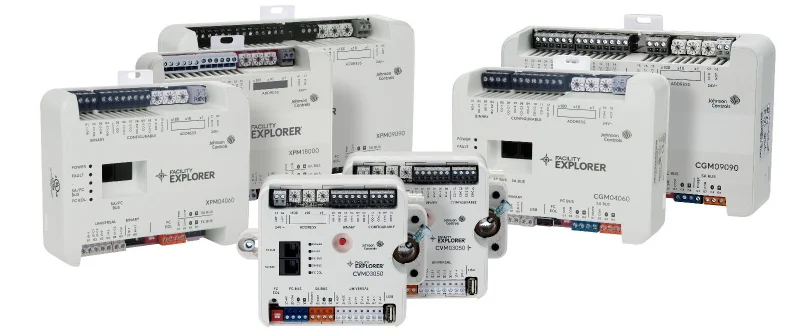
MILWAUKEE — In a major push to redefine the parameters of intelligent infrastructure, Johnson Controls (NYSE: JCI) has announced a sweeping, multi-tiered product release designed to augment its Facility Explorer ecosystem. Unveiled at the close of January, the latest rollout introduces next-generation equipment controllers, advanced plug-and-play energy management tools, hybrid supervisory plant controllers, and high-precision environmental and gas detection sensors.
This comprehensive suite of hardware and software enhancements arrives at a critical juncture for the commercial real estate and facilities management sectors. As building owners face mounting pressure to decarbonize operations, slash energy expenditures, and comply with rigorous indoor air quality (IAQ) mandates, Johnson Controls’ latest offerings deliver enhanced edge computing capabilities, greater hardware flexibility, and seamless system interoperability.
Main Facts
The late-January product expansion touches nearly every layer of the modern Building Management System (BMS), focusing heavily on edge autonomy, plug load optimization, and rigorous safety compliance. The key highlights of the release include:
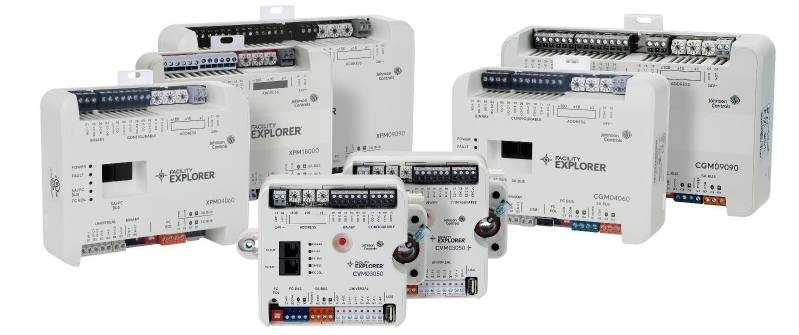
- Next-Generation Equipment Controllers: Expansion of the next-gen family to incorporate a new general-purpose application equipment controller, a Variable Air Volume (VAV) box controller with precise position feedback, and three distinct expansion Input/Output (I/O) modules.
- Integral Real-Time Clock Enhancements: CGM and CVM controllers now feature built-in real-time clocks, empowering devices to autonomously manage complex schedules, calendars, and trend logs while operating entirely offline from the broader Facility Explorer network.
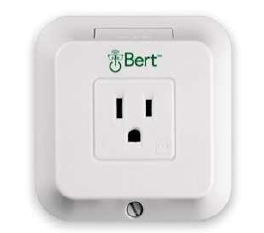
- BERT Plug Load Management: Integration of Building Energy Management Technology (BERT) smart plugs and inline circuit controllers, designed to curb "phantom" energy loads through automated, Wi-Fi-enabled scheduling and occupancy-based logic.
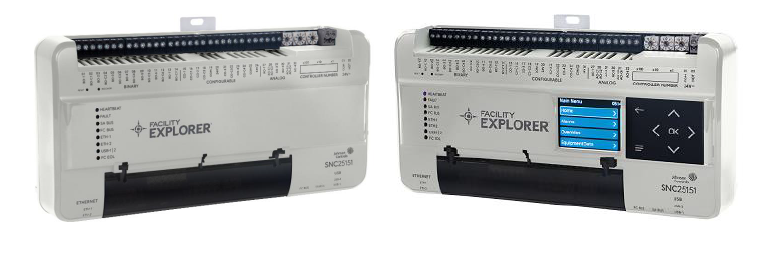
- SNC Supervisory Plant Controller Series: A novel hybrid family combining supervisory oversight and direct equipment control into a singular hardware and software architecture, featuring native support for BACnet® Protocol Revision 18 and daisy-chain IP networking.
- HE-6900 Duct Probe Sensors: Plenum-rated (UL 2043) relative humidity (RH) and temperature sensors engineered for exact environmental tracking across a full 0% to 100% RH spectrum.
- GS3000 Gas Detection Series: Indoor and outdoor-rated sensors dedicated to monitoring carbon monoxide (CO) and nitrogen dioxide ($textNO_2$) to safeguard occupant health and streamline code compliance.
Chronology
The strategic rollout represents the culmination of a multi-year engineering initiative by Johnson Controls to modernize its product portfolio for the Internet of Things (IoT) era.
Phase 1: Edge Intelligence and Standalone Autonomy
Historically, building automation controllers relied heavily on continuous communication with a central supervisory controller or cloud database to execute advanced scheduling and data logging. Recognizing the vulnerability of network disruptions—whether due to IT updates, cyber precautions, or connectivity loss—Johnson Controls initiated development on localized edge intelligence. The introduction of the integral real-time clock across the CGM and CVM controller lines marks a vital milestone in this timeline, giving edge devices the localized memory and timekeeping required to function autonomously for extended intervals.
Phase 2: Bridging Supervisory and Equipment Control
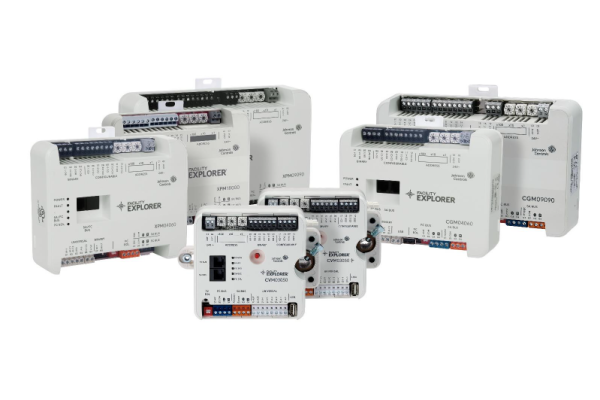
Traditionally, BMS architecture required distinct physical hardware boundaries between supervisory devices (which manage network-level coordination and graphics) and equipment controllers (which govern individual air handlers, boilers, and chillers). Over the past year, engineering teams at Johnson Controls worked to synthesize these disparate layers. The unveiling of the FX Supervisory Plant Controller (SNC) series realizes this objective, merging both operational tiers into a single, cohesive unit.
Phase 3: Expanding the Periphery—Plug Loads and Safety
While HVAC and lighting traditionally command the lion’s share of BMS focus, plug loads—power consumed by office equipment, refrigerators, and localized devices—have remained an elusive frontier for automated energy management. By integrating BERT technology into the ecosystem, Johnson Controls has systematically closed this gap. Concurrently, the finalization of the HE-6900 sensor and GS3000 gas detection lines rounds out the physical sensing layer, ensuring that safety, air quality, and environmental accuracy keep pace with computational advancements.
Supporting Data & Technological Breakdown
To fully grasp the impact of Johnson Controls’ latest release, industry professionals must examine the underlying specifications and engineering capabilities of each product line.
1. Advanced Equipment Controllers and I/O Expansion
The expanded controller family provides systems integrators with unprecedented deployment flexibility. The addition of the new general-purpose application controller and the VAV box controller—complete with position feedback—allows for tighter damper and valve modulation, directly translating to superior thermal comfort and reduced hunting.
Furthermore, the three new expansion I/O modules allow technicians to scale points locally without needing to invest in entirely new controller chassis. This modularity reduces labor overhead and minimizes panel footprint in crowded mechanical rooms.
+-----------------------------------------------------------------+
|               Facility Explorer (FX) Ecosystem                  |
+-----------------------------------------------------------------+
         |                                         |
         v                                         v
+-------------------+                    +------------------------+
|   SNC Series      |-- (BACnet Rev 18)--| CGM/CVM Controllers    |
| (Hybrid Plant &   |                    | (With Integral Real-   |
|  Supervisory Ctrl)|                    |  Time Clock & I/O)     |
+-------------------+                    +------------------------+
         |                                         |
         +------------------+----------------------+
                            |
                            v
                 +---------------------+
                 | Periphery Devices:  |
                 | - BERT Smart Plugs  |
                 | - HE-6900 Sensors   |
                 | - GS3000 Gas Detect |
                 +---------------------+
2. BERT Plug Load Management
Phantom loads (or standby power) account for up to 10% of a typical commercial building’s total electricity consumption. BERT devices disrupt this waste by acting as intelligent gatekeepers at the outlet level.
- Connectivity: Integrated Wi-Fi capability enables seamless communication without cluttering the primary automation network.
- Automation: Commands can be triggered via strict time-of-day schedules, occupancy detection algorithms, or custom logic written within the BMS framework.
- Metering: Continuous power measurement provides facility managers with granular, real-time data visualizations of individual appliance consumption, supporting corporate ESG (Environmental, Social, and Governance) reporting requirements.
3. SNC Supervisory Plant Controller Architecture
The FX SNC series introduces a robust hybrid framework designed to streamline system architecture. Key technical parameters include:
- Protocol Compliance: Full support for BACnet® Protocol Revision 18, which enhances structured security, advanced device discovery, and interoperability with third-party automation components.
- Networking: Dual Ethernet ports facilitate daisy-chain IP networking topologies, drastically simplifying wiring runs and eliminating the need for standalone network switches in many configurations.
- Expandability: Onboard I/O coupled with SA bus connectivity ensures that the SNC series can adapt to expanding plant footprints without requiring wholesale hardware replacements.
4. HE-6900 Duct Probe RH and Temperature Sensor
Engineered specifically for demanding air-handling environments, the HE-6900 series tackles the challenges of duct-mounted HVAC monitoring:
- Accuracy Tiers: Available in $pm$2% RH and $pm$3% RH accuracy options, paired with flexible thermistor or RTD temperature sensing outputs.
- Safety Ratings: Certified and tested to UL 2043, qualifying the units for safe installation within air-handling plenum spaces where fire and smoke spread characteristics are heavily regulated.
5. GS3000 Gas Detection Sensor Series
Indoor air safety in enclosed parking structures, mechanical rooms, and high-occupancy zones requires rapid detection of asphyxiants and toxic combustion byproducts. The GS3000 series addresses this through:
- Target Gases: Dedicated monitoring for Carbon Monoxide (CO) and Nitrogen Dioxide ($textNO_2$).
- Deployment Versatility: Housed in rugged enclosures rated for both indoor and outdoor environments, minimizing installation costs while ensuring continuous life-safety compliance.
Official Responses and Industry Perspective
While Johnson Controls has long maintained a dominant market position in commercial building automation, executive leadership emphasizes that modern solutions must pivot toward simplicity, sustainability, and cybersecurity resilience.
Industry analysts note that the integration of BACnet Revision 18 across the SNC series is a direct response to growing demands for secure, future-proofed IT/OT (Information Technology / Operational Technology) convergence. As building systems face increasing scrutiny regarding network vulnerabilities, hardware that natively supports higher security revisions simplifies compliance for corporate enterprise networks.
Furthermore, field integrators have responded enthusiastically to the inclusion of the real-time clock in edge controllers. In statements circulating through building automation forums, contractors have highlighted how edge-level data buffering drastically reduces troubleshooting hours during intermittent network outages. Rather than facing corrupted trend data or lost schedules when a primary server drops offline, the upgraded CGM and CVM controllers maintain continuous operational fidelity.
Implications for the Building Automation Industry
The introduction of this comprehensive product suite carries profound implications for building owners, facilities managers, and systems integrators alike.
1. Accelerating Decarbonization and ESG Compliance
With commercial real estate facing strict municipal carbon caps (such as New York City’s Local Law 97 or similar global legislation), energy waste is no longer merely a financial liability—it is a legal risk. By combining precision HVAC control (via advanced VAV controllers and HE-6900 sensors), localized life safety (GS3000), and plug-load automation (BERT), Johnson Controls provides a holistic toolkit for lowering a building’s overall carbon footprint.
2. Streamlining Installation and Reducing CapEx
Labor shortages and rising material costs continue to challenge construction and retrofitting timelines. Features such as daisy-chain IP networking on the SNC series, wireless plug-load management, and modular I/O expansions directly address these pain points. By minimizing wiring complexity and reducing the physical number of distinct devices required in a mechanical panel, contractors can deliver projects faster and within tighter budgets.
3. Elevating Occupant Health and Safety Post-Pandemic
The heightened focus on indoor environmental quality (IEQ) sparked by recent global health events remains a permanent fixture of modern facility management. The HE-6900’s high-accuracy humidity and temperature tracking, paired with the GS3000’s vigilant gas monitoring, ensure that building operators can proactively maintain environments that foster occupant productivity, cognitive function, and safety.
Next Steps for Facilities Professionals
Building owners and systems integrators interested in incorporating these next-generation components into upcoming retrofits or new construction projects are encouraged to reach out to authorized building automation solution (BAS) providers to review engineering datasheets, software compatibility requirements, and procurement timelines.