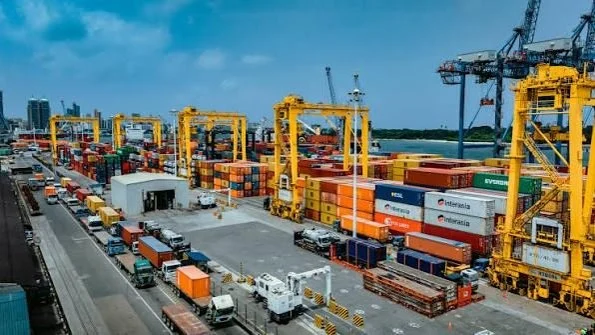
DAR ES SALAAM, Tanzania — In the competitive landscape of global maritime logistics, the Dar es Salaam Port is rapidly transforming from a regional maritime hub into a critical artery for the African continent. By pairing record-breaking cargo throughput with unprecedented operational efficiency, Tanzania is successfully positioning itself as the primary Indian Ocean gateway for the economic corridors of Central, Eastern, and Southern Africa.
As global supply chains shift, the performance of Dar es Salaam has become a bellwether for the broader economic health of the Great Lakes region and the Central African Copperbelt. With massive infrastructure investments and a strategic pivot toward private sector partnerships, the port is not only handling more volume but is doing so at a pace that is fundamentally altering the regional trade map.
The Evolution of Performance: A Chronology of Progress
The recent ascent of the Dar es Salaam Port is not an overnight phenomenon but the result of a deliberate, multi-year strategy to modernize Tanzania’s maritime infrastructure.
The Foundation (2021–2023)
In 2021, the port faced significant headwinds. The World Bank’s Container Port Performance Index (CPPI) reflected these challenges, assigning the port a standardized score of -176. At the time, vessel waiting times and berth congestion were major bottlenecks, threatening to deter international shipping lines from incorporating Dar es Salaam into their rotation schedules.
The Infrastructure Pivot (2023–2024)
The turning point arrived with the Dar es Salaam Maritime Gateway Project (DMGP). This ambitious public initiative focused on structural transformation: deepening berths to accommodate larger, modern container vessels, widening the entrance channel, and expanding the turning basin. These physical upgrades provided the necessary canvas for the subsequent operational revolution.
The Private Sector Catalyst (2024–2026)
In April 2024, the arrival of DP World to operate the port’s terminals introduced a new level of technological and operational rigor. Within just over two years, the impact has been staggering. By July 2026, data revealed that discharge times for comparable cargo had plummeted by over 90%—dropping from an industry-lagging 300 hours to a highly competitive 28 hours. This shift has fundamentally changed the port’s value proposition to global shipping conglomerates.
Supporting Data: By the Numbers
The quantitative evidence of the port’s success is found in both its throughput records and its improved efficiency metrics.
Cargo Throughput Growth
The Tanzania Ports Authority (TPA) has reported a steady, aggressive climb in cargo volumes over the last three fiscal years:
- 2023/24: 23.7 million tonnes
- 2024/25: 27.7 million tonnes
- 2025/26: 33.7 million tonnes
This growth trajectory underscores the port’s increasing importance to landlocked neighboring nations, which are increasingly favoring the "Dar Corridor" over longer, more expensive alternatives.
The Regional Dependency Map
The port serves as the vital maritime terminus for a vast economic hinterland. Recent data highlights the breakdown of transit traffic, confirming that nearly half of the port’s transit cargo is destined for the Democratic Republic of Congo (DRC):
- DRC: 5.995 million tonnes (47% of total transit traffic)
- Zambia: 3.51 million tonnes
- Rwanda: 1.72 million tonnes
- Malawi: 675,200 tonnes
- Burundi: 425,774 tonnes
These figures illustrate that Dar es Salaam is no longer merely serving the Tanzanian domestic market; it is the essential lifeblood for the DRC’s copper and cobalt industries, as well as the agricultural and manufacturing sectors of the Great Lakes nations.
Efficiency and the CPPI Ranking
The World Bank’s 2025 Container Port Performance Index (CPPI) serves as the industry gold standard for benchmarking. Dar es Salaam’s current ranking—255th globally with a score of -7.75—represents a dramatic recovery from its 2021 performance.
While the CPPI does not account for the "last mile" of logistics (such as customs clearance or inland road conditions), it provides a pure measure of maritime productivity. The fact that the port has climbed significantly in the index while simultaneously managing a record 33.7 million tonnes of cargo indicates that the operational improvements are scaling successfully alongside demand.
Official Responses and Strategic Marketing
The TPA has been aggressive in promoting these improvements, particularly in the heart of the markets they serve. During a recent marketing mission in Lubumbashi, DRC, TPA officials highlighted that cargo volume from the DRC alone surged by 43% year-on-year.
"The efficiency gains we are seeing at the quay are being passed directly to our regional partners," noted a representative from the port authority. "By reducing average container vessel handling time to approximately three days, we are drastically lowering the ‘cost of waiting’ for the mines and factories in the Copperbelt."
Private partners, such as Tanzania East Africa Gateway Terminal Limited, have echoed these sentiments, emphasizing that their investments in information systems and yard management have allowed the port to "sweat its assets" more effectively, processing higher volumes without requiring an infinite expansion of the physical footprint.
Implications: The Infrastructure Chain Reaction
The success of the Dar es Salaam Port has created a "pressure test" for the rest of the supply chain. In logistics, a port is only as efficient as the corridor that feeds it.
The Inland Bottleneck Challenge
As vessel turnaround times have tightened, the focus of regional trade experts has shifted inland. The speed at which cargo leaves the port is now the primary metric for landlocked nations. If cargo sits on a pier waiting for rail transport or faces delays at border crossings, the gains made at the maritime terminal are effectively neutralized.
Strategic Investments Beyond the Waterfront
Recognizing this, the Tanzanian government has initiated a comprehensive investment program in:
- Railway Connectivity: Upgrading the central railway line to move bulk cargo, such as copper and fuel, more efficiently toward the borders.
- Dry Ports: Establishing inland container depots to act as "buffer zones," allowing for the rapid clearance of cargo away from the primary port area.
- Border Harmonization: Working with regional blocs to digitize customs procedures, reducing the time trucks spend idling at border crossings like Tunduma (Zambia) and Rusumo (Rwanda).
The Regional Trade Race
Tanzania is currently engaged in a subtle but high-stakes race with other regional corridors, including those in South Africa, Mozambique, and Kenya. The "Dar Corridor" is betting that its combination of a deep-water port, massive capacity expansion, and stable operational management will make it the preferred route for the next decade of African development.
Conclusion: The Next Phase of Growth
The transformation of the Dar es Salaam Port is a case study in how targeted infrastructure investment, combined with private sector operational expertise, can revitalize a national economy. However, the path forward is not without its hurdles.
As cargo volumes continue to hit record highs, the "next test" for Tanzania will be maintaining these high-efficiency metrics while managing the sheer physical volume of goods moving through the system. The sustainability of this growth depends on the synergy between the maritime gateway and the inland infrastructure.
If Tanzania can successfully integrate its port efficiency with robust, high-speed rail and streamlined border operations, it will solidify its status as the preeminent gateway to the African interior. For the mines of the Copperbelt and the markets of the Great Lakes, the Indian Ocean has never been closer. The coming years will determine if Dar es Salaam can sustain this momentum and lead the way for a new, more efficient era of African trade.