By Bill Schweber
Contributing Editor, Electronic Design
Main Facts
The landscape of power-line protection is undergoing a quiet revolution. Traditional thermal and electromagnetic fuses, once the undisputed standard for circuit safety, are increasingly sharing space on modern bills of materials (BOMs) with sophisticated semiconductor alternatives known as electronic fuses, or eFuses.
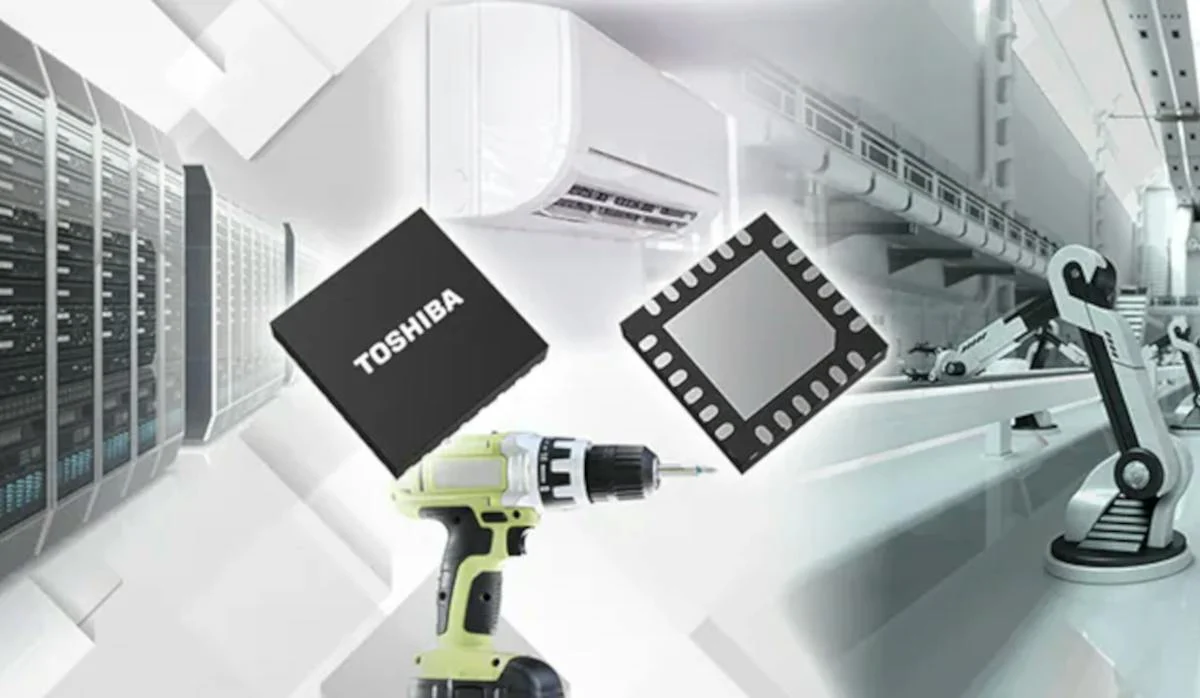
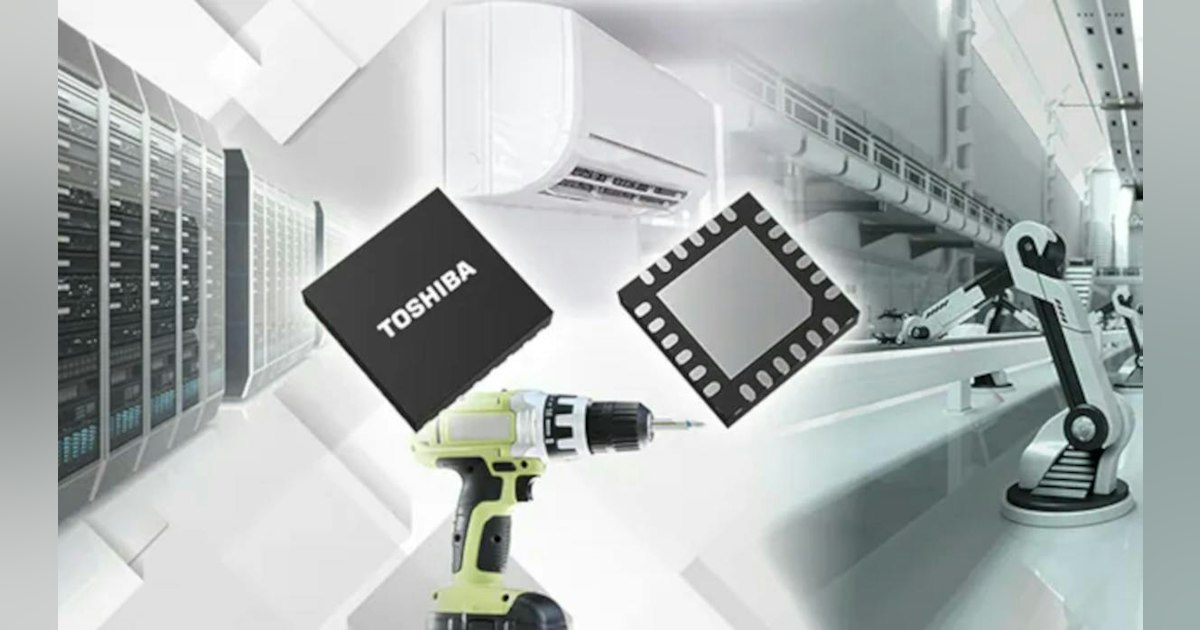
Entering this rapidly expanding market is the TCKE1401NM from Toshiba Electronic Devices & Storage Corp. Designed to meet the stringent demands of enterprise servers, network infrastructure, factory automation, robotics, and industrial systems, this tiny 75-V, 6-A eFuse IC is engineered to address the growing industry shift toward 48-V and 54-V power distribution architectures.
Unlike passive thermal fuses that require manual replacement after a fault event, the TCKE1401NM is a fully integrated, resettable active protection device. It features a wide operating voltage range spanning 4.7 V to 75 V, making it versatile enough to handle legacy 24-V systems as well as modern 48-V and 54-V power buses. Key highlights of the device include:
- High Voltage and Current Ratings: Withstands up to 75 V while supporting a continuous current limit of up to 6 A (adjustable from 0.82 A to 6.43 A).
- Low On-Resistance: Features a typical $R_textDS(on)$ of just $44.5text mOmega$, minimizing power loss and bolstering overall system energy efficiency.
- Compact Footprint: Housed in a space-saving VQFN24D package measuring just $4.0 times 4.0 times 0.9text mm$, preserving critical printed circuit board (PCB) real estate.
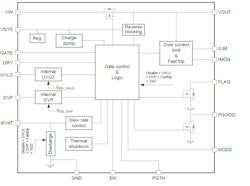
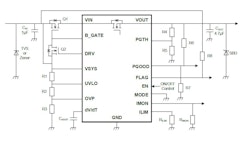
- Extensive Protection Suite: Offers adjustable overcurrent limits, undervoltage lockout (UVLO), overvoltage protection (OVP), thermal shutdown, and short-circuit protection. Advanced safety configurations—such as reverse-current blocking, input reverse-polarity protection, and inrush-current slew-rate control—are easily achieved using external MOSFETs and capacitors.
Chronology: The Evolution of Circuit Protection
To fully appreciate the significance of the TCKE1401NM, it is helpful to trace the historical trajectory of circuit protection technologies and how the industry arrived at the widespread acceptance of active eFuses.
The Era of Skepticism
When electronic fuses were first introduced to the commercial market over a decade ago, they were met with a high degree of skepticism and, in many cases, outright suspicion from traditional hardware designers. For generations, engineers relied on thermal fuses—simple, predictable, and remarkably reliable devices that physically melted when subjected to excessive current.
The core reservation surrounding early eFuses was rooted in complexity. Designers questioned how an active semiconductor device, packed with complex logic gates, amplifiers, and internal switches, could ever match the absolute certainty and fail-safe nature of a simple piece of melting wire.
Gradual Market Acceptance
Over the ensuing years, semiconductor manufacturers refined the architecture, reliability, and predictability of eFuses. Slowly, engineers began to recognize their operational advantages. Unlike thermal fuses, which act as a binary break requiring manual intervention and component replacement, eFuses respond in milliseconds, offer user-selectable thresholds, support remote telemetry and reset capabilities, and can be distributed strategically across localized subsystems for targeted protection.
Regulatory Milestone and Standardization
As field reliability data accumulated, regulatory standards bodies gradually shifted their stances. Today, eFuses are officially approved by numerous regulatory bodies for overcurrent protection—a testament to their rigorous performance validation. Crucially, standard-setting organizations do not update their safety criteria lightly. Furthermore, engineers have discovered that implementing an eFuse does not preclude using a classic thermal fuse as an ultimate, high-level backup, providing a redundant, belt-and-suspenders approach to safety.
The Modern Industrial Transition
The introduction of the Toshiba TCKE1401NM marks the latest chapter in this timeline. As data centers, telecommunications infrastructure, and industrial automation facilities transition to 48-V power distribution to minimize $I^2R$ transmission losses and improve overall energy efficiency, the demand for robust, high-voltage eFuses has reached an all-time high. Toshiba’s new IC arrives precisely as the industry moves away from legacy 12-V systems toward higher-voltage architectures.

Supporting Data and Technical Specifications
A deep dive into the technical documentation for the TCKE1401NM reveals a component designed for rigorous industrial environments. The device’s performance metrics underscore its capability to manage complex power management tasks:
| Parameter | Specification / Value |
|---|---|
| Input Voltage Range ($V_textIN$) | 4.7 V to 75 V |
| Absolute Maximum Voltage | 75 V |
| Continuous Current Rating | Up to 6.0 A |
| Adjustable Current Limit Range | 0.82 A to 6.43 A (set via external resistor) |
| Typical On-Resistance ($R_textDS(on)$) | $44.5text mOmega$ |
| Package Type | VQFN24D ($4.0 times 4.0 times 0.9text mm$) |
| Fault Response Modes | Two-mode selectable: Auto-retry or Latch-off |
| Additional Protections | UVLO, OVP, Thermal Shutdown, Short-Circuit Protection |
| Auxiliary Features | Power-good output indication, fault flag signal |
Flexibility Through External Configuration
Rather than operating as a rigid, black-box component, the TCKE1401NM is engineered for maximum configurability. Designers can tailor the device’s operational parameters to match exact system requirements using straightforward external components:
- Overcurrent, UVLO, and OVP Limits: Easily adjusted via standard external resistors, allowing engineers to fine-tune trip thresholds without redesigning the core circuit.
- Inrush Current Control: An external capacitor connected to the slew-rate control pin dictates the ramp-up speed of the output voltage, effectively mitigating damaging inrush currents during startup.
- Fault Response Flexibility: System architects can choose between an auto-retry mode (where the device attempts to recover after a fault clears) or a latch-off mode (where the switch remains open until a manual or system reset is issued).
- Diagnostic Reporting: The IC includes a dedicated flag signal pin to instantly alert the host microcontroller when any fault condition—such as overcurrent, overvoltage, or thermal overload—is detected.
Official Responses and Documentation Resources
To assist design engineers in integrating the TCKE1401NM with minimal development friction, Toshiba Electronic Devices & Storage Corp. has released an extensive collateral package alongside the physical component.
The primary resource is a comprehensive 24-page datasheet that provides exhaustive functional block diagrams, timing charts, and threshold breakdowns. Importantly, the datasheet walks engineers step-by-step through the mathematical equations required to calculate precise resistor and capacitor values for setting current limits, undervoltage lockouts, and slew rates.
Complementing the datasheet, Toshiba offers two specialized technical guides:
- eFuse IC for Robust Power Supply Protection (Document ID: ALQ00272): An overview document detailing how eFuses safeguard modern power architectures against transient faults.
- Basic Usage and Functions of eFuse IC (Document ID: AKX00297): An application note that explains the operational subtleties, layout best practices, and functional nuances of deploying full-featured eFuses in industrial hardware.
Additionally, component distributors such as Mouser Electronics have stocked the TCKE1401NM, making evaluation boards and samples readily available to the engineering community.
Implications for Industry and System Design
The commercial availability of high-voltage, highly configurable eFuses like the Toshiba TCKE1401NM carries profound implications for power electronics and industrial system design.
Minimizing Downtime and Maintenance Costs
In legacy industrial automation and robotic systems, a blown fuse often required a physical service call, manual fuse replacement, and costly equipment downtime. By utilizing an eFuse configured in auto-retry or externally resettable latch-off modes, modern machinery can automatically recover from temporary transient faults or report diagnostic data back to a central programmable logic controller (PLC) for remote triage. This dramatically reduces mean time to repair (MTTR) and boosts overall equipment effectiveness (OEE).
Enabling Efficient 48-V Architectures
As data centers and telecommunications networks push toward higher voltage rails to handle escalating power densities, component-level protection must evolve concurrently. Operating at 48 V or 54 V introduces severe arcing risks and transient voltage spikes that can instantly destroy sensitive downstream silicon. The TCKE1401NM’s 75-V rating provides the necessary safety margin to handle these high-voltage buses while maintaining low resistive losses through its optimized $44.5text-mOmega$ MOSFET channel.
Space-Saving Modular Protection
The trend toward decentralized power management means engineers can no longer rely on a single, centralized protection circuit at the main power entry point. Instead, intelligent protection must be "sprinkled" across individual board rails and subsystem branches. Measuring just $4.0 times 4.0text mm$, the VQFN24D package of the TCKE1401NM allows designers to embed localized, high-performance protection directly adjacent to sensitive loads—such as microcontrollers, communication transceivers, and motor drivers—without bloating the overall PCB footprint.
Conclusion
What began over a decade ago as a disruptive and controversial technology has firmly matured into an indispensable cornerstone of modern circuit design. With the release of the TCKE1401NM, Toshiba has provided the engineering community with a powerful, versatile tool that bridges the gap between traditional safety expectations and the dynamic requirements of next-generation industrial systems.