Main Facts
The debate surrounding the integration of generative artificial intelligence into creative industries has transcended theoretical ethics and entered a phase of direct labor exploitation. Recent reports highlight a disturbing trend where generative tools—such as OpenAI’s ChatGPT—are not only mimicking the distinct styles of human artists but are also actively affixing real cartoonists’ signatures to entirely synthetic works. This alarming development occurs despite legal agreements, such as the high-profile pact between Condé Nast and OpenAI, which explicitly prohibit training AI models on copyrighted illustrative works.
At the center of this controversy is the growing existential threat facing independent cartoonists, illustrators, and technical creators. Industry professionals argue that AI generation is not merely a tool for artistic expression or efficiency, but a calculated mechanism designed to render human labor obsolete. Critics point to statements from tech industry insiders, including Microsoft’s director of applied science Brent Hecht, who recently acknowledged in court documents that AI represents the "largest theft of labor in human history."
For traditional creators, engineers, and illustrators who rely on decades of practiced skill, the rise of prompt-based art generation devalues merit, hard work, and foundational expertise. This friction raises critical questions across creative and technical sectors: If automation can bypass the friction of human creation, what happens to the value of human experience, whether in drawing a cartoon or engineering a complex circuit?
Chronology
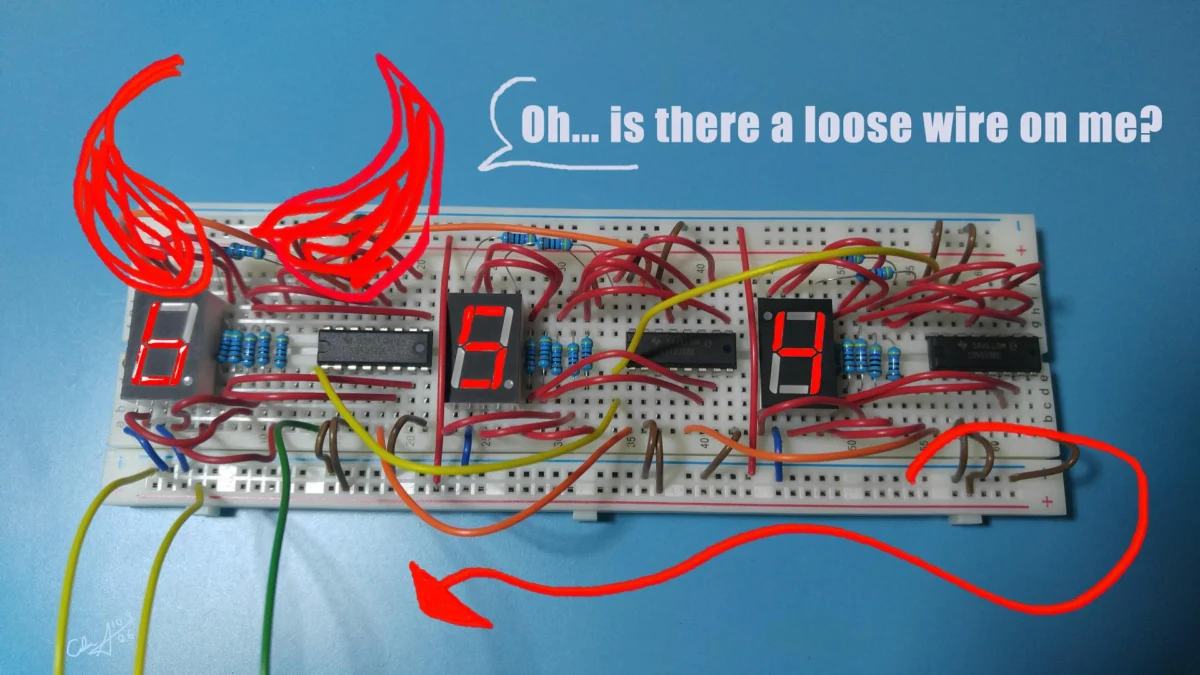
- Over a Decade Ago: Early digital mock-ups and hand-drawn technical cartoons are created using fundamental tools like MS Paint during early Halloween challenges, establishing a baseline of human-made, imperfect artistic expression in engineering culture.
- Recent Years: Generative AI platforms scale rapidly, ingesting vast corpuses of internet data, text, and visual art. Major media companies begin signing licensing deals with AI developers (such as Condé Nast partnering with OpenAI) with stipulations intended to protect intellectual property and specific artistic styles.
- Early 2026: Incidents emerge demonstrating that generative AI tools are bypassing safety guardrails and agreements, synthesizing fake cartoons in the specific styles of veteran publication artists—complete with forged signatures.
- This Week: Veteran New Yorker cartoonist Jason Adam Katzenstein publicly condemns the practice, asserting that the primary objective of these technologies is not to create quality humor, but to deal a "death blow to labor." Concurrently, technology publications and engineering blogs highlight the broader systemic risks of relying on automated shortcuts across both art and technical design.
Supporting Data and Context
The friction between generative AI adoption and human labor rights is underpinned by verifiable data regarding copyright infringement and market displacement:
- The Scope of Ingestion: Studies and legal filings reveal that foundational models consume billions of copyrighted images, texts, and illustrations without explicit compensation or consent from the original creators.
- High-Profile Licensing Realities: Despite content agreements—such as the Conde Nast-OpenAI partnership designed to safeguard editorial and illustrative content—generative models continue to produce derivative works that closely mirror protected styles.
- Economic Pressures on Creators: According to labor advocates, the integration of generative tools into publishing pipelines reduces commission budgets for human illustrators by an estimated double-digit percentage annually, pushing freelance and staff artists out of the industry.
- Parallel Parallels in Engineering: The devaluation of skill is not isolated to fine art. In technical fields, reliance on unvetted AI code generation and circuit design mirrors the lazy shortcuts seen in visual arts, risking structural and functional failures when practitioners lack foundational engineering expertise.
Official Responses and Industry Reactions
The professional community has mobilized rapidly to address what many perceive as an existential threat to creative livelihoods.
Jason Adam Katzenstein (New Yorker Cartoonist):
Reacting to reports of AI systems generating fake cartoons bearing real artists’ signatures, Katzenstein offered a sharp critique of the technology’s true intent. He stated:

"It’s not the point for it to actually be funny or good. The point is that [AI usage is] trying to deal a death blow to labor. It’s trying to render individual cartoonists obsolete because we cost money and take time."
Brent Hecht (Microsoft Director of Applied Science):
In disclosures stemming from recent court documentation regarding AI training methodologies, Hecht provided a sobering assessment of the industry’s scale, characterizing the uncompensated ingestion of human intellectual output as the "largest theft of labor in human history."
The Australian Cartoonists Association:
Weighing in on the ethical boundaries of automated creation, the association issued a clear policy stance regarding the preservation of human agency in visual storytelling, declaring succinctly that artificial intelligence "[should] not replace the artist."

Engineering and Technical Perspectives:
Writing from the intersection of hardware engineering and visual commentary, technology editors and authors emphasize that the shortcuts encouraged by AI erode core competencies. In fields where precision matters—such as breadboard troubleshooting, 555 timer circuit design, and hardware configuration—outsourcing problem-solving to an unvetted algorithm introduces catastrophic vulnerabilities. As industry veterans note, would anyone knowingly hire a circuit designer or programmer who relies entirely on AI without a foundational, professional history in the underlying engineering?
Implications for Art, Engineering, and Labor
The fallout from the normalization of generative AI extends far beyond the drawing board or the editorial bullpen; it strikes at the philosophical definition of human effort and merit.
1. The Erosion of Foundational Skill
When technology allows users to bypass the friction of learning—whether it is mastering the anatomy of a hand-drawn cartoon or understanding the capacitive discharge curves of an analog circuit—society loses the rigorous feedback loop that builds true expertise. Art and engineering are inherently difficult; they require trial, error, and dedication. When AI promises instant results, it cultivates a culture of intellectual laziness that devalues genuine craftsmanship.
2. Legal and Ethical Precedents
The revelation that AI platforms are forging artists’ signatures on synthetic works exposes the fragility of current corporate licensing agreements. If contracts between media giants and tech developers cannot prevent style appropriation and signature replication, individual creators have virtually no legal shield against systemic mimicry. This necessitates tighter regulatory frameworks, transparent attribution standards, and robust enforcement of copyright protections.
3. The Future of Human Labor in the Digital Economy
Ultimately, the debate forces a reckoning over who benefits from technological progress. If automation is deployed primarily to eliminate human labor costs rather than to augment human capability, the creative and technical workforce faces a bleak economic landscape. Preserving the integrity of human-made art—from hand-drawn comic strips to custom-engineered electronics—is not merely an aesthetic preference; it is an economic and moral necessity to ensure that human labor, ingenuity, and expression retain their rightful value in the modern world.