SANTA CLARA, Calif. — In the rapidly evolving world of commercial robotics, choosing the foundational motion architecture remains one of the most consequential decisions an engineering team can make. As demands for higher payload capacities, smaller form factors, and faster deployment cycles intensify, the debate between building custom component-level systems and adopting all-in-one solutions has taken center stage.
To help navigate these complex engineering trade-offs, Harmonic Drive—a global leader in precision motion control—is bringing its expertise to the forefront of the industry. Marcel Almonte, a mechatronics applications engineer at Harmonic Drive, will deliver a keynote-level technical session at RoboBusiness 2026, titled "Integrated Drive Actuator Design: Combining Gearheads, Motor, Drive, and Sensors for Smarter Motion."
The premier commercial robotics event is scheduled to take place on October 20 and 21, 2026, in Santa Clara, California. Almonte’s presentation is slated for the opening day of the conference at 10:30 a.m. PT, setting a high-tech tone for a packed agenda focused on innovation, development efficiency, and scaling robotic enterprises.
Main Facts: The Shift Toward Integrated Motion Architectures
The core thesis of Almonte’s upcoming presentation centers on a paradigm shift in how robotic joints are engineered. Traditionally, designers built actuators from the ground up by sourcing individual components: separate gearheads, motors, servo drives, and encoders. While this method offers granular control over individual specifications, it introduces massive engineering overhead, complex wiring harnesses, extended testing cycles, and higher points of failure.
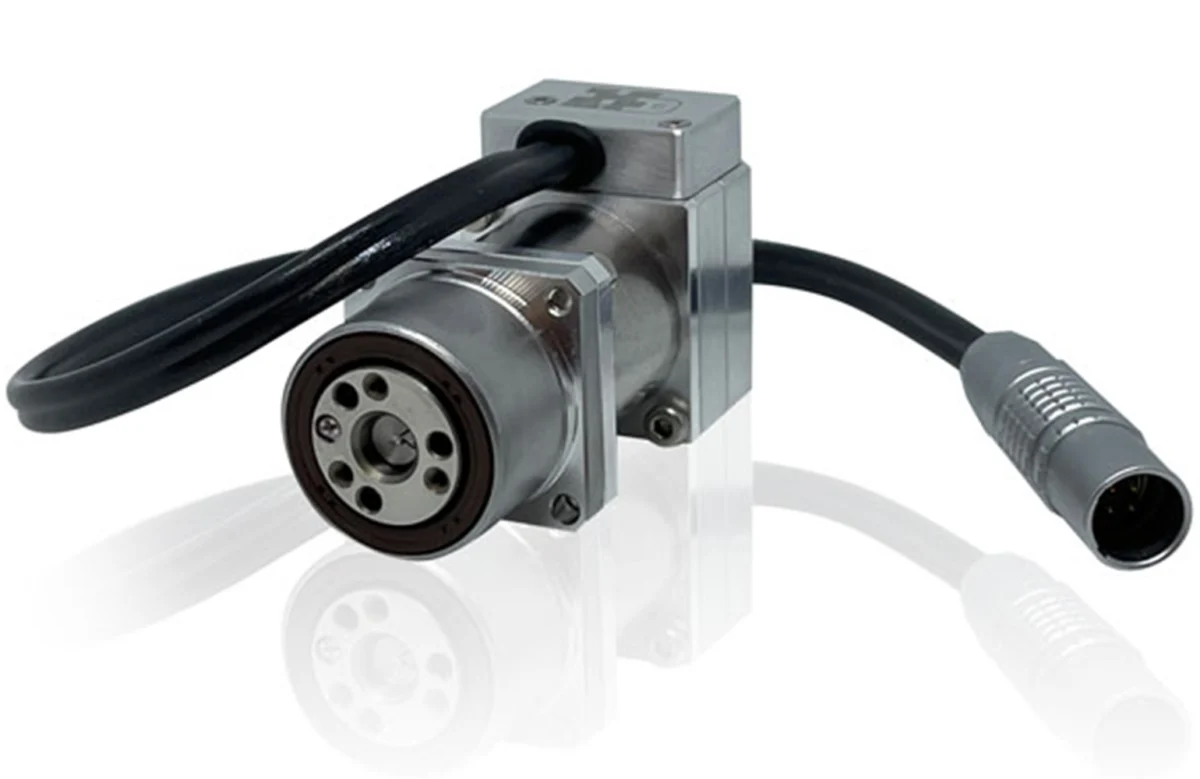
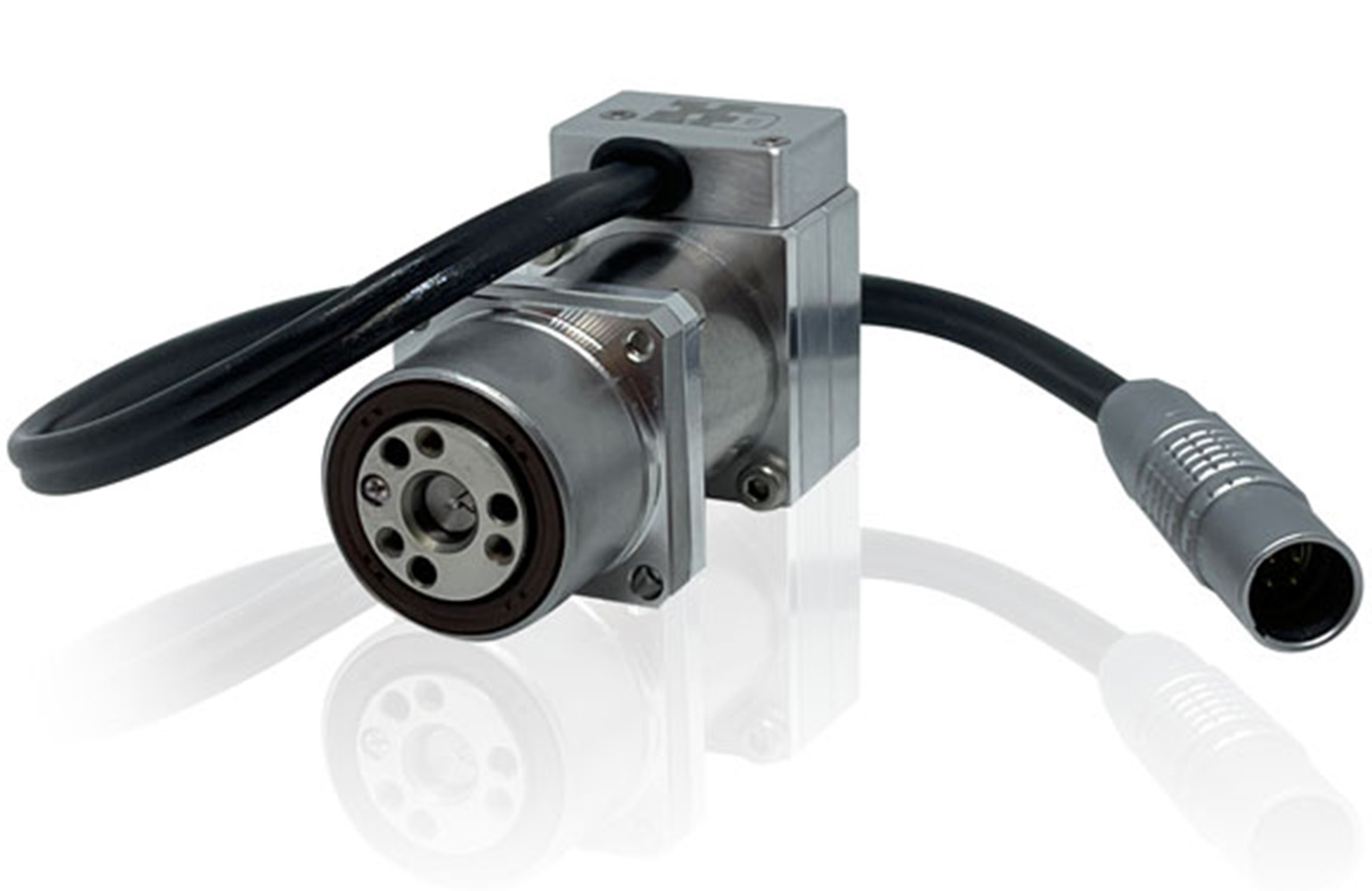
Harmonic Drive’s session will explore how modern integrated actuators—such as the company’s RSF-5B IDT Supermini actuator, which features a fully integrated servo drive—fundamentally alter this dynamic.
Key takeaways from the session will include:
- Architecture Trade-offs: A rigorous comparison between component-level designs and integrated actuator solutions, helping engineers evaluate performance, flexibility, and spatial constraints.
- Engineering Efficiency: Practical insights into how pre-integrated systems dramatically reduce design hours, simplify mechanical layouts, and minimize cabling complexity.
- Accelerated Time-to-Market: Demonstrations of how out-of-the-box integrated drives shorten testing, commissioning, and validation phases, allowing robotics startups and established OEMs alike to field their products faster.
- Selection Frameworks: A strategic guide for matching motion solutions to specific application needs, taking into account communication protocols, environmental constraints, and rigorous performance targets.
Chronology: The Evolution of Motion Control and Almonte’s Path to Harmonic Drive
To understand the weight of Harmonic Drive’s technical contributions, it is helpful to look at both the trajectory of motion control technology and the career path of the engineer leading the discussion.
The Rise of Mechatronic Integration
Over the past decade, robotics has transitioned from heavy, rigidly programmed industrial arms to agile, collaborative, and mobile systems operating in unstructured environments. This transition demanded a simultaneous evolution in actuators. Bulky external control cabinets gave way to decentralized drives mounted directly onto robot joints. Today, the industry is moving further toward hyper-integrated "smart actuators," where high-precision strain wave gearing, brushless motors, absolute encoders, and intelligent servo drives are housed within a single, seamless enclosure.
Marcel Almonte: A Background in Practical Mechatronics
The expertise behind Harmonic Drive’s presentation is anchored by Marcel Almonte, whose career bridges rigorous academic grounding with hands-on field experience across multiple high-tech sectors:
- 2022: Almonte graduated from the Wentworth Institute of Technology, earning a degree in electro-mechanical engineering complemented by a minor in applied mathematics. During his undergraduate studies, he served as a quality and safety engineer at Philips, where he was tasked with testing complex medical devices to ensure strict CE compliance—instilling a deep appreciation for rigorous safety and reliability standards.
- Post-Graduation (Field Engineering): Almonte transitioned into the logistics and automation space as a field engineer at Alert Innovation. In this role, he was on the front lines of hardware and software troubleshooting, diagnosing complex system bugs in automated storage and retrieval systems and relaying critical feedback to core development teams.
- Motion Control Sales & Support: He then joined Infranor USA, a specialized servo motor and drive sales office. Here, Almonte worked closely with industrial clients to engineer custom motion control solutions tailored to unique operational demands.
- Current Role at Harmonic Drive: Today, Almonte brings this multidisciplinary background to Harmonic Drive. His daily responsibilities include developing comprehensive verification tests for motor specifications, troubleshooting electrical, software, and hardware anomalies, and collaborating directly with customers, sales divisions, and internal R&D design teams.
Supporting Data: The Economics and Engineering of Integration
While exact proprietary manufacturing data varies across the industry, independent engineering studies and manufacturer white papers consistently highlight the hidden costs of component-level design.
When engineering teams opt to build actuators from discrete parts, they typically face several compounded challenges:
- Design and Documentation Time: Engineers must spend weeks—sometimes months—calculating thermal dissipation across disparate housings, designing custom adapter plates, and managing mechanical tolerances between gearboxes and motor shafts.
- Cabling and Electromagnetic Interference (EMI): Multi-component systems require extensive wiring runs between the motor, encoder, and remote drive. These cable bundles are prone to mechanical fatigue, flexing failures in robotic joints, and susceptibility to EMI. Integrated actuators eliminate external feedback and power cable clutter, significantly boosting system reliability.
- Commissioning Overhead: Tuning a system where the drive, motor, and gearhead are sourced from different vendors requires exhaustive tuning of PID loops and feedback filters. Pre-integrated units come factory-calibrated, drastically reducing commissioning hours on the factory floor.
Harmonic Drive’s product lineup—exemplified by units like the RSF-5B IDT Supermini—demonstrates how high torque density can be achieved in ultra-compact footprints without sacrificing positional accuracy or thermal performance.
Official Perspectives: Industry Insight from Harmonic Drive
Although formal corporate statements regarding the RoboBusiness presentation emphasize educational value, industry representatives and application engineers continuously underscore the existential need for design simplification in modern robotics.
"Selecting a motion architecture is no longer just about torque and speed; it’s about system-level manageability," industry analysts note. As robot density increases—especially in humanoid robotics, surgical systems, and dense warehouse automation—every cubic millimeter and gram saved in the actuator translates directly into greater payload capacity, lower battery consumption, and simplified maintenance.
By presenting at RoboBusiness 2026, Harmonic Drive aims to demystify the integration process. Rather than viewing integrated actuators as a "black box" compromise, Almonte’s session will frame them as strategic enablers that liberate engineering teams to focus on higher-level software, application logic, and user experience rather than mechanical fastening and cable routing.
Implications: What This Means for the Future of Commercial Robotics
The insights shared by Harmonic Drive at RoboBusiness 2026 carry profound implications for various sectors within the commercial robotics landscape:
- Humanoid and Quadruped Robotics: The race to build dynamic, human-like bipedal robots requires extreme power-to-weight ratios and minimal inertia. Integrated actuators reduce distal weight in robotic limbs, making fast, stable locomotion significantly easier to control.
- Medical and Surgical Devices: In applications where precision is a matter of life and death, reducing points of electrical and mechanical failure through integration enhances overall system safety and regulatory compliance.
- Industrial Automation and Logistics: As manufacturing floors demand faster reconfiguration of robotic cells, modular, plug-and-play actuators reduce downtime and simplify maintenance protocols for end-users.
Ultimately, the transition toward integrated motion solutions represents a maturation of the robotics industry. As time-to-market becomes the ultimate competitive differentiator, tools and components that eliminate friction in the design phase will dictate which companies successfully scale their products.
Attend RoboBusiness 2026
RoboBusiness 2026 stands as the premier annual gathering for commercial robotics developers, founders, researchers, and enterprise end-users. Attendees will have the opportunity to engage with leading experts in robotics and artificial intelligence, exploring cutting-edge hardware, software trends, and innovative deployment strategies across manufacturing, healthcare, agriculture, logistics, and beyond.
In addition to technical sessions like Marcel Almonte’s presentation on integrated actuators, the event features robust networking receptions, keynote panels, and an exhibition hall showcasing the latest components and platforms driving the industry forward.
- Registration: Full conference passes—which grant access to all keynotes, technical tracks, and networking events—are currently available. Special discount programs are offered for academic institutions, industry associations, and corporate groups. For inquiries regarding group registrations, contact
events[at]arrowfly.com. - Sponsorship and Exhibition: Organizations interested in showcasing their technologies can download the exhibitor prospectus online. Questions regarding sponsorship opportunities should be directed to Colleen Sepich at
csepich[AT]arrowfly.com.