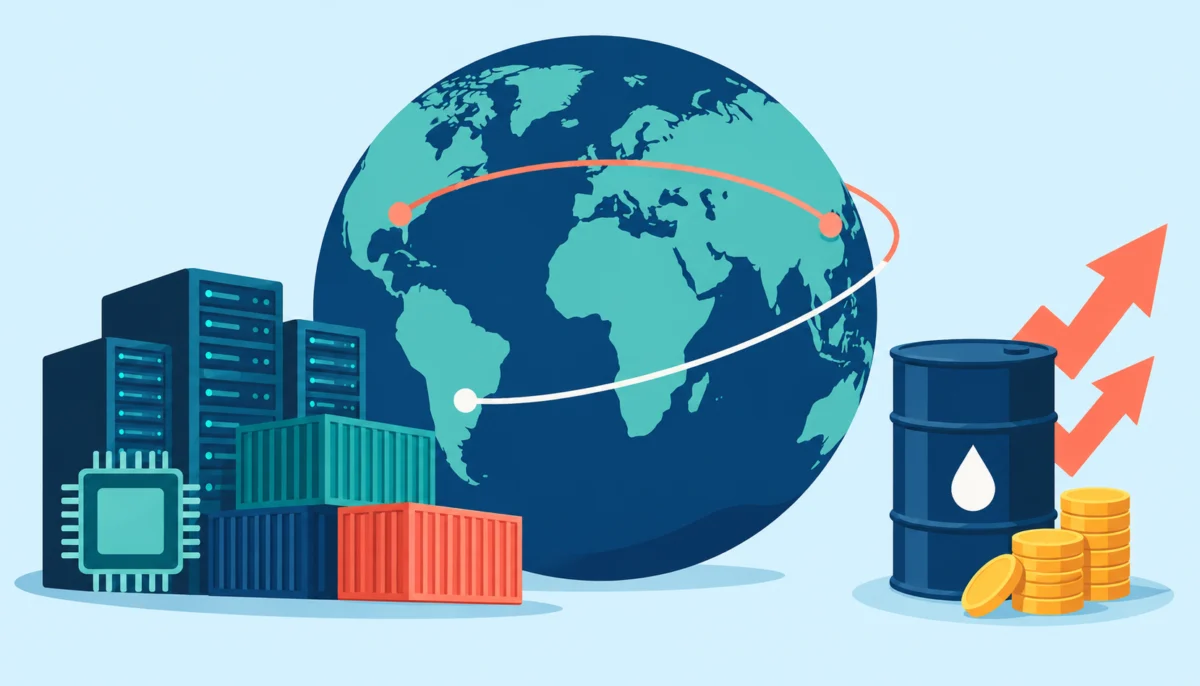
Executive Summary: The 2026 Economic Outlook
The latest data from UN Trade and Development (UNCTAD) paints a complex portrait of the global economy for 2026. While the agency forecasts a deceleration in global economic growth to 2.6%, down from 2.9% in 2025, this headline figure masks a deeper, more nuanced trend: the continued expansion of global trade in goods and services, which is expected to rise by approximately 4% at constant prices.
For institutional investors, credit committees, and corporate strategists, this divergence between broad macroeconomic output and trade activity is the defining characteristic of the coming year. As growth slows, the widening gap between trade volume and domestic prosperity suggests that traditional metrics—such as national GDP growth—are no longer sufficient indicators of individual borrower health or sovereign stability.
Chronology and Key Forecasts: A Shifting Global Landscape
The October 9 announcement from UNCTAD serves as a critical baseline for market participants. The trajectory of the global economy has been marked by a transition from the post-pandemic recovery phase into a period of structural recalibration.
- 2025 Retrospective: Global growth stood at 2.9%, with developing economies recording a robust 4.7% expansion.
- 2026 Projections: Global growth is forecasted to ease to 2.6%. Notably, developing economies are expected to moderate to 4% growth, reflecting a tightening of fiscal space and the cooling of domestic demand in several key regions.
- Trade vs. Growth: The 4% expansion in trade volume represents a decoupling from the broader economic slowdown. This indicates that while households are tightening their belts in response to persistent inflation and the rising cost of living, global production networks are becoming increasingly fragmented and multi-staged, driving higher volumes of cross-border intermediate shipments.
Supporting Data: Dissecting the Value-Volume Gap
The UNCTAD report underscores a vital distinction that analysts must master: the difference between trade values (often inflated by price shocks) and trade volumes (the actual physical movement of goods).
Global trade reached $35 trillion in 2025. However, much of this high valuation is anchored in the energy shock that has characterized the last two years. When analyzing a firm’s export growth, an analyst must strip away the inflationary veneer of high dollar values to see if real volume is increasing.
The AI Concentration Effect
The report highlights that gains from the ongoing trade expansion are heavily concentrated in AI-related sectors and advanced computing. This creates a "bifurcated market." A company supplying critical infrastructure for the AI revolution may see margins expand, while a traditional manufacturer—faced with high import costs for energy and raw materials—may see its margins squeezed by the very same trade trends.
Regional Disparities: The Asian Engine
Asia remains the primary engine of global growth, projected to contribute 59% of the world’s total economic expansion in 2026. Specific country forecasts include:
- India: 7.3% projected growth.
- Indonesia: 5.2% projected growth.
- China: 4.5% projected growth.
While these figures suggest momentum, they do not guarantee success for every firm operating within these borders. The UNCTAD analysis cautions that national GDP is a blunt instrument. Access to reliable electricity, specialized labor pools, and sophisticated supply-chain integration are the true determinants of whether a firm in these regions will capture the value of the broader regional expansion.
Official Responses and Strategic Implications
The International Monetary Fund (IMF), in its 2026 review, corroborates the UNCTAD findings, emphasizing the "strained resilience" of current supply chains. Policymakers are being urged to prioritize transparency and predictability in trade policy to mitigate the inherent costs of diversification.
The Cost of Resilience
For the corporate sector, building a "China Plus One" or similar resilient supply-chain strategy is not free. It requires duplicating tooling, undergoing new qualification processes, and holding higher levels of inventory. These are upfront cash drains that occur long before the security of a redundant supply chain can be tested or monetized. Lenders must therefore distinguish between a temporary cash-flow requirement—necessary for strategic positioning—and a permanent degradation in a firm’s operating profitability.
The Sovereign Debt Trap
The World Bank’s International Debt Report 2025 provides the grim fiscal context for these projections. Low- and middle-income countries paid a staggering $741 billion more in external debt principal and interest between 2022 and 2024 than they received in new financing.
This creates a "financing squeeze." Governments with significant debt service obligations have limited room to maneuver. When tax receipts fail to keep pace with debt servicing costs, governments are often forced to:
- Seek domestic financing: This crowds out private sector lending and increases the banking sector’s exposure to sovereign default risk.
- Cut public spending: This ripples through the economy, hurting contractors and public-sector suppliers.
- Depreciate currency: This increases the cost of essential imports, fueling further inflation.
Implications for Credit and Risk Management
For the financial services sector, the implications of the 2026 forecast are profound. The "one-size-fits-all" approach to emerging market or sector lending is officially obsolete.
H3: Redefining Credit Risk Assessment
Lenders should shift from evaluating aggregate trade data to analyzing micro-level cash flows. Key risk checks include:
- Gross Margin Sensitivity: Does the borrower have the contractual power to pass on price increases for imported inputs? If a manufacturer is locked into a fixed-price contract, they are at extreme risk in a volatile trade environment.
- Cash Conversion Cycles: The time interval between paying for imported components and collecting revenue from customers has never been more critical. Lenders must conduct stress tests based on shipment delays and payment postponements.
- Milestone-Based Financing: To mitigate execution risk, especially in strategic technology clusters, lenders should tie loan drawdowns to verified project milestones. This ensures that capital is deployed only when the necessary specialized equipment has arrived and the supply chain is functional.
H3: Sovereign Risk and the Refinancing Calendar
Sovereign analysis must look beyond annual GDP ratios. Analysts should focus on the "liquidity calendar"—the specific months in which large principal repayments fall due. If these dates precede the collection of major tax revenues, the risk of a liquidity event is high, regardless of the country’s long-term growth potential. Foreign-currency reserves must be stress-tested against these specific repayment spikes.
Conclusion: Looking Beyond the Baseline
The UNCTAD forecast of 2.6% growth is not a destination; it is a starting point. The real story of 2026 will be written in the margins of individual firms and the fiscal balance sheets of specific nations.
As global trade continues to evolve into a more complex, multi-layered system, the winners will be those who can successfully navigate the tension between trade expansion and domestic demand contraction. For lenders and investors, the mandate is clear: move away from broad regional allocations and toward a granular, borrower-specific analysis.
The volatility inherent in the 2026 outlook creates both risk and opportunity. By scrutinizing the timing of cash flows, the resilience of supply chains, and the reality of sovereign repayment capacities, market participants can transform a period of economic uncertainty into a landscape of disciplined, profitable engagement. The era of assuming that "a rising tide lifts all boats" has ended; in 2026, the quality of the vessel—and the skill of the navigator—will be the only factors that matter.