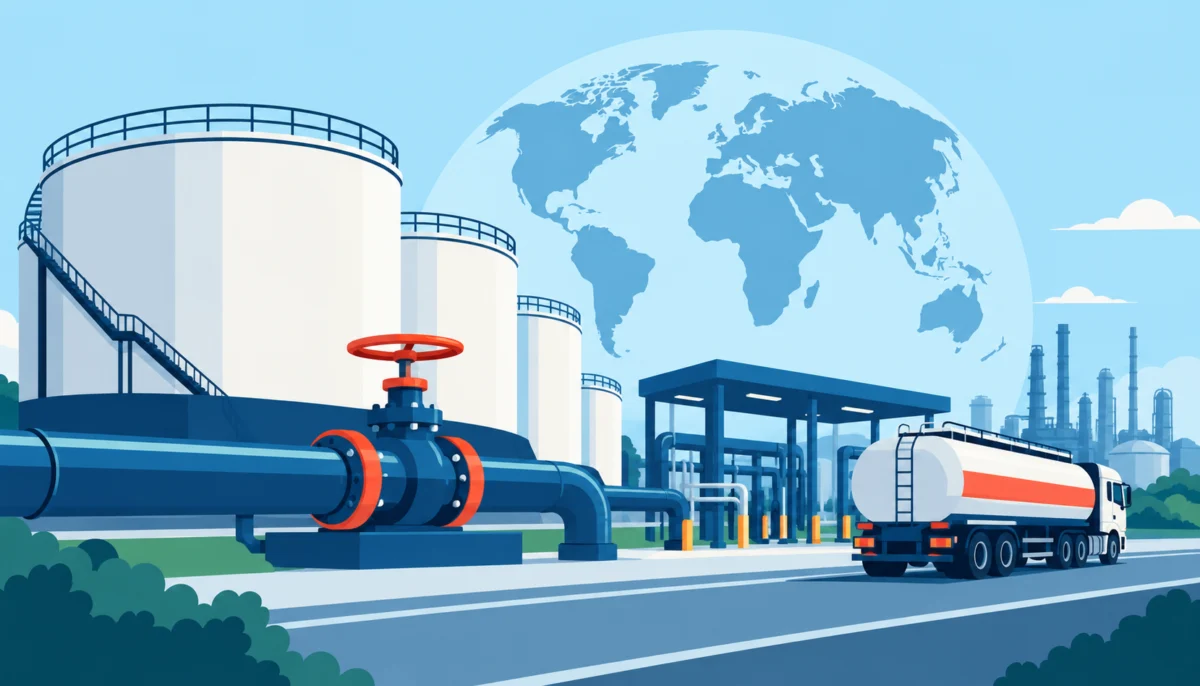
In a decisive move to stabilize global energy markets and mitigate acute fuel shortages, G7 leaders announced on October 2, 2026, a coordinated release of 100 million barrels of oil. Facilitated through the International Energy Agency (IEA), the initiative spans a four-month period. Notably, the plan prioritizes the immediate infusion of diesel and refined products, with a significant portion of these supplies slated for delivery within the first 20 days.
This strategic intervention arrives as governments grapple with the dual challenges of tightening refinery capacity and volatile international trade flows. While the headline figure of 100 million barrels is designed to capture market attention and temper price volatility, the actual impact on households and businesses remains contingent on the granular reality of logistics: what fuel reaches which market, and at what speed.
The Chronology of Intervention: From March Commitments to October Action
The October 2 announcement is not an isolated event but a continuation of a broader policy trajectory. The official G7 statement explicitly links the current release to commitments made in March 2026, following significant disruptions in the Middle East.
Key Milestones:
- March 11, 2026: The IEA announces a collective action to release 400 million barrels of oil to counter supply-side shocks.
- September 11, 2026: The IEA publishes its Oil Market Report, detailing a 95-million-barrel decline in global inventories during August and a critical shortfall in diesel exports from major producers.
- October 2, 2026: G7 leaders convene to authorize the new 100-million-barrel release, emphasizing a "diesel-first" strategy to address immediate bottlenecks.
- October 22, 2026 (Upcoming): Deadline for the IEA to submit a follow-up report detailing implementation progress and recommendations for the replenishment of strategic stocks.
The language used in the October statement suggests that this new volume is deeply integrated with previous, unfulfilled, or ongoing commitments. Analysts are currently urged to exercise caution; the headline number should not be interpreted as a simple "additive" to the March pledges. Instead, the market requires a rigorous "implementation account"—a transparent audit of what has been delivered, what remains in the pipeline, and how the specific classification of these shipments (crude versus refined product) impacts localized inventory levels.
Supporting Data: The Anatomy of Diesel Scarcity
The urgency behind the G7’s decision is rooted in a fundamental mismatch between crude availability and the availability of finished products. According to the IEA’s September report, the global energy system has been under severe strain.
The Refinement Gap
In August 2026, global refinery throughput hovered at 81.4 million barrels per day (mb/d), representing a shortfall of 4.2 mb/d compared to the previous year. Simultaneously, net diesel and gasoil exports from Russia and the Gulf region plummeted by 1.6 mb/d compared to February levels. This decline in throughput is the primary driver of the current "diesel premium"—a scenario where the price of refined products has decoupled from the price of underlying crude oil.
The Inventory Deficit
The depletion of global oil inventories by 95 million barrels in August created a dangerous buffer-thinning effect. When inventories are low, the market loses its "shock absorber" capability, making it hyper-sensitive to even minor logistical delays. The G7’s focus on diesel is a direct response to this: by releasing finished products rather than just raw crude, the coalition aims to bypass the "refining lag"—the time required for crude oil to be processed, transported, and converted into usable diesel for logistics and heating.
Official Responses and Policy Frameworks
The IEA’s emergency-response framework is predicated on the understanding that strategic stocks are not merely "oil in the ground" but a vital tool for economic continuity. By allowing member nations to fulfill commitments through a mix of crude and refined products, the agency provides a degree of flexibility.
However, the effectiveness of this framework is entirely dependent on the "last mile" of the energy supply chain. As noted by the IEA, infrastructure—such as pipelines, storage terminals, and trucking capacity—determines the speed of impact. G7 leaders have underscored the need for coordinated refinery maintenance and have explicitly called for the removal of export restrictions between member nations to ensure that fuel flows where it is needed most.
Implications for Businesses and Households
For the average consumer and corporate entity, the "success" of the release will be measured at the pump and the invoice. The link between global crude prices and local retail diesel prices is tenuous at best.
Procurement and Working Capital
For transport and logistics firms, lower fuel costs could provide a necessary reprieve for working capital. However, the benefit is not uniform.
- Margin Compression: Firms that utilize fuel surcharges may see their cash-flow requirements drop, but if they are contractually obligated to pass those savings immediately to customers, they will gain no net profit advantage.
- Inventory Risks: Businesses that stocked up on fuel at peak prices may find themselves holding "expensive inventory" as market prices drop, potentially impacting their balance sheets and credit ratios.
The "Quantity Risk"
Perhaps the most critical risk for businesses is not the price of diesel, but its availability. If a company secures a lower price but faces a delivery delay, the financial loss from operational downtime will far outweigh any savings on the fuel unit cost. Lenders are advised to evaluate borrowers not just on their fuel procurement costs, but on their supply chain resilience and the cost of maintaining backup fuel arrangements.
Fiscal and Monetary Consequences
The macro-economic fallout of the G7 decision presents a complex puzzle for governments and central banks.
Sovereign Fiscal Space
For energy-importing nations, sustained relief on fuel costs could alleviate the pressure on public budgets currently strained by subsidies or consumer price caps. However, this relief is conditional. Governments that have committed to fixed cash transfers or price-capping mechanisms may find that any "fiscal space" created by lower import bills is quickly consumed by the need to replenish strategic reserves.
Inflationary Transmission
Central banks remain wary. While lower fuel prices can reduce headline inflation, the persistence of these lower prices is uncertain. If the market perceives the G7 release as a temporary "band-aid" rather than a solution to structural refining shortages, energy prices may rebound as soon as the release period concludes. Therefore, monetary policy committees are unlikely to shift interest rate trajectories based on this announcement alone.
Strategic Guidance for Stakeholders
For Corporate Credit Analysts:
Do not rely on broad sector averages. Review the specific hedging arrangements and inventory turnover rates of the borrower. Test liquidity scenarios that account for "delayed delivery" even if the spot price is favorable. A business may have a lower replacement cost for its fuel, but it may still face a cash shortage if it is still paying off expensive debt incurred during the peak of the crisis.
For Sovereign Risk Assessment:
Evaluate the "replenishment obligation." A government that draws down its reserves to lower consumer prices today is effectively borrowing from its own future security. Analysts should monitor the fiscal cost of rebuilding these stocks in an environment where demand remains structurally high and supply chains remain fragile.
For Market Participants:
Distinguish clearly between crude benchmarks and product-specific shipments. The most actionable data will not come from the total "100 million barrel" headline, but from regional updates on refined product arrivals. Traders should focus on the "basis spread"—the difference between crude and diesel prices—as the true indicator of whether the G7 intervention is successfully easing the physical supply crunch.
Conclusion
The G7’s decision to release 100 million barrels is a significant policy signal intended to restore confidence and provide tactical relief to a stressed global energy market. However, the path from a government press release to a functional, lower-cost diesel market is fraught with logistical and economic variables.
The success of this intervention will be defined by the quality of its execution. If the diesel-first approach leads to timely replenishment of regional stocks and a easing of the refinery bottleneck, it will serve as a vital bridge to more stable times. If, however, the release is marred by distribution delays or offset by renewed geopolitical volatility, it may do little more than provide a temporary, fleeting respite. For businesses, governments, and investors, the mandate is clear: look past the headlines and monitor the physical movement of product to assess the true impact on balance sheets and national economies.