By Agnia Grigas
Published: October 7, 2026
Section: Politics & World Affairs
Introduction
With Russian provocations against NATO member states growing more frequent, the alliance urgently needs to develop a credible doctrine of punitive deterrence to guide its response to acts of aggression that fall below the threshold of conventional war. For decades, the North Atlantic Treaty Organization has anchored its strategic posture on the principles of collective territorial defense, famously enshrined in Article 5 of the Washington Treaty. However, the security landscape of the mid-2020s has fundamentally shifted.
The Kremlin no longer limits its hostile actions to conventional battlefields or overt military invasions. Instead, Moscow increasingly relies on a persistent campaign of hybrid warfare—testing alliance resilience through airspace violations, cyberattacks, maritime sabotage, and instrumentalized migration. In this gray-zone environment, mere territorial defense is no longer enough. By reacting defensively to each individual provocation without imposing tangible costs on the aggressor, NATO inadvertently invites further probing, risking a catastrophic miscalculation that could draw the alliance into a direct, large-scale conflict.
Main Facts
The urgency of this strategic pivot was thrown into sharp relief during a volatile ten-day period in September 2026, which underscored the porous nature of NATO’s eastern flank and the escalating tempo of Russian provocations.
- The Lithuanian Border Incident: On September 16, 2026, NATO fighter jets stationed in the Baltic region scrambled to intercept and subsequently shot down an unmanned aerial vehicle (UAV). The drone had originated from Belarusian territory—acting as a proxy and staging ground for Moscow—and deeply penetrated Lithuanian airspace. The interception marked a dramatic escalation, transforming abstract warnings about potential border spillovers into kinetic reality.
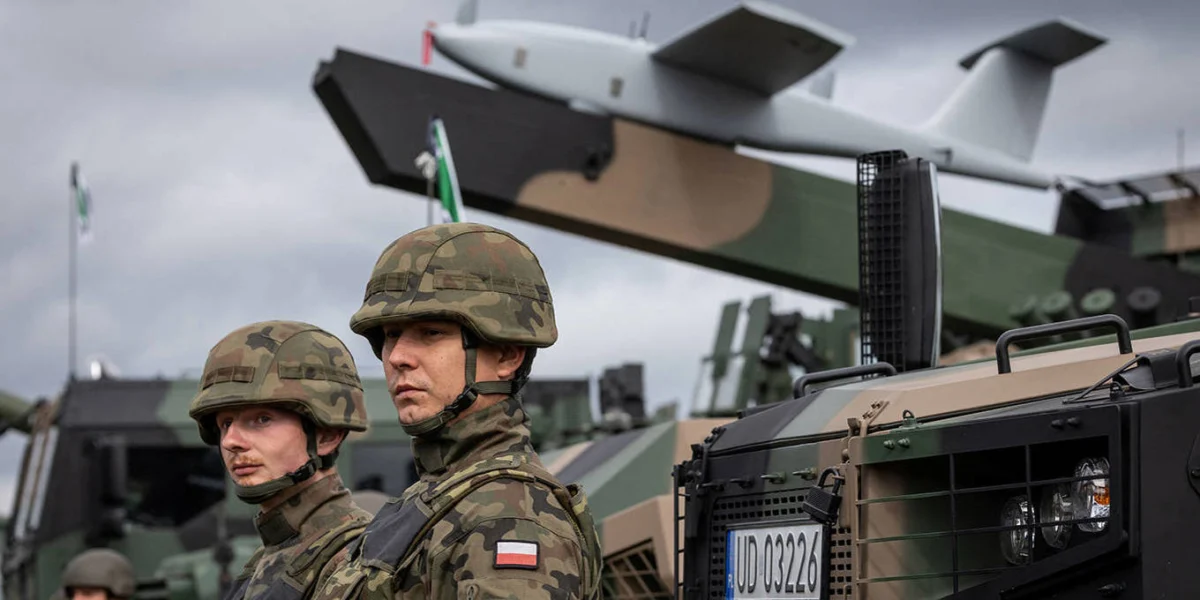
- The Polish Incursion: Just one week later, on September 23, 2026, a Russian military helicopter operating out of the heavily militarized exclave of Kaliningrad briefly breached Polish airspace. While the intrusion lasted only a matter of minutes, it served as a deliberate probe of Warsaw’s air defense reaction times and radar tracking capabilities.
- The Gray-Zone Continuum: These aerial breaches do not occur in a vacuum. They are part of a broader, well-documented catalogue of security incidents that includes GPS jamming in the Baltic Sea, suspected sabotage of critical undersea data cables, and cyberattacks targeting critical infrastructure across Central and Eastern Europe. As Russia’s protracted war of aggression against Ukraine grinds onward, the friction along NATO’s borders is growing steadily more ominous, proving that the Kremlin views the boundary between war and peace as highly permeable.
Chronology of Escalation: The Road to the 2026 Border Breaches
To understand the gravity of the September 2026 incidents, one must examine the steady accumulation of gray-zone provocations that preceded them over the preceding years. The Kremlin’s incremental testing of NATO’s resolve has followed a carefully calibrated trajectory:
-
2022–2023: The Initial Spillover Phase
Following the full-scale invasion of Ukraine in February 2022, stray munitions occasionally crossed into NATO territory. Most notably, a stray Ukrainian air defense missile landed in Polish borderlands in November 2022, killing two civilians. While tragic, this was recognized as an accidental byproduct of active combat. However, Russia simultaneously began stepping up electronic warfare, resulting in widespread GPS jamming that disrupted commercial aviation across the Baltic states and the Black Sea region. -
2024: Hybrid Operations Intensify
By 2024, the nature of provocations shifted from accidental to intentional probing. Estonia reported multiple instances of Russian border guards removing navigational buoys placed on the Narva River. Concurrently, European intelligence agencies uncovered a series of orchestrated arson attacks and physical sabotage operations across Poland, the Baltic states, and Germany, linked directly to Russian military intelligence (GRU) operatives employing local criminal proxies. -
2025: Maritime Sabotage and Cyber Escalation
The vulnerability of critical subsea infrastructure came to the forefront in 2025 as several undersea communication cables and energy pipelines in the Baltic Sea suffered unexplained disruptions. While Moscow maintained plausible deniability, maritime tracking data revealed suspicious movements of Russian "research vessels" and shadow-fleet tankers lingering near the affected sites. Cyberattacks against energy grids and government ministries in frontline NATO states became a near-daily occurrence. -
September 2026: Direct Kinetic Probes
The culmination of this incremental pressure arrived in September 2026. The downing of the drone over Lithuania on September 16 and the Kaliningrad helicopter incursion into Poland on September 23 represented a qualitative leap: direct, physical violations of NATO sovereign airspace by Russian-controlled assets within a matter of days. These events signaled that Moscow was no longer content with sub-threshold cyber and maritime harassment, but was actively testing alliance reaction chains in the physical skies of Central and Eastern Europe.
Supporting Data: The Scale of Russian Probing
Quantifying the rise in Russian hostile activity reveals a systemic campaign designed to wear down Western political will and strain military resources.
- Airspace Interceptions: According to internal NATO defense estimates, air policing scrambles along the eastern flank have increased by over 40% since the escalation of the war in Ukraine. In the Baltic region alone, NATO fighter jets have intercepted hundreds of Russian military aircraft flying without transponders, failing to file flight plans, or maintaining radio silence near allied airspace.
- Electronic Warfare: Commercial aviation authorities in Northern and Eastern Europe have registered thousands of GPS-spoofing and jamming incidents originating from Kaliningrad, the Kola Peninsula, and western Russia. These disruptions have severely impacted civilian flight paths, forcing airlines to rely on legacy navigation systems and increasing operational risks.
- Critical Infrastructure Vulnerabilities: The Baltic Sea—often dubbed a "NATO lake" following the accession of Finland and Sweden—has become a primary theater for sub-threshold competition. Over 80% of regional data traffic and vital energy interconnections transit through these waters, making them prime targets for gray-zone disruption by Russia’s Main Directorate of Deep-Sea Research (GUGI).
Official Responses
The dual airspace violations in September 2026 provoked immediate diplomatic and military reactions from the affected capitals and NATO headquarters in Brussels, though they also highlighted lingering divisions over how forcefully to respond.
- Vilnius and Warsaw Take a Firm Stand: Lithuanian defense officials commended the rapid response of air policing units in neutralizing the Belarusian-launched drone, emphasizing that national sovereignty is non-negotiable. Polish authorities, speaking in the wake of the Kaliningrad helicopter breach, reiterated that Poland’s armed forces remain on heightened alert and are fully prepared to defend every inch of national territory. Warsaw called for an extraordinary consultation under NATO Article 4 to address the deteriorating security environment on the eastern border.
- NATO’s Official Stance: Speaking from Brussels, NATO leadership condemned the airspace incursions as "irresponsible and dangerous." The alliance underscored its unwavering commitment to collective defense, pointing to the ongoing reinforcement of the multinational battlegroups stationed along the eastern flank. However, while alliance spokespersons reiterated that Article 5 remains a formidable deterrent against a full-scale conventional invasion, they stopped short of announcing a new punitive framework for sub-threshold provocations.
- The Strategic Vacuum: This diplomatic caution exposes a critical vulnerability. Current alliance procedures are heavily skewed toward defensive reactions—scrambling jets, issuing diplomatic demarches, and registering formal protests. There is currently no pre-agreed, automatic, or proportional system of punitive costs—such as synchronized economic sanctions, targeted cyber-retaliation, or the reinforcement of maritime blockades—specifically tailored to punish low-level gray-zone aggression.
Implications: Why NATO Needs a Doctrine of Punitive Deterrence
The central argument advanced by security analysts is that deterrence by denial alone—fortifying borders, deploying air defenses, and preparing to repel a massive invasion—is fundamentally insufficient against an adversary waging total hybrid warfare.
1. The Failure of Gradual Escalation Management
By treating each drone incursion, GPS-jamming campaign, or cable severance as an isolated incident, NATO falls into a reactive posture. Moscow calculates that the West’s fear of escalation will prevent it from responding decisively to actions that individually do not cross the threshold of Article 5. This salami-slice strategy allows Russia to gradually rewrite the rules of engagement, normalizing aggressive behavior in peacetime.
2. Defining Punitive Deterrence
To restore strategic stability, NATO must formulate and adopt a credible doctrine of punitive deterrence. Unlike defensive deterrence, which focuses on making an attack too costly to succeed while it is happening, punitive deterrence focuses on ensuring that any hostile act—regardless of its scale—will trigger swift, severe, and predictable retaliatory costs imposed by the alliance as a whole.
A robust punitive deterrence doctrine would establish clear red lines and pre-calibrated responses:
- Asymmetric Retaliation: Proving that gray-zone attacks on infrastructure can be met with devastating cyber or economic counter-measures.
- Collective Enforcement: Ensuring that a provocation against one member (such as Lithuania or Poland) is treated as an attack on the deterrence threshold of the entire alliance, triggering immediate, coordinated diplomatic and economic penalties rather than isolated national responses.
- Denial of Safe Havens: Holding Belarus and other enablers fully accountable as co-belligerents in cross-border hybrid operations.
3. Preventing a Major War through Strength
Paradoxically, critics of a harsher posture often warn that adopting punitive measures risks escalating tensions. However, history demonstrates the opposite: unchecked aggression breeds miscalculation. When authoritarian regimes believe they can probe Western borders with absolute impunity, their appetite for risk expands. By signaling clear, painful, and unavoidable consequences for sub-threshold provocations, NATO can disabuse the Kremlin of the notion that it can wage a perpetual shadow war without paying a heavy price.
Conclusion
The events of September 2026 in Vilnius and Warsaw serve as a stark wake-up call. The security perimeter of the Euro-Atlantic area is under daily assault, not necessarily by marching armies, but by the creeping normalization of hostile gray-zone tactics. If NATO is to successfully navigate this dangerous new era, it must look beyond traditional territorial defense. Crafting and implementing a credible doctrine of punitive deterrence is no longer an optional luxury for the alliance—it is an absolute strategic necessity to preserve peace, protect sovereignty, and deter future aggression before it spirals out of control.