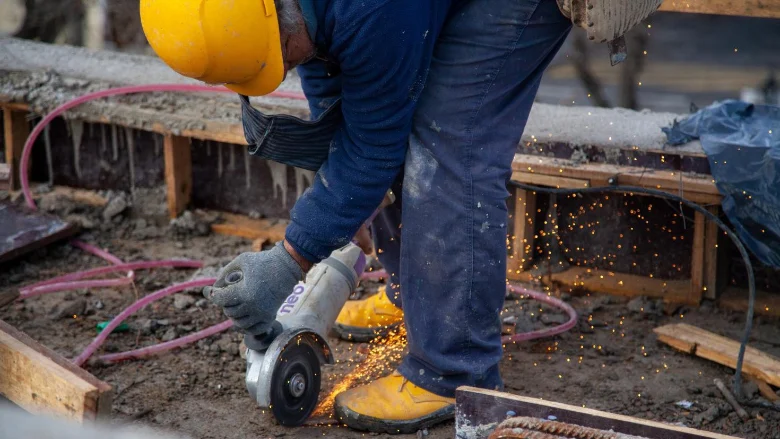
In the high-stakes world of industrial safety, the steel-toed boot remains a ubiquitous symbol of worker protection. For decades, specifying protective footwear has been a straightforward, albeit dangerously narrow, exercise: check the box for a safety toe, verify compliance, and hand them out to the workforce.
Yet, safety professionals and industrial hygienists are increasingly recognizing that stopping the evaluation at the toe cap is a recipe for catastrophic failure. While a reinforced toe cap expertly mitigates the risk of a falling or rolling wrench, it offers zero defense against a rusted nail piercing the sole, a corrosive chemical eating through the upper leather, a volatile static discharge in a sensitive manufacturing cleanroom, or a slick, greasy floor waiting to cause a debilitating slip.
OSHA’s foot-protection mandates—enshrined under 29 CFR 1910.136—are fundamentally hazard-based. They dictate that protective footwear must be worn wherever workers face hazards from falling or rolling objects, objects piercing the sole, or electrical hazards that cannot be engineered away. Consequently, the most critical question an employer can ask is no longer, "Which safety shoe should we buy?" but rather, "What hazards can actually injure our workers’ feet during the execution of their daily tasks?"
Main Facts: The Anatomy of Modern Foot Protection
To build an effective foot-protection program, safety managers must break down protective footwear into its component parts, matching specific engineering features to documented workplace risks.
At its core, industrial footwear engineering addresses several distinct exposure categories governed by stringent consensus standards, primarily those established by ASTM International.
- Impact and Compression (ASTM F2413-24): Impact protection shields the foot from dropping objects, while compression protection guards against rolling or pressing forces—such as heavy steel pipes, dynamic material-handling equipment, or shifting industrial loads. Crucially, steel is no longer the default option. While steel toes remain durable and thin, composite toe caps (made of materials like carbon fiber, fiberglass, or Kevlar) provide identical performance standards while introducing non-conductive, non-magnetic properties. This makes composites indispensable in environments with metal detectors, high electrical voltages, or extreme ambient temperatures where metal toe caps would conduct heat or cold.
- Puncture Resistance: A robust toe cap is utterly useless if a worker steps on a jagged piece of scrap metal, a stray screw, or a rusty nail. Construction, demolition, waste recycling, and heavy manufacturing expose soles to severe penetration hazards. Protective midsoles—crafted from flexible steel plates or puncture-resistant nonmetallic woven textiles—are essential in these environments.
- Slip Resistance (ASTM F3445-24): Traction is entirely contextual. A specialized polyurethane sole that grips a dry warehouse floor brilliantly can hydroplane or lose traction instantly on wet concrete, chicken-processing floors slick with animal fats, or oily machine shops. The ASTM F3445-24 standard utilizes the ASTM F2913 whole-shoe test method to evaluate slip resistance, but safety professionals must always cross-reference laboratory ratings with real-world contaminants.
- Electrical and Static-Control Classifications: Conflating electrical hazard (EH) footwear with static-dissipative (SD) or conductive (CD) footwear is a dangerous error. EH boots are engineered with non-conductive soles and heels to provide a secondary source of protection against accidental contact with live electrical circuits. Conversely, static-dissipative footwear is designed to safely channel static electricity to the ground to protect sensitive electronic components or mitigate the ignition risks of flammable vapors. They are distinct, non-interchangeable categories under ASTM F2413-24.
- Environmental and Ergonomic Realities: Boots must withstand environmental extremes—from standing water and corrosive chemical washdowns to freezing cold storage facilities and blistering foundries. Furthermore, wearer comfort and physiological burden are vital. Heavy, non-breathable boots trap heat and moisture, compounding worker fatigue and elevating the physiological heat stress burden, particularly during strenuous shifts in hot environments.
Chronology: The Evolution of Industrial Footwear Standards
The modern approach to foot protection did not materialize overnight. It is the result of decades of industrial evolution, data collection, and regulatory refinement.
- Pre-1970s (The Industrial Era Baseline): Foot protection was largely rudimentary. Heavy leather work boots with makeshift steel inserts were common, but performance standards were fragmented, leaving workers largely at the mercy of individual manufacturer claims.
- 1971 (The Birth of OSHA): The Occupational Safety and Health Act codified the general requirement for employers to provide safe working conditions, eventually leading to specific standards under 29 CFR 1910.136 that mandated personal protective equipment (PPE) based on hazard assessments.
- Late 20th Century (Consolidation of Standards): The American National Standards Institute (ANSI) developed early baseline standards for protective footwear (such as ANSI Z41), establishing rigorous testing protocols for impact, compression, and electrical hazards.
- 2005 (The Transition to ASTM): Responsibility for the primary protective footwear standard transitioned from ANSI to ASTM International, resulting in the introduction of ASTM F2413. This shift streamlined testing metrics and incorporated evolving material sciences, such as advanced composite toe caps.
- Modern Era (Granular, Hazard-Specific Standards): Recognizing that slip-and-fall injuries represent a massive percentage of industrial worker compensation claims, ASTM introduced specialized protocols like ASTM F3445-24. This move fundamentally shifted the industry toward testing whole shoes against specific workplace contaminants rather than relying on generic "slip-resistant" marketing labels.
Supporting Data: The Hidden Costs of Poor Footwear Specification
While manufacturers publish reams of technical specifications, real-world data demonstrates why meticulous hazard matching is essential.
According to safety audits and industrial ergonomic studies:
- Slips, Trips, and Falls: Slips, trips, and falls account for roughly 25% of all reported workplace injuries annually, costing employers billions in direct workers’ compensation claims, lost productivity, and legal liabilities. Generic slip-resistant labels frequently fail when exposed to niche industrial contaminants like industrial lubricants, biological fats, or fine powders.
- Heat Stress Multiplication: The National Institute for Occupational Safety and Health (NIOSH) notes that heavy, insulated, or waterproof PPE significantly increases metabolic heat stress. When boots fail to breathe or trap moisture, worker fatigue accelerates by an estimated 15% to 20%, directly correlating with a higher incidence of human error, near-misses, and acute injuries.
- Compliance and Discomfort Failures: Workplace surveys consistently indicate that up to 30% of workers admit to intentionally modifying, loosening, or wearing compromised protective footwear simply because poorly fitting boots cause blisters, plantar fasciitis, and chronic lower-back pain. When discomfort drives non-compliance, the engineered safety features of the boot become entirely theoretical.
Official Responses and Regulatory Guidance
Regulatory bodies and safety agencies have progressively tightened their guidance to combat superficial compliance.
The Occupational Safety and Health Administration (OSHA) maintains strict enforcement regarding hazard assessments. Through its non-mandatory compliance guidelines for PPE selection, OSHA explicitly mandates that employers must conduct a walk-through survey of operations to pinpoint sources of foot hazards. If hazards are present, the employer must select footwear that specifically addresses those conditions—a mandate that prohibits a one-size-fits-all purchasing model.
Similarly, NIOSH emphasizes that safety gear must be evaluated through a holistic ergonomic lens. Official agency communications warn that safety managers must balance protection with physiological load. For example, in shipyard cleaning operations—frequently cited in OSHA case studies—workers face simultaneous hazards: hot water, steam, wet walking surfaces, corrosive chemical splashes, and heavy falling debris. OSHA guidance dictates that standard rubber boots are insufficient if they lack chemical-resistant polymers or adequate puncture-resistant midsoles.
Industry standards organizations echo these rigorous expectations. The evolution of ASTM F2413-24 and ASTM F3445-24 underscores a collective industry movement away from broad generalizations. Regulators and standard-makers now demand that safety professionals prove their footwear selections are validated by data reflecting actual workplace contaminants, flooring substrates, and electrical profiles.
Implications for Safety Professionals and Industrial Operations
The paradigm shift from checking a box to conducting deep, granular hazard assessments carries profound implications for safety management teams.
1. The Death of the "One-Size-Fits-All" Uniform Policy
Many organizations buy a single model of steel-toed boot in bulk and distribute it across every department. A thorough hazard assessment invariably shatters this practice. It reveals that a maintenance technician crawling through wiring raceways, a warehouse picker sprinting across polished concrete, and a chemical processing operator handling corrosive acids operate in entirely different risk universes. Departmental segmentation of footwear is no longer a luxury; it is a necessity.
2. Moving Beyond the Shoe Box Label
Safety managers must train procurement teams to look past marketing buzzwords. Terms like "non-slip," "heavy-duty," or "industrial-grade" hold no legal or regulatory weight unless backed by specific ASTM certifications that match the physical reality of the floor surface.
3. Incorporating Worker Trials and Ergonomic Fit
Fit is an active component of safety engineering. If a boot causes severe arch fatigue or fails to accommodate a worker’s foot shape, the worker will suffer. Procurement protocols must incorporate mandatory fitting trials, allowing employees to test footwear for toe-box volume, heel retention, sole flexibility, and overall weight over a multi-day trial period. Comfortable workers are compliant workers.
4. Integrating Footwear into the Broader Hierarchy of Controls
Finally, footwear must never be viewed as a standalone fix. It represents the final line of defense in the industrial safety hierarchy. Engineering controls (such as non-slip flooring matrices, spill containment systems, and machine guards) and administrative controls (such as strict housekeeping protocols) must work in tandem with the specified footwear.
Conclusion
The steel toe will always retain its foundational place in industrial safety. But treating it as the alpha and omega of foot protection exposes workers to hidden hazards lurking above, beneath, and around them.
By starting with a rigorous, worksite-specific hazard assessment—analyzing impact, compression, punctures, slip vectors, electrical profiles, and environmental extremes—safety professionals can transform protective footwear from a compliance checkbox into a sophisticated, highly targeted line of defense. The most effective safety shoe is never the one with the most impressive marketing claims printed on the side of the box; it is the one meticulously engineered to match the exact hazards of the job.