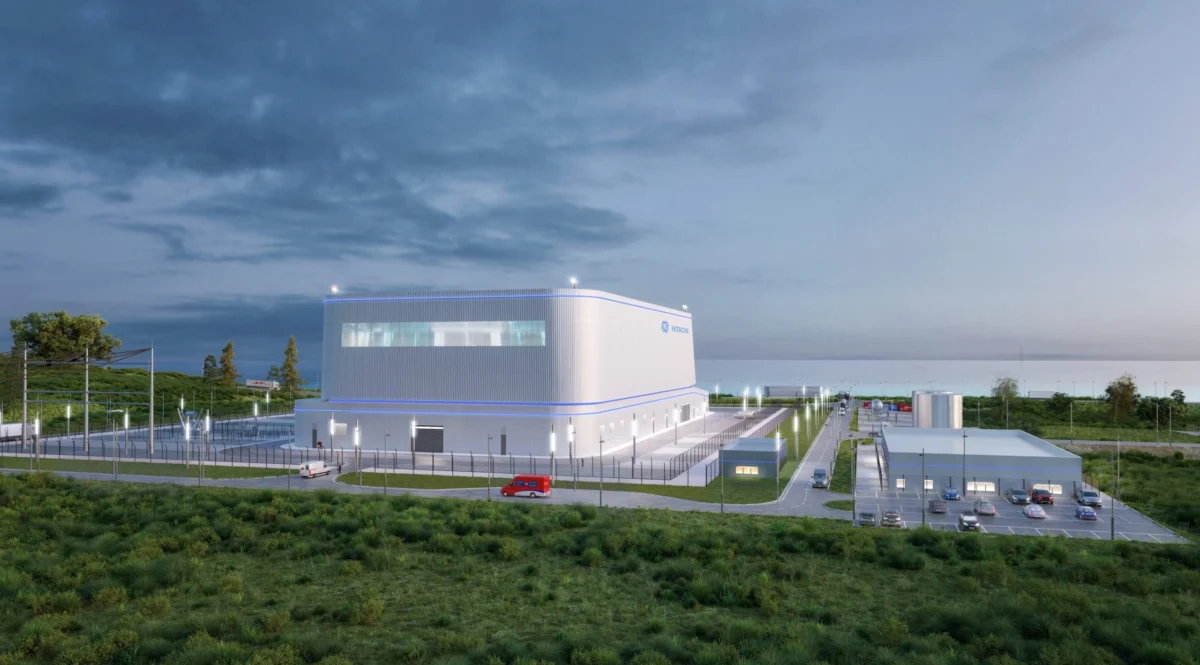
In a pivotal development for the American energy landscape, the Tennessee Valley Authority (TVA) has cleared a significant regulatory hurdle, receiving a construction permit from the U.S. Nuclear Regulatory Commission (NRC) for the Clinch River Nuclear Site. This authorization paves the way for the deployment of a 300-megawatt (MW) GE Vernova Hitachi BWRX-300 small modular reactor (SMR), marking a sophisticated shift in how the nation approaches carbon-free baseload power.
The approval, granted earlier than industry analysts had projected, represents more than just a single power plant; it serves as a proof-of-concept for the next generation of nuclear technology. As the U.S. grapples with a surging demand for electricity driven by the proliferation of energy-intensive data centers and artificial intelligence, the TVA’s success in navigating the NRC’s rigorous licensing process provides a blueprint for utility-scale deployment of advanced reactors.
The Core Facts: What the NRC Approval Means
The NRC’s decision to issue the construction permit is a watershed moment for the nuclear industry. By authorizing the construction of the BWRX-300—a small, boiling-water modular reactor—the commission has signaled its readiness to support non-traditional, scalable nuclear designs.
Located near the Oak Ridge National Laboratory, a facility steeped in the history of nuclear research, the Clinch River project is positioned to leverage decades of regional expertise. The BWRX-300 is specifically engineered to be smaller and more flexible than traditional gigawatt-scale reactors. Its modular design allows for components to be fabricated in controlled factory environments and transported to the site for assembly, significantly reducing the complexity and time typically associated with large-scale nuclear construction.
For TVA, this permit is the culmination of years of rigorous environmental and safety assessments. It validates the utility’s strategy to diversify its energy portfolio, aiming to provide reliable, dispatchable power that complements its existing hydroelectric, solar, and conventional nuclear assets.
A Chronology of Progress
The path to this week’s regulatory win was paved by methodical, multi-year preparation:
- Pre-Application Planning: Long before the formal submission, TVA engaged in extensive dialogue with the NRC to define the safety and design parameters for SMRs.
- The Formal Submission (May 2025): TVA officially submitted its construction permit application for the Clinch River site. At the time, industry experts noted the historical significance of the filing, as it was the first time a U.S. utility had sought such a permit for this specific class of reactor technology.
- Regulatory Review: The NRC’s evaluation process involved a deep dive into the BWRX-300 design, seismic and geological stability of the Oak Ridge site, and emergency preparedness protocols. The fact that the NRC completed its evaluation ahead of schedule is being hailed as a sign of improved regulatory efficiency.
- The Permit Issuance (Current Week): The NRC officially granted the permit, making TVA the first utility in the nation authorized to build the BWRX-300 and the second overall to receive a permit for an advanced reactor in the U.S.
Supporting Data: Why SMRs are the Future
The move toward SMRs is not merely a preference for scale; it is a response to the shifting economics of the power grid. Traditional nuclear reactors often face "megaproject" risks—massive capital outlays, multi-decade construction timelines, and significant interest rate exposure.
The Modular Advantage
- Capacity: Each unit produces approximately 300 MW, enough to power roughly 200,000 homes.
- Scalability: The Clinch River site is geographically configured to support up to four reactors, providing a potential total capacity of 1,200 MW.
- Factory Fabrication: By moving the bulk of construction into a factory setting, developers can achieve economies of scale and higher quality control, effectively "de-risking" the construction phase.
Meeting the "AI Load"
The surge in demand from hyper-scale data centers—which require 24/7, carbon-free energy to function—has fundamentally altered the utility landscape. Unlike wind or solar, which are intermittent, nuclear SMRs provide the high-capacity factor necessary to keep critical infrastructure running without interruption. The Clinch River site is being viewed as a potential "energy hub," where SMRs can provide the steady, firm power that hyperscalers and industrial manufacturers increasingly demand.
Official Responses and Strategic Negotiations
Despite the excitement surrounding the permit, TVA leadership remains pragmatic. Scott Hunnewell, vice president of TVA’s New Nuclear Program, has been a key figure in the project, emphasizing that while the regulatory milestone is achieved, the project remains in the development phase.
The Cost-Sharing Conundrum
One of the most sensitive aspects of the project is its financial structure. TVA has explicitly stated it is currently engaged in complex negotiations with industry partners to establish a robust cost-sharing plan. The utility’s stated goal is to shield its ratepayers from the full burden of initial capital expenditures. This "first-of-a-kind" (FOAK) cost barrier is the primary hurdle for all advanced nuclear projects. By seeking private-sector partnerships, TVA aims to distribute financial risk, making the project viable without necessitating rate hikes for Tennessee Valley customers.

Regulatory Predictability
The NRC’s performance in this case is being lauded as a "licensing model." By completing the review ahead of schedule, the commission has demonstrated that it can provide the predictability that private investors and utilities require to commit billions of dollars to energy infrastructure. This sets a precedent for other utilities currently eyeing SMR technology as a way to replace retiring coal-fired power plants.
Implications: A National Energy Pivot
The implications of the Clinch River permit extend far beyond Tennessee.
1. The Domestic Supply Chain
The construction of the BWRX-300 will necessitate a localized supply chain. From the specialized steel and concrete required for the containment structures to the digital instrumentation and control systems, the project is expected to catalyze regional manufacturing growth. If successful, this could spark a revival in domestic nuclear manufacturing, reducing the nation’s reliance on foreign components.
2. A Blueprint for Other Utilities
Other major U.S. utilities are watching the Clinch River project with keen interest. The ability to point to an active, NRC-approved construction permit reduces the perceived "regulatory risk" for other companies looking to invest in SMRs. If the project progresses on its 2032 operational timeline, it could trigger a wave of similar applications across the Midwest and Pacific Northwest, where coal plant retirements are accelerating.
3. Decarbonization vs. Reliability
The energy sector is currently caught in a transition where decarbonization targets are colliding with an urgent need for grid stability. The Clinch River SMR project represents the "Goldilocks" solution: it offers the low-carbon benefits of renewables with the reliability of traditional fossil fuel plants. By utilizing existing site footprints, the project also minimizes land-use disputes, a growing friction point for massive solar and wind farms.
The Road Ahead: Challenges and Uncertainty
While the permit is a massive victory, the project is not without its risks. The timeline to 2032 is ambitious. The nuclear industry has historically struggled with construction delays, and as this is the first deployment of the BWRX-300 at this scale in the U.S., there is always the potential for unforeseen technical or supply-chain challenges.
Furthermore, public perception of nuclear power remains a dynamic factor. While the climate benefits of nuclear are increasingly recognized by policymakers, maintaining community support for the construction of a new reactor in Oak Ridge will require ongoing transparency from TVA regarding safety protocols, waste management, and the economic benefits to the local workforce.
Conclusion: The Dawn of the SMR Era
The issuance of the construction permit for the Clinch River Unit 1 is more than a administrative victory; it is a technological turning point. By proving that the NRC can efficiently license advanced modular designs, TVA has opened a door that many thought would remain closed for decades.
As the project moves from the planning phase to the reality of the construction site, the eyes of the global energy community will be fixed on Tennessee. If the BWRX-300 can be built on time and on budget, it will not only solidify TVA’s position as a leader in clean energy but will also provide a replicable, scalable solution for a nation in desperate need of reliable, carbon-free power. The race to the future of energy is officially on, and with this permit, the Tennessee Valley Authority has just taken the lead.