By Damian Brett (Enriched & Expanded Edition)
Global Logistics & E-Commerce Desk
Main Facts
Amazon Global Logistics (AGL) has officially expanded its transpacific airfreight capabilities, introducing two distinct service options tailored specifically for merchants operating along the vital China-to-United States trade lane. The newly launched services—Air SMP and Economy Air—are engineered to give third-party sellers and enterprise brands greater flexibility, accelerated replenishment schedules, enhanced placement precision, and more competitive pricing models.
The introduction of these offerings comes at a critical juncture for cross-border e-commerce. As supply chains face persistent macroeconomic volatility, shifting consumer expectations, and recurring port congestion, brands increasingly require agile alternatives to traditional ocean freight without incurring the prohibitive costs typically associated with standard, premium express air cargo.
By strategically splitting inventory at origin hubs in Asia and leveraging targeted destination entry points across the United States, Amazon is effectively tightening the operational feedback loop between manufacturers overseas and consumer doorsteps domestically.
Chronology of Supply Chain Evolution
To understand the strategic significance of the Air SMP and Economy Air rollouts, it is necessary to examine Amazon’s aggressive, multi-tiered structural overhaul of its global supply chain network over the past year:
- May 2026: Signaling a deeper push into comprehensive enterprise logistics, Amazon launched Amazon Supply Chain Services (ASCS). This third-party logistics (3PL) offering consolidated a wide array of standalone capabilities—encompassing international freight forwarding, regional distribution, automated fulfillment, and end-to-end parcel shipping—into a single, cohesive operating framework.
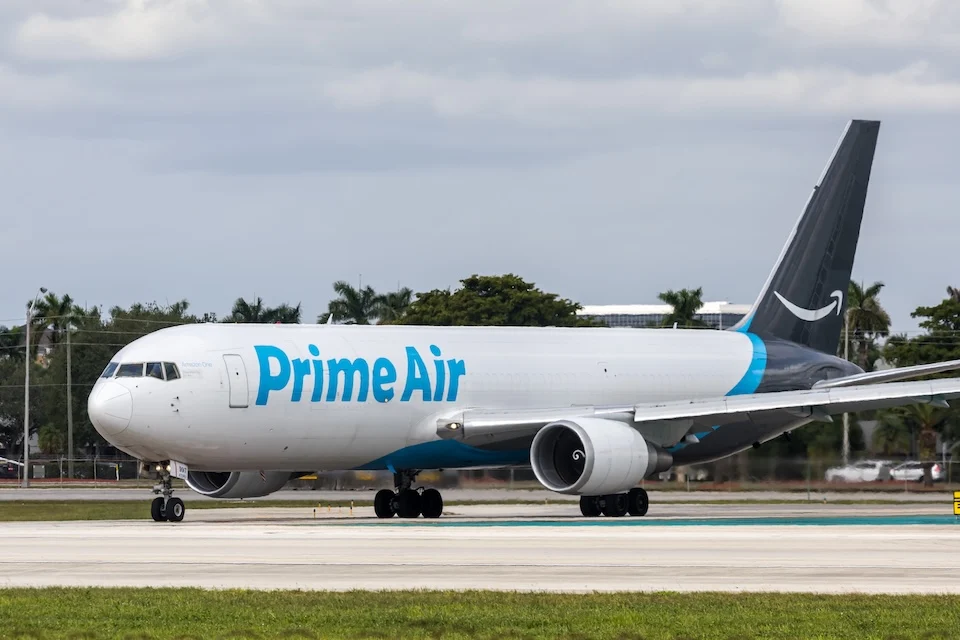
- Summer 2026: In a massive internal reorganization designed to eliminate institutional friction, Amazon reunited its proprietary Amazon Air flight operations with its domestic ground transportation and sort center teams. Leadership of this unified juggernaut was handed to industry veteran Raoul Sreenivasan. The consolidation was designed to fast-track decision-making, optimize network planning, and create a frictionless, single-pipeline journey for every package traversing the Amazon ecosystem.
- September 2026: Building directly upon the structural efficiencies realized by Sreenivasan’s unified team, Amazon Global Logistics formally debuted the Air SMP and Economy Air programs. These products leverage the newly integrated air-ground networks to provide specialized routing, cost optimization, and expedited customs clearance between major manufacturing hubs in China and major consumer markets in the US.
Supporting Data and Service Mechanics
The two new service options have been meticulously designed to address specific logistical bottlenecks that brands encounter when balancing inventory costs against delivery timelines.
1. Air SMP: Precision Placement and Speed
The Air SMP service is built for maximum speed and control, targeting time-sensitive inventory replenishment:

- Transit Timeline: Shipments move from origin pickup to final destination within an estimated seven to 10 calendar days.
- Flight Frequency: Backed by daily scheduled flights operating out of key export gateways in Shanghai and Hong Kong.
- Inventory Distribution: Customers can split their inventory at the point of origin, bypassing centralized sorting delays by shipping air freight directly to a locked fulfillment center within each of Amazon’s five designated US operational regions.
- Fee Structure: To incentivize adoption, Amazon has eliminated Fulfilment by Amazon (FBA) inbound placement service fees for this tier. Furthermore, the company has waived all additional surcharges typically levied on specialized commodities such as apparel, electronics, and lithium-battery-powered products.
2. Economy Air: Cost-Effective Transpacific Lift
For brands seeking a middle-ground solution that undercuts standard airfreight pricing while drastically outperforming maritime shipping, Economy Air fills a crucial gap:
- Transit Timeline: Offers an estimated 11-to-15-day transit window.
- Routing: Operates outbound from major southern and eastern manufacturing corridors in Shanghai and Shenzhen, terminating at the crucial logistics nexus of Los Angeles.
- Value Proposition: As Amazon noted in its rollout brief, the service delivers "air-speed replenishment that outpaces ocean freight by weeks, at rates lower than standard Amazon Global Logistics Air."
Both offerings are explicitly positioned as emergency recovery and peak-season stabilization tools. Whether brands are scrambling to recover from unexpected stockouts, racing against the clock for major product launches, or prepping inventory ahead of the high-volume holiday shopping period, Air SMP and Economy Air provide robust alternatives when maritime transit proves too sluggish.
Official Responses and Strategic Vision
Amazon’s leadership has framed the introduction of Air SMP and Economy Air not merely as new shipping lanes, but as foundational pillars of a fully integrated global trade ecosystem.
When Raoul Sreenivasan took the helm of the unified Amazon Air and ground logistics divisions earlier this year, the company emphasized that breaking down internal silos was paramount. By merging air assets with ground transport and sort centers, Amazon eliminated the traditional handoff friction that often plagues traditional freight forwarders.
An Amazon Global Logistics spokesperson elaborated on the strategic intent behind the September expansion:
"Modern e-commerce supply chains cannot afford the rigid, fragmented approaches of the past. By introducing Air SMP and Economy Air, we are giving our sellers the surgical precision they need to manage inventory placement at the origin level, while simultaneously driving down costs across high-value categories like electronics and apparel. Whether navigating the high-stakes crunch of peak season or executing a tightly choreographed product drop, our merchants now possess a seamless, end-to-end logistical advantage that bridges continents in days rather than months."
Industry analysts have similarly praised the move, noting that by waiving FBA placement fees on Air SMP, Amazon is aggressively encouraging third-party merchants to rely deeper on its proprietary ecosystem rather than turning to legacy freight forwarders or competing 3PL providers.

Implications for the Global Freight and E-Commerce Landscape
The launch of Amazon’s dual-air service offerings carries profound implications for the broader freight forwarding, air cargo, and retail logistics sectors:
Compression of Traditional Freight Forwarding Margins
Traditional freight forwarders have long relied on the complexity of customs clearance, multi-modal handoffs, and third-party warehousing to generate revenue. By offering a streamlined, direct-to-fulfillment-center model (Air SMP) with waived placement fees, Amazon is exerting severe pricing and service pressure on legacy forwarders operating on the transpacific lane. Sellers are increasingly likely to bypass traditional brokers in favor of Amazon’s closed-loop visibility.
Reshaping Peak Season Readiness
Historically, supply chain managers faced a binary choice ahead of the retail peak season: gamble on high-cost, standard air freight to guarantee shelf-space, or commit weeks in advance to unpredictable ocean liners. Economy Air introduces a hybrid economic model. By capping transit times at roughly two weeks from Shenzhen and Shanghai to Los Angeles at rates below standard airfreight, brands can dynamically react to real-time consumer demand trends mid-season without completely eroding their profit margins.
The Rise of Regionalized Inventory Balancing
The ability to split inventory at origin and direct it to locked fulfillment centers across all five US regions transforms how brands plan their domestic logistics footprint. Rather than paying heavy cross-country trucking fees after goods arrive at a single port of entry (such as the Ports of Los Angeles or Long Beach), merchants can leverage Amazon’s localized air routes to pre-position stock regionally. This drastically reduces last-mile transit times and aligns with consumer expectations for rapid, Prime-style delivery speeds.
Regulatory and Commodity Handling Advantages
By explicitly removing surcharges on complex categories like electronics, apparel, and lithium batteries under the Air SMP framework, Amazon is targeting some of the fastest-growing and highest-value segments of cross-border e-commerce. Handling lithium-ion batteries—subject to stringent regulatory compliance and hazardous material protocols in air cargo—traditionally incurs heavy administrative and financial burdens. Amazon’s streamlined handling capability signals a high degree of operational maturity and regulatory integration across its charter network and ground fleets.
Conclusion
Amazon Global Logistics’ launch of Air SMP and Economy Air marks a milestone in the evolution of transpacific supply chains. By weaving together origin-level inventory splitting, daily dedicated lift from Hong Kong, Shanghai, and Shenzhen, and a newly unified air-ground operational structure, Amazon is redefining speed and cost-efficiency in e-commerce logistics. As brands prepare for increasingly volatile consumer markets and hyper-competitive peak shopping seasons, these new airfreight solutions provide the agility, precision, and economic viability necessary to stay ahead in a rapidly changing global economy.