As the global energy transition accelerates, the intersection of climate policy, technological innovation, and industrial strategy is yielding both unprecedented challenges and remarkable solutions. The latest episode of This Week in Cleantech—hosted by Paul Gerke of Factor This and Mike Casey of Tigercomm, featuring special guest Benton Graham from Grist—dives deep into the monumental shifts reshaping our infrastructure, economy, and daily lives.
From the electrification of historic commuter rail lines to groundbreaking revelations about indoor air quality in commercial kitchens, the cleantech sector is proving that decarbonization is no longer just an environmental imperative—it is a total economic and societal redesign.
In this comprehensive briefing, we examine five of the most critical developments in clean energy and climate infrastructure this week, supported by deep-dive analyses on critical mineral recycling, grid management under high-penetration renewables, the counterfactual realities of clean energy deployment, advanced solar manufacturing, and the future of mass transit.
1. Main Facts: Key Developments Shaping the Clean Energy Landscape
The past week has brought a flurry of announcements that underscore how rapidly the clean energy ecosystem is maturing. Rather than operating as a niche sector, cleantech is rapidly becoming the dominant force in global industrial policy, materials science, and urban planning.
- The Circular Energy Economy: According to insights highlighted by Reuters, the energy transition is beginning to feed itself. As the first wave of electric vehicles (EVs), utility-scale battery installations, and aging solar infrastructure reach the end of their operational lifespans, domestic recycling initiatives are turning old hardware into the critical mineral feedstock required to build the next generation of clean tech. Companies like Redwood Materials are now recovering more than 95% of vital elements like lithium, nickel, cobalt, and copper from spent batteries and manufacturing scrap.
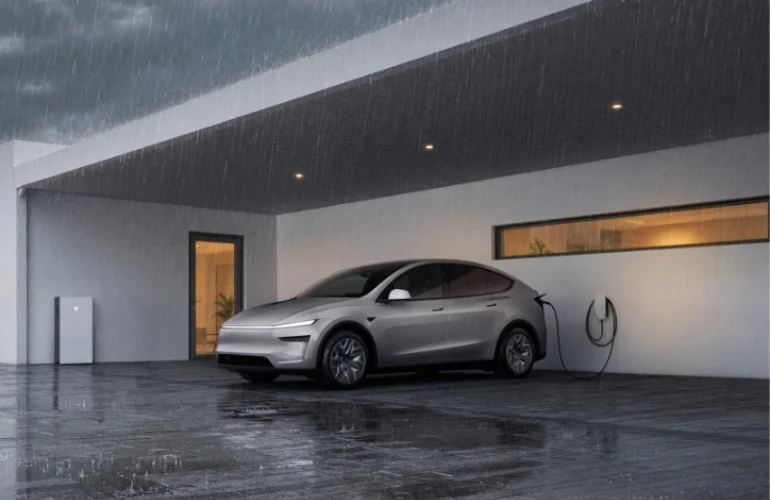
- The Grid Management Paradigm: As reported by The Financial Times, grid operators globally are grappling with a dual challenge: skyrocketing power demand driven by EV adoption, heat pumps, and data centers, coupled with the decentralized, intermittent nature of wind and solar. In response, utilities are looking toward vehicle-to-grid (V2G) technology. British energy supplier Octopus Energy projects that up to 2 million EVs could be actively selling stored power back to the UK grid by 2030, creating a virtual power plant of unprecedented scale.
- The Counterfactual of Renewables: A viral debate regarding whether renewables are merely "stacking on top" of fossil fuels rather than replacing them was systematically dismantled by Zeke Hausfather in The Climate Brink. By analyzing global electricity demand growth—which surged 75% over the past two decades—Hausfather demonstrated that without wind and solar, global power-sector emissions in 2025 would have been 28% higher, avoiding roughly 3.7 billion tonnes of carbon dioxide in a single year.
- Next-Generation Solar Manufacturing: In an effort to counter China’s roughly 80% dominance of the global solar supply chain, U.S. manufacturers are pivoting rapidly toward tandem solar cells. As covered by The New York Times, companies like Qcells, Tandem PV, and First Solar are pioneering multi-layered panels capable of generating up to 25% more energy than standard silicon panels, positioning Western manufacturers to claw back critical market share.
- Revolutionizing Commuter Rail: As featured on Grist and discussed extensively on This Week in Cleantech, the Massachusetts Bay Transportation Authority (MBTA) has announced a landmark $765 million plan to electrify Boston’s historic Fairmount Line using battery-powered commuter trains supplied by Swiss manufacturer Stadler.
2. Chronology: How These Breakthroughs Unfolded
Understanding the trajectory of modern clean technology requires looking at how past decades of policy, research, and pilot projects have culminated in today’s commercial breakthroughs.
- 2005–2015 (The Foundation Era): Global electricity demand began its steep upward trajectory, driven by industrialization, early consumer electronics, and nascent HVAC expansion. During this decade, fossil fuels met the vast majority of new demand, while early-stage wind and solar subsidies laid the groundwork for dramatic cost declines.
- 2015–2020 (The Inflection Point): Wind and solar crossed critical cost thresholds, making them the cheapest source of new electricity generation in most parts of the world. Between 2015 and 2025, renewables successfully met 57% of all new global electricity demand, preventing catastrophic emissions growth.
- 2020–2024 (The EV Boom and Material Crunch): The rapid commercialization of lithium-ion batteries for electric vehicles created unprecedented demand for critical minerals like lithium, cobalt, and nickel, triggering supply chain vulnerabilities and exposing heavy reliance on overseas refining. Concurrently, pioneering recyclers began scaling operations to capture processing scrap.
- June 2024 (Caltrain’s Electric Milestone): Caltrain successfully launched its electrified overhead-wire service between San Francisco and San Jose, offering the U.S. a live masterclass in the benefits of rail electrification—including a 60% surge in ridership and an 89% reduction in black carbon exposure for commuters.
- June 2025 (Manufacturing Milestones): U.S. solar manufacturer Qcells launched commercial production at its Cartersville, Georgia facility, rapidly moving to secure independent certification for advanced tandem solar technology.
- October 2026 (Current Developments): Analysts and industry observers spotlight the circular economy loop as Redwood Materials surpasses 60,000 metric tons of annual critical material recovery, while transit agencies like the MBTA commit to battery-electric rail fleets scheduled for deployment by 2030.
3. Supporting Data: The Metrics Driving the Transition
Data remains the ultimate arbiter of the energy transition’s velocity and scale. A rigorous review of recent studies, industry disclosures, and independent analyses highlights the staggering scale of change:
- 95%+: The material recovery rate achieved by leading battery recyclers like Redwood Materials, stripping spent lithium-ion batteries and factory scrap for vital components including lithium, nickel, cobalt, and copper.
- 20% to 30%: The share of global lithium, nickel, and cobalt demand that the International Energy Agency (IEA) projects could be satisfied entirely by recycling efforts by the year 2050.
- 206% to 245%: The projected increase in total generating capacity required by the UK’s grid operator between 2024 and 2050 to manage widespread electrification, nearly a third of which must come from flexible storage or dispatchable power.
- 5 Kilowatts: The average power contribution of a single smart-charging electric vehicle participating in vehicle-to-grid (V2G) programs. Scaled to 2 million vehicles by 2030, this equates to multiple nuclear reactors’ worth of flexible capacity.
- 99%: The percentage of new global electricity demand met by wind and solar power in the most recent annualized tracking data, effectively absorbing virtually all load growth without increasing carbon intensity.
- 3.7 Billion Tonnes: The estimated volume of CO2 emissions avoided in a single year (2025) thanks to the historical deployment of wind and solar energy—equivalent to roughly 75% of total annual U.S. carbon pollution.
- 25%: The targeted energy output increase of tandem solar panels over traditional silicon cells, achieved by stacking supplementary material layers to capture a broader spectrum of sunlight.
- $765 Million: The total cost of the MBTA’s 15-year lease agreement for seven four-car, battery-powered Stadler trains slated for Boston’s Fairmount Line by 2030.
- 17,700 Tons: The annual reduction in CO2 emissions expected once the MBTA replaces its legacy diesel fleet on the 10-mile Fairmount Line.
- 70%: The alarming percentage of gas-fired commercial restaurant kitchens found in a peer-reviewed study—co-authored by Chef Christopher Galarza—to harbor nitrogen dioxide ($NO_2$) levels well above EPA and World Health Organization safety limits, even when commercial ventilation systems were running at full capacity.
4. Official Responses and Industry Perspectives
The rapid evolution of cleantech has sparked diverse reactions from corporate leaders, policymakers, labor advocates, and environmental experts.
- The Recycling Vanguard: Industry leaders emphasize that the narrative of resource scarcity is outdated. By treating spent batteries and decommissioned solar arrays as "above-ground mines," companies argue that the energy transition will soon become self-sustaining, insulated from the geopolitical instabilities of traditional mining.
- The Grid Operator Perspective: Executives at major utilities across Europe and North America stress that grid reinforcement is no longer optional. With power demand climbing due to the electrification of transport and heating, power providers are championing software-driven demand response and smart-charging infrastructure as cost-effective alternatives to building endless miles of new transmission lines.
- The Solar Manufacturing Alliance: American solar executives view tandem technology not merely as an incremental upgrade, but as a strategic national security imperative. By leapfrogging legacy single-junction manufacturing technologies, U.S. firms aim to render older Chinese production lines economically uncompetitive, reshaping global solar trade dynamics.
- The Urban Transit Visionaries: Speaking on This Week in Cleantech, special guest Benton Graham of Grist highlighted that battery-electric trains offer transit agencies a cost-effective loophole around the prohibitive capital expenses of stringing overhead catenary wires across complex urban rail corridors.
- The Human Element (Cleantecher of the Week): Christopher Galarza, longtime chef, co-founder of EcoChef, and this week’s honored cleantecher, offered a poignant perspective on the human toll of fossil fuel reliance. Reflecting on his research into kitchen air quality, Galarza noted that stepping into all-electric commercial kitchens was the first time in his career he could practice his craft without experiencing chronic respiratory distress—underscoring that decarbonization is fundamentally a public health issue.
5. Implications: What This Means for the Future
The compounding developments of this week signal profound structural shifts for the global economy, urban infrastructure, and environmental health over the coming decades.
Economic and Supply Chain Resilience
The transition from a purely extractivist energy model to a circular, closed-loop economy will fundamentally alter international trade. As recycling technologies scale to capture up to 30% of critical battery mineral demand by mid-century, nations that aggressively invest in domestic recycling infrastructure will insulate themselves from commodity price shocks and supply chain weaponization.
The Urban Mobility Transformation
The MBTA’s adoption of battery-electric commuter rail—following on the heels of Caltrain’s successful electrification—signals the beginning of the end for diesel-powered mass transit. By eliminating toxic black carbon and particulate emissions in densely populated corridors, cities will see immediate public health dividends, alongside dramatic improvements in commute times and ridership retention. Furthermore, proving battery-train viability on high-frequency routes will unlock rail electrification for dozens of transit authorities previously deterred by the multi-billion-dollar price tag of overhead wire installation.
Indoor Air Quality and Environmental Justice
Galarza’s peer-reviewed findings regarding gas-fired commercial kitchens bring a long-overlooked aspect of fossil fuel combustion indoors. The revelation that 70% of commercial gas kitchens exceed EPA and WHO safety limits for nitrogen dioxide—even with active ventilation—makes a compelling case for building electrification not just for outdoor carbon reduction, but for indoor occupational health. Restaurant workers, disproportionately representing marginalized communities, stand to benefit immensely from the rapid transition to induction and all-electric commercial cooking.
The Macro-Energy Horizon
Ultimately, the data compiled by analysts like Zeke Hausfather proves that clean energy investments are working precisely as intended. Despite massive increases in global electricity demand driven by digitalization, artificial intelligence data centers, and vehicle electrification, wind and solar have effectively absorbed nearly all recent load growth. As next-generation tandem solar panels enter commercial markets and smart-grid V2G applications scale to millions of vehicles, the foundational architecture of a zero-carbon global economy is rapidly falling into place.