By Peter G. Furst, MBA, Registered Architect, CSP, ARM, REA, CRIS, CSI
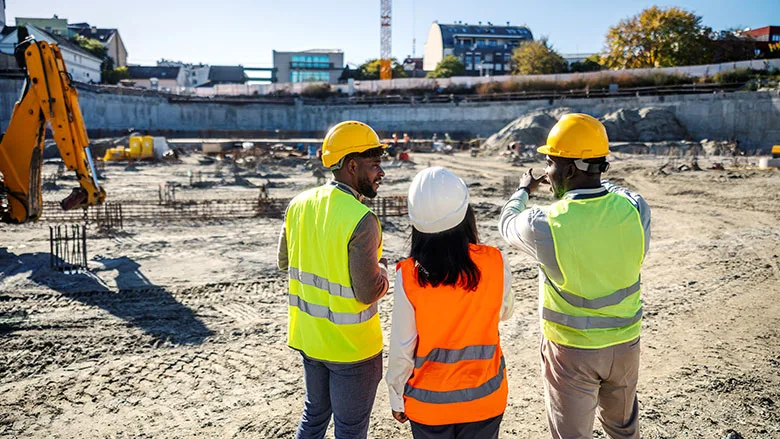
In the high-stakes arena of construction, injury prevention has traditionally been relegated to the operational phase. When a worker steps onto a job site in a hard hat and high-visibility vest, the burden of spotting hazards, assessing exposures, and avoiding accidents typically falls on the shoulders of field supervisors and on-site safety personnel.
Industry wisdom dictates that the absolute gold standard for managing workplace risk is complete elimination. Yet, in the physical, ever-changing environment of a construction project, erasing every potential hazard is rarely achievable. Consequently, project management is often forced to settle for a secondary objective: minimizing the impact of these risks on the workforce.
However, looking at safety strictly through an on-site lens misses the forest for the trees. Decades of industry research reveal a stark, undeniable truth: a substantial percentage of worksite accidents are not born in the mud of the trench or on the edge of the scaffolding. Instead, their roots are planted months—or even years—earlier, during boardroom decisions made long before the first shovel breaks ground.
Main Facts: The Preconstruction Genesis of Risk
The modern construction process is a complex chain of custody involving owners, financiers, architects, structural engineers, and general contractors. At each link in this chain, decisions are made that quietly embed injury risks into the project delivery lifecycle.
When an owner defines a project’s budget, timeline, and operational requirements, they are inadvertently drafting the risk profile for the tradespeople who will eventually build it. Similarly, when design teams draft blueprints and specifications under tight fee structures and aggressive schedules, they may inadvertently layout geometric or structural configurations that introduce severe physical hazards into the field.
Add to this the traditional competitive bidding process—which frequently rewards the lowest financial tender over demonstrated safety performance—and the contractor is thrust into a high-pressure environment where slim margins breed rushed operations, increased worker fatigue, and heightened injury rates.
True construction safety, therefore, cannot be achieved by merely policing workers on-site. It requires a holistic, lifecycle-integrated approach that addresses risk at its inception.
Chronology: The Evolution of Construction Safety and Risk
To understand how modern risk management must evolve, it is helpful to look back at how safety standards and project development timelines have historically intersected.
The Regulatory Framework (OSHA 1926)
The safety of construction workers in the United States is primarily governed by the Occupational Safety and Health Administration’s (OSHA) 1926 standards. Established to protect workers as they erect modern infrastructure, these codes set strict parameters for fall protection. Historically, federal guidelines mandated fall protection for workers exposed to drops greater than six feet. Scaffold erection required protection above 10 feet, decking required it above 15 feet, and steel erectors required tie-offs at heights exceeding 30 feet.
These numbers are not just administrative figures; they represent hard margins between life and catastrophic injury. For instance, a residential framing accident involving a fall from a relatively modest height of 8.5 feet while installing roof trusses can instantly result in a broken back and permanent paraplegia.
The Project Lifecycle: A Shrinking Window of Influence
Research conducted over the past half-century demonstrates a clear, inverse relationship between a project’s timeline and the ability to eliminate its inherent risks:
- Inception & Planning: At the earliest stages, when an owner conceives a project, the potential to eliminate risk is at its absolute highest. Major decisions regarding site selection, project delivery methods, and scheduling flexibility can completely remove vast categories of future hazards.
- Design & Engineering: As architects and engineers translate the owner’s vision into technical drawings, the opportunity to design out hazards remains robust through concepts like Prevention through Design (PtD). However, barriers begin to form due to budget constraints, contractual boundaries, and professional silos.
- Bidding & Procurement: Once the project goes out to tender, risk elimination opportunities plummet. General contractors and subcontractors are brought on board, inheriting pre-existing risk factors embedded in the design and schedule.
- Construction Execution: By the time construction is underway, the window to eliminate risk is virtually closed. Management is restricted to mitigation—trying to protect workers from hazards that were baked into the project months or years prior.
Supporting Data: Site Factors, Owner Influence, and Design Challenges
1. Physical and Adjacent Site Factors
Many risks originate directly from the ground up. Preconstruction site assessments must account for physical variables such as:
- Soil quality, bearing capacity, and potential chemical contamination.
- Surface conditions, topography, and hydrological drainage.
- Access constraints and the presence of underground utilities.
Furthermore, construction projects do not exist in a vacuum. Urban and suburban developments interact constantly with adjacent neighborhoods. Issues such as noise, dust, vehicular and pedestrian traffic, disruptive nuisances, and trespassing can create friction between the contractor and the local community. While these surface tensions manifest during construction, their underlying risk factors are frequently planted during early site selection and zoning decisions.
2. The Owner’s Ripple Effect
The journey begins with an owner’s perceived need for space and a target completion date. To achieve this, the owner establishes a core oversight team, sets a preliminary budget, and formulates a procurement plan.

Every single one of these initial business decisions carries downstream safety implications. For example, dictating an accelerated, unyielding project schedule forces contractors to run overlapping shifts, ramp up labor intensity, and push workers harder—all of which dramatically increase the probability of human error and workplace injuries.
Moreover, owners frequently overlook the immense value of engaging an experienced safety professional during the earliest preconstruction meetings. Integrating a safety expert alongside the owner and designers can significantly reduce accident potential while optimizing project delivery costs.
3. The Design Team Dilemma
Architects and structural, mechanical, and electrical engineers are legally and professionally bound to ensure that a building meets applicable codes (such as the IBC, ASTM, NFPA, and NEC). However, traditional design scopes rarely include construction worker safety.
Because design professionals focus almost exclusively on the final occupant and the performance of the finished structure, architectural and engineering drawings can inadvertently embed severe hazards into the construction process.
Official Responses: Overcoming Professional and Legal Barriers
Why don’t more design professionals proactively engage in construction safety? The reluctance is deep-seated and multi-faceted:
- Ethical Boundaries: Professional codes of ethics—such as those established by the American Institute of Architects (AIA)—historically prioritize the safety and welfare of the building’s final occupants and the general public, omitting the safety of the construction workforce building it.
- Liability and Legal Fear: Architects and engineers routinely avoid addressing construction means, methods, and worker safety out of fear that doing so will expose them to crippling legal liability and lawsuits from injured workers on the job site.
- Lack of Regulatory and Insurance Support: There is a distinct absence of legal, contractual, or regulatory mandates requiring safety to be integrated directly into the design phase. Compounding this, risk-transfer products and specialized professional liability insurance covering "design-for-safety" practices are rarely available in current commercial insurance markets.
The Solution: Prevention through Design (PtD)
Despite these hurdles, forward-thinking projects are increasingly adopting Prevention through Design (PtD). This collaborative framework actively engages designers, constructors, and safety professionals to identify and eliminate physical hazards during the drafting phase.
Under a PtD model, teams explore strategies such as prefabrication and modularization. By shifting labor-controlled tasks from a chaotic, weather-exposed job site to a controlled factory environment, worker exposure to extreme heights, heavy machinery, and environmental hazards is drastically curtailed.
Implementing PtD requires a cultural shift:
- Designer Education: Architects and engineers must gain a practical understanding of construction means and methods. They must learn to leverage modern digital tools, such as Building Information Modeling (BIM), to simulate construction sequences and flag spatial conflicts before they manifest in the field.
- Transparent Communication: When certain risks cannot be engineered out of a design, the design team must explicitly communicate these residual hazards to the general contractor. This transparency allows field teams to deploy appropriate administrative and engineering controls safely.
Implications: The Pitfalls of Competitive Bidding and the Path Forward
Beyond design and planning, the commercial mechanisms of the industry exert a profound influence on safety outcomes. When project owners rely solely on a traditional competitive bidding process, contracts are frequently awarded to the lowest financial bidder.
This practice often triggers a dangerous race to the bottom. To secure the contract, contractors may deliberately shave their profit margins to razor-thin levels, gambling that they can extract higher productivity and efficiency from their workforce to turn a profit. This "win-win" illusion frequently pressures field workers to cut corners, skip safety briefings, and rush through dangerous tasks.
To break this cycle, the construction industry must fundamentally reform how it evaluates general contractors and construction managers, selecting partners based on demonstrated safety records, cultural alignment, and operational excellence rather than bare-minimum pricing.
Conclusion: A Holistic Vision for Safety
Construction safety cannot be achieved in a vacuum, nor can it be successfully outsourced entirely to the safety manager on-site. Creating an injury-free work environment demands a truly holistic, cross-functional team effort.
Owners, designers, general contractors, subcontractors, and safety professionals must bridge historical silos and cooperate from day one. Owners must orchestrate the process with an acute awareness of how business demands shape field realities. Designers must embrace their capacity to engineer out hazards. And contractors must be selected for their ability to balance efficiency with uncompromising worker protection.
By addressing risk where it truly begins—at the drawing board and in the boardroom—the construction industry can finally move past merely reacting to tragedies and begin designing them out of existence altogether.