WASHINGTON, D.C. — In a dramatic escalation of ongoing federal friction over renewable energy infrastructure, the U.S. Department of the Interior has petitioned a federal court to re-evaluate the foundational permits governing Revolution Wind.
The move targets an offshore wind farm that has already reached its final construction milestones and is actively delivering electricity to households across New England. The legal challenge represents the latest chapter in a broader, highly contentious strategy by the administration to challenge the rapid expansion of American offshore wind, setting up a fresh clash between federal regulators, renewable energy developers, and environmental advocates.
Main Facts
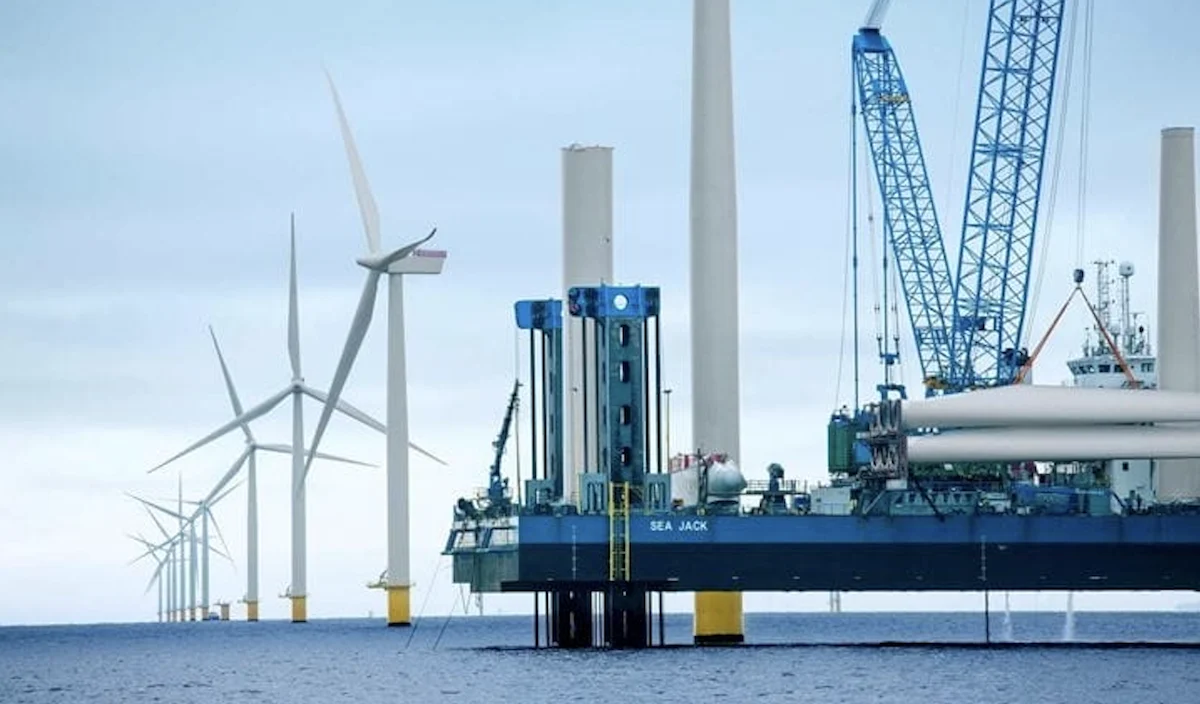
The Department of the Interior’s recent legal filing focuses on Revolution Wind, an offshore renewable energy project developed by Ørsted that sits off the coast of Rhode Island and supplies power to the New England grid. Despite the project having successfully completed its major construction phases—including the installation of its final turbine in September—the federal government is seeking a judicial review of its permitting process.
This latest maneuver is part of a consistent pattern of administrative resistance against the offshore wind sector. Since taking office in 2025, the administration has repeatedly sought to halt the development and operation of major clean energy assets in federal waters.
Simultaneously, reports indicate that federal officials have explored or implemented financial incentives—totaling nearly $4 billion in potential outlays—aimed at encouraging energy companies to abandon offshore wind initiatives and pivot back toward fossil-fuel-centric operations.
Legal experts and industry analysts point out that challenging a completed project that is actively feeding power into regional grids is an unusual and legally complex tactic. Previous attempts by the administration to stall Revolution Wind via executive stop-work orders were swiftly struck down by federal courts, which ruled the actions unlawful.
Chronology of Events
The regulatory and legal tug-of-war surrounding Revolution Wind has unfolded across several critical milestones:
Pre-2025: Revolution Wind secures its federal permits, and construction preparations move forward to establish a major clean energy supply line for Rhode Island and neighboring New England states.
2025: The incoming administration initiates a push against offshore wind developments, resulting in the issuance of the first of two stop-work orders targeting the Revolution Wind project.
Early 2026: Federal courts intervene, overruling the administration’s stop-work orders and determining them to be without sufficient legal backing. Similar administrative blocks on other coastal wind projects are likewise struck down by the judiciary.
September 2026: Construction on Revolution Wind officially concludes with the successful installation of the final turbine. The project begins regular commercial operations, pumping electricity into local homes and businesses.
October 2026: The Department of the Interior files a formal request asking a federal court to revisit and re-evaluate the project’s original permits, sparking immediate pushback from environmental groups and regional stakeholders.
Supporting Data and Financial Context
The conflict over Revolution Wind does not happen in a vacuum; it is underscored by significant financial figures and economic stakes:
$4 Billion: The estimated magnitude of federal financial maneuvers and payouts directed toward encouraging energy firms to walk away from offshore wind developments in favor of traditional fossil fuels.
Two Stop-Work Orders: The number of administrative halts issued against Revolution Wind since 2025, both of which were subsequently overturned by federal judges.
Complete Infrastructure: As of September, 100% of the project’s turbines are installed, meaning the physical asset is fully realized and operational rather than existing merely as a blueprint or a site under early construction.
Regional Energy Demands: New England faces significant seasonal fluctuations in energy demand, making winter utility price stability a critical concern for millions of families reliant on diversified power sources.
Official Responses and Stakeholder Reactions
The Department of the Interior’s decision to pursue a court-ordered permit review has drawn sharp criticism from environmental organizations and consumer advocates who view the action as economically counterproductive and environmentally harmful.
Xavier Boatright, Deputy Legislative Director for the Sierra Club, issued a scathing critique of the administration’s legal strategy:
"Revolution Wind is already producing affordable, reliable electricity for families across New England. The administration is reckless and cruel to do this ahead of the cold winter months when the region will need offshore wind more than ever to keep utility prices stable.
Why challenge something that is already darn near complete? The answer is that the administration wants to help its buddies in the fossil fuel industry bolster profits by eliminating their competition instead of delivering the affordable, clean energy Americans need."
Industry stakeholders and renewable trade associations have similarly expressed alarm, noting that retroactively questioning the permits of fully completed infrastructure introduces a high degree of regulatory uncertainty that could chill future domestic and international investment in American energy infrastructure.
Broader Implications for American Energy
The ongoing saga of Revolution Wind highlights deep structural divisions regarding the future of the United States energy grid.
Regulatory Uncertainty for Investors
When completed projects with court-affirmed permits remain subject to sudden federal challenges, institutional investors and energy developers face a volatile regulatory landscape. Capital-intensive projects like offshore wind require decades of predictability; erratic federal oversight risks driving capital away from U.S. waters and toward more stable international markets.
Winter Reliability and Utility Costs
As New England approaches the peak heating season, regional grid operators continuously monitor generation capacity to prevent price spikes and supply shortages. Introducing legal ambiguity to an active utility asset directly threatens to disrupt regional resource planning at a time when consumers are acutely sensitive to utility inflation.
The Fossil Fuel Pivot
The administration’s parallel efforts—combining multi-billion-dollar incentives for fossil fuel retention with aggressive litigation against renewable installations—signals a concerted push to reshape the national energy mix through executive and legal intervention. Whether these measures can permanently alter a market increasingly driven by corporate sustainability goals and state-level clean energy mandates remains a central question for the remainder of the decade.
As the federal court weighs the Interior Department’s request to revisit the Revolution Wind permits, all eyes remain on the judicial branch to determine whether completed renewable infrastructure can be successfully undone by executive policy shifts.