In the rapidly evolving landscape of artificial intelligence, few innovations have captured the public imagination—and ignited as much professional debate—as ChatGPT. Developed by OpenAI, this sophisticated large language model (LLM) has transitioned from a niche research project to a household name, fundamentally altering how industries approach natural language processing (NLP), content creation, and human-computer interaction.
Main Facts: Decoding the Power of ChatGPT
At its core, ChatGPT is a state-of-the-art conversational AI built upon the Generative Pre-trained Transformer (GPT) architecture. While the acronym "GPT" has become synonymous with the current AI boom, it is essential to understand the underlying mechanics. "Generative" refers to the model’s ability to create original text; "Pre-trained" signifies that it has been fed massive datasets containing books, articles, code, and internet content; and "Transformer" denotes the neural network architecture that allows the model to weigh the importance of different words in a sentence, regardless of their distance from one another.
ChatGPT is essentially a fine-tuned iteration of the GPT-3.5 and subsequent GPT-4 models, optimized specifically for dialogue. Unlike traditional search engines that retrieve existing links, ChatGPT synthesizes information to provide coherent, human-like responses. Its capabilities span a vast spectrum, including:
- Language Translation: Bridging linguistic gaps with high-context accuracy.
- Text Summarization: Distilling lengthy documents into concise executive briefs.
- Code Generation: Assisting developers by writing, debugging, and documenting code.
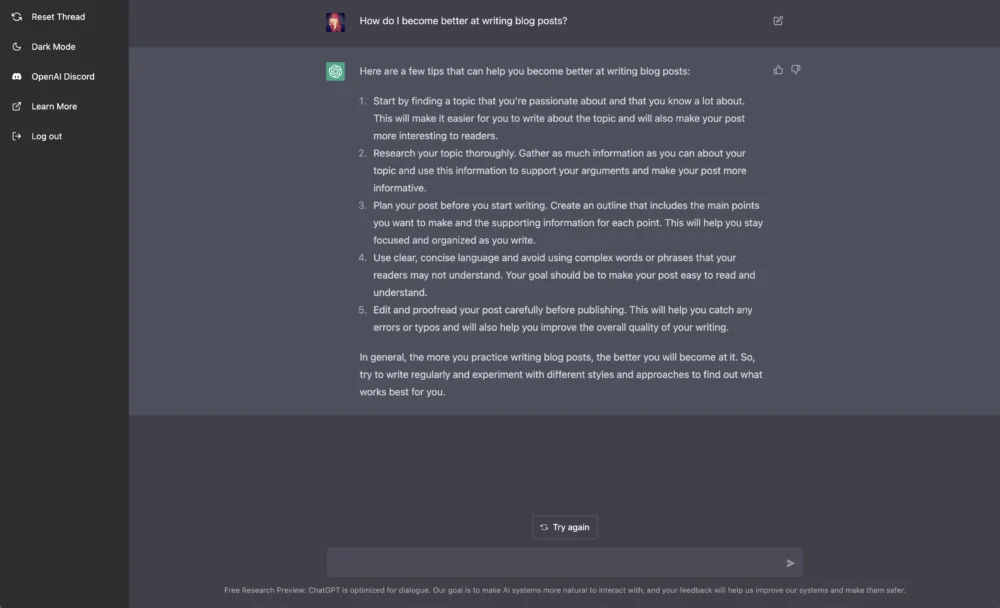
- Creative Writing: Assisting in the drafting of emails, blog posts, and technical manuals.
A Chronological Evolution: From GPT-1 to the Present
The journey of ChatGPT did not begin in a vacuum. It is the culmination of years of iterative research by OpenAI, a San Francisco-based AI research laboratory.
- 2018: The Genesis (GPT-1): OpenAI released the first version of the Generative Pre-trained Transformer, demonstrating that a model could learn to predict the next word in a sequence without extensive supervised training.
- 2019: Scaling Up (GPT-2): GPT-2 made headlines for its ability to generate realistic, coherent paragraphs. Its release was initially delayed due to concerns about potential misuse, highlighting early awareness of the technology’s ethical implications.
- June 2020: The Breakthrough (GPT-3): With 175 billion parameters, GPT-3 was a massive leap in scale. It showed an unprecedented ability to perform tasks it wasn’t explicitly trained for, such as basic arithmetic or translating between languages, simply by being prompted.
- Late 2022: The Public Debut (ChatGPT): By fine-tuning GPT-3.5 using Reinforcement Learning from Human Feedback (RLHF), OpenAI created a model that was not just capable, but conversational. The release of ChatGPT in November 2022 marked the moment AI moved from the lab to the mainstream.
Supporting Data: How It Works and How to Use It
To leverage the power of ChatGPT effectively, one must understand the importance of "prompt engineering." Because the model functions by predicting the most probable next token in a sequence, the quality of its output is intrinsically linked to the quality of the input.
Best Practices for Interaction
Our research suggests that "wordiness" in the prelude to a prompt significantly improves performance. Providing the model with a persona (e.g., "Act as a senior software engineer") or a specific context (e.g., "Write this summary for a non-technical audience") yields far more relevant results.
Technical Integration
For those looking to build applications, the OpenAI API provides a gateway to integrating these models into custom software. While Python remains the industry standard for interacting with these APIs due to its robust library support, the barrier to entry for developers is lower than ever. Through "few-shot learning," users can provide the model with a handful of examples of desired input-output pairs, effectively teaching the model a specific tone or task structure without the need for intensive retraining.
Official Responses and Ethical Considerations
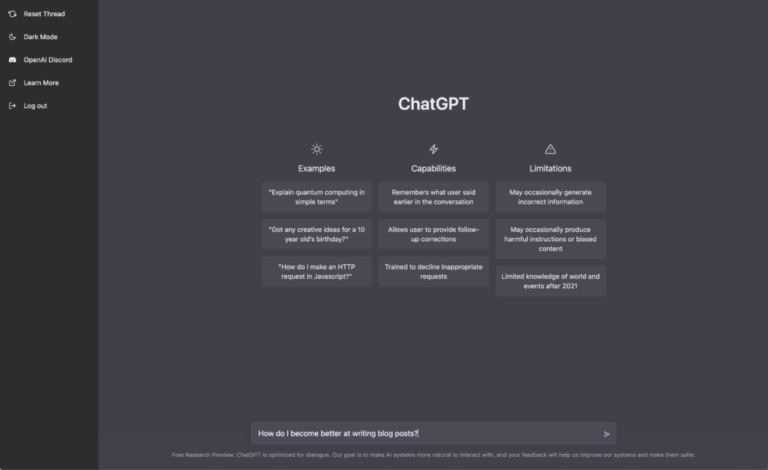
OpenAI’s official documentation acknowledges that while ChatGPT is a "powerful tool," it is not infallible. A primary point of concern for both developers and the public is the issue of "hallucination"—instances where the model confidently states factually incorrect information.
Because the model is trained on a snapshot of internet data, it lacks a real-time "understanding" of truth. It predicts the most statistically plausible sequence of words, not the most accurate one. OpenAI has been vocal about these limitations, continuously updating their documentation to advise users that the model’s output should be verified, especially in sensitive domains like legal, medical, or financial advice.
Furthermore, the academic and creative communities have raised significant ethical questions. Issues regarding intellectual property rights, the potential for mass-produced misinformation, and the displacement of entry-level knowledge work are central to the current public discourse. OpenAI has responded by implementing safety guardrails, including content filters designed to prevent the generation of harmful, illegal, or biased content.
Implications for the Future of Work
The rise of generative AI signals a fundamental shift in the digital economy. The implications are broad, affecting nearly every sector that relies on information processing.
The Productivity Paradigm
In the short term, ChatGPT acts as a force multiplier for human productivity. Tasks that once took hours—such as drafting a technical report or cleaning up messy datasets—can now be performed in seconds. This allows professionals to move away from "blank page" syndrome and focus on higher-level strategy and editorial oversight.
The Skills Gap
The emergence of this technology necessitates a shift in education. The focus is moving away from rote memorization and towards critical thinking, verification, and the ability to effectively communicate with machines. In our own training courses, we emphasize that the goal is not to replace human creativity, but to augment it with machine efficiency.
Societal Shifts
Long-term, we are looking at a transformation in how we interact with computers. We are moving from a command-line and graphical-interface world to a natural language interface. This democratizes technology, allowing individuals without formal programming backgrounds to build complex systems.
Conclusion: A Tool, Not a Replacement
ChatGPT and its successors are among the most significant technological advancements of the 21st century. However, it is vital to remember that they are tools. They possess no consciousness, no intent, and no true comprehension of the world. They reflect the data they were trained on, which includes both the brilliance and the biases of humanity.
As we move forward, the successful adoption of this technology will depend on our ability to navigate the fine line between innovation and regulation. We must embrace the efficiency these models offer while maintaining a rigorous commitment to ethics and accuracy. For those eager to stay ahead of this curve, the best approach is to start experimenting, learning the nuances of prompt engineering, and understanding the architecture that makes it all possible.
Whether you are a developer looking to integrate AI into your workflow or a professional curious about how to automate your daily tasks, the era of generative AI has arrived. The question is no longer whether AI will impact your industry, but how you will choose to wield it. For those looking to deepen their technical expertise, exploring structured software training courses remains the most effective way to transition from a casual user to an AI-proficient professional.