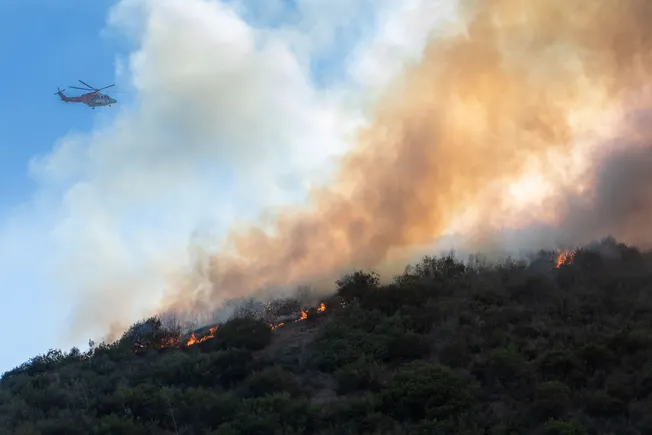
SACRAMENTO, Calif. — California’s major electric utilities are bracing for another wave of preventative power outages this week, as a grueling combination of prolonged high temperatures, parched landscapes, and strong offshore winds continues to create extreme wildfire vulnerabilities across the state.
Pacific Gas & Electric (PG&E) announced that targeted Public Safety Power Shutoffs (PSPS) are highly likely to begin on Wednesday, potentially stretching through Saturday. The preemptive de-energization measures could impact more than two dozen counties, predominantly concentrated in northern and central regions of the state.
This latest threat follows a grueling fortnight of severe weather that tested the resilience of California’s electrical grid. While coordinated efforts by grid operators and utilities largely kept the system stable during the peak of the recent heat wave, the compounding threats of high heat and heightened fire weather have forced energy providers to keep emergency protocols active.
The Core Threat: Wind, Heat, and the Return of PSPS
The primary driver behind the anticipated outages is a dangerous convergence of meteorological factors. According to PG&E, forecasters are tracking another round of offshore winds developing mid-week. When paired with the bone-dry conditions left behind by weeks of unrelenting heat, the potential for rapid wildfire ignition and spread escalates significantly.
"The utility is currently monitoring the potential for another round of offshore winds Wednesday through Saturday," PG&E stated in a recent advisory. "Elevated fire weather conditions will be present across much of the territory later this week."
If implemented, the shutoffs will disrupt power to tens of thousands of residents, affecting rural and semi-urban communities alike. The strategy of cutting power during high-risk weather windows has become a standard, if controversial, tool for California utilities attempting to prevent catastrophic infrastructure-sparked wildfires, such as those that devastated parts of the state in previous years.
Chronology of a Crisis: How the Heat Wave Unfolded
The current grid crisis is the culmination of weeks of relentless thermal pressure that began in late September. A timeline of key events highlights the escalating strain on California’s energy infrastructure:
- Sept. 30: San Diego Gas & Electric (SDG&E) issues the first formal warnings to its customers regarding potential public safety power shutoffs driven by emerging wildfire conditions.
- Oct. 1: The National Weather Service in Los Angeles issues an alarm for a "very dangerous and long-lasting heat wave" set to commence on October 2 and persist well into the following week. Concurrently, SDG&E urges consumers to proactively manage their energy consumption to support grid reliability.
- Oct. 2: SDG&E initiates rolling public safety power shutoffs, impacting an area encompassing approximately 35,000 customers due to extreme heat, high winds, and severe wildfire threats.
- Oct. 4: SDG&E issues an all-clear notice, indicating that immediate PSPS conditions have passed, though warning that ongoing extreme temperatures will continue to stress local infrastructure.
- Oct. 5–8: The California Independent System Operator (CAISO) issues Restricted Maintenance Operations (RMO) notices across four consecutive days, enacting six total alerts (two for Southern California and four system-wide) as statewide demand surges.
- Oct. 9: PG&E begins de-energizing targeted areas in Fresno, Kern, Kings, San Benito, and San Luis Obispo counties, ultimately affecting thousands of customers across multiple counties and tribal areas.
- Oct. 10: PG&E temporarily restores power and issues all-clear notices as weather conditions momentarily moderate.
- Oct. 11: Following the brief respite, PG&E announces a fresh round of planned shutoffs targeting Colusa, Glenn, Shasta, Tehama, and Yolo counties.
Supporting Data: Grid Performance and Metrics
Despite the severity and duration of the heat wave, California’s bulk power system managed to avoid widespread, uncontrolled blackouts. Data from CAISO and independent grid analysts shed light on how the system performed under extreme pressure:
- Peak Demand: Driven by relentless residential and commercial air conditioning use, statewide electricity demand peaked at approximately 46,000 megawatts (MW) on October 5, according to CAISO data.
- Restricted Maintenance Operations: CAISO imposed RMOs on October 5, 6, 7, 8, 9, and 10. These notices require generators and transmission operators to cancel non-essential maintenance to ensure maximum grid availability.
- Emergency Declarations: According to CAISO’s Grid Emergencies History Report (revised Oct. 9), the system recorded six RMO incidents for the month, but notable for their absence were any Energy Emergency Alert (EEA) Watches, actual transmission emergencies, or statewide Flex Alerts—indicating that conservation measures and resource balancing were largely sufficient.
- Customer Impact: Individual utility actions affected targeted populations significantly. SDG&E’s early October shutoffs impacted roughly 35,000 customers. Subsequent PG&E actions targeted roughly 12,200 customers spread across 17 counties and three tribal areas during each wave of de-energization.
Official Responses and Utility Guidance
State agencies and utility providers have maintained a posture of aggressive preparedness, balancing the need for transparency with appeals for public cooperation.
When CAISO issued its Restricted Maintenance Operations notices at the outset of the heat wave, officials emphasized that while supply shortfalls were not immediately forecast, the steps were necessary to prepare consumers and market participants. "We want to prepare consumers in the event that we need to call a Flex Alert," CAISO noted, urging generators to avoid taking any equipment offline that could jeopardize generation or transmission availability.
Southern California utilities also focused heavily on localized vulnerabilities. While planned PSPS events are designed to stop wind-driven catastrophes, prolonged heat inevitably takes a toll on underground cables, transformers, and local distribution lines.
"Prolonged periods of extreme heat can increase stress on the electric system and may contribute to localized unplanned outages," SDG&E explained to customers after unscripted local outages accompanied the planned shutoffs. Following the expiration of its initial PSPS window on October 4, SDG&E stressed that although public safety shutoff risks had temporarily abated, continuous monitoring remained essential because persistent high temperatures elevate everyday energy demand.
PG&E has similarly utilized its automated alert systems, web-based seven-day PSPS forecast maps, and direct community notifications to give residents maximum lead time before turning off the grid in high-hazard zones.
Broader Implications for California’s Energy Future
The events of late September and early October 2026 underscore a stark, ongoing reality for California: the intersection of climate change, aging infrastructure, and extreme weather has forged a new normal where grid management is a perpetual crisis-response exercise.
1. The Proliferation of PSPS Events
Public Safety Power Shutoffs, once viewed as an absolute last resort, have evolved into routine operational procedures during autumn wind events. While effective at reducing the ignition of catastrophic wildfires, these outages impose severe economic, social, and health costs on residents and businesses who lose refrigeration, medical equipment power, and business continuity.
2. Grid Resilience Under Thermal Stress
The fact that CAISO managed a 46,000 MW peak demand without resorting to rolling blackout mandates or Energy Emergency Alerts points to improvements in the state’s resource adequacy, including battery storage deployment and solar integration. However, the system remains vulnerable at the distribution level, where localized equipment failures caused by relentless heat continue to plague neighborhoods even when the high-voltage transmission grid holds firm.
3. Adaptation and Mitigation
As climate projections indicate that heat waves will grow longer, hotter, and more frequent, California utilities face mounting pressure to accelerate grid hardening. This includes undergrounding power lines in high-fire-threat districts, deploying advanced sectionalizing equipment to narrow the geographic footprint of PSPS events, and expanding microgrid projects to keep critical community facilities powered when major lines are dropped.
For now, residents in northern, central, and southern California must remain vigilant. With PG&E’s latest round of threatened shutoffs looming through the weekend, the state’s battle against extreme weather and its cascading infrastructure risks is far from over.