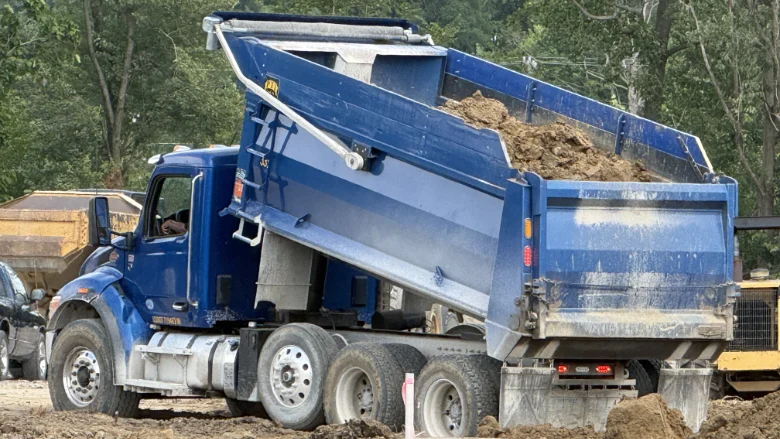
Heavy machinery is the backbone of modern infrastructure, yet it often operates as a silent hazard on construction sites, highways, and earthmoving projects across the globe. Among the fleet of heavy equipment, dump trucks occupy a uniquely hazardous space. Ubiquitous yet formidable, these vehicles are tied to over 1,500 distinct cases in the Occupational Safety and Health Administration’s (OSHA) fatality database.
Recent research, high-profile accidents, and stringent regulatory demands reveal a sobering reality: dump truck safety is an urgent public health and industrial crisis. From catastrophic rollovers and overhead electrical strikes to fatal backing-up incidents, the risks demand a complete overhaul of how job sites manage heavy equipment hazard prevention.
Main Facts: The Anatomy of Dump Truck Hazards
The inherent danger of dump trucks stems from their massive size, immense weight distribution, and dynamic operational environments. Operating a dump truck or working near one requires precise coordination, flawless visibility, and strict adherence to safety protocols. When these elements fail, the consequences are frequently irreversible.
According to data compiled from federal safety agencies, the primary injury events involving dump trucks fall into distinct categories:
- Struck-By Incidents: Accounting for 59% of fatal incidents, these occur when workers on foot, flaggers, or inspectors are struck by moving trucks, backing vehicles, or falling debris.
- Caught-In and Caught-Between Incidents: Representing 47% of non-fatal injuries, these hazards involve workers getting pinched or crushed between moving truck beds, tailgates, and fixed structures.
- Crush and Blunt Force Trauma: Overwhelmingly, 90% of fatal injuries are attributed to crush and blunt force trauma, primarily stemming from backing up and run-over exposures.
- Environmental and Mechanical Failures: Road departures, electrical shocks caused by the dump box striking overhead power lines, falling objects, brake failures, and slippery dump beds contribute significantly to workplace injuries and fatalities.
Non-fatal injuries, while sparing lives, often result in life-altering physical toll. Fractures, severe sprains, and traumatic amputations account for 71% of non-fatal incidents, triggering substantial workers’ compensation claims and permanently altering workers’ livelihoods.
Chronology: A Timeline of Rising Risk and Regulatory Evolution
The journey toward understanding and mitigating dump truck risks has evolved through decades of regulatory action, alarming research findings, and deeply personal tragedies that transformed grief into systemic advocacy.
The Legislative Foundation
- 1970s (OSHA Establishment): The Occupational Safety and Health Act establishes baseline protections for workers, eventually leading to specific construction safety standards codified under Title 29 of the Code of Federal Regulations, Section 1926.601. This section mandates rigorous pre-use inspections for motor vehicles operating on off-highway construction jobsites, covering vital safety systems such as brakes, steering, tires, horns, coupling devices, and seat belts.
- 2001 (Construction Safety Association of Ontario Advisory): Recognizing a surge in instability incidents, safety advocates issue formal advisories regarding dump truck tip-overs, highlighting how the shifting center of gravity and momentum of materials inside a raised dump box dramatically increase rollover risks.
Recent Data and Tragic Turning Points
- December 2017: A personal tragedy strikes the heavy equipment community. Dave Fons, a veteran Michigan heavy equipment and road construction professional, is tragically struck and killed by a fully loaded dump truck that fails to stop at a red light while visiting family in Florida.
- FY 2017 – FY 2020 (University of Kentucky Study): Researchers from the University of Kentucky and the Kentucky Injury Prevention and Research Center conduct a comprehensive review of OSHA data concerning dump truck safety, published in the journal Safety. The findings reveal a staggering escalation: catastrophic and fatal cases jump from 890 in fiscal year 2017 to over 1,500 by fiscal year 2020.
- 2024–2026 (Recent Industrial Incidents): A series of high-profile accidents underscores the ongoing crisis. In 2024, a civil engineer walking on a closed highway shoulder is run over and killed by a reversing dump truck. In May 2026, a multi-vehicle crash near Indianapolis claims the life of a 22-year-old dump truck driver. Later that year, in August 2026, a nighttime paving operation near Port St. Lucie, Florida, ends in tragedy when a 45-year-old dump truck driver is struck by a coworker’s tractor while exiting his cab.
Supporting Data: Demographics and Regional Risk Factors
A deeper look into the University of Kentucky’s analysis of OSHA data highlights specific demographic and geographic vulnerabilities within the heavy construction industry.
- Age Vulnerability: Workers and drivers over the age of 55 account for an unproportionately high share of fatalities—a striking 49% of all recorded deaths in the study period. This demographic vulnerability points to a need for targeted ergonomic, stamina, and situational awareness training tailored to older personnel.
- Occupational Breakdown: While 25% of fatalities involve the truck drivers themselves, the remaining deaths impact a wide cross-section of ground personnel. These include laborers, tradesmen, equipment operators, inspectors, and flaggers who operate within close proximity to moving machinery.
- Geographical Concentration: Geographic analysis reveals distinct regional hazards. Out of 88 total fatal cases examined in specific deep-dive subsets, 50 occurred in the Southern region of the United States, pointing toward potential regional variations in year-round construction volume, weather conditions, or regulatory enforcement practices.
Non-fatal injury data further demonstrates that mechanical elements also play a prominent role in daily risks. Tailgate failures account for 9% of non-fatal exposures, backing maneuvers account for 5%, and a long tail of mechanical and environmental hazards—including brake failure, hot asphalt spills, icy or slippery dump beds, and protruding ground objects—round out the statistics.
Official Responses and Regulatory Frameworks
Regulatory bodies and safety advocates agree that existing rules, if strictly enforced, can drastically curtail workplace tragedies. The foundational compliance standard, 29 CFR 1926.601, outlines mandatory requirements for construction motor vehicles. Among its most critical provisions is subsection (b)(14), which mandates that all safety devices, braking systems, tires, horns, and steering mechanisms must be inspected prior to each daily use.
Beyond specific mechanical mandates, federal guidelines rely heavily on the General Duty Clause, which legally obligates employers to provide a workplace free from recognized hazards that are causing or are likely to cause death or serious physical harm.
Safety experts emphasize that regulatory compliance must extend to operational habits:
- Mandatory Seatbelt Use: Despite the low-speed nature of many jobsites, wearing a seatbelt is non-negotiable. In the event of a tip-over, rollover, or sudden collision, a seatbelt prevents the driver from being ejected or crushed inside the cab.
- Blind Spot Management: Dump trucks possess massive blind spots directly behind the truck, immediately in front of the raised hood, and along the sides. Relying solely on reverse audio alarms is insufficient. Modern safety frameworks strongly advocate for the installation of backup and side-view cameras, alongside dedicated, high-visibility spotters.
- Traffic Control and Communication: Flaggers and ground personnel must maintain a strict line-of-sight protocol with heavy equipment operators, establishing clear hand signals and radio communication channels before any reverse maneuvers begin.
Implications: Turning Tragedy into Transformation
The human cost of dump truck accidents extends far beyond statistical spreadsheets. Careers are ended abruptly by career-altering amputations and crush injuries. Coworkers, friends, and families bear the emotional and financial scars of preventable workplace failures.
Yet, out of profound personal grief has emerged a powerful movement toward transformation. Following the tragic death of Dave Fons in 2017, his family turned their mourning into a mission. They established the Dave Fons Memorial Fund for the Advocacy of Truck Safety, a non-profit dedicated to promoting heavy equipment safety through advocacy, public awareness campaigns, educational resources, and direct support for truck drivers. The foundation also provides vital scholarships for the children of impacted truck accident victims, ensuring that Dave’s lifelong dedication to safety lives on.
To build a sustainable culture of safety, industry leaders recommend adopting simple, memorable mental frameworks for workers on the ground. Concepts like "location, location, location"—reminding operators and pedestrians to constantly evaluate their spatial awareness relative to moving heavy machinery—and "know where you stand, and stand where you know" help bridge the gap between complex regulatory manuals and daily jobsite realities.
Educational toolkits provided by academic institutions such as Rutgers University, the University of Kentucky, and the University of California offer actionable toolbox-talk materials. By integrating comprehensive risk management—identifying struck-by and caught-between hazards before turning the ignition—employers and workers can reclaim control over jobsite safety.
Ultimately, dump truck safety is a shared obligation. Through rigorous pre-trip inspections, advanced visibility technology, proactive hazard communication, and a cultural shift driven by education and advocacy, the construction and earthmoving industries can work toward a future where every worker returns home safely at the end of the shift.