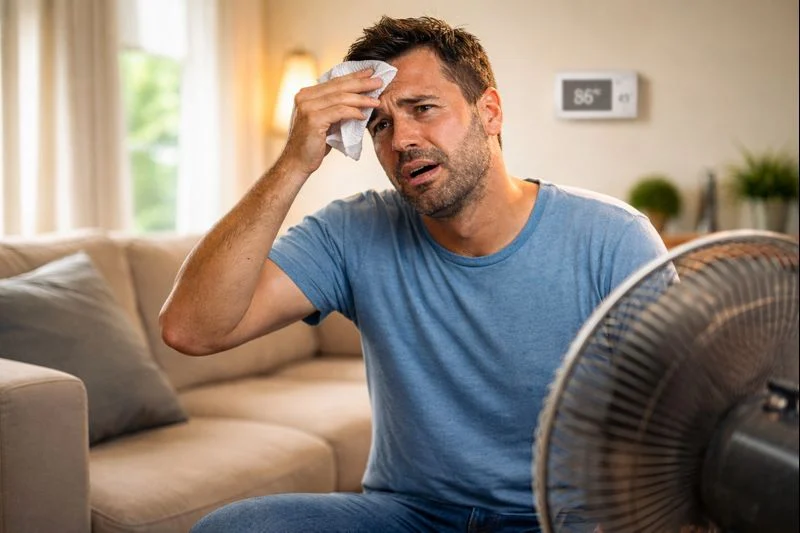





WASHINGTON — As summer temperatures reach their seasonal peaks, homeowners across the country face one of the most frustrating and costly household emergencies: an air conditioning system that hums along continuously without producing a single drop of cool air.
When an AC unit runs indefinitely, it draws a massive amount of electrical power while failing to lower indoor temperatures. This not only results in sweltering living conditions but also leads to staggering utility bills and accelerated wear-and-tear on critical HVAC components. Understanding why this phenomenon occurs—ranging from simple homeowner-fixable oversights to catastrophic mechanical failures—is the first step toward restoring indoor comfort and preventing system-wide destruction.
Main Facts: The Anatomy of a Cooling Failure
An air conditioning system is not a standalone box that magically creates cold air; rather, it is a complex, closed-loop heat-transfer machine. Its primary job is to extract heat and humidity from the interior of a residence and pump that thermal energy outside. When an AC runs constantly but fails to cool, it means the thermodynamic loop has been disrupted.
Industry data compiled by major HVAC associations indicates that continuous runtime without temperature reduction is almost always symptomatic of one of three broad categories:
- Restricted Airflow: The system cannot pull in warm air or push out chilled air effectively.
- Thermal Transfer Failure: Refrigerant or coil issues prevent the system from absorbing or releasing heat.
- Control and Mechanical Malfunctions: Thermostats, electrical relays, or the compressor fail to synchronize the cooling cycle.
While routine maintenance can mitigate many of these issues, ignoring the early warning signs of a struggling cooling system often converts a minor $50 fix into a multi-thousand-dollar system replacement.
Chronology: How a Minor Issue Spirals Into a Major Breakdown
To understand how an air conditioner transitions from working order to complete failure, it helps to look at the chronological progression of a typical cooling malfunction, using a neglected air filter as a prime case study.
Phase 1: The Incipient Stage (Weeks 1 to 4)
A homeowner installs a standard fiberglass or pleated air filter. Over the course of a month, dust, pet dander, pollen, and microscopic debris accumulate within the filter matrix. Airflow begins to bottleneck slightly, though the homeowner notices no change in indoor comfort.
Phase 2: The Performance Decline (Weeks 5 to 8)
The filter becomes heavily clogged. The blower motor inside the air handler must work significantly harder to pull air through the blockade. Because less air passes over the indoor evaporator coil, less heat is absorbed. The AC cycle lengthens; what used to be a 15-minute cooling cycle now runs for 30 minutes.
Phase 3: The Thermal Collapse (Month 3 and Beyond)
Because the evaporator coil is not receiving enough warm air to absorb, the temperature of the coil drops below freezing. Humidity in the air condenses on the freezing metal and instantly turns into a solid layer of frost and ice.
Phase 4: System Failure
The ice acts as an impenetrable thermal insulator. The refrigerant inside the coils can no longer absorb any heat from the home. The thermostat registers that the set temperature has not been reached, forcing the compressor and blower motor to run 24 hours a day. Eventually, liquid refrigerant may flood back to the compressor, destroying the system’s most expensive component, or the motor simply burns out from thermal overload.
Supporting Data: The Hidden Costs of Deferred Maintenance
According to energy efficiency reports from the U.S. Department of Energy and Energy Star, cooling a home accounts for a massive percentage of an average household’s summer utility budget. When an AC system encounters operational hurdles, the financial impact is immediate and measurable.
- Energy Consumption Spike: A dirty air filter alone can force an air conditioning system to consume 5% to 15% more energy as it struggles to circulate air through the home.
- Ductwork Losses: Energy Star estimates that typical duct systems lose 20% to 30% of the conditioned air that moves through them due to leaks, holes, and poorly sealed connections. This means nearly a third of the electricity paid for is being pumped directly into crawlspaces, attics, or walls rather than living spaces.
- Lifespan Reduction: Residential air conditioners are engineered to last between 12 and 15 years. However, units that suffer from chronic refrigerant leaks, dirty condenser coils, and unaddressed airflow restrictions frequently experience total mechanical failure before their 8th year of service.
Detailed Breakdown of Common Causes and Official Diagnostics
HVAC technicians categorize the reasons behind an AC running without cooling into several distinct mechanical and environmental failure points.
1. Restricted Airflow Caused by Dirty Air Filters
As established, a clogged air filter chokes the HVAC system. Without proper airflow, cooling performance plummets.
- The Fix: Homeowners should visually inspect their air filters on a monthly basis. Filters should be replaced every 1 to 3 months, or more frequently if multiple pets reside in the home, if family members suffer from severe allergies, or if construction work is taking place nearby.
2. Incorrect Thermostat Settings and Programming Errors
Sometimes, the physical cooling hardware is operating at peak efficiency, but the brain of the system—the thermostat—is sending incorrect signals.
- What to Check: Ensure the thermostat is switched to "Cool" rather than "Heat" or "Off." Verify that the fan setting is on "Auto" rather than "On" (leaving the fan set to "On" continuously blows uncooled air back through the house after the cooling cycle finishes, raising indoor humidity).
- Smart Thermostat Glitches: Modern Wi-Fi and smart thermostats can experience firmware bugs, Wi-Fi connectivity dropouts, or corrupted scheduling software that disrupts temperature commands.
3. Low Refrigerant Levels (The Silent Leak)
Refrigerant is the lifeblood of your air conditioner. It does not get "consumed" or "used up" like gasoline in a car; it continuously cycles between liquid and gas states. If your system is low on refrigerant, it means there is a physical breach—a leak—somewhere in the copper tubing or coils.
- Warning Signs: Hissing or bubbling noises near the refrigerant lines, ice buildup on the indoor coil, weak airflow that feels lukewarm, and an unexplained spike in monthly power bills. Because refrigerant is a regulated chemical compound under EPA guidelines, leaks must be located, repaired, and recharged exclusively by licensed professionals holding Section 608 EPA certification.
4. Fouled Evaporator and Condenser Coils
An air conditioner features two primary sets of coils: the indoor evaporator coils (which absorb heat) and the outdoor condenser coils (which release heat).
- Evaporator Coil Build-up: If dust bypasses a failing air filter, it coats the damp evaporator coil, creating an insulating barrier that halts heat transfer.
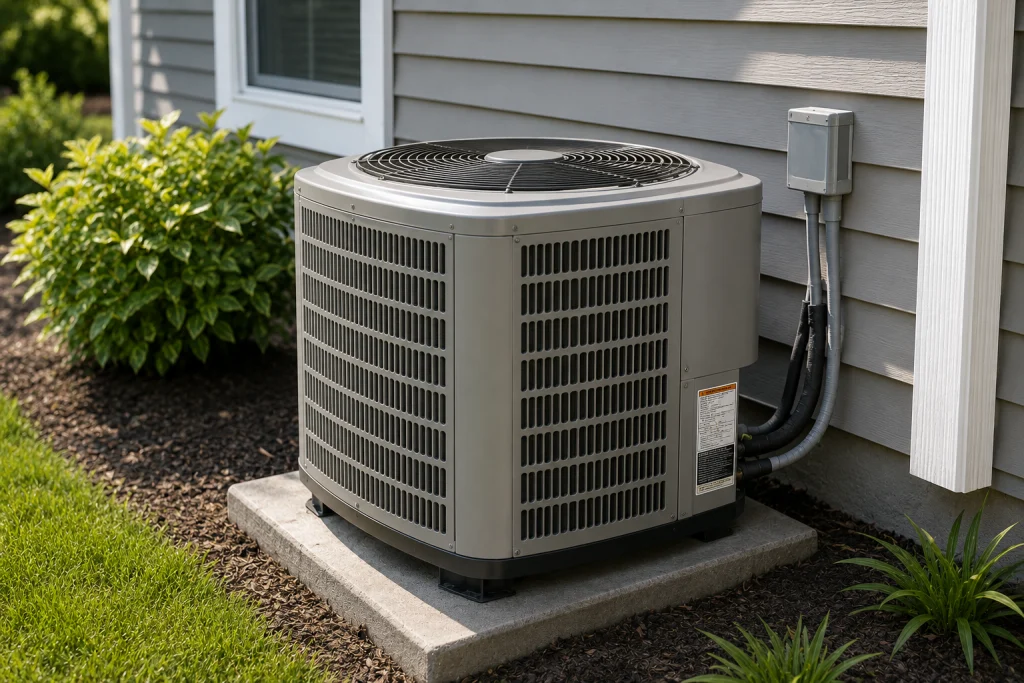
- Condenser Unit Obstructions: The outdoor unit relies on ambient air blowing across its coils to dump the thermal energy gathered from your home. If leaves, grass clippings, dirt, cottonwood seeds, and structural debris block the surrounding perimeter, heat cannot escape. HVAC specialists recommend maintaining a mandatory two-foot clearance zone around all sides of the outdoor condenser unit.
5. Frozen Evaporator Coils
A frozen coil is both a symptom and a cause of cooling failure. Coils freeze when temperatures drop below 32°F due to restricted airflow (dirty filters, blocked supply registers) or low refrigerant pressure.
- Protocol: If a homeowner spots solid white ice coating the indoor unit or copper lines outside, they must immediately turn off the cooling mode at the thermostat (setting the fan to "On" can help accelerate the melting process). Running a frozen AC can permanently destroy the compressor.
6. Leaky, Disconnected, or Damaged Ductwork
It is entirely possible for an air conditioner to produce perfectly chilled 55°F air, only for that air to warm up significantly before it ever exits a ceiling or floor vent.
- Duct Vulnerabilities: Flexible and sheet-metal ducts running through unconditioned attics, basements, or crawlspaces can become crushed, torn, disconnected, or eaten away by rodents. Sealing joints with mastic paste and wrapping ducts in thermal insulation are critical steps to recovering lost cooling capacity.
7. Compressor Failures: The Heart of the System
The compressor, housed within the outdoor unit, pumps refrigerant through the system under high pressure. If the compressor fails due to electrical surges, overheating, or mechanical wear, the system will circulate air, but that air will never be cooled.
- The Dilemma: Replacing a failed compressor is a major, labor-intensive overhaul. For older units nearing the end of their operational life expectancy, investing in an entirely new, high-efficiency air conditioning system is frequently more cost-effective than repairing a dead compressor.
8. Electrical Malfunctions and Component Wear
An AC unit relies on a complex array of electrical components—including contactors, capacitors, wiring harnesses, and circuit boards.
- Capacitor Failure: Capacitors act as energy storage banks that give motors the electrical "kick" needed to start. A failing run or start capacitor will cause the outdoor fan or compressor to hum loudly and shut down on thermal overload without ever engaging the cooling cycle. These electrical repairs involve high-voltage currents and must be handled by trained technicians.
Implications: When to Call a Professional and How to Prevent Future Failures
While homeowners can perform basic triage—such as swapping out a dirty air filter, clearing debris from the outdoor condenser unit, checking breaker boxes, and verifying thermostat configurations—attempting advanced internal repairs can be dangerous and void equipment warranties.
When to Call an HVAC Professional Immediately
Property owners should cease DIY troubleshooting and contact a licensed service provider if they observe any of the following "red flag" symptoms:
- Continuous burning smells, acrid odors, or electrical popping sounds coming from the vents or equipment.
- Grinding, squealing, or metallic screeching noises originating from the outdoor compressor unit or indoor blower motor.
- Heavy ice accumulation persisting on indoor components or refrigerant lines despite turning off the cooling system.
- Tripped electrical breakers that immediately pop again upon resetting the HVAC system.
- Complete lack of cool air accompanied by warm air blowing forcefully from all supply registers.
The Power of Preventive Maintenance
The single most effective strategy against unexpected mid-summer breakdowns is proactive, routine maintenance. Partnering with a qualified service provider—such as Climate-Tech—for annual spring tune-ups ensures that critical systems are inspected, cleaned, and optimized before the heavy cooling season begins.
A comprehensive professional maintenance visit typically includes:
- Checking and calibrating refrigerant pressures and subcooling/superheat metrics.
- Deep-cleaning indoor evaporator coils and outdoor condenser fins.
- Inspecting electrical wiring, tightening terminal connections, and testing capacitors.
- Lubricating moving mechanical parts such as motor bearings.
- Clearing condensate drain lines to prevent costly water overflow damage to ceilings and walls.
- Testing thermostat communication and overall system efficiency ratings.
By investing in preventative care and addressing minor inefficiencies early, homeowners can protect their financial investment, lower their monthly utility expenditures, and ensure reliable, crisp indoor comfort through the hottest months of the year.