



By David Manners
As the global automotive industry navigates the complex, multi-pathway transition toward a carbon-neutral future, motorsport continues to serve as the ultimate proving ground for experimental technologies. In a bold move that bridges traditional internal combustion pedigree with cutting-edge zero-emission engineering, Toyota has announced that it will enter a hydrogen-powered truck into the grueling January 2027 Dakar Rally.
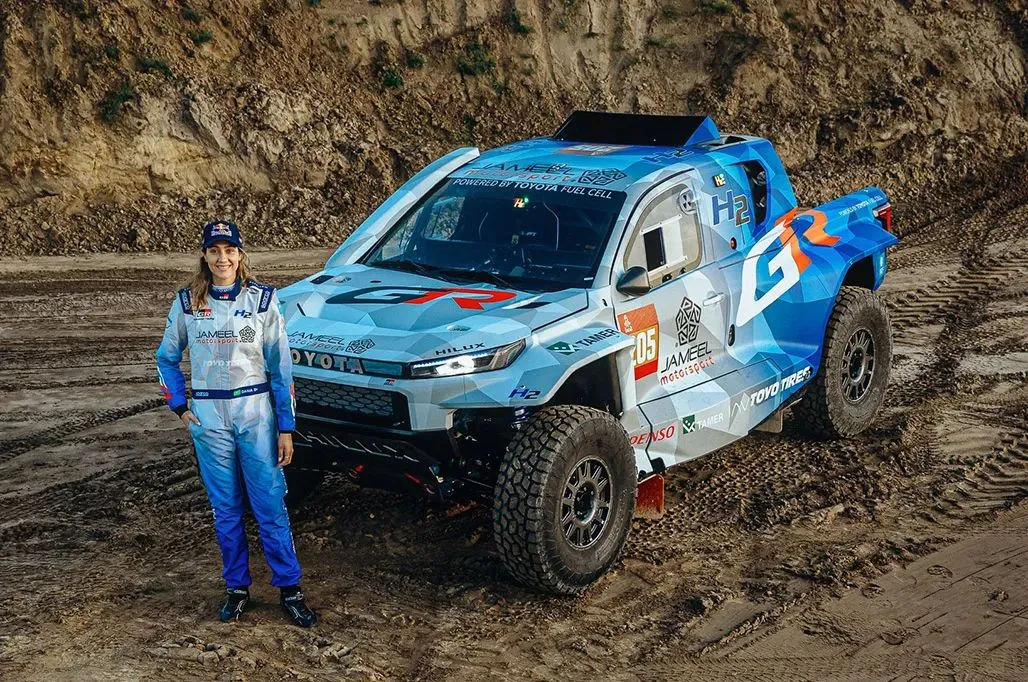
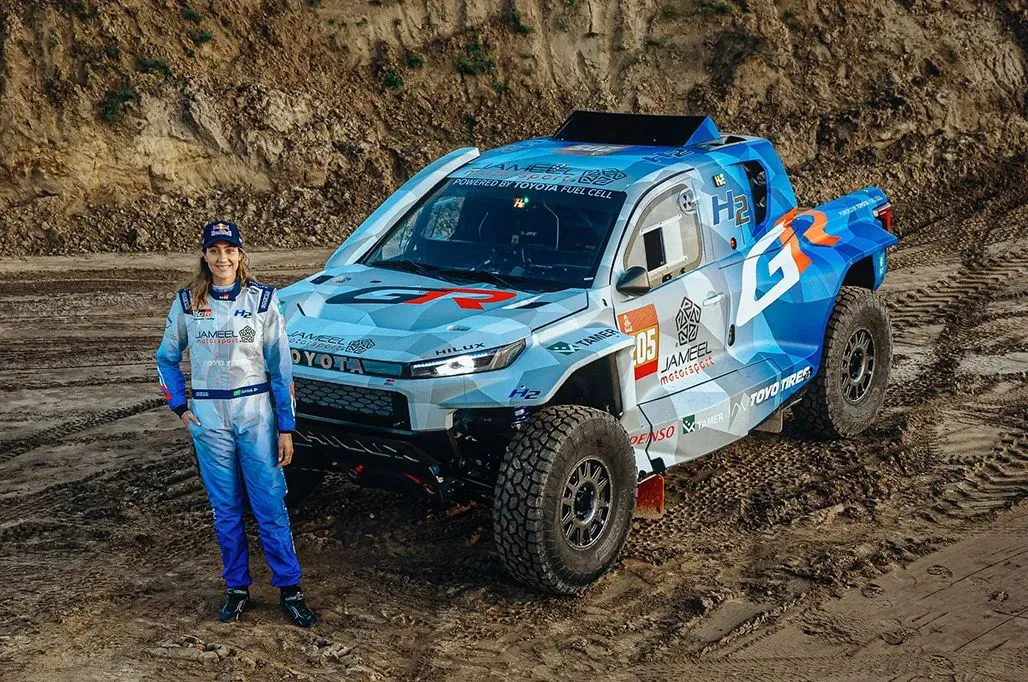
Piloted by acclaimed racer Dania Akeel, the newly minted hydrogen fuel cell vehicle—officially designated the DKR GR FC Hilux—represents a massive leap forward for alternative-fuel endurance racing. Based on the familiar platform of the iconic internal combustion engine (ICE) Hilux pickup, this machine is not merely a design study; it is a meticulously engineered, highly durable competitor built to survive one of the most punishing motorsport events on the planet.
Main Facts: Engineering a Hydrogen Desert Warrior
The transition from a diesel- or petrol-powered workhorse to a hydrogen-fuel-cell desert racer is no small feat. Underneath its familiar 4.5-meter exterior—which matches the precise dimensions of the premier "Ultimate" category in the World Rally-Raid Championship (W2RC)—lies an entirely different powertrain philosophy.
At the heart of the DKR GR FC Hilux are two advanced fuel cell stacks that collectively generate a staggering 400 kilowatts (kW) of power. To put that sheer output into perspective, it is roughly equivalent to the combined power generation of three production Toyota Mirai fuel cell passenger cars. This immense electrical energy is stored and managed through a high-performance system utilizing four onboard high-pressure hydrogen tanks, echoing the proven storage technology found in the Mirai.
Despite the radical shift in propulsion, Toyota has retained much of the mechanical toughness that makes the Hilux a global legend. The hydrogen racer utilizes the exact same robust tubular frame, specialized safety cell, heavy-duty suspension, and high-performance brakes as its petrol-powered sibling. However, to harness and distribute the immense electrical power smoothly across shifting desert dunes, engineers integrated a dedicated e-axle, an advanced IAV Dragoon ECU, and a newly designed proprietary electronics system.
Furthermore, the vehicle embraces sustainable innovation in its construction. Innovative natural fiber body panels have been implemented to replace a portion of the traditional carbon fiber components, reducing the vehicle’s ecological footprint without compromising structural integrity. A specialized high-voltage cooling system has also been introduced to manage thermal loads under extreme desert operating temperatures.
Chronology: From Concept to Competitive Reality
The journey of the DKR GR FC Hilux to the starting line of the 2027 Dakar Rally is the culmination of a deeply collaborative, multi-continental development program.
- The Foundation: The project brought together the collective expertise of Overdrive Racing—the organization trusted to operate the TOYOTA GAZOO Racing W2RC team—alongside TOYOTA RACING GmbH located in Cologne, Germany, and the parent Toyota Motor Corporation in Japan.
- Regulatory Evolution: The stage for alternative energy vehicles in rally-raid was significantly bolstered when organizers established a dedicated competition category in 2024. This class was specifically designed to test new technology vehicles over a punishing 1,000 km test distance, laying the regulatory and safety groundwork for full-scale category integration.
- Construction and Testing Phase: Construction of the DKR GR FC Hilux was recently finalized, marking a critical milestone for the program. Toyota confirmed that the vehicle has officially transitioned into its dynamic testing phase, where engineers are fine-tuning its handling, thermal management, and power delivery ahead of its competitive debut.
- The 2027 Horizon: The vehicle’s baptism by fire will occur at the January 2027 Dakar Rally, which serves as the opening round of the five-round 2027 World Rally-Raid Championship (W2RC) calendar.
Supporting Data: The Arena and The Driver
To understand the magnitude of Toyota’s undertaking, one must examine the grueling nature of the Dakar Rally and the pedigree of the driver tasked with taming the hydrogen Hilux.
The Crucible: The Dakar Rally
Originally known as the Paris-Dakar Rally, the event relocated its operations to the vast, unforgiving expanses of Saudi Arabia in 2020. Over the course of two intense weeks of competition, participants must navigate roughly 8,000 kilometers of punishing terrain, ranging from razor-sharp rocky tracks to towering, soft-sand dunes where navigation errors can prove catastrophic.
The Pilot: Dania Akeel
Behind the wheel of the hydrogen Hilux is Dania Akeel, a driver whose career is defined by exceptional resilience, consistency, and speed across desert landscapes. Akeel’s impressive racing credentials include:
- Securing a stage win at the Dakar Rally in 2025.
- Achieving multiple stage victories across the 2025 and 2026 W2RC seasons.
- Claiming the Challenger class victory at the W2RC Abu Dhabi Desert Challenge.
- Winning the FIA Middle East Baja Cup back-to-back in 2024 and 2025 while driving an Overdrive Racing-entered Toyota Hilux.
Akeel’s intimate familiarity with the Hilux platform makes her an ideal partner for Toyota as the manufacturer ventures into the unknown territory of hydrogen-powered competitive rallying.
Official Responses: Toyota’s Vision for the Future
Toyota has long championed a multi-pathway approach to achieving carbon neutrality, arguing that battery-electric vehicles (BEVs) are not the sole solution for every mobility application. Motorsport provides the ideal accelerated development loop to test the boundaries of hydrogen combustion and fuel cell technologies.
"Construction of the DKR GR FC Hilux is now complete, and it is undergoing dynamic testing prior to its competitive debut," Toyota stated, highlighting the rigorous validation protocols the vehicle is currently undergoing.
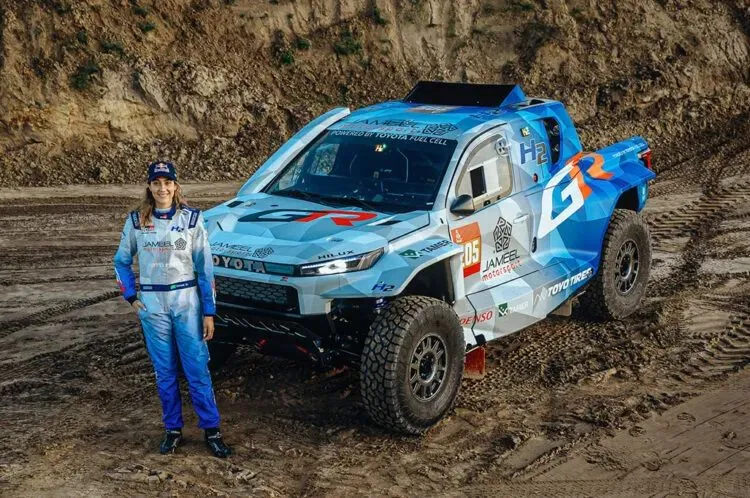
By leveraging the hydrogen architecture already validated in passenger vehicles like the Mirai and scaling it up to heavy-duty, 400kW motorsport applications, Toyota is signaling to both the industry and consumers that hydrogen fuel cell technology is robust enough to handle the most demanding environments imaginable. The data gathered from the sands of Saudi Arabia will directly inform the passenger cars and commercial vehicles of tomorrow.
Implications: What a Hydrogen Hilux Means for the Future of Motoring
The entry of a hydrogen fuel cell truck into the Dakar Rally carries profound implications for the automotive and energy sectors alike.
1. Proving Durability and Reliability
For decades, consumer skepticism surrounding alternative fuel vehicles has centered on reliability, range anxiety, and performance under stress. If a hydrogen fuel cell powertrain can survive 8,000 kilometers of extreme heat, violent shocks, and uninterrupted high-output demands in the Saudi desert, it proves that hydrogen technology is ready for heavier commercial and industrial applications—such as logistics, construction, and long-haul trucking.
2. Validating the Multi-Pathway Strategy
While many automakers have aggressively streamlined their roadmaps toward pure battery-electric vehicle (BEV) production, Toyota’s sustained investment in hydrogen—both via internal combustion engines and fuel cells—underscores a belief that diverse energy vectors are necessary. Motorsport validation helps break down technical barriers, optimize fuel cell stack durability, and improve cooling and power electronics under thermal duress.
3. The Future of Motorsport Sustainability
As global sporting organizations face mounting pressure to reduce their carbon footprint without sacrificing the entertainment and technical spectacle of racing, alternative fuels offer a viable lifeline. Categories designed for hydrogen, synthetic fuels, and electrification ensure that high-performance motorsport can survive and even pioneer green innovations well into the future.
When Dania Akeel fires up the DKR GR FC Hilux at the start line of the January 2027 Dakar Rally, she won’t just be racing for a podium finish. She will be driving the vanguard of a hydrogen-powered automotive revolution, proving that zero-emission mobility can be just as tough, resilient, and exhilarating as the fossil-fueled giants of the past.