






In an era defined by geopolitical friction, economic volatility, and the constant threat of unpredictable "black swan" shocks, corporate leadership faces a persistent temptation: equating the passive monitoring of risk with its active management. For modern procurement teams, this illusion of control frequently manifests as a deluge of data. Dashboards light up with endless real-time alerts, market feeds stream unceasing intelligence, and risk registers expand to encyclopedic proportions.
Yet, in practice, this avalanche of information often achieves the exact opposite of its intended effect. Instead of fostering agility, it overwhelms procurement professionals who lack the time—let alone the capacity—to parse every alert, much less translate them into meaningful commercial action.
As supply chain complexity reaches unprecedented heights, industry experts argue that a paradigm shift is underway. Until artificial intelligence and predictive technologies mature to the point where machines can autonomously shoulder the entirety of this analytical burden, Chief Procurement Officers (CPOs) are discovering a more pragmatic path forward: refocusing their risk management frameworks strictly on the threats that matter most.
1. Main Facts: The Trap of Infinite Visibility and the Rise of Targeted Oversight
The core challenge facing contemporary procurement is not a lack of information, but a severe deficit of actionable clarity. Traditional supply chain risk management (SCRM) strategies have long operated under the assumption that more data equals better mitigation. However, recent insights shared within the Procurement Leaders’ Resilience Cohort reveal a starkly different reality.
Unchecked data collection breeds bureaucracy, inflates operational expenditures, and—most dangerously—creates a false sense of security. When every potential supplier vulnerability is treated with equal urgency, teams experience decision fatigue, effectively blinding themselves to genuine, high-impact hazards.
To counteract this, progressive procurement organizations are abandoning the pursuit of total, unbroken visibility in favor of high-impact, targeted intervention. By intentionally scaling back routine tracking and establishing clear thresholds for action, these enterprises are demonstrating that effective risk management is as much about strategic exclusion as it is about inclusion.
2. Chronology: The Evolution from Bureaucratic Overload to Pragmatic Precision
To understand how modern procurement organizations are streamlining their operations, it is instructive to examine the trajectory of change within a prominent multinational member of the Procurement Leaders’ Resilience Cohort.
The Legacy Model: Unrestricted and Unfocused
Historically, this organization’s approach to supplier financial solvency was decentralized and reactive. Under its legacy policy, any member of the procurement team could—at any time, for any vendor, and for virtually any reason—request a financial solvency check.
While ostensibly designed to maximize transparency, the policy failed spectacularly in practice. It introduced massive bureaucratic friction into the procurement cycle, racked up exorbitant external data subscription costs, and rarely influenced actual commercial decision-making. Solvency checks were treated as a procedural box-ticking exercise rather than a strategic tool.
The Catalyst for Change: Company-Wide Simplification
Recognizing that administrative bloat was stifling organizational agility, the company initiated a sweeping, company-wide mandate to simplify decision-making and eradicate red tape. Procurement leadership was tasked with auditing its risk evaluation processes to eliminate redundant expenditures and focus exclusively on value-additive tasks.
The New Framework: Three Pillars of Risk Evaluation
Rather than attempting to monitor the financial health of every vendor in its database, the company radically narrowed its scope. It instituted a streamlined policy built around three distinct, high-risk scenarios:
- The Risk of Supply Loss: Continuous financial monitoring was strictly ring-fenced to business-critical vendors—those entities whose failure would cause immediate, catastrophic disruption to core operations.
- Onboarding Scenarios: Financial evaluations were shifted to the earliest stages of the procurement lifecycle. Potential critical suppliers are now rigorously vetted during the evaluation phase, empowering buyers to walk away before ink meets paper on a binding contract.
- Cash Exposure Triggers: Instead of continuous monitoring, routine financial checks are automatically triggered by specific commercial behaviors—most notably, whenever a vendor requests an advance payment.
Adapting Customer Metrics for Supplier Risk
In tandem with these operational guardrails, the company adopted a pragmatic methodology for scoring vendor risk. Rather than investing in bespoke, complex supplier-scoring models, the organization repurposed the algorithms, risk bands, and credit limits traditionally used to evaluate customer solvency, ingeniously adapting them to assess supplier stability.
3. Supporting Data: Quantifying the Impact of Less
The results of this strategic pivot, enacted roughly a year ago, offer a compelling indictment of the "more is more" philosophy that has long dominated corporate risk management.
- 50% Reduction in Evaluations: By narrowing the criteria for financial checks, the procurement team now carries out half as many supplier financial risk evaluations as it did under the legacy model.
- 66% Drop in Data Spend: Eliminating indiscriminate, blanket monitoring allowed the organization to slash its external data subscription and software costs by two-thirds.
- Zero Operational Disruptions: Most importantly, despite conducting fewer evaluations and spending significantly less on data feeds, the company reported a flawless operational record. Over the past year, it has experienced zero supply chain disruptions resulting from unexpected supplier failures.
These figures challenge the foundational anxiety of many risk managers: that reducing oversight invites catastrophe. On the contrary, this data suggests that focused, intelligent oversight is exponentially more effective than generalized surveillance.
4. Official Responses and Industry Perspectives: Turning Down the Volume
The experiences of the Resilience Cohort member echo broader sentiments resonating across global leadership circles regarding information consumption and risk mitigation.
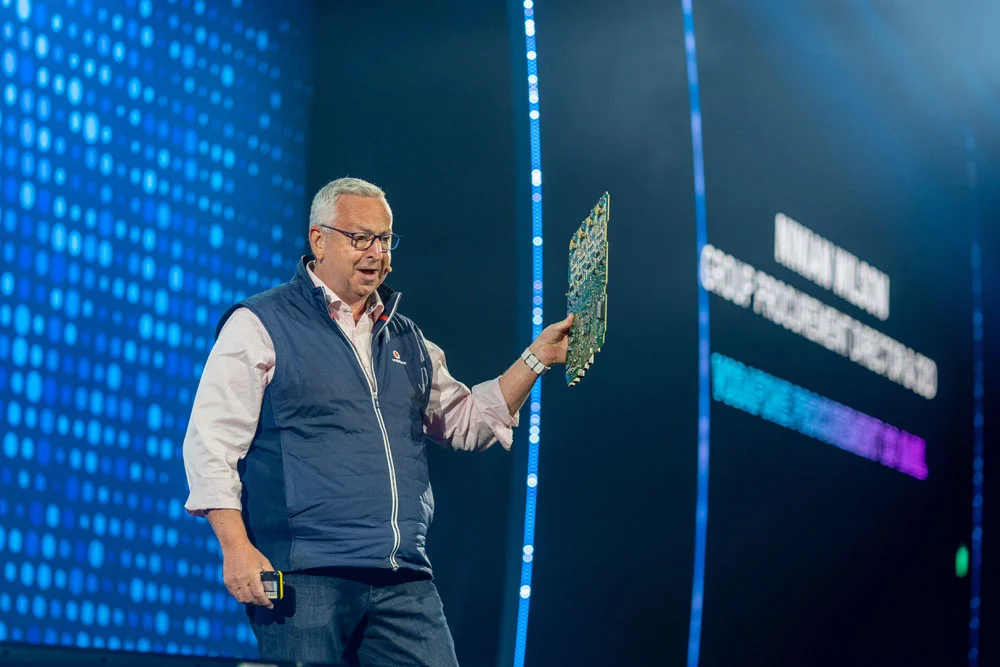
At the recent Ovation conference, macroeconomic expert Sony Kapoor addressed an audience of senior executives, issuing a timely warning about the dangers of cognitive overload. Kapoor noted that in the modern information ecosystem, it is remarkably easy for leaders to become consumed by every breaking headline, every volatile data point, and every microscopic shift in market sentiment. However, he emphasized that this constant state of hyper-vigilance is rarely helpful—and is often actively harmful to strategic execution.
For decades, the standard corporate advice has centered on the importance of "separating the signal from the noise." Yet, as initiatives like the one deployed by the Resilience Cohort demonstrate, the true secret to modern resilience may lie in a simpler, bolder tactic: turning down the volume altogether.
Industry analysts point out that procurement leaders are increasingly pressured to adopt advanced technologies like generative AI and predictive analytics to manage data flows. However, technology alone cannot solve a fundamentally flawed strategic approach.
"Automation applied to a broken, bloated process simply generates errors and alerts at a faster scale," notes one supply chain advisory expert. "Before deploying capital into complex risk-tech stacks, organizations must first define their risk appetite and eliminate the noise that distracts their teams from high-value work."
5. Implications: What This Means for the Future of Procurement
The successful streamlining of supplier financial risk management holds profound implications for the future of the procurement profession. As organizations navigate an increasingly unpredictable global landscape, the mandate for CPOs is evolving rapidly.
Shifting from Administration to Strategy
When procurement professionals are untethered from the endless cycle of chasing low-value alerts and managing bureaucratic data requests, their role undergoes a qualitative transformation. Time previously wasted on administrative compliance can be redirected toward strategic value creation, such as collaborative supplier innovation, sustainability initiatives, and long-term partnership building.
Redefining Resilience
True supply chain resilience is not achieved by attempting to predict every conceivable disruption. Rather, it is born from operational agility, clear internal alignment, and the capacity to focus intense, targeted resources where they will yield the greatest impact. Organizations that master the art of strategic filtering will find themselves uniquely equipped to weather future shocks without burning out their teams or inflating their overheads.
The Road Ahead for CPOs
As the procurement community continues to share best practices through networks like the Resilience Cohort, the consensus is clear: the era of passive, indiscriminate risk monitoring is drawing to a close.
For chief procurement officers looking to future-proof their operations, the takeaway is unmistakable. Success in a volatile world does not require knowing everything about every supplier at every second. It requires knowing the right things about the right suppliers at the exact moment it matters most.
To receive weekly insights, strategic analysis, and updates from the Procurement Leaders community, sign up to the CPO Crunch newsletter.