





The rapid ascent of artificial intelligence has moved from the peripheral curiosity of research labs to the center stage of global discourse. At the heart of this transformation lies ChatGPT, a sophisticated large language model (LLM) that has fundamentally altered the landscape of natural language processing (NLP). Developed by OpenAI, this technology has captivated the public, disrupted industries, and ignited a global conversation about the future of human-computer interaction.
The Genesis of a Conversational Revolution: What is ChatGPT?
To understand the magnitude of ChatGPT, one must first look at its lineage. The "GPT" in its name stands for Generative Pre-trained Transformer. It is a class of artificial intelligence models designed to understand, interpret, and generate human-like text by predicting the next word in a sequence based on the vast dataset it was trained on.
While GPT-1 and GPT-2 laid the essential groundwork, it was the release of GPT-3 in 2020 that signaled a paradigm shift. GPT-3 exhibited an unprecedented ability to write code, compose poetry, draft legal documents, and engage in complex reasoning. ChatGPT, specifically, represents a refined, fine-tuned iteration of this architecture. Unlike the broader GPT-3, which acts as a general-purpose text completion engine, ChatGPT is optimized for dialogue. It is trained using Reinforcement Learning from Human Feedback (RLHF), a technique where human reviewers rank model responses to teach the AI how to be more helpful, harmless, and context-aware.
A Chronological Perspective: From Research to Public Utility
The journey of OpenAI’s language models is a study in rapid technological acceleration:
- 2018: The Foundation: OpenAI releases the first GPT model, proving that a transformer-based architecture could learn generalized representations of language.
- 2019: GPT-2 and Scaling: With an increase in parameters, GPT-2 demonstrated that larger models could perform tasks they weren’t explicitly trained for—a concept known as "zero-shot learning."
- 2020: The GPT-3 Breakthrough: The release of GPT-3 provided the public with a glimpse of an AI that could pass as a sophisticated writer. This model served as the backbone for a new wave of startups and applications.
- Late 2022: The ChatGPT Milestone: OpenAI releases ChatGPT to the public. Unlike its predecessors, which were largely hidden behind developer APIs, ChatGPT was deployed via a user-friendly chat interface. This democratization of power led to an unprecedented adoption rate, reaching 100 million users in mere months.
Technical Mechanics: How to Harness the Power of the Model
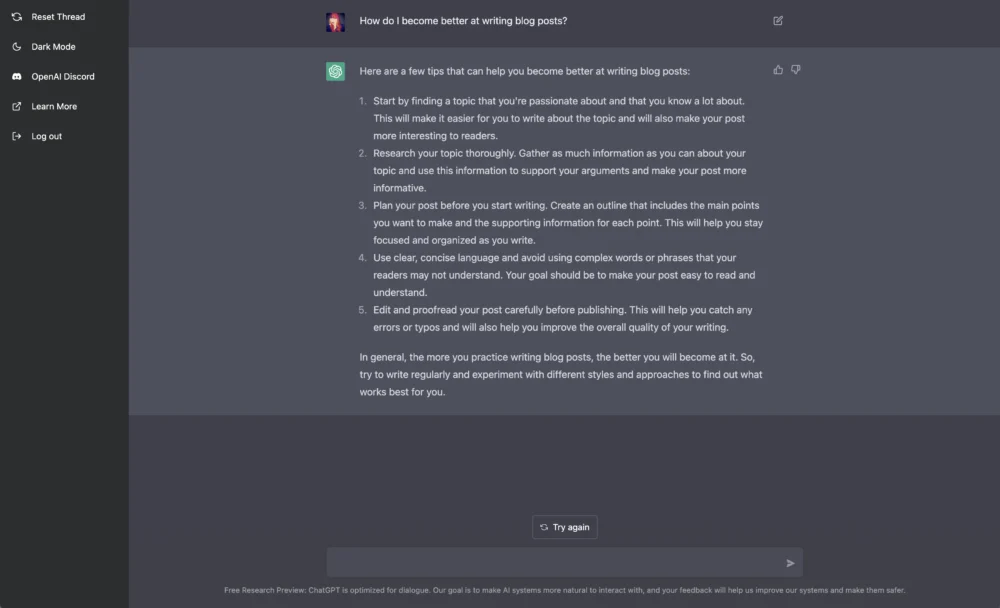
For those looking to integrate this technology into their workflows, understanding the mechanics of prompting is essential. ChatGPT operates on the principle of "input-output," where the quality of the response is directly correlated to the clarity and detail of the "prompt."
The Art of Prompt Engineering
The most effective way to interact with the model is to provide context. Rather than asking a blunt question, users are encouraged to be "wordy" and descriptive. For instance, providing a role-based prompt—such as "Act as a software architect and explain this Python script"—yields significantly more relevant and structured results.
Fine-Tuning and Few-Shot Learning
Beyond standard interaction, developers utilize "few-shot learning." By providing the model with a few examples of the desired output within the prompt, users can guide the AI to replicate specific styles, formats, or tones. This is particularly useful for enterprise applications where consistency is paramount. For developers, the OpenAI API provides a gateway to build these capabilities directly into software, typically using languages like Python, which boasts the most robust support for AI libraries.
The Industry Implications: A Digital Renaissance
The implications of ChatGPT extend far beyond simple text generation. In the professional sphere, it is acting as a "force multiplier."
- Software Development: Programmers are utilizing the model to debug code, write boilerplate functions, and translate legacy code into modern languages.
- Content Creation: Marketing professionals and journalists are using the tool to draft outlines, brainstorm creative concepts, and summarize dense reports into digestible summaries.
- Education and Academia: The technology is forcing a reconsideration of how we assess knowledge. With AI capable of drafting essays and solving problems, educators are shifting toward a focus on critical thinking and the verification of AI-generated content.
However, this adoption is not without its hurdles. The "hallucination" phenomenon—where the model presents factually incorrect information with high confidence—remains a significant barrier to its use in high-stakes fields like medicine or law.
Official Responses and Ethical Considerations
OpenAI has been proactive in addressing the ethical dimensions of their creation. Their official documentation stresses the importance of "safety layers" intended to prevent the model from generating hate speech, promoting illegal activities, or revealing sensitive information.
Despite these safeguards, the academic and technical communities remain in deep debate. Critics point to the "black box" nature of these models—where even the developers cannot always explain why the AI chose a specific word or logical path. Furthermore, there are significant concerns regarding intellectual property, as these models are trained on massive, scraped datasets that often include copyrighted material without direct compensation to the original authors.
OpenAI’s stance has been one of iterative deployment: release, monitor, gather feedback, and patch. They argue that by exposing the technology to the public, they can identify biases and vulnerabilities faster than they ever could in a closed laboratory environment.
Looking Ahead: The Future of Human-AI Collaboration
As we move forward, the integration of generative AI into our daily lives appears inevitable. We are likely to see the transition of AI from a "chat window" to a ubiquitous assistant embedded within our operating systems, search engines, and professional software suites.
However, it is vital to remember that ChatGPT is a tool, not an oracle. It lacks intent, consciousness, and a true understanding of the world. Its strength lies in its ability to synthesize existing human knowledge, not in creating original truth. As the technology continues to evolve, the most successful individuals and organizations will be those who learn how to effectively collaborate with these models, applying human oversight to ensure that the speed and scale provided by AI are tempered by accuracy and ethical responsibility.
For those eager to stay ahead of the curve, the key is continuous learning. As industries transform, the demand for professionals who understand the intersection of human creativity and machine learning will only grow. Whether it is through formal software training courses or hands-on experimentation with new APIs, the ability to navigate this new landscape is becoming a foundational skill for the 21st-century workforce.
The story of ChatGPT is still being written. It is a story of human ingenuity, the relentless pursuit of progress, and the ongoing challenge of managing the tools we create. As we stand at this technological crossroads, the focus must remain on leveraging this power to enhance human potential rather than replacing it.