Published: October 8, 2026
Source: Air Cargo News Editorial Desk
Introduction and Executive Summary
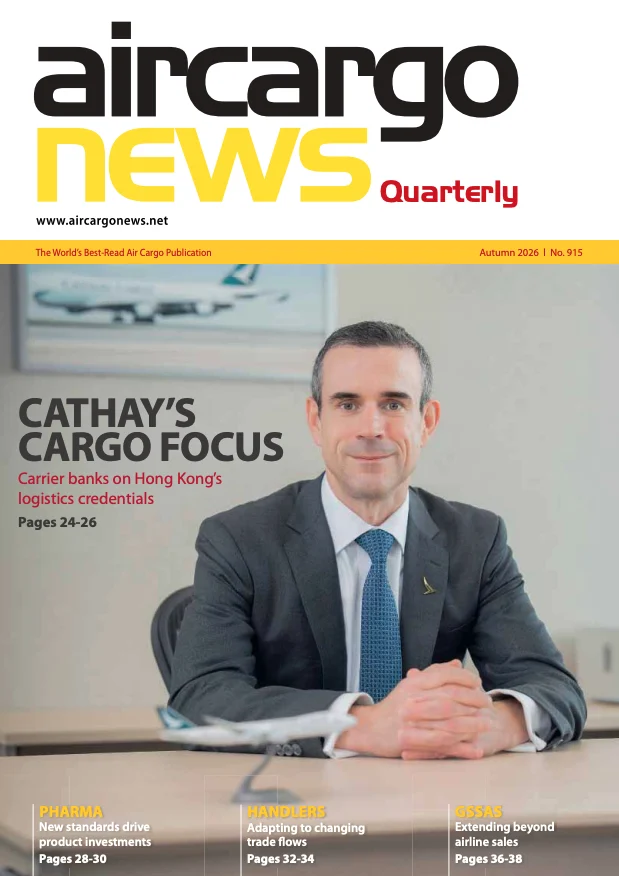
The global aviation logistics sector finds itself at a fascinating crossroads of technological transition, regulatory evolution, and shifting geopolitical trade lanes. Against this backdrop, Air Cargo News has officially released its highly anticipated Autumn 2026 Edition, offering an exhaustive deep-dive into the trends, challenges, and commercial victories shaping the industry today.
From a sensational regulatory reprieve for one of the world’s most reliable workhorse freighters to deep-seated alliances among major global carriers, this quarter’s publication captures an ecosystem in rapid motion. Readers will find exhaustive market updates on the global freighter fleet, comprehensive special reports targeting specialized sectors such as pharmaceuticals and ground handling, an exclusive executive interview with Cathay Cargo, and a strategic look at Anchorage—the indispensable crossroad of trans-Pacific trade.
This article explores the core highlights of the Air Cargo News Autumn 2026 Edition, synthesizing the critical updates, market dynamics, and operational transformations detailed within its pages.
Main Facts: Core Highlights of the Autumn 2026 Edition
The latest edition of Air Cargo News addresses several monumental developments that are currently redefining the economics of international airfreight. Chief among them are fleet longevity milestones, carrier joint-venture maturation, and structural shifts in specialized cargo handling.
- The Boeing 777F Reprieve: In a development that has sent ripples of relief and strategic re-evaluation through airline boardrooms worldwide, the iconic Boeing 777 Freighter has secured a vital regulatory and operational reprieve. This ensures its continued dominance in long-haul mainline cargo operations amid tightening environmental mandates.
- Trilateral Alliance Progress: The high-stakes partnership involving International Airlines Group (IAG Cargo), Qatar Airways Cargo, and MASKargo has achieved significant operational milestones. The synergy between these three aviation giants is effectively reshaping cargo flows between Europe, the Middle East, and Asia.
- Freighter and Container Market Updates: Supply and demand curves are experiencing distinct adjustments. The edition provides granular analysis on belly-hold capacity recovery versus dedicated freighter utilization, alongside a thorough update on the global air cargo container (ULD) market.
- Specialized Focus Sectors: Dedicated deep-dives dissect the evolving landscapes of General Sales and Service Agents (GSSAs), airport cargo ground handlers navigating labor and automation challenges, and the high-value pharmaceutical cold chain.
- Strategic Hubs and Leadership: Anchorage International Airport takes center stage as a vital refueling and transshipment nexus, while an exclusive interview with Cathay Cargo leadership offers a masterclass in modern network management and sustainability.
Chronology: How the 2026 Market Landscape Unfolded
To understand the weight of the stories featured in the Autumn 2026 edition, it is essential to trace the sequential milestones that led the air cargo industry to this juncture over the preceding quarters:
- January – March 2026: Global supply chains faced early-year turbulence driven by maritime canal disruptions, forcing a temporary surge in emergency air charter requests. Airlines scrambled to reallocate widebody aircraft to meet unexpected spikes in trans-Pacific and Asia-Europe demand.
- April – June 2026: Regulatory bodies globally intensified discussions regarding carbon emissions baselines, putting pressure on older-generation freighters. Uncertainty loomed over fleet replacement timelines, particularly regarding the phase-out schedules for non-compliant quad-jets and older twins.
- July – August 2026: Major collaborative frameworks, notably the IAG-Qatar-MASkargo network alignment, began moving from preliminary regulatory clearances into operational execution phases, laying the groundwork for harmonized booking systems and shared capacity blocks.
- September 2026: The breakthrough regulatory clarification regarding the Boeing 777F emerged, granting operators extended operational certainty. Concurrently, preparations for the peak Q4 cool-chain pharmaceutical shipping season kicked into high gear across major hubs.
- October 8, 2026: Air Cargo News publishes its Autumn 2026 Edition, consolidating these milestones into a definitive blueprint for the remainder of the year and heading into 2027.
Supporting Data and Market Analysis
The data presented within the Autumn 2026 edition underscores a market defined by resilience, disciplined yield management, and targeted technological investments.
1. The Fleet Dilemma and the 777F Reprieve
With stricter noise and emissions standards rolling out across North American and European airspace, operators of large widebody freighters faced mounting anxieties. The Boeing 777F—accounting for a substantial share of global long-haul cargo capacity—was at the center of compliance discussions. The recent reprieve provides airlines with a financial and operational buffer, allowing them to maximize return on investment on existing airframes while next-generation alternative propulsion technologies continue their prolonged development cycles. Current market metrics show that widebody twin-engine freighters maintain an average daily utilization rate exceeding 13.5 hours on prime intercontinental routes.
2. Alliance Synergy: IAG, Qatar, and MASKargo
The trilateral cooperation between IAG Cargo, Qatar Airways Cargo, and MASKargo represents a combined fleet reach and network footprint that commands an enviable share of global tonnage. By integrating schedules, streamlining interline agreements, and optimizing hub-and-spoke models through London, Doha, and Kuala Lumpur, the alliance has reported efficiency gains. Data highlighted in the market update indicates that partner airlines have reduced transit times by an average of 8% on connecting routings between Europe and Southeast Asia.

3. Pharma and Cold Chain Logistics
The pharmaceutical special report underscores the sector’s unyielding demand for precision. Despite broader economic fluctuations, global temperature-controlled airfreight has maintained a steady year-on-year volume growth of roughly 4.5%. Airports investing in dedicated, GDP-compliant (Good Distribution Practice) cool-chain facilities—such as Anchorage and major European gateways—are capturing disproportionate yield premiums.
Official Responses and Industry Commentary
Industry leaders and analysts featured in the Autumn 2026 edition have offered profound insights into the state of the market:
- On Fleet Strategy: A leading aerospace analyst noted, "The reprieve granted to key widebody platforms like the 777F is a pragmatic acknowledgment by regulators and environmental agencies that the global logistics backbone cannot be overhauled overnight without inducing catastrophic capacity shortages."
- On Carrier Partnerships: Executives within the IAG-Qatar-MASkargo orbit emphasized that modern air cargo is no longer a game of solitary competition. "Scale, seamless digital connectivity, and shared infrastructure are the absolute prerequisites for surviving macroeconomic volatility and meeting the exacting standards of multinational shippers."
- On Ground Handling and GSSAs: Representatives from top-tier GSSAs highlighted the ongoing digital transformation within cargo terminals. "Data transparency is no longer a value-add service; it is the fundamental currency of customer retention. Shippers demand real-time visibility from warehouse acceptance to final tarmac delivery."
Implications: What the Autumn 2026 Edition Means for the Industry
The releases and analyses compiled in the Air Cargo News Autumn 2026 Edition carry profound implications for stakeholders across the entire aviation supply chain:
For Airlines and Operators
Carriers must leverage the breathing room provided by fleet regulatory reprieves to carefully map out their long-term fleet renewal strategies. While the immediate pressure on certain freighter types has eased, the trajectory toward net-zero operations remains unyielding. Operators must balance near-term profitability against capital expenditures for sustainable aviation fuel (SAF) integration and next-generation fuel-efficient aircraft.
For Airports and Ground Handlers
Hubs like Anchorage continue to prove that strategic geographic positioning paired with infrastructure upgrades can insulate them from regional volume dips. Ground handlers, however, face mounting pressure to accelerate automation—such as autonomous guided vehicles (AGVs) and AI-driven warehouse management systems—to combat ongoing labor shortages and soaring throughput expectations.
For Shippers and Forwarders
With alliances like IAG-Qatar-MASkargo tightening their integration and specialized sectors like pharmaceuticals requiring hyper-specialized handling, forwarders must adapt to increasingly consolidated capacity options. Maintaining close partnerships with adaptable GSSAs and leveraging digital booking platforms will be paramount to securing space during the impending Q4 peak season.
Conclusion
The Air Cargo News Autumn 2026 Edition serves as an indispensable compass for an industry navigating a complex matrix of regulatory relief, strategic consolidation, and technological modernization. By capturing the pulse of the market—from the flight decks of long-haul freighters to the high-tech cold rooms of global hubs—the publication provides the clarity and foresight required by logistics professionals worldwide.
Readers can access the full digital edition of Air Cargo News Autumn 2026 via the official PageSuite reader link.