




Main Facts
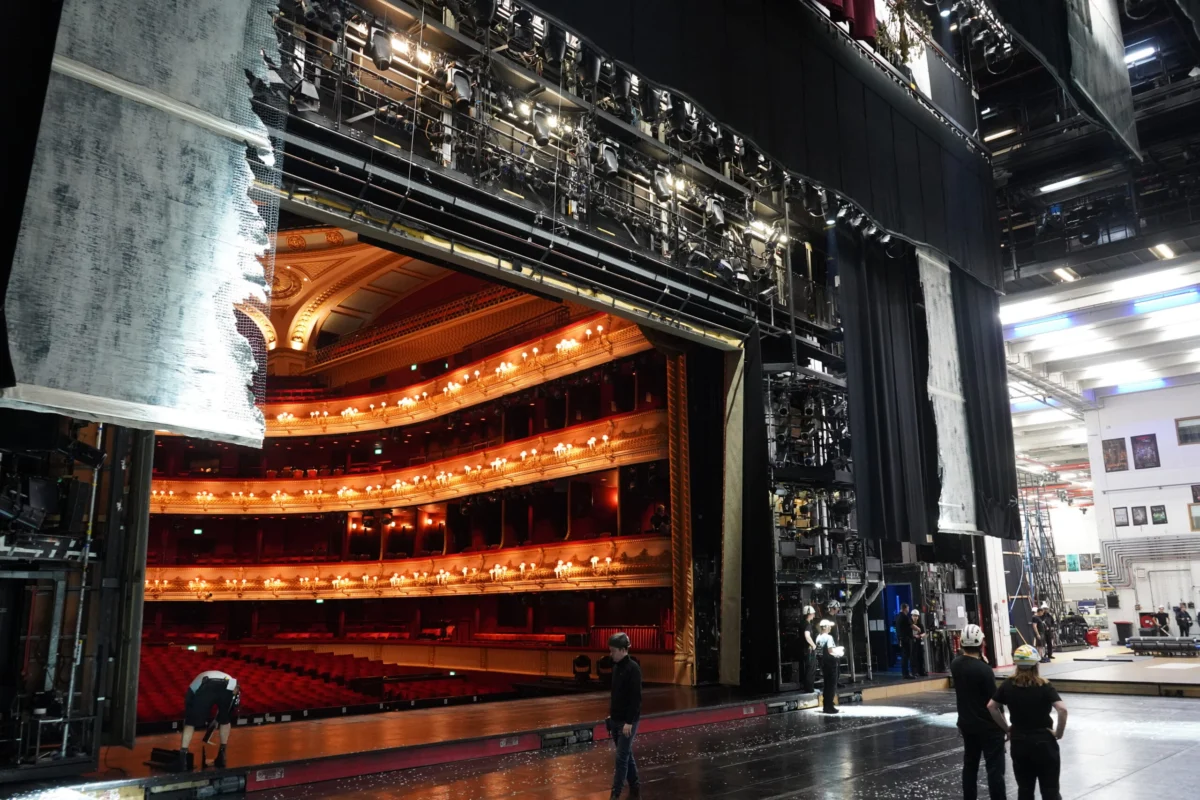
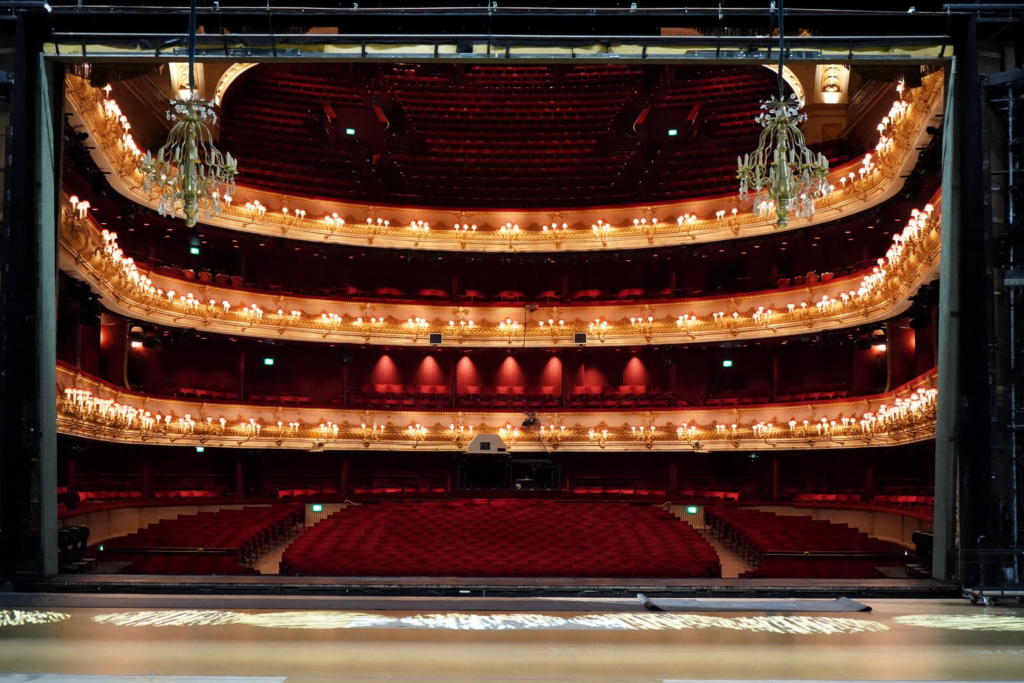
London’s iconic Royal Opera House (ROH)—home to both The Royal Opera and The Royal Ballet—recently completed a critical modernization of its overstage technical infrastructure. After 25 years of reliable, uninterrupted service, the venue’s legacy stage machinery underwent a comprehensive overhaul to support a major shift from traditional halogen spotlights to modern LED lighting systems.
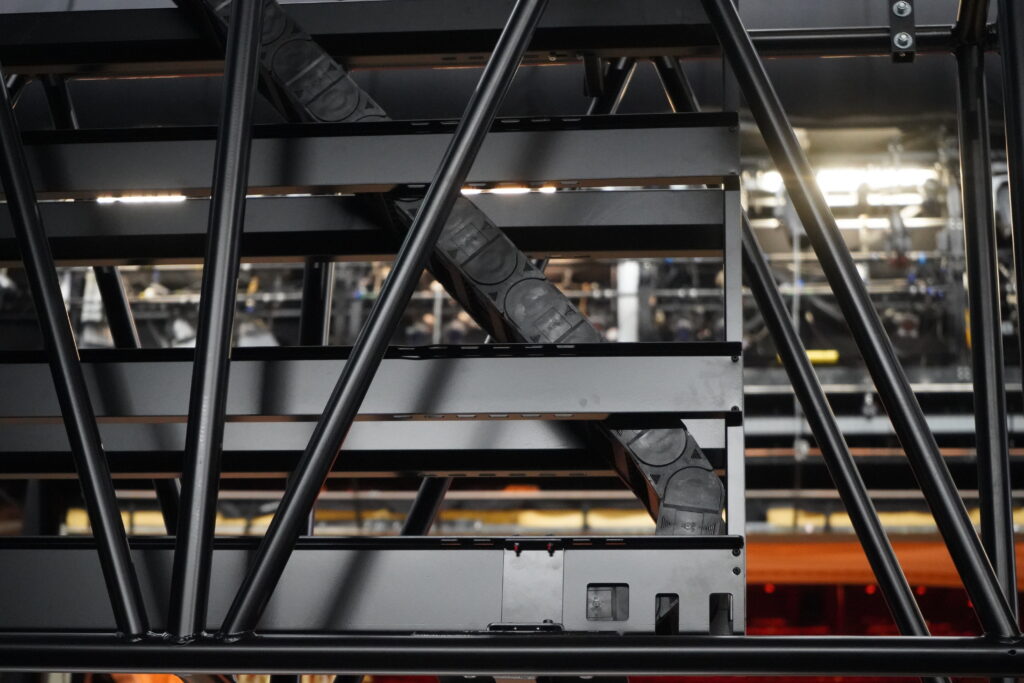
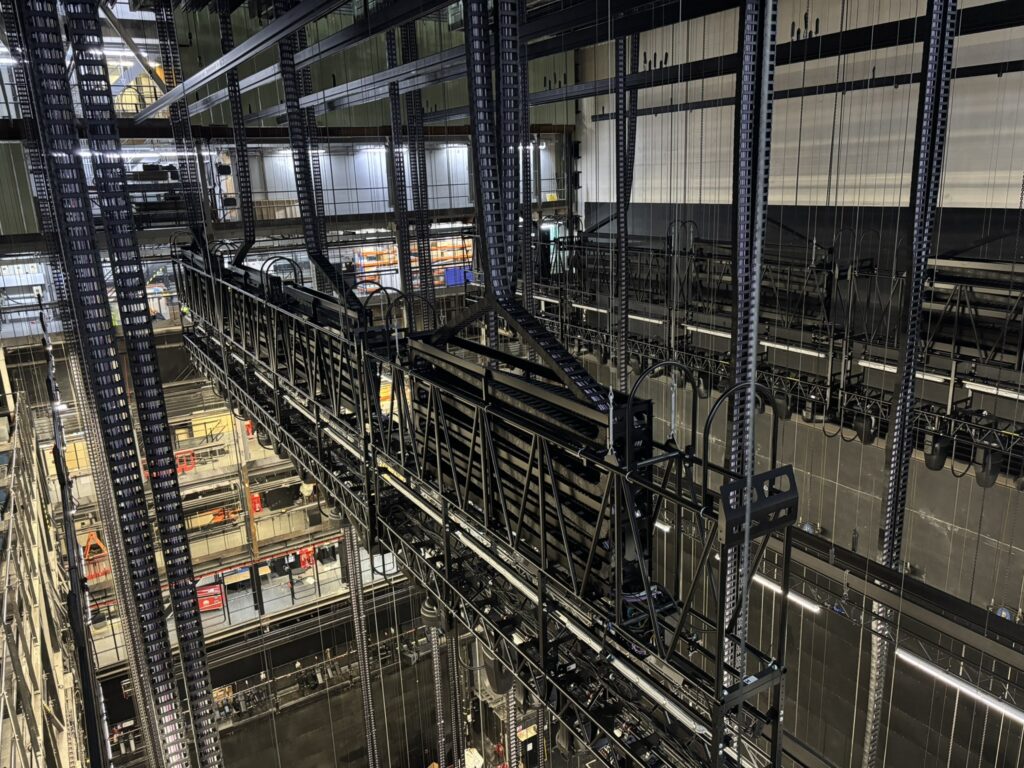
At the heart of this multi-million-pound technical transformation is a custom-engineered, heavy-duty cable management solution developed by motion-plastics manufacturer igus. The new installation features an array of specialized zigzag energy chains, specialized continuous-flex cables, and lightweight guide structures spanning more than 25 meters of vertical travel.

Operating behind the scenes of a venue that hosts more than 250 performances annually for a 2,256-seat auditorium, this sophisticated apparatus handles the massive bundle of motor, bus, data, fiber-optic, and control lines necessary to power state-of-the-art stage productions. Crucially, the engineering team had to overcome severe structural weight limits imposed by the historic London building, successfully shrinking guide box components while reducing lateral cable sway from one meter down to a negligible 20 millimeters.
Furthermore, the entire retrofit was executed during a stringent four-week maintenance window, showcasing a masterclass in modern theatrical engineering, rapid deployment, and sustainable lifecycle management.
Chronology of the Modernization
1997–2000: The Foundation of Modern Stage Automation
Between 1997 and 1999, the Royal Opera House underwent a massive, landmark rebuild that fundamentally altered its Bow Street footprint. This project introduced cutting-edge stage technology, including a towering 37-meter fly tower capable of holding two full sets simultaneously, alongside a purpose-built elevator large enough to transport full-scale scenery directly from the loading bay to the stage level.
As part of this millennium-era upgrade, motion-plastics manufacturer igus was contracted to supply an innovative zigzag energy chain system. This system was designed to safely guide the dense volume of power and control cables required for five vertically moving rows of overhead beams equipped with heavy halogen spotlights. For a quarter-century, this infrastructure operated seamlessly, serving as the invisible backbone for thousands of world-class ballet and opera performances.
2025: The LED Revolution and Structural Impasses
By 2025, technological advancements and energy-efficiency mandates prompted the ROH to retire its aging halogen spotlights in favor of contemporary LED lighting arrays. While LEDs dramatically slashed the venue’s overall power consumption, they introduced a unique structural dilemma: the cumulative volume, weight, and density of the new cabling ecosystem exceeded the load-bearing capacities of the existing overstage suspension points.
To support the heavier weight of modern LED hardware without threatening the structural integrity of the historic building, engineers realized the entire overhead machinery needed a clean-sheet redesign.
The 2025 Retrofit Window: Four Weeks to Transformation
Faced with a tight, non-negotiable operational schedule dictated by the theater’s packed performance calendar, engineers and technicians were granted a mere four-week maintenance window in 2025 to rip out the old infrastructure and install the new system.
The legacy igus chains were decommissioned and dismantled. True to modern environmental standards, the ROH enrolled in the igus Chainge recycling program, successfully returning 2.4 tons of old, worn plastic energy chains to the material cycle. Simultaneously, 15 pre-assembled, ready-to-install zigzag systems—complete with optimized guide boxes, advanced e-chains, and specialized cabling—were hoisted into place, meticulously calibrated, and tested via high-precision lasers just in time for the curtain to rise on a new era of performances.
Supporting Data and Technical Specifications
The sheer scale of the Royal Opera House engineering project is reflected in its technical metrics:
- Vertical Travel: Overhead lighting trusses move smoothly at speeds of 250 millimeters per second across a vertical range exceeding 25 meters.
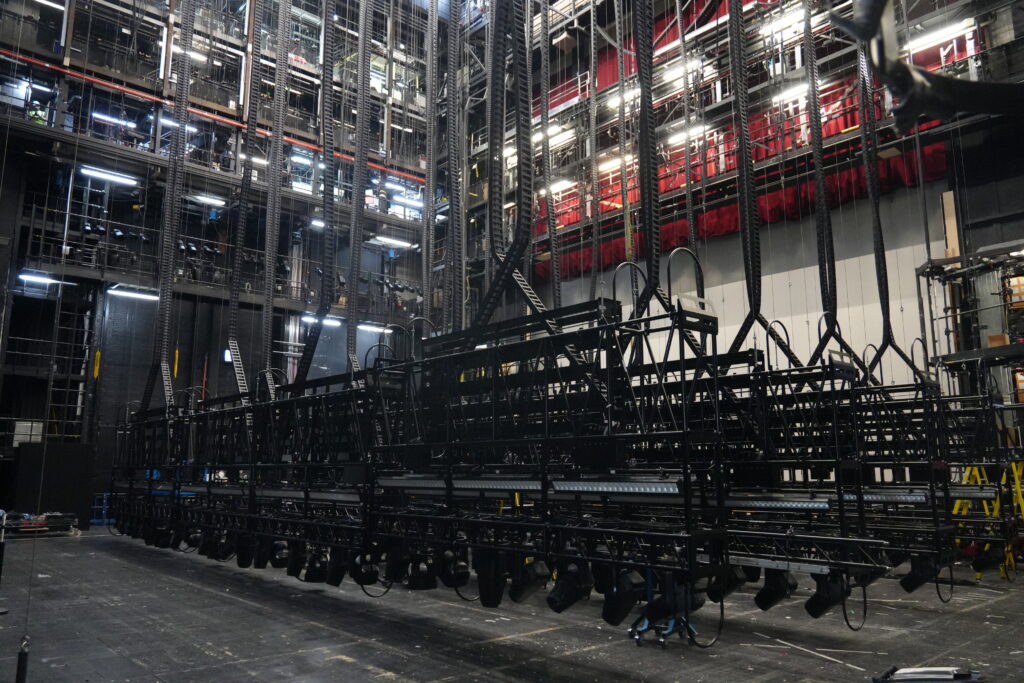
- Truss Architecture: The modernized lighting hoists consist of five 21-meter-long rows of aluminum trusses. Each row is broken down into three closely spaced units that operate independently. Every unit utilizes a robust two-truss design, segregating the lower lighting fixture platform from the main structural load-bearing section.
- Cable and Chain Footprint: The installation incorporates roughly 9 tons of energy chains, translating to over 1 kilometer of total plastic track deployed across the overstage grid.
- Weight Reductions: Initial designs for the guide boxes called for 2.5-millimeter-thick steel baskets, weighing roughly 200 kilograms per unit—a figure that threatened to overload the hoisting machinery. Engineers successfully re-engineered the assemblies, reducing guide box weight to under 150 kilograms.
- Sway Suppression: Due to the geometry of vertical zigzag systems, massive cable loads initially generated a dangerous 1-meter lateral pendulum effect during testing. By implementing an opposed configuration—pairing two e-chains per unit moving in reverse directions—lateral forces cancelled each other out, shrinking sway down to just 20 millimeters.
- Operational Scope: The venue supports a workforce of over 3,000 people, delivers more than 250 live performances annually, and welcomes audiences to its 2,256-seat main auditorium—a space that accounts for only a fraction of the sprawling Bow Street site’s total footprint.
Official Perspectives and Engineering Insights
The success of the Royal Opera House cable management upgrade highlights the close collaboration between theatrical production teams and industrial motion control specialists.
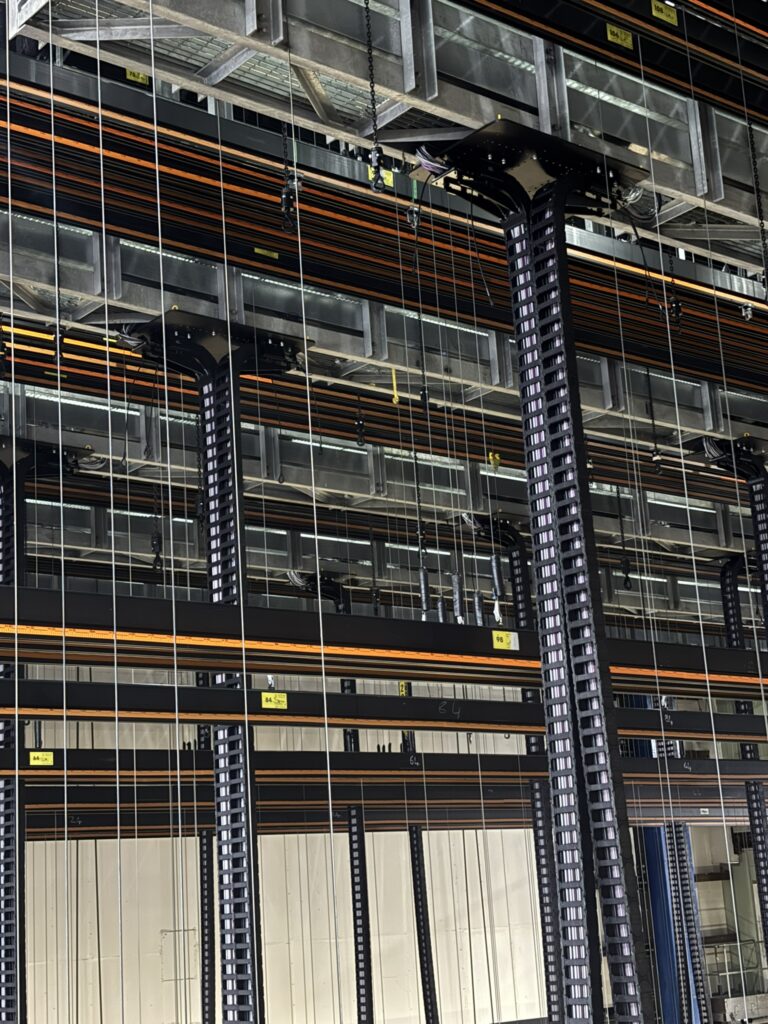
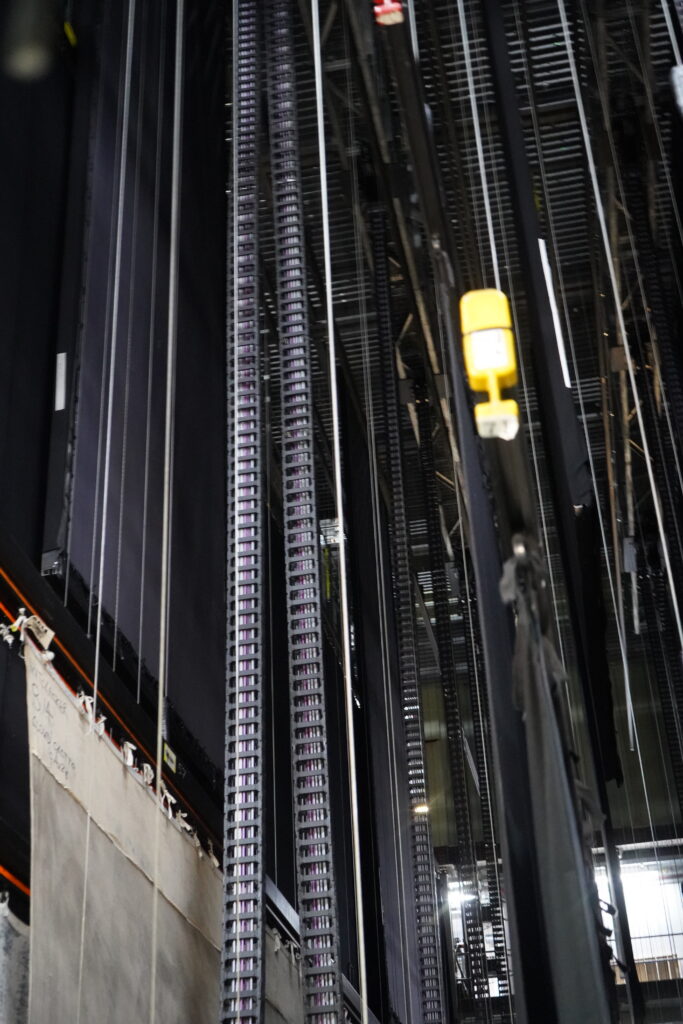
Engineers working on the project noted that while alternative energy supply solutions, such as motorized cable reels, were initially evaluated, they were quickly dismissed. Given the sheer density and diversity of lines required—encompassing robust chainflex motor, bus, data, fiber-optic, and control cables—the zigzag system remained the undisputed superior choice. The folding mechanism ensures that cables are managed dynamically without placing harmful tensile strain on individual lines, while allowing technicians to rapidly swap or add individual cables when necessary.
Furthermore, the selection of the E4.56 series e-chain from igus was driven by the strict acoustic requirements of a world-class performance venue. Theatergoers expect absolute silence during quiet movements in a ballet or opera; any mechanical squeaking or whirring from the fly tower would ruin the artistic illusion. The low-noise profile of the e-chain, paired with electromagnetic compatibility (EMC) shielding on the chainflex cables, ensures that delicate audio and video signals remain completely free from electrical interference generated by nearby stage motors.
Implications for Theatrical Engineering and Future Sustainability
The completion of the Royal Opera House cable management overhaul carries significant implications for the broader performing arts and industrial automation sectors.
First and foremost, it establishes a compelling blueprint for historic cultural venues attempting to bridge the gap between 19th- or 20th-century architecture and 21st-century environmental standards. As theaters worldwide face pressure to adopt energy-efficient LED technologies, they frequently run into the exact structural wall encountered by the ROH: heavy cables meeting outdated load limits. The solution demonstrated at Bow Street—combining lightweight, high-strength motion plastics, opposed pendulum-canceling chain geometries, and precision laser-guided balancing—provides a replicable framework for global theater operators.
Second, the project underscores the growing importance of circular economies in industrial maintenance. By recycling 2.4 tons of old energy chains through specialized take-back programs, the ROH demonstrated that massive infrastructure overhauls do not have to come at the expense of environmental responsibility.
Finally, by ensuring that the new systems are quieter, lighter, and engineered to outlast their 25-year predecessors, the Royal Opera House has future-proofed its technical ecosystem. Though entirely invisible to the thousands of patrons gazing up at the stage each week, this silent, precise network of plastic and copper ensures that the magic of London’s premier ballet and opera house will continue to run flawlessly for decades to come.