





Introduction: The Imperative of Weather Science
In the modern landscape of high-performance computing, ubiquitous connectivity, and rapid technological advancement, it is easy to assume humanity has insulated itself from the raw power of nature. Yet, as Senior Editor Cabe Atwell points out in this week’s flagship editorial, taking away the smartwatches, cellular devices, personal vehicles, and modern infrastructure leaves a sobering reality: humanity remains entirely at the mercy of the planet.
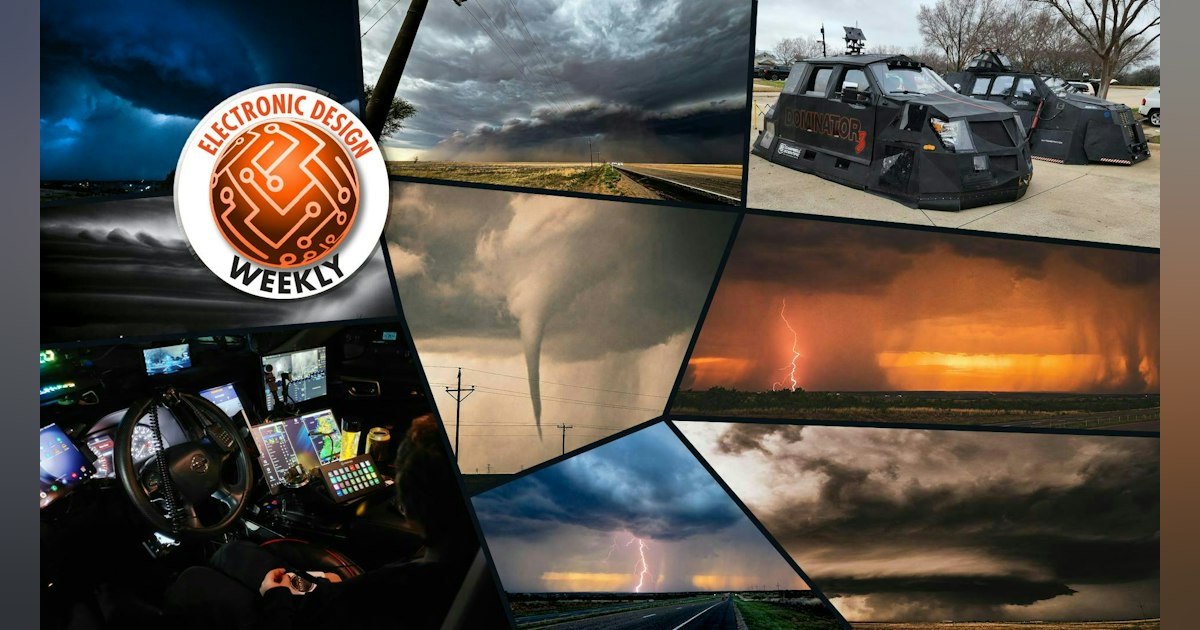
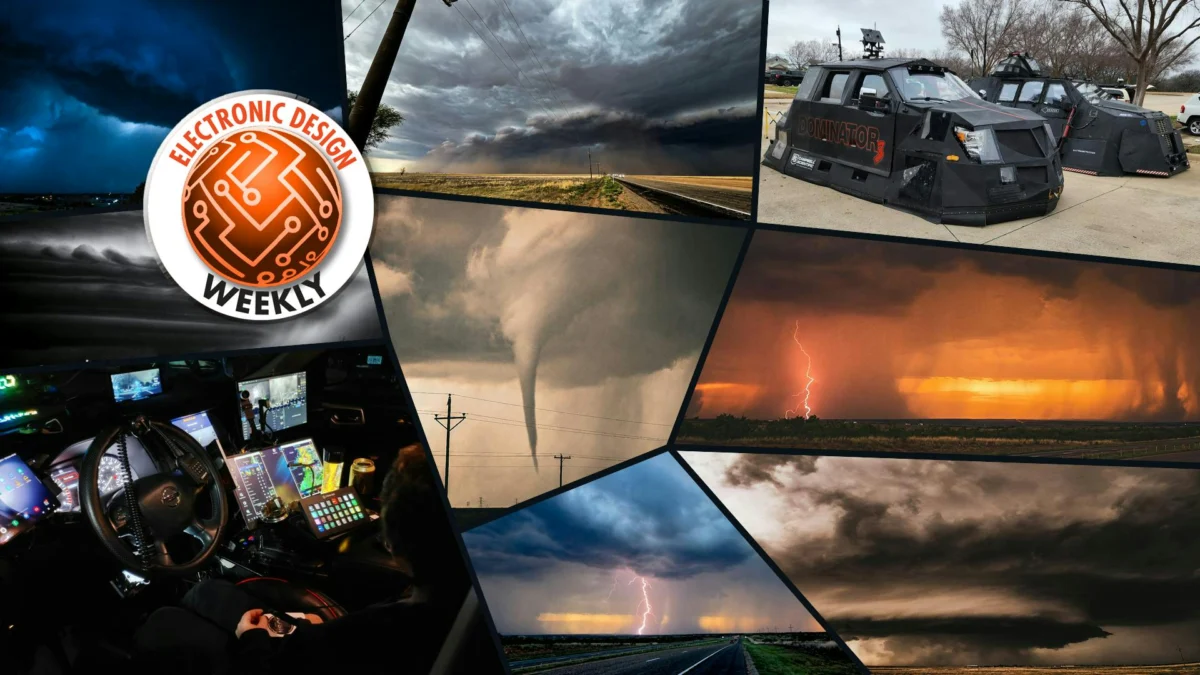
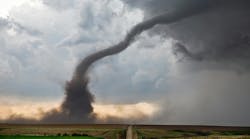
Looking back at the catastrophic toll of a single month—August 2026—the vulnerability of global infrastructure becomes starkly apparent. Across the globe, severe weather events tested civilization’s limits: devastating floods in Nepal and Arizona, an onslaught of 86 tornadoes churning through the American Midwest, destructive earthquakes in Indonesia, raging wildfires across the Balkans and Canada, and unrelenting heavy rains that paralyzed streets in Korea and the Philippines. Domestically, intense localized storms left thousands without power for days in Indiana alone.

The underlying shocker of these statistics is not simply the frequency or severity of these meteorological events, but the uncomfortable truth highlighted by engineering communities: modern civilization is simply not keeping up. Weather science and the technology driving predictive forecasting are no longer academic pursuits or background utilities; they are dynamic, mission-critical frontiers that dictate global survival, economic stability, and structural resilience.

Electronic Design’s weekly digest for the week of October 26, 2026, dives deep into this intersection. It explores how next-generation electronic instrumentation, advanced semiconductor materials, artificial intelligence, and historical weather analysis are transforming our ability to understand, predict, and mitigate planetary forces.

Main Facts: Hardware Breakthroughs and Environmental Sensing
This week’s technical coverage spans multiple engineering disciplines, highlighting how innovations in analog circuitry, power management, and sensor design are directly impacting everything from meteorological forecasting to consumer electronics and electric vehicle infrastructure.

Tracking Sub-Atomic Particles with Off-the-Shelf Components
One of the standout analog breakthroughs featured this week details how careful analog circuitry combined with readily available, off-the-shelf sensors has yielded a sophisticated, low-cost particle detector capable of tracking muons. Muons—sub-atomic particles created when cosmic rays strike Earth’s upper atmosphere—provide vital baseline data for environmental and atmospheric monitoring. By democratizing the hardware required to detect these high-energy particles, researchers can scale deployment, creating denser arrays for atmospheric and geophysical analysis.

High-Voltage Power Innovations and PowiGaN
In the power sector, Power Integrations announced a milestone for high-voltage power systems with its 2,200-V PowiGaN technology. Designed to address the insatiable energy demands of AI data centers, electric vehicles (EVs), photovoltaic installations, and high-voltage direct-current (HVDC) grids, this wide-bandgap semiconductor technology delivers higher power density, enhanced operating efficiency, and dramatically simplified system architectures. As AI compute clusters push thermal and electrical limits, components capable of handling multi-kilovolt thresholds without excessive footprint expansion are becoming mandatory.
Vehicle-to-Grid (V2G) Standardization
On the automotive and energy front, Underwriters Laboratories (UL) has formally approved the UL V2G-AC Certification Program. This formal testing framework paves the way for the commercial and residential deployment of bidirectional EV chargers. By allowing electric vehicles to discharge energy back into the local grid or home infrastructure during peak demand hours, V2G technology transforms parked transportation assets into decentralized grid-stabilization buffers.

Chronology: The Evolution of Weather Prediction and Emergency Preparedness
The urgency surrounding modern weather technology is rooted in a rich historical chronology of scientific persistence, military necessity, and engineering adaptation. This week’s retrospective features offer a timeline of how weather observation has evolved from rudimentary visual cues to hyper-accurate digital twins.

- The 1940s (D-Day Forecasting): Highlighting the historical weight of meteorological precision, a review of the film Pressure explores how rudimentary 1940s weather forecasting technology forced the vital delay of D-Day by 24 hours, ultimately saving thousands of lives and dictating the success of history’s most critical military operation.
- The Post-War Era (Modern Tornado Tracking): Modern tornado forecasting traces its roots to post-World War II military research at Tinker Air Force Base, where pioneering meteorologists combined early radar systems with dedicated tracking methodologies to demystify nature’s most violent vortices.
- The Mid-20th Century (Chicago’s Weather Bell): Long before the advent of smartphone weather applications and radar loops, urban residents in cities like Chicago relied on direct, visual environmental indicators—such as the iconic downtown Weather Bell—to anticipate atmospheric shifts. This historic landmark is currently being restored to light up once again.
- Nearly a Century of Radiosondes: For almost 100 years, radiosondes—instrument packages suspended beneath weather balloons—have ascended into the stratosphere to profile atmospheric pressure, temperature, and humidity. Despite their age, continuous electronic and telemetry upgrades keep them foundational to global forecasting models.
- Contemporary Era (AI Digital Twins and Infrasound): Today, weather forecasting has transcended traditional radar. Platforms like NVIDIA’s Earth-2 leverage AI and machine learning to construct atmospheric digital twins, processing planetary data in real time. Simultaneously, advanced acoustic arrays like GLINDA listen for infrasound frequencies emitted by storms hours before tornadogenesis occurs, while daring storm chasers deploy rocket-propelled probes directly into active vortex walls.
Supporting Data: Infrastructure Pressures and Market Shifts
The engineering choices highlighted this week reflect broader economic and technological shifts across industrial sectors:

- AI and LLM Optimization: As large language models (LLMs) continue to demand vast computational resources, engineering teams are exploring unorthodox quantization methods—such as squeezing complex operations down to minimal bit representations—to maximize edge efficiency.
- Automotive Displays and VRR Standards: The Video Electronics Standards Association (VESA) stepped in to standardize variable refresh rate (VRR) performance metrics, combating the industry habit of cherry-picking single gray-to-gray (G2G) benchmarks that fail to reflect real-world display performance in automotive cockpits and consumer screens.
- Component Shrinkage: TDK expanded its multi-layer inductor family, offering 1.7X to 2X higher impedance than legacy parts to support Automotive Power-over-Coax (PoC) architectures. Meanwhile, Bourns introduced shielded power inductors targeted specifically at space-constrained portable electronics and wearables.
- Global Supply Chain Volatility: Editor Andy Turudic’s industry roundup highlighted turbulent market adjustments, including General Motors canceling supply agreements for EV rare-earth magnets with VAC, and Volkswagen experiencing a massive surge in demand for affordable EV models in international markets (such as 10,000 orders for the Jetta M6 EV in just 19 hours).
Official Responses and Editorial Perspectives
Editorial leadership across Electronic Design used this week’s dispatch to emphasize the philosophical and operational challenges facing engineers today.

William G. Wong, Senior Content Director, continues to champion hands-on systems development, urging engineers to maintain foundational hardware competence while navigating the software-heavy paradigms of modern development. Meanwhile, Technology Editor Andy Turudic—drawing on his extensive background with Bell Labs—contrasted the methodical, foundational innovations of historical research facilities with the current "Wild West" rush of AI reverse-engineering and hyper-fast startup cycles.

In his weekly cartoon strip for Engineering on Friday, Cabe Atwell humorously lampooned the corporate patent process with a hand-drawn look at Stone Age umbrella manufacturing ("Brolly Wood Inc."), proving that human-driven humor remains resilient against the encroaching tide of generative AI art.

Implications: What This Means for Engineers and Technologists
The convergence of extreme weather events, escalating energy demands from AI data centers, and the rapid electrification of transportation points toward a single, overarching conclusion: engineering disciplines are no longer operating in isolation.

- Resilience Over Optimization: Designers of power systems, automotive components, and embedded controllers must increasingly design for extreme environmental resilience. Whether building GaN semiconductors that can withstand the thermal and electrical stress of high-voltage grids or developing low-cost particle sensors to monitor atmospheric decay, hardware must endure harsher real-world conditions.
- The Energy-Compute Nexus: The insatiable power demands of AI data centers are no longer just a software or cloud-computing issue; they are driving hardware breakthroughs down to the semiconductor level (such as 2,200-V PowiGaN) and forcing structural integration with the electrical grid via V2G certification.
- Cross-Disciplinary Integration: As demonstrated by the integration of AI digital twins (Earth-2), infrasound acoustics, and aerospace drone payloads (such as ozone measurements over Mount Qomolangma), the future of survival engineering relies on breaking down silos between mechanical, electrical, and data science disciplines.
As Electronic Design continues to document these shifts, the message to developers, technical managers, and system architects remains clear: understanding the physical world—and the forces of nature acting upon it—is the ultimate engineering challenge of our time.