As the global wind energy sector matures, the focus of asset managers has shifted from initial capital expenditure to the grueling realities of long-term operational excellence. With many of the world’s early-generation wind farms now entering their second decade of operation, operators are grappling with the "aging fleet" challenge: maintaining high availability while managing rising maintenance costs.
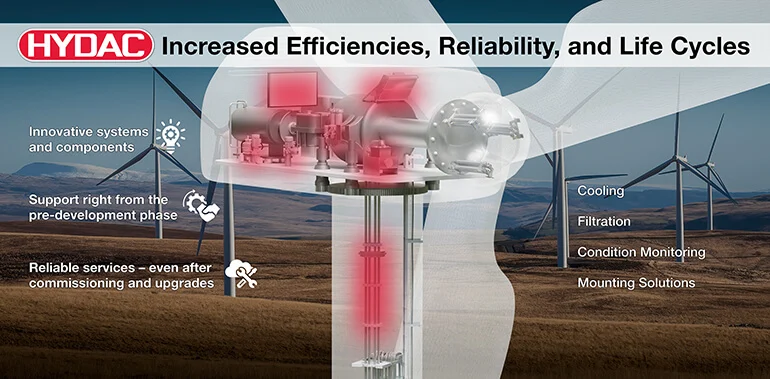
While the industry often fixates on high-profile drivetrain components like main bearings and gearboxes, a critical, often-neglected subsystem sits at the heart of premature component failure: the heat exchanger. The ability to manage gearbox oil temperature is not merely a maintenance chore—it is a foundational pillar of structural reliability and, ultimately, the financial viability of a wind project.
The Hidden Impact of Thermal Management
In a wind turbine, the gearbox acts as the heartbeat of the energy conversion process, transferring mechanical torque from the rotor to the generator. This process is inherently friction-intensive, necessitating high-performance lubrication. Oil is the lifeblood of this system, but its efficacy is tethered strictly to temperature.
Wind turbine gearbox oil typically functions within an ideal thermal window of 45°C to 65°C. When this equilibrium is disrupted, the consequences are swift and severe. Industry data indicates that a seemingly modest 12°C rise in oil temperature can degrade lubricant viscosity by nearly 28 percent. As the oil thins, it loses its ability to maintain a protective film between gear teeth and bearings, leading to accelerated surface fatigue, micro-pitting, and, eventually, catastrophic mechanical failure.
The culprit is rarely the gearbox itself, but the heat exchanger tasked with keeping that oil cool. Traditional "panel cut" designs, while once the industry standard, are failing to keep pace with the harsh, debris-laden environments in which modern turbines operate.
A Chronology of Cooling Innovation
The evolution of heat exchanger technology in wind power has been defined by a transition from reactive cleaning to proactive design.

- The Early Era: In the first wave of large-scale wind deployment, standard industrial heat exchangers were adapted for turbine nacelles. These units utilized tightly packed fin structures designed for maximum heat transfer in clean, factory-like conditions.
- The Environmental Conflict: As turbines were deployed in agricultural, desert, and pollen-heavy regions, the flaws of these designs became apparent. Debris—ranging from dust and seeds to organic matter—quickly clogged the dense fin structures.
- The "Clean-Fix" Cycle: Operators adopted a regime of manual cleaning, requiring technicians to climb up-tower to clear exchangers. This was not only expensive but often insufficient; oil leaks within the nacelle frequently trapped contaminants in the core, creating a sludge that was nearly impossible to remove without specialized equipment.
- The Engineering Shift: Recognizing this as a systemic bottleneck, industry leaders began prototyping architectures that prioritized "flow-through" capability over traditional fin density.
The "Square Wave" Paradigm: A Technical Breakthrough
In response to these challenges, HYDAC introduced the "Square Wave" heat exchanger design, a departure from traditional cooling geometry. By re-engineering the internal fin structure to allow airborne debris to pass through the exchanger rather than becoming trapped, the design maintains consistent airflow even in high-contamination environments.
The Mechanism of Resilience
The Square Wave technology addresses two fundamental failures of traditional cores:
- Reduced Fouling: By increasing the spacing and modifying the shape of the cooling fins, the design prevents the "matting" effect that occurs when dust and organic material accumulate on the face of the unit.
- Thermal Stability: Because the core remains unobstructed for longer durations, the heat transfer coefficient remains stable throughout the year, preventing the "thermal spikes" that trigger SCADA cooling faults.
Supporting Data: Validating the Upgrade
The transition from theory to field-proven reliability has been documented through rigorous multi-year evaluations.
GE 1.x Platform Trials
A one-year trial involving GE 1.x turbines provided the first concrete evidence of the technology’s efficacy. Compared to legacy units, the Square Wave-equipped turbines saw a measurable decrease in "cooling fault" triggers. Maintenance teams noted a significant reduction in the hours required for up-tower cleaning, freeing up technicians for more value-added maintenance tasks.
Pacific Northwest Case Study
In a high-debris environment in the Pacific Northwest, a major renewable energy operator retrofitted 1 MW-class turbines with Square Wave units. The results were striking:
- Thermal Efficiency: SCADA analysis revealed that these turbines operated consistently 20 to 25 percent cooler than reference units.
- Durability: While conventional exchangers showed a rapid decay in cooling performance over a six-month period, the Square Wave units maintained their baseline performance, proving their resilience in heavy-debris environments.
Mitsubishi Platform Validation
Long-term data from Mitsubishi platforms has further solidified these findings. Over a two-year performance monitoring period, the units equipped with the new design sustained a 19 to 25 percent cooling improvement. This consistency is the "holy grail" of asset management: predictable performance that extends the intervals between invasive maintenance interventions.

Official Perspectives: The View from the Field
Mike Erickson, HYDAC’s Market Manager for the Wind Industry, emphasizes that the shift toward better cooling is a shift in mindset. "Wind operators today are balancing increasing performance expectations with the realities of aging fleets and rising maintenance costs," Erickson notes. "Technologies that improve cooling efficiency and reduce service exposure can have a meaningful impact on long-term turbine reliability and operational profitability."
Erickson argues that the industry has spent too long treating cooling as an auxiliary system rather than a core component of the drivetrain. "What operators are increasingly recognizing is that small improvements in thermal management can create meaningful gains in turbine reliability, maintenance efficiency, and long-term asset performance. The field data we’re seeing continues to validate the value of designing cooling systems specifically for real-world wind operating environments."
Implications for Asset Owners and Investors
The business case for upgrading cooling infrastructure is built on three pillars:
1. Enhanced Asset Availability
Every hour a turbine is down for a cooling fault is an hour of lost revenue. By minimizing debris-related shutdowns, operators can capture more energy during peak wind months.
2. Extension of Component Lifecycle
Gearbox replacements are among the most expensive operations in wind energy. By keeping the oil within the optimal viscosity range, the Square Wave design acts as an insurance policy for the gearbox, potentially delaying or eliminating the need for mid-life component overhauls.
3. Reduced O&M Expenditures
Operational Expenditure (OPEX) is the primary enemy of profit margins in mature wind farms. Reducing the frequency of up-tower cleaning visits—a task that requires specialized labor and logistics—provides a direct, quantifiable return on investment.

Conclusion: Designing for the Future
As the wind industry looks toward the next decade, the emphasis on "lifecycle optimization" will only intensify. Building a more resilient wind asset requires more than just replacing broken parts; it requires upgrading the subsystems that cause those parts to break in the first place.
The success of technologies like the Square Wave heat exchanger serves as a blueprint for this strategy. By addressing the root cause of cooling degradation—debris accumulation—operators can transform their maintenance strategy from reactive to proactive. In an industry where reliability is the ultimate currency, cooling system optimization represents one of the most accessible and effective pathways to maximizing energy production and asset longevity.
For stakeholders evaluating the health of their portfolios, the message is clear: do not let the limitations of yesterday’s cooling technology constrain the performance of tomorrow’s wind assets.
For further technical insights on how cooling system optimization can support your wind farm’s operational goals, connect with the specialists at HYDAC.