





In the high-stakes environment of corporate talent reviews, a quiet form of bias has long been allowed to flourish. A manager sits across from a human resources leader and dismisses a high-potential employee with a casual observation: "She’s a bit too reserved; she probably doesn’t want the promotion," or "He’s analytical, so he’ll naturally reflect on feedback."
These statements, while common, rely on a dangerous, unproven assumption: that an individual’s personality style is a reliable proxy for their "growth mindset"—their capacity to learn, adapt, and embrace challenges. A landmark study conducted between September 2025 and October 2026 has finally put this assumption to the test, and the results suggest that talent leaders have been looking for potential in all the wrong places.
The Core Investigation: Decoupling Personality from Potential
The concept of a "growth mindset," pioneered by psychologist Carol Dweck, posits that human abilities are not static traits but are instead malleable through effort, strategic planning, and the assimilation of feedback. Conversely, a "fixed mindset" operates under the belief that talent is an innate, unchangeable commodity.
For years, the corporate world has conflated personality frameworks—often used for team-building—with these deeper, psychological drivers of growth. To determine whether specific personality types are inherently more "growth-oriented," researchers launched a dual-assessment study. They utilized the Personality Diversity Indicator (PDI), which categorizes individuals into four distinct behavioral styles, and the Mindset Assessment Profile (MAP), an 18-question instrument designed to measure where an individual sits on a 100-point growth-to-fixed mindset spectrum.
The study involved 166 participants who, while part of a larger pool of 10,000, engaged in this specific research of their own volition. The MAP assessment, which has been refined over a decade, boasts a strong internal consistency (Cronbach’s alpha of .83), providing a reliable lens through which to view these participants’ underlying beliefs.
Chronology of the Findings
The research timeline was designed to allow for organic, self-motivated participation rather than forced corporate compliance, ensuring a more accurate reflection of individual beliefs.
- September 2025 – October 2026: Data collection period. Participants completed both the PDI personality assessment and the MAP growth mindset questionnaire.
- Late 2026: Statistical analysis of the correlation between personality styles and growth mindset scores.
- 2027: Peer review and synthesis of findings into a comprehensive white paper, leading to the current public dissemination of the results.
The data revealed a startling lack of correlation. If personality were a driving force behind mindset, one would expect to see clear disparities between the four personality styles. Instead, the average scores for each of the four categories were tightly clustered between 79.7 and 83.5.
The researchers found that personality style accounted for a negligible 1.5% of the variance in mindset scores. In other words, 98.5% of what makes a person embrace growth comes from factors entirely unrelated to their personality "type." Knowing someone’s personality style provided virtually no predictive power regarding their capacity for growth.
Supporting Data: The Statistical Reality
The data suggests that the "growth mindset" is a universal trait, not a personality-dependent one. Across every personality style represented in the study, there was a vast spread of results. Some individuals within a "reserved" or "analytical" category scored as high as those in "confident" or "assertive" categories.
The statistical tests, conducted through three distinct analytical lenses, all pointed toward the same conclusion: there is no causal link between how a person behaves (personality) and how they learn (mindset).
"All but three participants scored in the growth mindset range," the researchers noted. This suggests that the human capacity for learning is far more ubiquitous than corporate screening processes would lead us to believe. The tendency of managers to favor the "vocal" and "confident" during promotion cycles is not based on superior growth potential, but rather on a preference for a specific communication style.
Implications for Learning and Development (L&D)
The implications for HR departments and C-suite executives are profound. The study forces a paradigm shift in how talent is identified, nurtured, and promoted.
1. Development as a Universal Mandate
If personality is not a limiting factor for growth, then every employee is, in theory, a candidate for development. Current talent review practices often suffer from "visibility bias," where the most articulate or extroverted individuals are fast-tracked. The researchers urge L&D leaders to move away from these subjective labels.
Instead, firms should implement criteria based on observed, cross-referenced behaviors. Rather than asking "Is she confident enough for this stretch assignment?" leaders should ask:
- How did this employee respond to critical feedback last quarter?
- What specific challenges have they volunteered for in the last year?
- What meaningful changes did they implement following a setback?
These questions shift the focus from who the person is to what the person does.
2. The Architecture of Culture
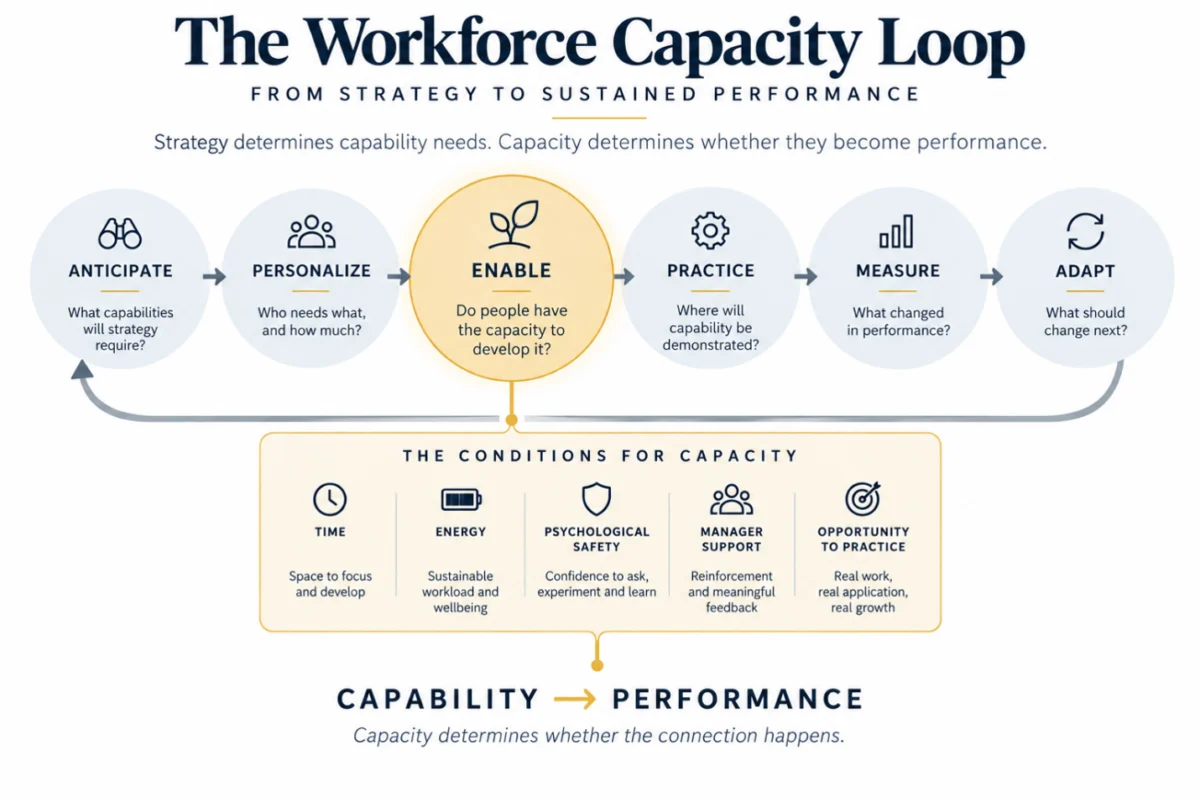
The study highlights a critical reality: even if an employee possesses a strong growth mindset, that potential can be suffocated by a "fixed" culture. Citing research on U.S. ninth graders, the study shows that even the most motivated learners struggle in environments where failure is punished.
For corporations, this means that the effectiveness of a $100,000 training program is effectively zero if the participant returns to a team that demands perfection. To foster a true growth culture, organizations must emphasize:
- Psychological Safety: A workplace where employees can admit mistakes without fear of retribution.
- Visible Vulnerability: Leaders must model growth by openly discussing their own failures and the lessons learned from them.
- Systemic Feedback: Moving from annual performance reviews to continuous, structured coaching loops.
3. Re-evaluating Personality Tools
The researchers are not suggesting that personality tests be discarded. On the contrary, these tools provide an essential "shared language" that helps teams navigate conflict and improve communication. The problem arises only when these tools are weaponized as forecasting instruments.
When a personality assessment is used to determine who is "ready" for leadership, it ceases to be a tool for self-awareness and becomes a barrier to diversity and growth. The study recommends that companies explicitly state—in writing—that personality data should never be a factor in succession planning or promotion.
Conclusion: Tapping Into the Latent Potential
The most optimistic takeaway from this study is that the potential for growth is already present in your workforce. The "talent shortage" many organizations lament may be an illusion created by rigid evaluation frameworks that only recognize one type of employee.
As you head into your next talent review, consider these three questions to strip away the personality bias:
- Am I judging this person’s potential based on their communication style rather than their actual response to challenge?
- Does our current culture make it safe for this individual to experiment and potentially fail, or are we punishing the very behavior that leads to growth?
- Are we using personality tools to build empathy and team cohesion, or are we misusing them as a shorthand for "leadership potential"?
By decoupling personality from potential, L&D leaders have the opportunity to democratize development. The capacity to grow is not a rare personality trait; it is a universal human potential waiting for the right culture to set it free. Organizations that recognize this will not only improve their retention of diverse talent but will foster a more resilient, innovative, and ethical workforce in the process.