While many industrial organizations have successfully overhauled their production floors using lean manufacturing methodologies—such as 5S (Sort, Set in Order, Shine, Standardize, Sustain) and Kanban inventory systems—a significant "blind spot" remains in the maintenance department. Specifically, the maintenance of compressed air systems, often referred to as the "fourth utility," frequently operates on outdated, inefficient, or reactive models.
By failing to extend lean principles to utility maintenance, companies are leaving substantial operational efficiencies, energy savings, and capital on the table. This article explores how to transition from traditional maintenance to a lean, predictive, and high-performance model, utilizing compressed air as the primary case study for industrial optimization.
The Core Philosophy: Why Lean Maintenance Matters
The fundamental premise of lean manufacturing is the relentless pursuit of waste elimination. In production, this means reducing inventory or streamlining workflow. In maintenance, waste manifests as unplanned downtime, redundant parts replacement, and excessive energy consumption.
Compressed air systems are a prime target for this transition. Leaks, improper pressure settings, and inefficient cycling patterns are not just minor inconveniences; they are silent profit killers. Industry data consistently shows that the average facility loses 20% to 30% of its generated compressed air to leaks alone. When a company produces air at a high energy cost only to vent it into the atmosphere, it is engaging in the purest form of non-value-added activity.
A Strategic Roadmap: 10 Steps to Lean Maintenance
Implementing a lean transition does not require an overnight overhaul. It requires a methodical, data-driven approach.
1. The Power of "Slowing Down"
There is a common misconception that lean requires a rapid, comprehensive implementation. On the contrary, the most successful programs are incremental. Begin by focusing on Total Cost of Ownership (TCO). The purchase price of a compressor is a fraction of its lifetime cost; the vast majority of expenditure is tied to electricity and maintenance. By starting with small, low-budget investments—such as basic flow monitors—facilities can build a business case for larger energy-monitoring systems over time.
2. Prioritizing Mission-Critical Functions
Not all equipment is created equal. Lean maintenance demands that teams focus on assets that, if failed, would bring production to a grinding halt. Using Overall Equipment Effectiveness (OEE) as a benchmark, managers should identify which compressed air loops are vital to production and focus their initial predictive maintenance (PdM) efforts there.
3. Challenging the "Preventive" Paradigm
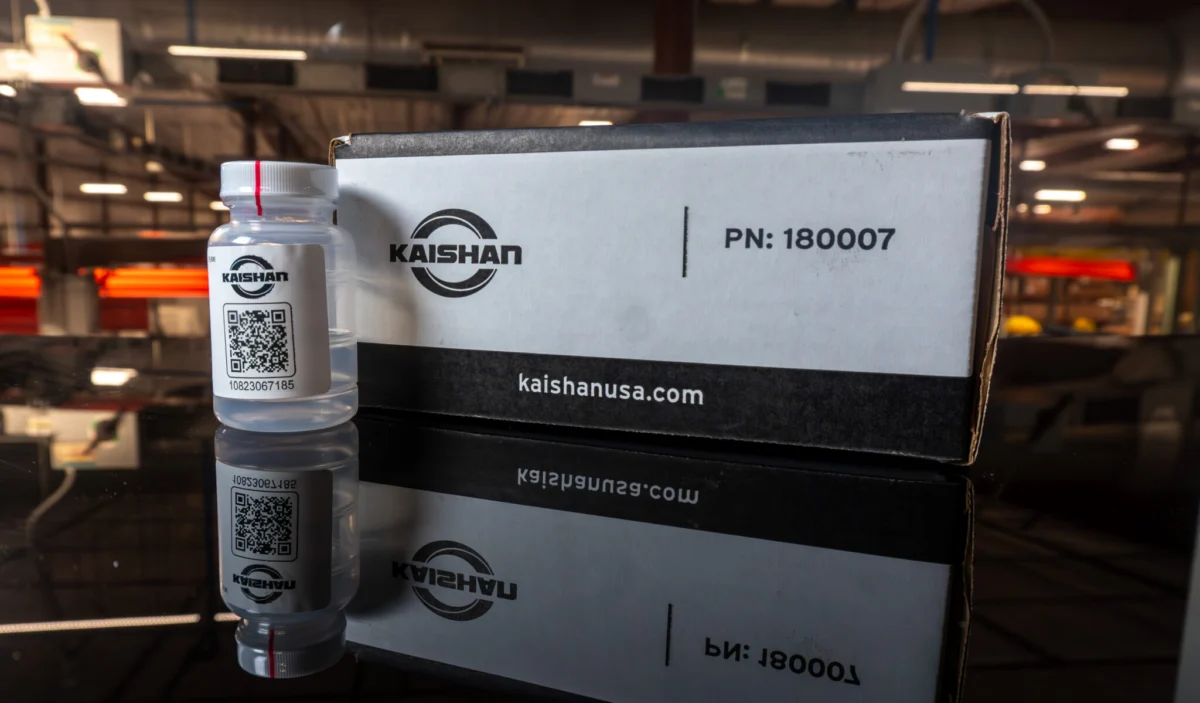
Traditional maintenance relies heavily on calendar-based preventive maintenance (PM). However, changing a filter or lubricant simply because three months have passed is, by definition, "over-processing." If a component still has 40% of its useful life remaining, replacing it is waste. Lean maintenance prioritizes condition-based or predictive maintenance. Use real-world data—vibration analysis, oil samples, and thermal imaging—to dictate when maintenance occurs, not a calendar.
4. Aggressive Waste Identification
Waste in a compressed air system is often invisible. Beyond leaks, consider "header pressure." Many facilities set their compressors to run at pressures significantly higher than required by the end-use equipment. This is a redundant cost that exacerbates leak rates. Reducing system pressure by just a few PSI can yield a 1–2% reduction in total energy consumption.
5. Visibility and Measurement
You cannot improve what you do not measure. In the context of compressed air, the "North Star" metric is Specific Power (cfm/kWh). This figure provides a clear efficiency baseline. When integrated with IoT sensors and AI-driven analytics, these measurements allow for proactive intervention before a failure occurs. This turns "gut feel" into empirical evidence, providing the necessary justification for capital investments.
6. The 5S Application
The 5S methodology is not just for the warehouse floor. A clean compressor room is a diagnostic tool. Dust accumulation on cooling fins reduces heat exchange efficiency, leading to premature component failure. Furthermore, an organized parts crib prevents the common, costly error of holding obsolete inventory while lacking the critical spare parts needed for a current machine.
7. Sustainability of Change
The most common failure in lean implementation is the "reversion to the mean." When employees feel that a new process is too complex or burdensome, they will eventually bypass it. To ensure longevity, implement changes that are intuitive and easily integrated into daily routines. If a maintenance task takes ten extra minutes, it will eventually be skipped. If it saves ten minutes, it will become the standard.
8. Root Cause Analysis (RCA)
When a system fails, the instinct is often to treat the symptom. For example, if there is oil carryover in the air line, the temptation is to simply replace the filter. A lean approach demands an investigation into the root cause: Is the scavenge line clogged? Is the oil reservoir overfilled? Are low-quality, "pirated" parts causing premature degradation? Solving the root cause eliminates the need for future repeat repairs.
9. Visual Management and Alerting
Technology is useless if it is ignored. Lean maintenance emphasizes visual cues. Use simple, high-visibility dashboards or "Andon" lights that alert anyone in the facility—not just technicians—to potential issues. When a maintenance alert is simple and actionable, the likelihood of a timely response increases dramatically.
10. Leveraging Expert Partnerships
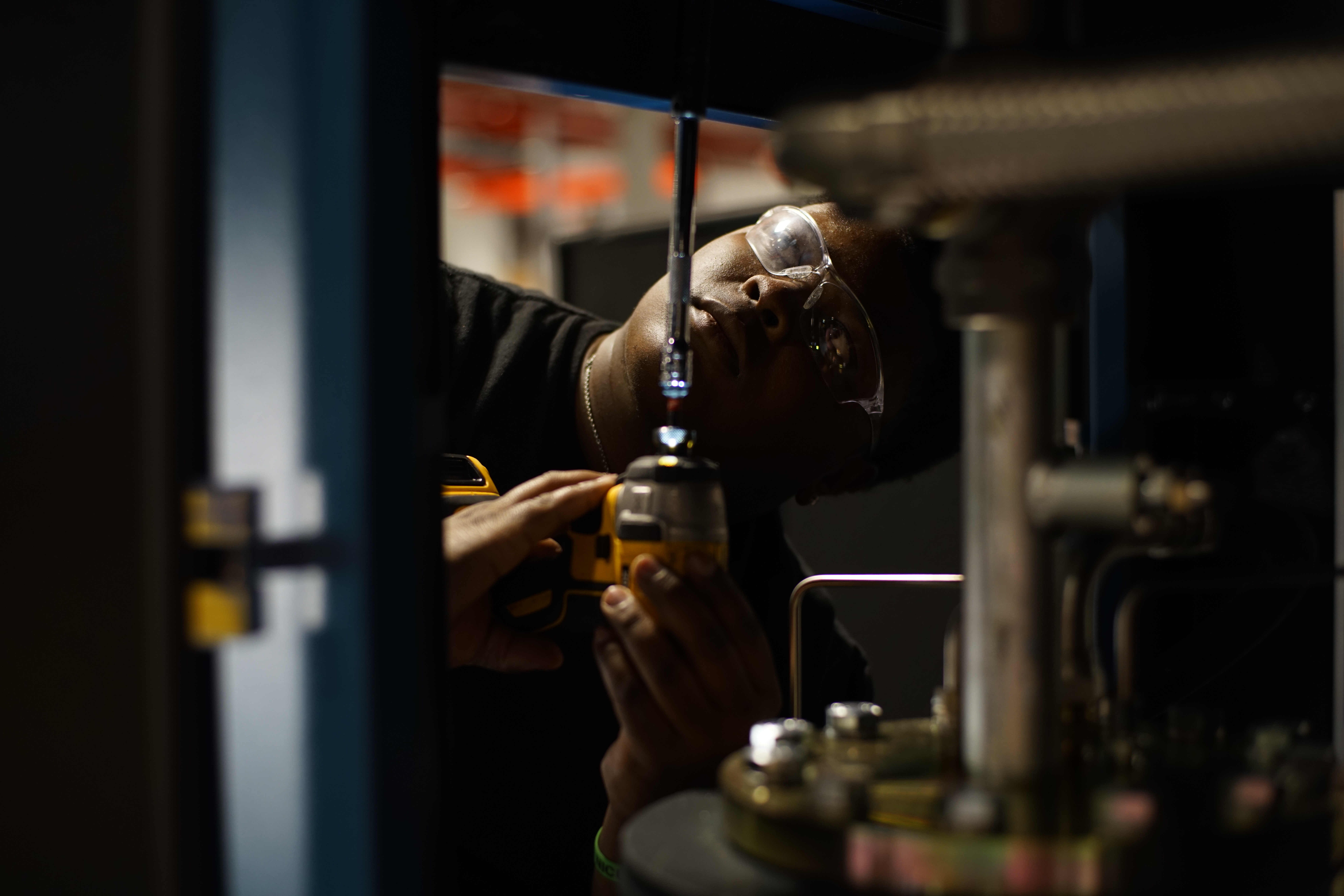
Do not attempt to navigate the transition alone. Compressed air is complex, and the expertise provided by specialized consultants is invaluable. An initial air audit provides the "baseline" necessary to track progress. A trusted partner can assist in identifying the correct KPIs, setting up remote monitoring, and training internal staff to manage a predictive model effectively.
The Backbone: Digital Integration via CMMS
The Computerized Maintenance Management System (CMMS) serves as the central nervous system for these efforts. However, a CMMS is only as effective as the data fed into it. To move from a reactive to a predictive model, facilities must transition their CMMS from a simple "work order generator" to a "data intelligence hub."
By logging specific power consumption, oil analysis results, and vibration data directly into the CMMS, managers can generate trend reports that predict failures before they happen. This shift in capability marks the difference between a facility that is constantly "putting out fires" and one that is running at peak, sustainable efficiency.
Implications and Future Outlook
The implications of adopting a lean maintenance culture are profound. Beyond the immediate bottom-line impact of reduced energy costs and extended equipment lifespan, there is a cultural shift. Maintenance teams move from being viewed as "fixers" to being viewed as "efficiency engineers."
For the modern plant manager, the message is clear: The principles that revolutionized production are waiting to be applied to the utility room. The tools are available, the data is accessible, and the potential for waste reduction is immense. By slowing down to analyze the process, focusing on the data, and committing to sustainable, root-cause-focused maintenance, industrial facilities can secure their place in an increasingly competitive global market.
Summary of Key Performance Indicators (KPIs) to Track
To maintain a lean compressed air system, management should prioritize the following metrics:
- Specific Power (cfm/kWh): The ultimate measure of energy efficiency.
- Leak Rate Percentage: Total air loss relative to total production output.
- Mean Time Between Failures (MTBF): A measure of the reliability of the system.
- System Pressure Variance: The deviation from the set point, which indicates load issues.
- Maintenance Spend vs. Production Output: A high-level view of whether maintenance costs are scaling linearly with production.
By institutionalizing these metrics, companies can move away from the traditional, wasteful "firefighting" mentality and toward a sophisticated, data-driven maintenance culture that ensures long-term operational success.