By GlobalData Pharmaceutical Insights Desk
Published: October 2026
Executive Summary: A New Era in Neuroscience and Ophthalmic Therapeutics
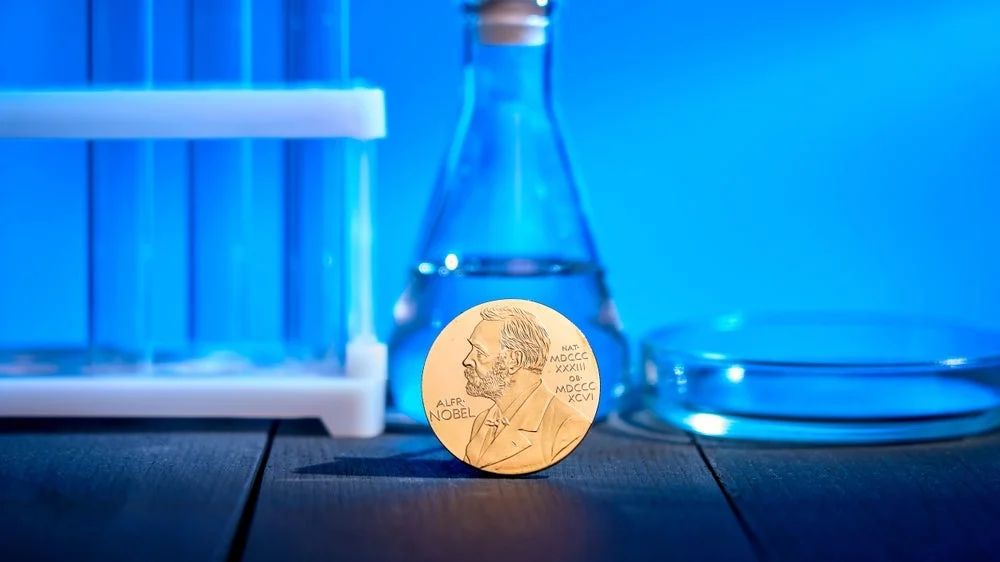
The landscape of modern medicine and neuroscience has been fundamentally reshaped. The Nobel Prize committee has announced that the 2026 Nobel Prize in Physiology or Medicine has been awarded to a trio of pioneering scientists: Dr. Karl Deisseroth of Stanford University, Dr. Peter Hegemann of Humboldt University of Berlin, and Dr. Georg Nagel of the University of Würzburg.
The esteemed researchers will share the SKr 12m ($1.19m) prize pot for their monumental work in discovering and developing optogenetics—a revolutionary biological technique that uses light to control and map the activity of nerve cells with unprecedented precision.
While the Nobel Committee has lauded optogenetics for laying the foundational framework for a brand-new era in neuroscience, the pharmaceutical and biotechnology sectors are looking far beyond basic research. Drug developers are actively harnessing the translational potential of light-sensitive proteins to tackle one of medicine’s most stubborn frontiers: restoring sight to the blind.
As regulatory bodies begin reviewing cutting-edge gene therapies and clinical pipelines mature, optogenetics is transitioning rapidly from an academic curiosity into a commercial powerhouse with multi-billion-dollar implications for ophthalmology, neurology, and psychiatry.
Main Facts: Decoding the Breakthrough
At its technical core, optogenetics marries optics with genetics to control cellular behavior in living tissue—specifically neurons—using light. The cornerstone of this technology is channelrhodopsin, a light-gated ion channel protein originally discovered in single-celled green algae (Chlamydomonas reinhardtii).
When exposed to specific wavelengths of blue light, channelrhodopsin rapidly opens, allowing ions to flow across cell membranes. This influx or efflux of ions triggers electrical impulses within the cell. By introducing the genes encoding these light-sensitive proteins into target neurons, researchers can effectively turn specific nerve cells "on" or "off" simply by flashing light upon them.
The 2026 Nobel Laureates
- Dr. Karl Deisseroth (Stanford University): Credited with pioneering the application of microbial opsins to mammalian neurons, proving that light could be used to control complex brain circuits and behavior in living, moving animals.
- Dr. Peter Hegemann (Humboldt University of Berlin): A biophysicist whose fundamental characterization of channelrhodopsins unlocked the molecular mechanisms of how algae respond to light.
- Dr. Georg Nagel (University of Würzburg): Collaborated closely with Hegemann to identify and isolate the channelrhodopsin genes, providing the essential biological tools that made optogenetic control possible.
By hijacking this natural algal mechanism, scientists gained the unprecedented ability to map the neural circuitry underpinning memories, emotions, movements, and complex behaviors. Today, this methodology serves as the guiding light for investigating elusive neurological and psychiatric disorders—ranging from Parkinson’s disease and depression to severe drug-resistant epilepsy.
Chronology: From Algal Curiosity to Nobel Recognition
The journey of optogenetics from a niche biological observation to a Nobel Prize-winning paradigm is a testament to the power of interdisciplinary science.
- The Late 1990s to Early 2000s (Discovery): Researchers including Peter Hegemann and Georg Nagel focus intensely on how single-celled algae sense light. In 2002 and 2003, their foundational studies identify channelrhodopsin-1 and channelrhodopsin-2, revealing that these algal proteins function as direct, light-gated ion channels.
- 2005 (The Mammalian Breakthrough): Karl Deisseroth and his team at Stanford University successfully express channelrhodopsin-2 in mammalian neurons. In a landmark publication, they demonstrate that millisecond pulses of blue light can trigger action potentials in targeted neurons. This single experiment births the field of optogenetics.
- 2010s (Preclinical Expansion): Academic laboratories worldwide adopt optogenetics to map brain circuits. Researchers dissect the neural pathways responsible for fear, reward, addiction, and motor control, publishing thousands of papers that radically update textbook understandings of neuroanatomy.
- Mid-to-Late 2010s (Translational Pivot): Biotech innovators realize that optogenetics can solve a major clinical problem: treating degenerative blindness. By delivering opsin genes to surviving retinal cells that have lost their light-detecting photoreceptors, researchers demonstrate the potential to bypass dead tissue and restore vision.
- 2024–2025 (Late-Stage Clinical Validation): Companies like Nanoscope Therapeutics achieve critical regulatory milestones, demonstrating clinical efficacy in late-stage trials for retinitis pigmentosa and Stargardt disease, and submitting biologics license applications (BLAs) to the US Food and Drug Administration (FDA).
- October 2026 (The Nobel Prize): Deisseroth, Hegemann, and Nagel are awarded the Nobel Prize in Physiology or Medicine, validating decades of physical chemistry and neurobiology research on a global stage.
Supporting Data & The Competitive Landscape
While optogenetics began as a tool for basic neuroscience, its commercial destiny is increasingly intertwined with ophthalmology. Degenerative retinal diseases—such as retinitis pigmentosa (RP) and Stargardt disease—destroy light-sensitive photoreceptor cells (rods and cones), leading to progressive, irreversible blindness. However, downstream retinal neurons (such as bipolar and ganglion cells) often remain structurally intact. Optogenetics aims to transform these surviving cells into "surrogate" photoreceptors.
Leading Clinical Candidates in Optogenetic Ophthalmology
| Company | Candidate Drug | Target Indication | Development Stage |
|---|---|---|---|
| Nanoscope Therapeutics | Mogenry (sonpiretigene isteparvovec / MCO-010) | Retinitis Pigmentosa & Stargardt Disease | BLA Accepted / Late-Stage |
| GenSight Biologics | GS030 | Retinitis Pigmentosa | Clinical Trials (Phase I/II) |
| Ray Therapeutics | RTx-01 | Retinitis Pigmentosa | Clinical Trials (Phase I/II) |
Nanoscope Therapeutics Leads the Pack
The most advanced contender in the space is Nanoscope Therapeutics with its gene-agnostic therapy, Mogenry (sonpiretigene isteparvovec, formerly MCO-010). Designed as a one-time intravitreal injection, Mogenry delivers a multi-characteristic opsin (MCO) gene to surviving inner retinal cells. This allows patients to perceive ambient light forms and navigate their environments independently, regardless of their specific genetic mutation. Following encouraging late-stage clinical trial data in both RP and Stargardt disease, US regulators accepted the Biologics License Application (BLA) for MCO-010, marking a watershed moment for the field.
Emerging Competitors
Nanoscope is not standing alone in the arena. GenSight Biologics is advancing GS030, a combined gene therapy and medical device approach that pairs a viral vector delivering channelrhodopsin with specially engineered light-stimulating goggles. Similarly, Ray Therapeutics is evaluating RTx-01, an optogenetic gene therapy designed to restore functional vision in advanced retinal dystrophies.
Market Context and Approved Therapies
Currently, the US FDA-approved landscape for inherited retinal diseases remains extremely sparse. Roche-owned Spark Therapeutics and Novartis market Luxturna (voretigene neparvovec), a groundbreaking gene therapy for RPE65-mutation-associated retinal dystrophy. However, Luxturna is mutation-specific and helps only a tiny fraction of patients.
According to market intelligence forecasts from GlobalData, Luxturna’s global sales are projected to approach $400m by 2032. As optogenetic treatments like Mogenry target gene-agnostic populations—helping patients regardless of their underlying genetic defects—their addressable patient pool is exponentially larger, signaling immense commercial upside for successful developers.
Official Responses: Perspectives from Academia and Industry
The scientific community has reacted with overwhelming enthusiasm to the Nobel Committee’s announcement, viewing it as validation of a technique that bridges physics, genetics, and medicine.
"Optogenetics provides scientists with opportunities for mapping the brain that we could once only dream of," noted Per Svenningsson, chair of the Nobel Committee for Physiology or Medicine. “What began as basic curiosity about how single-celled algae react to sunlight has ultimately transformed our fundamental understanding of neural circuits and opened up breathtaking therapeutic possibilities for human disease.”
Dr. Karl Deisseroth reflected on the collaborative nature of the breakthrough during a Stanford University press briefing:
"The beauty of optogenetics was never just about a single protein or a single experiment; it was about creating a shared language between light, genetics, and electrical engineering. To see this fundamental tool adopted by thousands of laboratories worldwide to study psychiatric disease, neurological trauma, and now blindness, is the ultimate privilege for a scientist."
Industry analysts emphasize that the 2026 Nobel Prize will likely act as a major catalyst for venture capital investment and pharmaceutical deal-making in the neuro-ophthalmology sector.
"The Nobel validation de-risks the underlying science in the eyes of risk-averse institutional investors," notes a senior biotech analyst at GlobalData. "We are moving past the proof-of-concept era. Big pharma companies, many of which have historically been hesitant to touch complex gene-and-optics paradigms, are now actively scouting for licensing and acquisition targets in the retinal gene therapy space."
Implications: What the Future Holds for Medicine
The recognition of optogenetics via the 2026 Nobel Prize carries profound implications across multiple scientific and commercial domains:
1. A Paradigm Shift in Ophthalmic Care
For millions of patients suffering from end-stage retinal degeneration—who previously faced a definitive prognosis of permanent blindness—optogenetics offers tangible hope. As gene-agnostic therapies move through regulatory review and commercialization, the standard of care for inherited blinding conditions is poised for a total overhaul. Patients will no longer be locked out of treatment options simply because their specific genetic mutation is rare or uncharacterized.
2. Deep Brain Stimulation and Beyond
Beyond ophthalmology, the foundational work of Deisseroth, Hegemann, and Nagel continues to power next-generation psychiatric and neurological research. While human clinical trials using optogenetics for deep-brain conditions (such as treatment-resistant depression, obsessive-compulsive disorder, and Parkinson’s disease) remain earlier in development compared to retinal applications, the Nobel win highlights the long-term clinical roadmap. Researchers are actively developing miniaturized, implantable wireless LED devices capable of delivering precise optical stimulation to deep brain structures without the need for cumbersome fiber-optic cables.
3. Investment and M&A Waves
With the Nobel Prize drawing mainstream public and financial attention to optogenetics, pharmaceutical giants are expected to aggressively pursue pipeline expansion. Licensing agreements, co-development partnerships, and strategic mergers involving clinical-stage optogenetics biotechs are forecasted to accelerate over the next 24 to 36 months.
Conclusion
The 2026 Nobel Prize in Physiology or Medicine does not merely honor past achievements; it illuminates the path forward. By turning light into a master switch for the nervous system, Karl Deisseroth, Peter Hegemann, and Georg Nagel have given humanity a tool that bridges the microscopic world of algae with the infinite complexity of the human mind and eye. As pharma turns this light into medicine, a new dawn is breaking for patients worldwide.