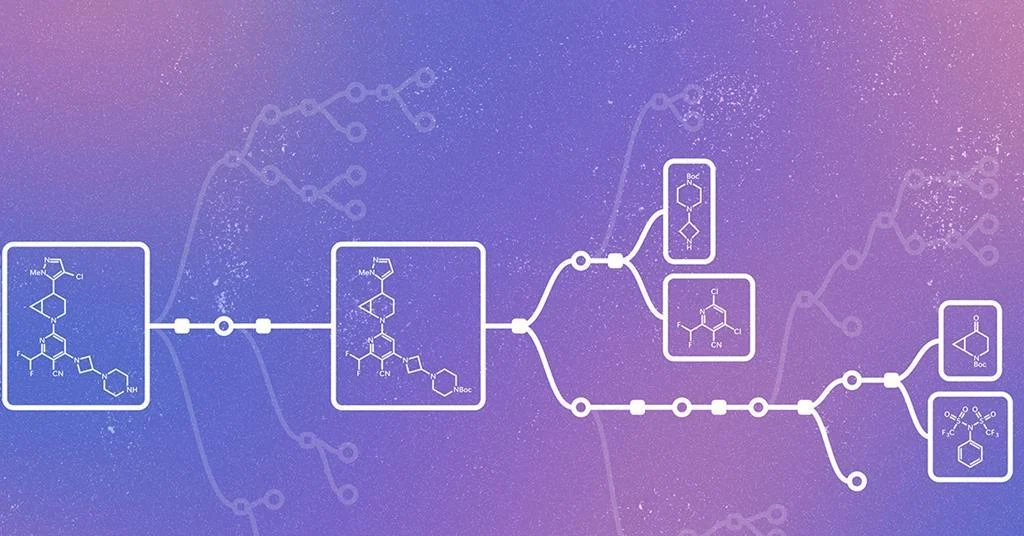
INDIANAPOLIS & SOUTH SAN FRANCISCO — Pharmaceutical giant Eli Lilly and Company is doubling down on cutting-edge biotechnology by expanding its strategic research collaboration and licensing agreement with Gate Bioscience. The multi-year deal—valued at up to $870 million in upfront, preclinical, clinical, and commercial milestones—aims to harness Gate’s proprietary "molecular gate" platform. The primary objective is to engineer oral small-molecule therapies capable of tackling "undruggable" proteins, a class of biological targets that have historically eluded traditional drug discovery approaches.
Under the terms of the expanded agreement, Lilly will fund Gate’s early-stage discovery operations while securing exclusive global development and commercialization rights to resulting therapeutics. In exchange, Gate will receive an undisclosed upfront payment, ongoing research funding, and tiered royalties on future global sales. While initial efforts will focus on a single target within a novel disease area, Lilly retains an option to incorporate a second target into the collaboration, which would trigger additional financial considerations.
The partnership marries Gate’s innovative platform biology with Lilly’s formidable late-stage development and commercialization muscle, reflecting a broader biopharmaceutical trend toward novel, precision-engineered modalities.
Main Facts
- Financial Scope: The expanded multi-year agreement features an undisclosed upfront cash payment, ongoing research and development funding, tiered royalties on global sales, and milestone payments totaling up to $870 million.
- Core Technology: The partnership centers on Gate Bioscience’s "molecular gate" approach, which utilizes oral small molecules to indirectly degrade target proteins by intercepting them at Sec61 channels.
- Responsibilities: Gate will lead early-stage drug discovery and identification efforts, whereas Lilly will take over later-stage preclinical evaluation, clinical trials, and global commercial execution.
- Pipeline Expansion: The initial scope covers a single target in an unannounced therapeutic area, with an option for Lilly to introduce a second target to the pipeline.
- Broader Context: The deal is backed by Lilly’s surging financial war chest, fueled heavily by the historic commercial momentum of its cardiometabolic portfolio, led by tirzepatide (marketed as Mounjaro and Zepbound).
Chronology of the Partnership and Deal Evolution
The expansion of the Lilly-Gate alliance represents the continuous evolution of a relationship rooted in early-stage platform validation.
- Platform Genesis: Gate Bioscience emerged from stealth with a radical thesis: rather than attempting to directly bind or inhibit pathogenic proteins (many of which lack functional pockets for traditional drugs), scientists could intercept secretory proteins at the point of cellular manufacture.
- Initial Engagement: Recognizing the potential of this modality to address thousands of intractable targets across immunology, neurology, and cardiometabolic disorders, Lilly engaged with Gate to test the limits of the Sec61 channel-blocking mechanism.
- 2026 Expansion Agreement: Building on foundational progress, the companies formalized an expanded, multi-year agreement. This latest pact shifts the partnership into a distinct, high-priority disease area, cementing Lilly’s status as a committed long-term partner in molecular gate technology.
- Future Milestones: Gate will manage the discovery pipeline through preclinical lead optimization, after which operational control shifts to Lilly for Investigational New Drug (IND)-enabling studies, human clinical trials, and eventual regulatory filings.
Supporting Data and Financial Framework
The economics of the deal highlight the steep premium pharmaceutical companies are willing to pay for platform technologies that promise to expand the druggable genome.
Financial Breakdown of the Gate Partnership
- Total Potential Value: Up to $870 million in milestones.
- Upfront and R&D Support: Undisclosed initial cash component coupled with continuous operational funding for Gate’s discovery engine.
- Commercial Terms: Tiered royalty payments on net sales of any successfully commercialized therapeutics on a global scale.
Lilly’s 2026 Dealmaking and Financial Footprint
According to data compiled by GlobalData’s Pharmaceutical Intelligence Center, Eli Lilly has established itself as one of the most aggressive dealmakers in the life sciences sector.
- M&A and Partnerships Outlay: Lilly has deployed just shy of $32 billion in mergers, acquisitions, and licensing agreements through the first three quarters of 2026.
- Therapeutic Diversification: The company’s capital deployment has spanned multiple modalities and therapeutic indications:
- Neurology: Acquisition of sleep-drug biotech Centessa.
- Infectious Disease: Strategic investments in vaccine developers.
- Ophthalmology: Continued gene therapy advancement via Meiragtx.
- Metabolic Disease: Obesity-focused research deals with firms like Nimbus.
- Oncology: Acquisition of blood-cancer specialist Ajax Therapeutics.
The Tirzepatide Revenue Engine
Lilly’s unprecedented dealmaking capacity is directly attributable to the market dominance of its incretin-based metabolic therapies. During the second quarter of 2026, financial results shattered Wall Street projections:
- Mounjaro Sales: Surged by 91% year-over-year to reach $9.9 billion.
- Zepbound Sales: Generated $4.9 billion in US revenue for obesity management.
- Portfolio Impact: Combined sales of tirzepatide-based therapies accounted for approximately 64% of Lilly’s total corporate revenue during Q2, providing the liquidity necessary to fund early-stage bets on high-risk, high-reward platforms like Gate’s molecular gates.
Official Responses and Strategic Rationale
Leadership from both organizations emphasized the transformative potential of the expanded alliance, framing it as a vital step toward solving some of medicine’s most stubborn biological challenges.
Jordi Mata-Fink, co-founder and Chief Executive Officer of Gate Bioscience, pointed to the strategic expansion as a validation of the company’s scientific thesis. "This agreement takes Lilly and Gate’s partnership into a new disease area," Mata-Fink stated, noting that the broader scope reflects Lilly’s expanding confidence in the molecular gate modality. By securing financial backing from a top-tier pharmaceutical enterprise, Gate can aggressively scale its discovery platform without sacrificing scientific independence in its early research phases.
From Lilly’s perspective, the collaboration underscores a deliberate strategy: leveraging record cash flows from commercial blockbusters to secure tomorrow’s breakthrough innovations. Industry analysts note that while multi-billion-dollar late-stage acquisitions dominate headlines, pharma leaders must continuously replenish their early-stage pipelines to protect against eventual patent cliffs. By partnering with platform pioneers like Gate, Lilly hedges its bets across thousands of potential protein targets that conventional antibodies, small molecules, and gene therapies cannot reach.
Implications for Drug Discovery and the Undruggable Proteome
The concept of the "undruggable" protein has plagued medicinal chemists for decades. Traditional small molecules generally require deep, well-defined hydrophobic pockets on a protein’s surface to bind effectively and alter its function. Similarly, therapeutic antibodies are restricted to extracellular targets or cell surface receptors, leaving intracellular and secretory proteins largely out of reach.
Gate Bioscience’s molecular gate approach circumvents this limitation by operating upstream during the protein synthesis lifecycle.
How Molecular Gates Work
- Target Identification: Approximately 4,000 proteins travel through the cell’s secretory pathway, traversing Sec61 translocation channels embedded in the endoplasmic reticulum membrane. These proteins include various cytokines, membrane receptors, and extracellular signaling molecules implicated in chronic diseases.
- The Interception Mechanism: Gate’s oral small molecules act as molecular gates. They selectively bind to the Sec61 channel only when a specific target protein is attempting to pass through.
- Induced Degradation: By blocking the channel for that specific target, the protein fails to export properly and is systematically degraded by the cell’s native quality control machinery.
This indirect degradation mechanism transforms proteins previously deemed untreatable into viable therapeutic targets. If successful, the platform could yield entirely new classes of oral medications for complex neurological disorders, inflammatory and immunological diseases, and cardiometabolic pathologies that fail to respond to existing biologics or small molecules.
Future Outlook
As Lilly integrates Gate’s technology into its broader R&D architecture, the success of the collaboration will be closely monitored by the biopharmaceutical community. If Gate’s molecular gates successfully transition from preclinical hypotheses into human clinical candidates, it could validate a brand-new pillar of pharmacology—shifting the focus of drug discovery from inhibiting proteins after they are built, to intercepting them at the very moment of their creation.