By Andy Extance | 13 October 2026
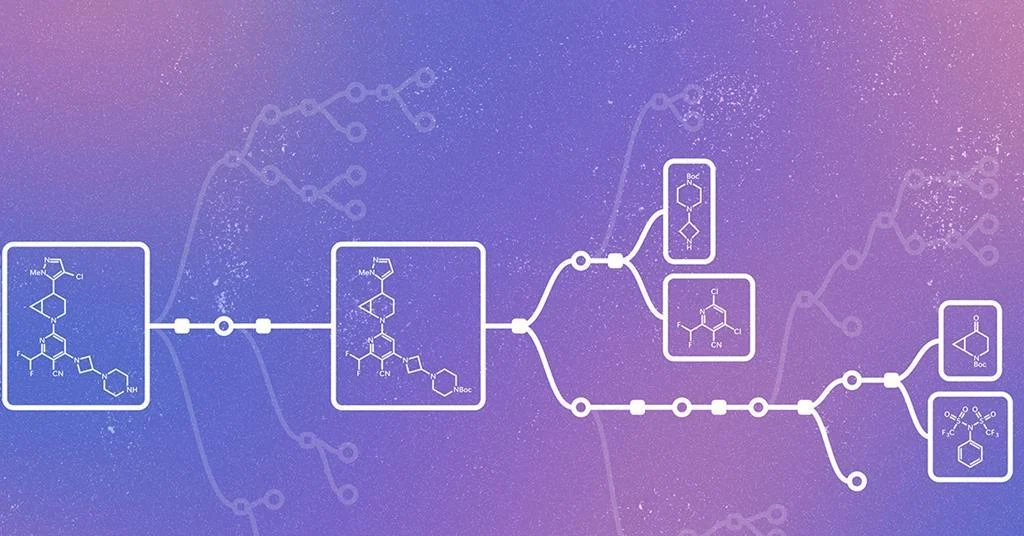
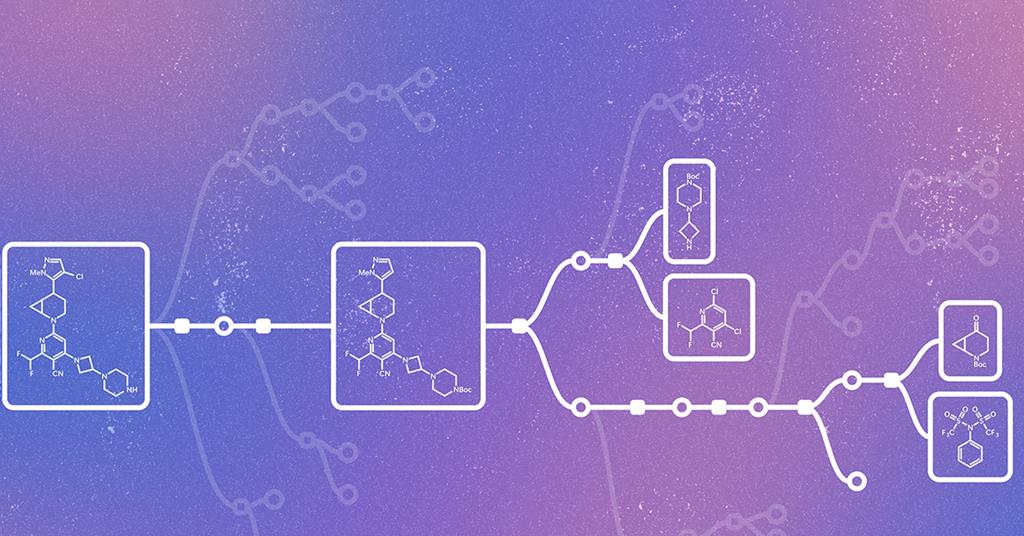
In the complex landscape of pharmaceutical development, the ability to work backward from a target molecule to the simple, readily available building blocks required to synthesize it—a process known as retrosynthesis—is the bedrock of innovation. For decades, this was a painstaking manual task performed by the world’s most brilliant synthetic chemists. Today, that process is undergoing a seismic shift. Researchers at Microsoft Research AI for Science have unveiled "Retrochimera," a novel computational framework that merges two disparate deep-learning architectures to solve the persistent problems of hallucinations and predictive failures in automated chemical planning.
The Core Innovation: Merging Diverse Inductive Biases
The challenge of retrosynthesis is one of massive search space and high branching factors. For a single target molecule, there are often thousands of potential "disconnections" (the breaking of chemical bonds to simplify the structure). Traditionally, artificial intelligence models have struggled to navigate this complexity without veering into chemically impossible routes—a phenomenon known as "hallucination."
Retrochimera addresses this by forcing a marriage between two distinct classes of deep learning algorithms. By combining models with different "inductive biases"—the set of assumptions a model uses to predict outcomes—the system functions more like a deliberative human chemist than a rigid statistical machine.
"We find that different models have different strengths and that combining them can yield considerable performance improvements over any single model alone," says Marwin Segler, senior director at Microsoft Research AI for Science. "By leveraging the strengths of one model to check the blind spots of another, we create a system that is significantly more robust than the sum of its parts."
Chronology: A Path to Algorithmic Synergy
The development of Retrochimera did not occur in a vacuum. It represents the culmination of several years of intensive research into how machine learning can be optimized for the physical sciences.
- Early 2023: Initial investigations into Transformer-based architectures for chemical reaction prediction showed promise but were plagued by high error rates when dealing with proprietary or "out-of-distribution" chemical datasets.
- Late 2024: Microsoft’s research team began testing the "ensemble" hypothesis—the idea that two models with different mathematical foundations could provide a "sanity check" for one another.
- Mid-2025: The integration phase saw the development of a hybrid architecture that allowed for cross-referencing between a rule-based inference model and a purely data-driven generative model.
- Early 2026: Extensive validation testing began using proprietary datasets provided by industry giants Novartis and GSK.
- October 2026: The official publication in Nature and the release of the open-source code repository on GitHub marked the formal debut of Retrochimera.
Supporting Data: Why Diversity Outperforms Complexity
The success of Retrochimera is not merely theoretical; it is rooted in empirical performance data. When tested against industry-standard datasets, the performance gap between Retrochimera and traditional models was stark.
Performance Benchmarking
In tests performed on reaction data from Novartis and GSK, individual models—even state-of-the-art ones—often reached a plateau in success rates. These models frequently proposed routes that were technically valid on paper but impossible in a laboratory setting due to reaction conditions or reagent incompatibility.
Retrochimera demonstrated a significantly lower hallucination rate. By requiring the hybrid system to reach a consensus, the algorithm effectively filtered out "noise" that would have misled a single-model approach. Furthermore, the team found that the model’s "branching factor" was more effectively pruned, meaning it spent less computational energy exploring dead-end pathways.
The Cost of Adaptation
One of the most significant barriers to AI adoption in the pharmaceutical industry has been the "fine-tuning problem." Most models are trained on public databases (like the USPTO patents database), which do not always reflect the specific, often secret, chemistry conducted by individual drug companies. Retrochimera was designed to be "fine-tuned cheaply and quickly." Internal metrics suggest that a lab can adapt the model to its own proprietary reaction history in a fraction of the time required by previous monolithic architectures, lowering the barrier to entry for smaller biotech firms and specialized research groups.
Official Perspectives and Expert Analysis
The chemical industry has long been skeptical of "black-box" AI. However, the transparent design of Retrochimera, which allows researchers to see why the model selected a specific retrosynthetic route, has earned praise from stakeholders.
"The industry has been waiting for a tool that doesn’t just guess, but validates," says a representative from the research team. "By ensembling diverse inductive bias models, we aren’t just making a better guesser; we are building a more reliable laboratory partner."
The choice to open-source the code through GitHub is a strategic move intended to foster community trust. By allowing chemists to inspect the logic behind the ensemble, Microsoft is encouraging an ecosystem of "human-in-the-loop" chemistry, where the AI provides the map, but the chemist maintains full oversight of the route planning.
Implications for the Future of Drug Discovery
The implications of this breakthrough are far-reaching, touching upon the three pillars of modern drug discovery: speed, cost, and safety.

Accelerating the Drug Development Pipeline
Current drug discovery pipelines can take over a decade and cost billions of dollars. Much of this time is consumed by the "trial and error" nature of synthetic route design. If an AI can accurately predict a viable synthesis path in seconds, the time saved in the early discovery phase could shave months or even years off the journey from molecule identification to clinical trials.
Navigating "Dark" Chemical Space
There are vast swathes of chemical space that have remained unexplored simply because they are too difficult or expensive to synthesize. Retrochimera’s ability to handle novel reactions suggests that it could unlock "dark" space, allowing researchers to explore molecules that were previously dismissed as too complex to manufacture.
Sustainability and Green Chemistry
A less obvious but equally vital implication is the impact on green chemistry. AI models are increasingly being used to optimize reactions for minimal waste and energy usage. By providing more reliable synthetic routes, Retrochimera can help chemists identify pathways that require fewer toxic reagents or less intensive heating and cooling, directly supporting the industry’s push toward sustainable practices.
The "Human-AI" Synergy
Despite the sophistication of Retrochimera, the developers emphasize that it is not intended to replace the synthetic chemist. Instead, it serves as a force multiplier. In the future, we may see a laboratory environment where an AI model like Retrochimera proposes a dozen viable routes, and the human chemist selects the most appropriate one based on cost, sustainability, and personal expertise. This symbiosis represents the next evolution of the scientific method.
Conclusion: A New Standard in Computational Chemistry
Retrochimera stands as a testament to the idea that the future of AI in science lies not in creating larger, more opaque models, but in creating smarter, more diverse systems that work in concert. By acknowledging that no single model has a monopoly on the truth of chemical interaction, Microsoft has paved the way for a more reliable, efficient, and innovative era of drug discovery.
As the research community begins to integrate Retrochimera into their workflows, the focus will undoubtedly shift to how these hybrid models can be expanded. Could this "ensemble" approach be applied to materials science, protein folding, or even quantum physics? If the success of Retrochimera is any indication, the synthesis of different AI perspectives is the key to unlocking the next generation of scientific discovery.
For now, the tool is available for researchers, developers, and pharmaceutical companies to download, adapt, and refine. As it continues to learn from the diverse, real-world chemistry performed in labs across the globe, Retrochimera is poised to become an indispensable asset in the chemist’s digital toolkit, turning the once-daunting task of retrosynthesis into a streamlined, high-confidence endeavor.