FRAMINGHAM, Mass. — In the high-stakes world of commercial property management, timing is everything. When critical mechanical infrastructure reaches the end of its lifecycle, replacing it often involves weeks of disruptive construction, noise, displaced tenants, and logistical nightmares. However, Building Automation Systems (BAS) recently redefined what is possible in heavy commercial HVAC retrofits.
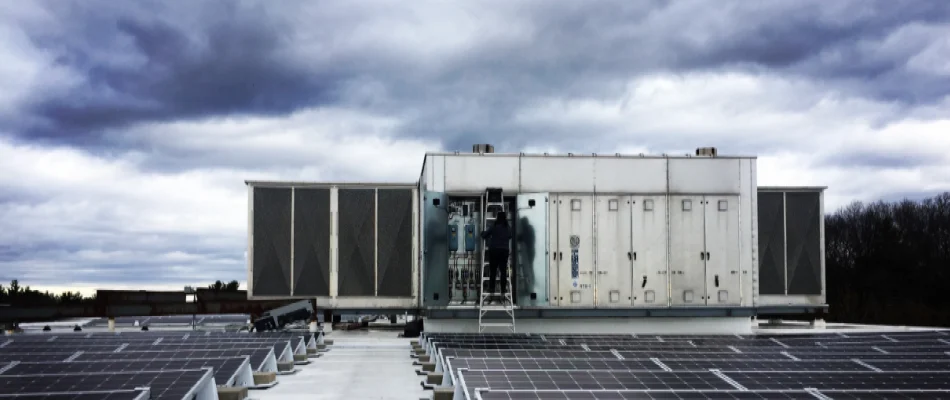
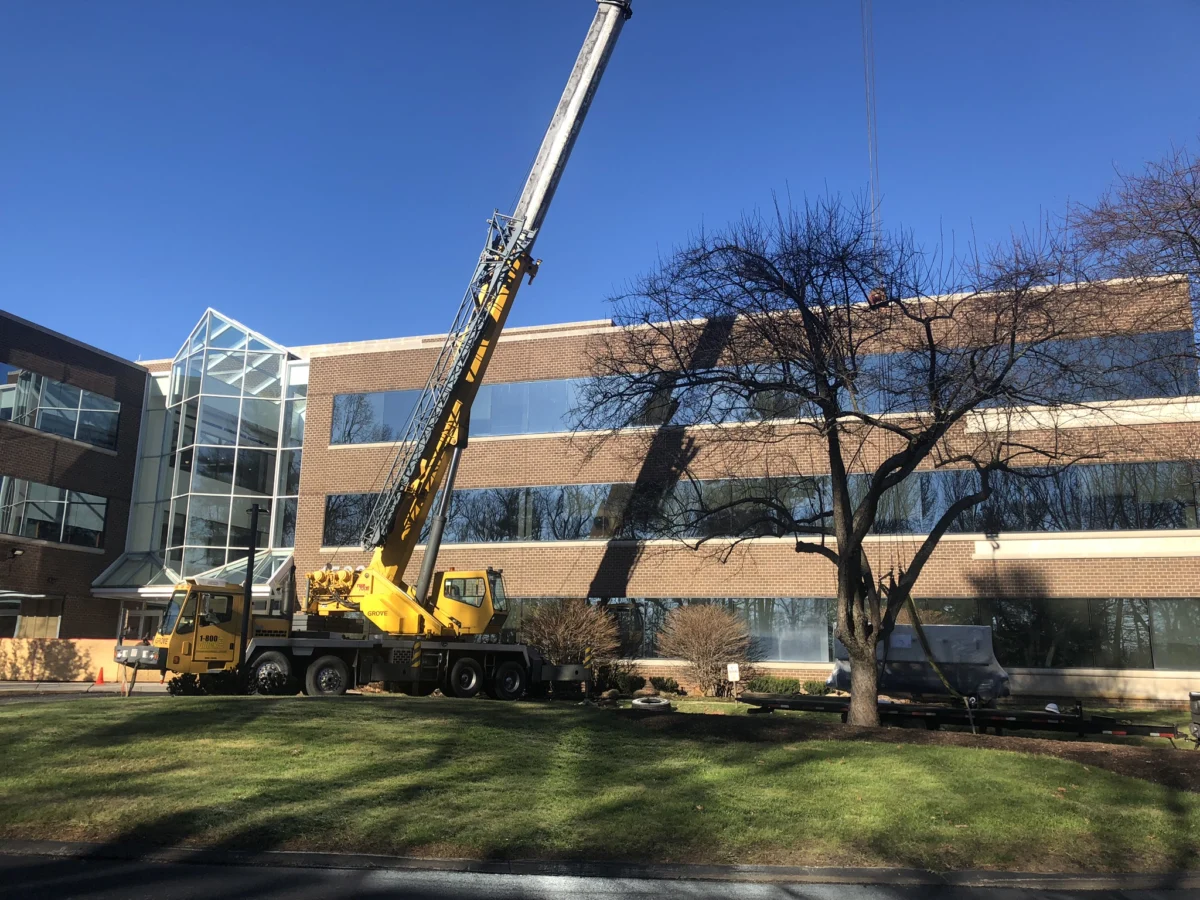
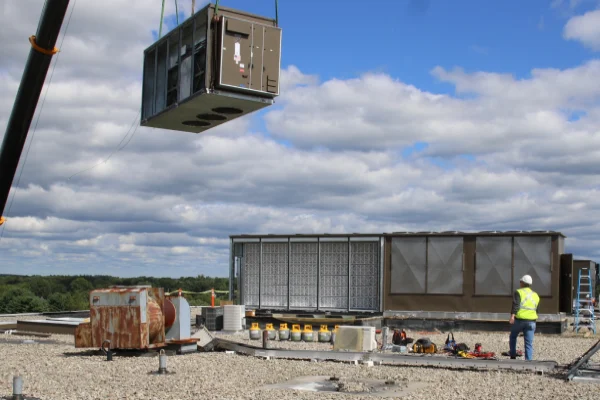
Over the course of a single September weekend, a specialized team from BAS orchestrated a flawless, rapid-fire replacement of a massive 172-ton Seasons 4 rooftop unit (RTU) atop a sprawling 162,000-square-foot office building in Framingham, Massachusetts. The operation, which involved moving a 32,300-pound piece of heavy industrial machinery via crane, was executed with military-like precision. Arriving on-site on Friday evening, September 11, the multi-disciplinary team had the new system completely installed, integrated, and fully commissioned by Sunday, September 13.
By executing the entire project within a compressed 48-hour window, BAS ensured absolute zero disruption to the daily operations of the building’s commercial tenants—a monumental achievement given the sheer scale and complexity of the mechanical overhaul.
Main Facts
The Framingham commercial office retrofit stands as a masterclass in modern mechanical engineering, logistical planning, and inter-company collaboration. At the center of the project was the complete removal of an aging legacy system and the drop-in replacement of a state-of-the-art, custom-engineered Seasons 4 rooftop unit.
Key specifications and operational facts of the project include:
- Location: Framingham, Massachusetts.
- Building Scope: A 162,000-square-foot multi-tenant commercial office facility.
- Equipment Installed: A custom 172-ton Seasons 4 rooftop unit (RTU) equipped with eight high-efficiency scroll compressors to provide robust direct expansion (DX) cooling capacity.
- Equipment Weight: A staggering 32,300 pounds (over 16 tons).
- Execution Window: Exactly one weekend, commencing Friday, September 11, and concluding Sunday, September 13.
- Key Partners: Equipment supplied by manufacturer’s representative Noble Associates, Inc., with engineering, project management, and installation executed entirely by Building Automation Systems (BAS).
- Tenant Impact: Zero downtime or operational disruption for building occupants, facilitated by the strictly weekend-only construction schedule.
The project highlights the increasing demand for high-performance HVAC retrofits in the commercial real estate sector, where property owners must balance aging infrastructure with strict energy-efficiency mandates and tenant comfort expectations.
Chronology of a Weekend Transformation
Executing a heavy industrial HVAC replacement in 48 hours requires meticulous advance preparation. While the physical labor occurred entirely over a single weekend, the project was weeks in the making. Below is the detailed chronology of how BAS brought the Framingham retrofit from concept to reality.
Phase 1: Pre-Construction Engineering and Load Assessment (Weeks Prior)
Long before any equipment arrived on-site, BAS’s in-house engineering team conducted comprehensive structural and thermal load surveys of the 162,000-square-foot office building. Engineers calculated peak cooling demands to ensure the new 172-ton Seasons 4 unit would neither underperform during peak summer loads nor waste energy during shoulder seasons.
Concurrently, BAS engineers collaborated directly with Seasons 4 factory engineers to address one of the most critical logistical hurdles of any rooftop replacement: physical dimensions and curb compatibility. By utilizing detailed CAD drawings and structural analyses, the team ensured the new, heavy-duty unit would fit precisely onto the existing roof curb without requiring costly and time-consuming structural steel modifications.
Phase 2: Friday Night Mobilization (September 11)
The on-site phase officially kicked off on Friday evening, September 11, immediately after the close of business, minimizing any potential overlap with office hours.
- 18:00 EST: Staging and site safety protocols were established around the perimeter of the Framingham office complex. Heavy crane rigging equipment was moved into position.
- 20:00 EST: Utility shut-offs and electrical lock-out/tag-out (LOTO) procedures were executed safely by licensed technicians.
- 22:00 EST: The rigging crew initiated the delicate extraction of the legacy HVAC unit, lifting the outdated, spent machinery off the roof and clearing the way for the new infrastructure.
Phase 3: Saturday Installation and Curb Integration (September 12)
With the old unit successfully removed, Saturday was dedicated to the core structural and mechanical installation.
- 06:00 EST: Backed by manufacturer’s representative Noble Associates, flatbed trucks carrying the massive 32,300-pound Seasons 4 RTU arrived on-site.
- 09:00 EST: A heavy-duty crane hoisted the 172-ton unit into the sky, guiding it with millimeter precision down onto the pre-inspected roof curb.
- 14:00 EST: Mechanical connections—including supply and return ductwork transitions—were sealed and insulated.
- 18:00 EST: Electrical tie-ins commenced. Because of the advanced pre-engineering work done by BAS, the team utilized the existing building power and control feeds, expertly aligning them with the new unit to eliminate the need for extensive, time-consuming field wiring.
Phase 4: Sunday Commissioning and Handover (September 13)
The final day of the project focused on system integration, software programming, and rigorous quality assurance testing.
- 08:00 EST: BAS certified programmers and technicians worked alongside Seasons 4 engineers to execute custom RTU sequences. These sequences were specifically designed to integrate seamlessly with the building’s pre-existing Building Management System (BMS).
- 12:00 EST: Comprehensive system testing began. Technicians tested all eight scroll compressors, verified refrigerant pressures, checked airflow balancing, and simulated alarm triggers to ensure fail-safe operations.
- 16:00 EST: Full commissioning was signed off. The system was deemed fully operational, stable, and ready to shoulder the commercial building’s environmental loads.
- 18:00 EST: Site cleanup was completed well ahead of the Monday morning tenant arrival, leaving zero footprint of the massive weekend operation.
Supporting Data and Technical Specifications
The success of the Framingham project rests heavily on the robust technical specifications of the selected equipment and the sophisticated engineering methodologies applied by BAS. Commercial real estate professionals understand that replacing an RTU of this magnitude is not merely a "swap-out" operation; it is an intricate exercise in thermodynamics, electrical engineering, and structural load balancing.
The Seasons 4 Advantage
The choice of a Seasons 4 unit, supplied through Noble Associates, Inc., was deliberate. Seasons 4 is widely recognized in the commercial HVAC industry for engineering heavy-duty, highly customizable rooftop units built to withstand harsh New England weather conditions.
- Cooling Capacity: 172 tons of direct expansion (DX) cooling capacity provides immense thermal management power, ensuring that all 162,000 square feet of multi-tenant office space remain comfortable regardless of external ambient temperatures.
- Multi-Stage Efficiency: The incorporation of eight independent scroll compressors allows the unit to modulate its capacity dynamically. Instead of running at 100% capacity continuously—which wastes energy and causes premature mechanical wear—the system can stage its compressors up or down based on real-time building heat loads. This staging significantly lowers operational energy costs for the property owner.
- Massive Scale: Weighing in at 32,300 pounds, the physical weight of the unit required sophisticated crane engineering to distribute the load safely across the building’s structural framework without exceeding roof load limits.
Engineering Ingenuity: Plug-and-Play Integration
One of the most remarkable technical achievements of the BAS project team was the elimination of secondary field wiring. In many HVAC replacement projects, upgrading to a modern unit with advanced controls necessitates ripping out old wiring and running entirely new electrical and control conduits throughout the building—a process that can take weeks and create massive interior disruption.
By conducting exhaustive advance surveys, BAS and Seasons 4 engineered the new RTU’s electrical and control connection points to match the legacy unit’s exact footprints. This "plug-and-play" compatibility allowed technicians to utilize the existing power and control feeds seamlessly. Not only did this save countless labor hours, but it also preserved the interior aesthetics of the office building by avoiding the need to cut into tenant ceilings or walls to run new cables.
Furthermore, the custom RTU programming developed collaboratively by BAS and Seasons 4 ensured that the new mechanical asset communicated fluently with the building’s existing BMS architecture. This guaranteed that building engineers retained centralized, real-time visibility and control over temperatures, fan speeds, and energy consumption profiles from day one.
Official Responses and Industry Perspectives
The seamless execution of such a complex engineering feat has generated significant praise within the New England commercial real estate and HVAC sectors.
While commercial property management teams frequently brace themselves for budget overruns, schedule delays, and tenant complaints during major mechanical overhauls, the BAS Framingham project proved that meticulous planning can eliminate these traditional pain points.
In an official statement released following the project’s completion, leadership at Building Automation Systems emphasized the broader philosophy driving their engineering approach:
"Property managers throughout the New England region can count on the top-quality engineering and HVAC services available from Building Automation Systems (BAS). With in-house licensed engineers, certified programmers, and technicians, our team can help you complete your most critical HVAC projects."
Industry observers have noted that the collaboration between BAS, Seasons 4, and Noble Associates serves as a benchmark for modern design-build mechanical projects. Manufacturers’ representatives like Noble Associates play a vital role in bridging the gap between factory production lines and field installation realities. By supplying a unit engineered specifically to the structural and operational constraints of the Framingham site, Noble Associates ensured that the equipment arrived ready to perform without requiring disruptive field modifications.
Implications for Commercial Real Estate and HVAC Engineering
The successful deployment of the 172-ton Seasons 4 unit in Framingham carries several crucial implications for property managers, building owners, and mechanical contractors operating across New England and beyond.
1. Zero-Downtime Expectations Are the New Standard
In today’s competitive commercial leasing market, office tenants expect uninterrupted environmental comfort. Commercial landlords cannot afford multi-week disruptions caused by construction noise, stagnant air, or fluctuating indoor temperatures. The BAS weekend turnaround demonstrates that heavy mechanical retrofits can—and increasingly should—be engineered to occur entirely outside of standard business hours. This capability protects tenant retention and preserves lease agreements by preventing productivity losses.
2. The Value of In-House Multi-Disciplinary Expertise
The complexity of modern HVAC systems means that fragmented project management—where engineering, controls programming, and mechanical installation are outsourced to separate, uncoordinated entities—frequently leads to project failure or finger-pointing. BAS’s model of employing in-house licensed engineers, certified programmers, and field technicians ensures total accountability from project conception to final commissioning. When the people designing the thermal loads are the same people writing the BMS control sequences and bolting down the unit on the roof, communication gaps are eliminated.
3. Energy Efficiency and Sustainability Mandates
As municipal and state governments across the Northeast implement stricter energy efficiency and carbon-reduction targets for commercial real estate, building owners face mounting pressure to upgrade aging infrastructure. Replacing an inefficient legacy HVAC system with a modern, multi-compressor unit like the 172-ton Seasons 4 RTU dramatically cuts a building’s carbon footprint while lowering utility operating expenses. Projects like the Framingham retrofit prove that major sustainability upgrades can be achieved swiftly without sacrificing building performance or tenant comfort.
Looking Forward
As commercial real estate markets continue to evolve, the demand for rapid, high-precision mechanical retrofits will only intensify. The successful completion of the Framingham project solidifies Building Automation Systems’ reputation as a premier partner for complex design-build HVAC solutions.
For property managers and building owners grappling with aging rooftop infrastructure, the message from Framingham is clear: major mechanical upgrades do not have to be a multi-week ordeal. Through advanced engineering, collaborative manufacturing partnerships, and flawless execution, critical infrastructure replacements can be completed cleanly, efficiently, and entirely on the weekend.
Property managers seeking expert guidance on upcoming design-build projects or mechanical retrofits are encouraged to contact the BAS engineering team to schedule a comprehensive site evaluation and project estimate.