





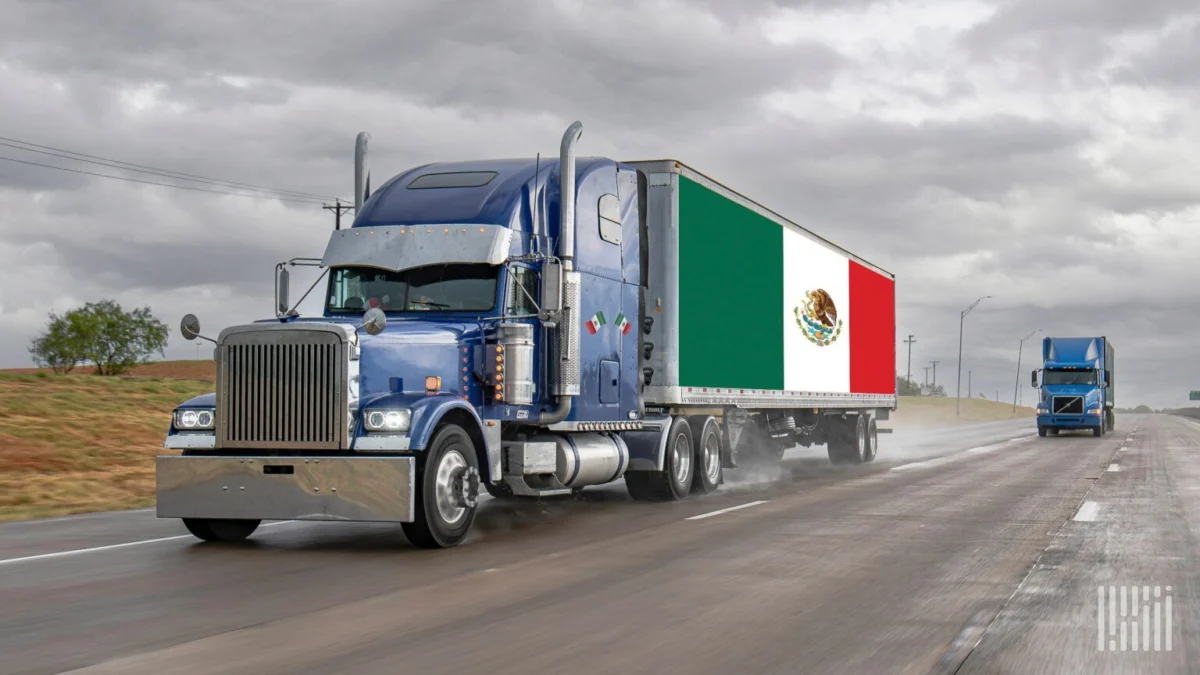
MEXICO CITY — Following days of sweeping disruptions that paralyzed major commercial corridors, paralyzed supply chains, and triggered alarms across the North American manufacturing ecosystem, Mexican trucking organizations and federal authorities have brokered a breakthrough agreement. The accord establishes a formal framework for negotiations aimed at resolving a crippling nationwide strike that has severely impacted freight movement across the country.
The breakthrough, secured late Tuesday following intensive discussions between the nation’s Interior Ministry (Secretaría de Gobernación, or Segob) and premier freight transportation alliances, comes in direct response to escalating protests. These demonstrations saw thousands of commercial drivers park their rigs, form strategic highway blockades, and stage roadside rallies in a desperate bid to force government intervention against skyrocketing violent crime, rampant cargo theft, and unsustainable operating costs.
While the opening of formal dialogue channels has injected a measure of cautious optimism into an otherwise tense logistics landscape, the situation remains fluid. Prominent transport chambers have noted that while negotiations are moving forward, the complete cessation of all localized demonstrations has not yet been universally confirmed, leaving supply chain stakeholders watching anxiously to see if the fragile truce will hold.
Main Facts of the Agreement
The core of Tuesday’s agreement centers on the creation of four distinct, high-level working groups designed to address the structural grievances plaguing Mexico’s freight transportation sector. The pact is the result of a high-stakes meeting between senior Segob officials and the principal leaders of Mexico’s most influential trucking associations:
- Augusto Ramos Melo, president of the National Chamber of Freight Transport (CANACAR);
- Carlos García Álvarez, president of the Honorable Mexican Alliance of Transport Organizations (HAMOTAC); and
- Lauro Rincón Hernández, president of the Mexican-American Federation of Transporters (FEMATRAC).
Under the terms of the newly minted accord, the government and industry representatives will convene across four specialized pillars:
- Highway Security: Developing concrete strategies to combat organized crime, armed highway robbery, and systematic extortion targeting commercial vehicle operators.
- Infrastructure Upgrades: Assessing and planning improvements to heavily trafficked freight corridors, weigh stations, and truck parking facilities to enhance driver safety.
- Tax Incentives & Economic Relief: Evaluating fiscal adjustments, fuel subsidies, and relief measures to offset crushing operating costs, tolls, and maintenance expenditures.
- Regulatory Framework: Reviewing federal regulations governing hours of service, weight limits, compliance burdens, and enforcement protocols to streamline legitimate commerce.
Despite the promise of these high-level talks, the immediate operational reality on Mexican highways remains complex. Officials from trade publications and logistics monitoring groups—including La Jornada, T21, and Revista Transportes y Turismo—reported that supply chain pressures mounted rapidly as the strike entered its second full day, compelling federal authorities to fast-track the dialogue to prevent catastrophic economic fallout.
Chronology of the Crisis
To understand how the Mexican freight network arrived at the brink of a total systemic freeze, it is necessary to examine the rapid escalation of events that culminated in Tuesday’s agreement:
- Months Prior: Mounting frustration among independent owner-operators and large fleet managers over unchecked cartel violence, highway hijackings, and the rising price of diesel reaches a boiling point. Despite repeated appeals to local and federal authorities, trucking associations report little to no coordinated law enforcement response.
- Sunday Evening: Leaders from CANACAR, HAMOTAC, and FEMATRAC finalize plans for nationwide coordinated action after final attempts to secure emergency protections from federal security agencies stall.
- Monday, 6:00 AM (EST): Truckers launch widespread national demonstrations. The Interior Ministry subsequently reports active protests at 38 strategic locations across 19 states, involving an estimated 691 commercial vehicles and 858 participants executing rolling slow-downs, roadside assemblies, and outright highway blockades.
- Monday Afternoon: Disputing the government’s conservative tally, CANACAR asserts that the protest movement is far more expansive, with mobilization reported across all 32 Mexican states, effectively creating a de facto national freight standstill along key arteries connecting industrial hubs to ports and international borders.
- Tuesday Morning: As economic pressures mount and commercial chambers sound the alarm over looming automotive, agricultural, and manufacturing component shortages, trucking leadership advises participants to maintain peaceful, strategic highway presences while urgently pressing for a seat at the federal negotiating table.
- Tuesday Afternoon: A high-level delegation of transport leaders—including Ramos Melo, García Álvarez, and Rincón Hernández—enters formal negotiations with the Interior Ministry in Mexico City.
- Tuesday Evening: Segob and trucking representatives successfully broker the four-pillar negotiation agreement, paving the way for structured dialogue while leaving localized demonstrations under continuous review.
Supporting Data and the Scale of Disruption
The sheer breadth of the Monday-Tuesday strike underscored the immense frustration festering within the ranks of Mexico’s commercial drivers. While federal authorities initially sought to frame the demonstrations as isolated regional protests, the operational data compiled by both state agencies and industry watchdogs revealed a nationwide crisis of confidence in public security.
According to initial assessments released by the Interior Ministry, Monday morning’s actions directly impacted 19 states via 38 distinct mobilization points, tying up hundreds of heavy-duty trucks and involving nearly a thousand drivers. However, industry insiders and CANACAR leadership quickly pushed back against these figures, maintaining that the geographical footprint of the strike encompassed all 32 federal entities. The discrepancy highlighted a fundamental gap in how federal officials versus frontline logistics operators perceive the severity of the crisis.
The grievances fueling these numbers are deeply rooted in daily operational hazards. Mexican freight networks have long struggled with high-risk corridors where criminal cartels operate with relative impunity. Cargo theft has evolved from opportunistic pilferage into sophisticated, highly coordinated, and frequently lethal hijackings. Drivers face regular threats of physical violence, kidnapping, and extortion by criminal elements operating checkpoints or targeting trucks during mandatory rest periods.
Compounding these security threats are unrelenting macroeconomic pressures. Operating costs—driven by soaring diesel prices, high toll road tariffs, climbing insurance premiums, and strict regulatory compliance costs—have squeezed profit margins for independent operators and mid-sized fleets to the breaking point. For many drivers, participating in a nationwide strike was seen not merely as a negotiation tactic, but as a matter of professional survival.
Official Responses and Stakeholder Positions
The federal government’s swift pivot from downplaying the protests to establishing a multi-tiered negotiation framework reflects the intense pressure exerted by national and international trade organizations.
Throughout Monday and Tuesday, industrial associations representing manufacturers, maquiladoras, agricultural exporters, and retail conglomerates voiced profound anxiety regarding the disruption of Just-In-Time (JIT) supply chains. With vital freight corridors blocked—particularly those connecting central manufacturing powerhouses like Monterrey, Guadalajara, and the Bajío region to key U.S. border crossings in Nuevo Laredo, Ciudad Juárez, and Tijuana—business leaders warned that even a 48-hour standstill could result in tens of millions of dollars in losses and assembly line shutdowns on both sides of the international border.
Augusto Ramos Melo of CANACAR emphasized that the decision to enter talks with Segob was made in good faith, driven by the industry’s desire to secure long-overdue protections for its workforce without inflicting permanent damage on the national economy. Nevertheless, Ramos Melo and his counterparts made it clear that patience among drivers is exhausted. The unions have signaled that while peaceful protest may pause to give diplomacy a chance, any sign of bad faith, stagnation, or failure to deliver tangible security reforms during the four upcoming working sessions will result in an immediate resumption of nationwide blockades.
Interior Ministry officials, recognizing the strategic vulnerability of the nation’s transport infrastructure, pledged a collaborative approach. Representatives from Segob stated that the federal government remains fully committed to working alongside industry stakeholders to deploy enhanced security patrols, evaluate infrastructure deficits, and explore regulatory relief measures.
Implications for North American Trade and Supply Chains
The successful de-escalation of this week’s strike carries profound implications not only for Mexico’s domestic economy, but for the entire North American free trade architecture.
1. Vulnerability of Cross-Border Logistics
The events of this week served as an abrupt wake-up call for corporations operating under United States-Mexico-Canada Agreement (USMCA) supply chains. The rapid mobilization of thousands of truckers across multiple states demonstrated how quickly domestic security crises in Mexico can cascade into international logistics bottlenecks. U.S. importers heavily reliant on Mexican automotive parts, electronics, fresh produce, and consumer goods were forced to activate contingency plans as trucks sat idle at border gateways.
2. The Security-Economy Nexus
Cargo theft and highway violence are no longer viewed strictly as localized law enforcement issues; they are recognized as systemic economic threats. If the upcoming high-level working sessions fail to produce enforceable, effective security protocols, the long-term viability of Mexico as an investment destination for advanced manufacturing could be compromised. Insurers have steadily driven up premiums for freight moving through high-risk Mexican states, pricing smaller operators out of the market and driving up end-consumer prices.
3. A Test of Federal Resolve
The four-pillar negotiation process represents a critical test for the federal administration’s ability to partner with private sector logistics operators. For the agreement to succeed, concrete deliverables must emerge from the security and infrastructure sessions. Incremental policy adjustments will no longer suffice for an industry demanding fundamental protection for its workforce.
4. Outlook for the Days Ahead
As the four specialized working sessions get underway, logistics managers, fleet operators, and supply chain directors across North America will maintain a watchful eye on proceedings in Mexico City. While the immediate threat of a prolonged, total national shutdown has receded following Tuesday’s agreement, the underlying tensions remain raw. Whether this diplomatic breakthrough translates into permanent highway security and operational stability will determine whether Mexico’s freight networks enter a new era of safety—or face an even more disruptive wave of labor unrest in the near future.