




The commercial interiors industry converged in Chicago this June for NeoCon 2023, the premier global event for the design community. As the industry grapples with the permanent shifts in how, where, and why we work, NeoCon 2023 served as both a compass and a laboratory. Over the course of the multi-day exhibition at The Merchandise Mart, thousands of designers, architects, and facilities managers explored a landscape defined by radical sustainability, the integration of residential comfort into professional environments, and a renewed emphasis on agile, multi-functional furniture.
The State of the Industry: A Chronology of Innovation
NeoCon has long been the barometer for the commercial furniture sector, but the 2023 iteration marked a distinct departure from the "office-first" mindset of the past.
Day One: Setting the Sustainability Agenda
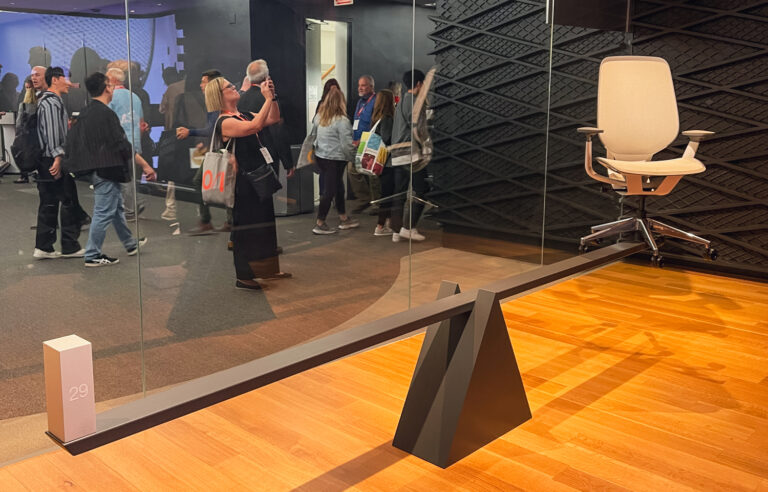
The event opened with a resounding focus on environmental stewardship. Industry titans unveiled products that prioritize circularity and carbon-footprint reduction. The conversation moved beyond mere recycling; it centered on the life cycle of materials. Steelcase, in particular, set the tone early by emphasizing weight reduction in ergonomic seating—demonstrating that less material translates to lower shipping emissions without sacrificing performance.
Day Two: The Rise of the "Third Space"
Mid-week saw a shift toward the "third space"—the hybrid area that occupies the spectrum between a formal desk and a private living room. Exhibitors like Hightower dominated the discourse, presenting lounge solutions that challenged the rigidity of traditional office layouts. The focus was on "flotation" and movement, acknowledging that the modern employee demands the flexibility to shift from deep-focus work to collaborative brainstorming seamlessly.
Day Three: Tech-Integrated Ergonomics
The final day highlighted the technological maturation of furniture. From integrated power solutions to advanced ergonomic adjustments, manufacturers like Okamura demonstrated that the future of the workplace is not just about aesthetics, but about the seamless integration of human needs and digital tools.
Key Exhibitors and Design Excellence
The exhibition floor was a masterclass in variety, with specific exhibitors emerging as the "Wow" factors of the show.
Steelcase: Engineering for the Planet
Steelcase continues to occupy the vanguard of workspace innovation. Their exhibition this year was a poignant reminder of the relationship between industrial design and sustainability. By highlighting ergonomic chairs that weigh 29lbs or less, Steelcase addressed the logistical carbon footprint of the industry. By streamlining the manufacturing and transport process, they proved that sustainability is not just a marketing buzzword, but a core engineering challenge. Their focus on inclusivity and work-from-home solutions underscored an understanding that the office is no longer a fixed point, but a network of environments.
Hightower: The Art of the Lounge
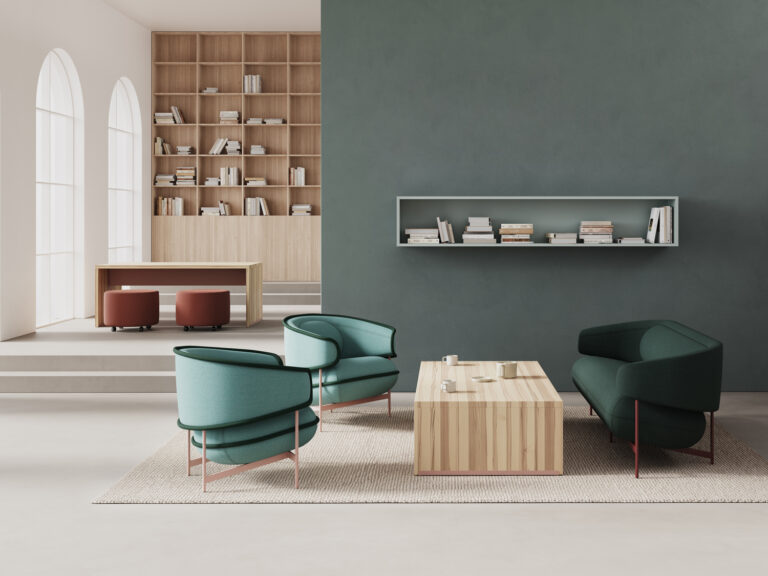
Hightower’s "Best of Competition" award for their Flote Lounge collection was a highlight of the event. The collection represents a shift toward fluid, modular furniture that elevates the commercial aesthetic. The Flote collection is notable for its versatility, proving that high-end design does not have to be exclusive; it can be adaptable, comfortable, and visually striking.
Sixinch: Challenging Conventional Forms
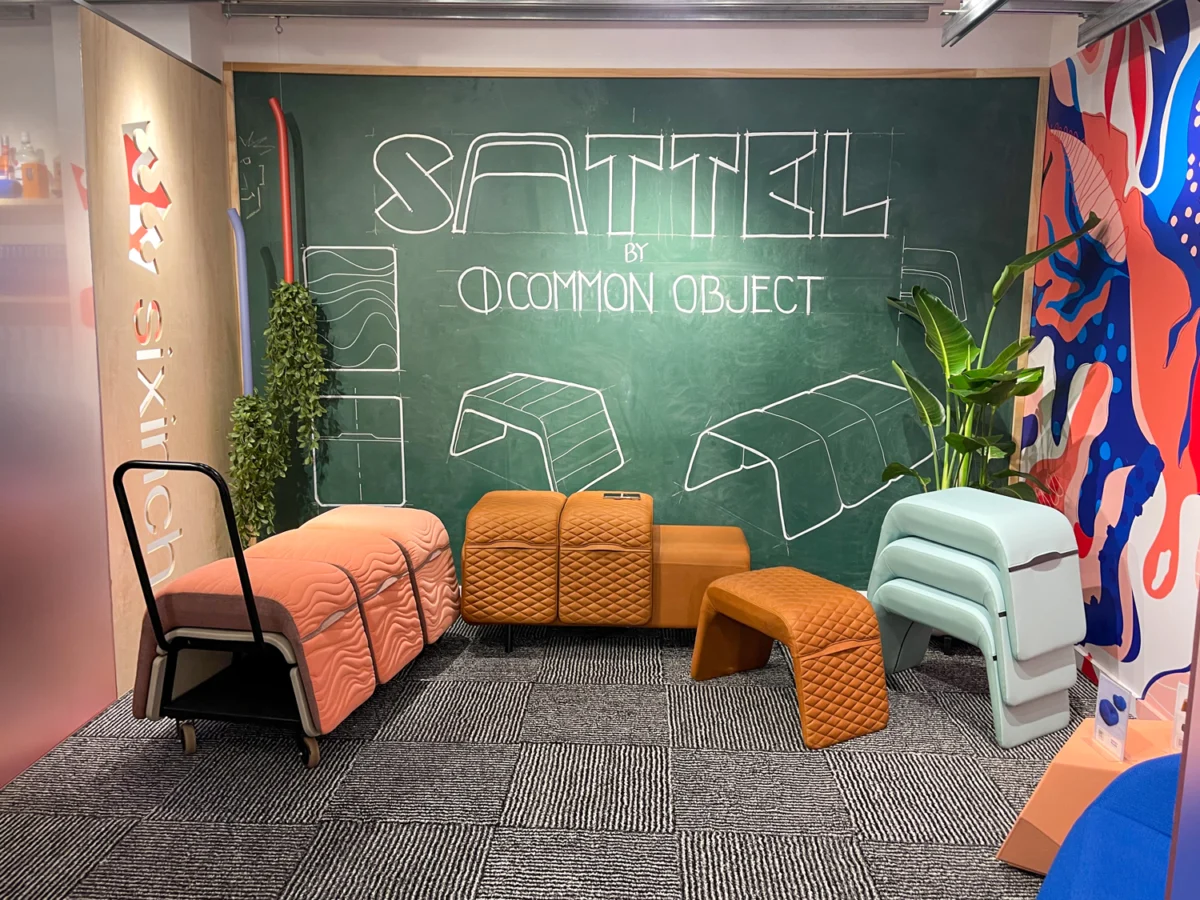
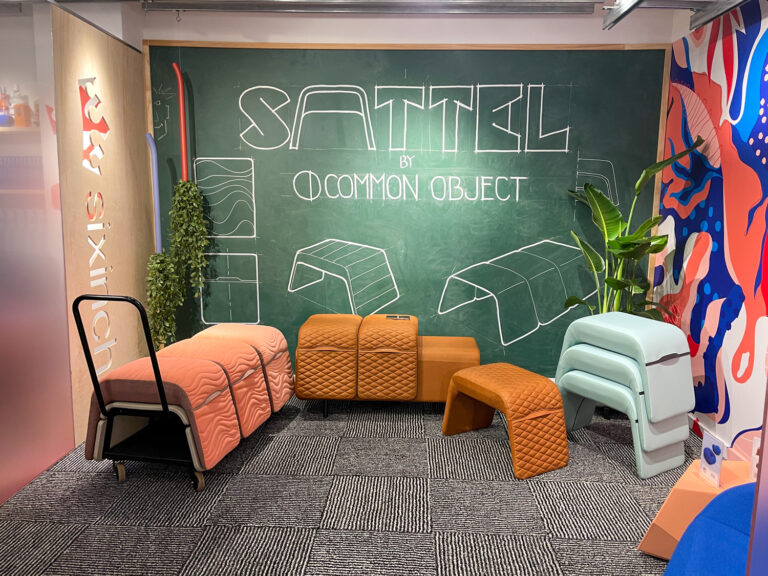
Sixinch provided the most vibrant, unconventional experience of the show. Their David Bowie-inspired collection was a testament to the power of color and texture in the workplace. By utilizing bold palettes and playful geometries—such as the Sattle chair and the highly mobile Sattle Wagen—Sixinch reminded the industry that office furniture need not be sterile. Their approach encourages creativity, inviting users to interact with their environment in a more tactile, human way.
Okamura: The Precision of Japanese Ergonomics
The Japanese manufacturer Okamura continued its tradition of merging technical precision with organic aesthetics. Their Lives Work Lounge chairs, which often feature integrated desk surfaces, perfectly captured the trend of "all-in-one" workstation furniture. These pieces provide a sense of security and intimacy—a "hug" for the user—which is increasingly important in the open-plan offices that still dominate the corporate landscape.
Om Seating: Pastel Palettes and Human-Centric Design
Om Seating’s presentation was an exercise in delight. Their use of soft, pastel palettes signaled a departure from the "corporate grey" that once defined professional spaces. Their Werksy chair and modular poufs demonstrated a commitment to user-oriented ergonomics that cater to a wide range of settings, from healthcare facilities to creative studios.
Supporting Data: The 2023 Design Trends
The themes observed at NeoCon 2023 were not merely aesthetic preferences; they were responses to data-driven shifts in workplace demographics and behavior.
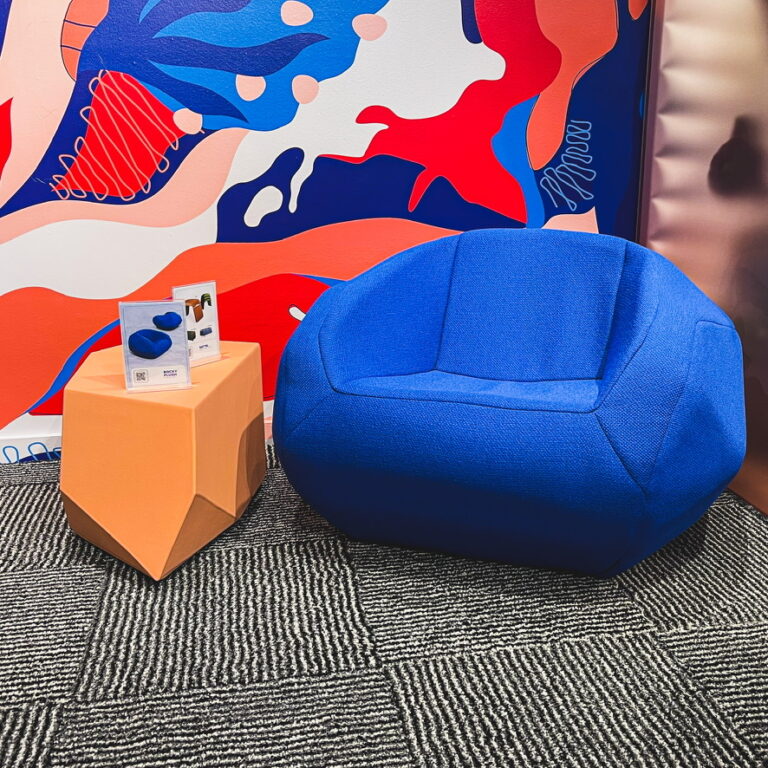
- Sustainability as a Baseline: According to industry reports released during the show, the demand for carbon-neutral office products has increased by over 40% in the last three years. Manufacturers are no longer "opting in" to green certifications; it has become the baseline requirement for entry into the commercial market.
- The Rise of Informal Seating: The introduction of floor cushions and lounge-based task furniture indicates a move away from the "8-hour-at-a-desk" model. Data suggests that companies providing diverse seating options see a 25% increase in employee engagement and satisfaction scores regarding workspace comfort.
- Multitasking Furniture: The surge in chairs with attached desks or integrated power/storage signifies an industry move toward "micro-environments." These units allow a single square foot of office space to serve multiple functions, essential for companies shrinking their physical footprints in favor of hybrid models.
Official Responses and Industry Outlook
Leadership within the interior design community has noted that NeoCon 2023 was a "reset" moment. "We are seeing a maturation of the hybrid office," noted one industry analyst at the event. "Previously, companies were rushing to buy furniture that looked ‘residential.’ Now, they are looking for furniture that is truly ‘versatile’—durable enough for commercial use, but comfortable enough to feel like a home office."
Manufacturers have largely responded by investing heavily in R&D. The consensus among the exhibitors is that the future of work is not fixed. Consequently, their production lines have shifted toward modular, field-reconfigurable systems that can adapt as corporate needs change, rather than static, one-time-purchase furniture sets.
Implications for the Future of Work
The implications of the trends observed at NeoCon 2023 are profound. First, the sustainability imperative will likely force smaller manufacturers to adopt more transparent supply chain practices. If a brand cannot prove its environmental impact, it will struggle to win bids in the current climate.
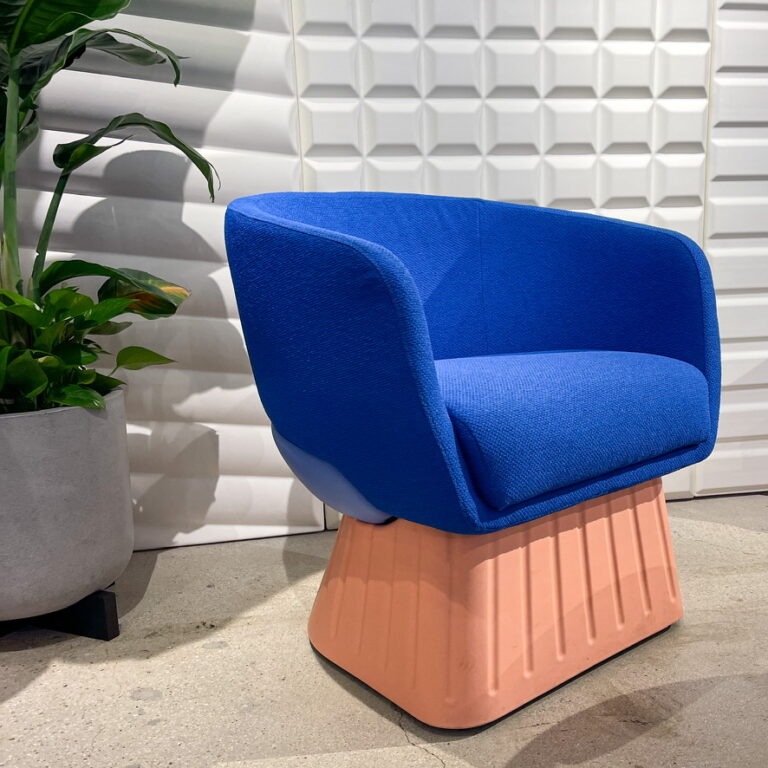
Second, the blurring of lines between residential and commercial design is permanent. The "office" is no longer a destination; it is an experience. If employers want to entice workers back to the office, the environment must be as supportive, comfortable, and inspiring as the home environment.
Finally, the mobility of the workforce necessitates furniture that moves with them. The success of pieces like the Sixinch Sattle Wagen or the Okamura lounge chairs points to a future where office layout is dynamic. Design firms that prioritize adaptability will be the ones to define the next decade of workplace culture.
Conclusion: Bridging the Gap Between Design and Function
NeoCon 2023 proved that the commercial interiors industry is in a state of healthy, vibrant evolution. From the sustainable breakthroughs of Steelcase to the artistic flair of Sixinch, the event highlighted that design is the primary tool for solving the complex challenges of the modern workplace.

For those inspired by these developments, the path forward is clear: success in the industry now requires a dual mastery of aesthetics and technical engineering. As organizations like Design Engine continue to provide specialized training for industrial designers and engineers, the next generation of creators is being equipped to handle these evolving demands.
The question for the industry now is not whether we will return to the office, but how the office will adapt to our lives. Based on the innovation on display in Chicago, the answer is clear: the office of the future will be more sustainable, more mobile, and more human than ever before.