London, UK — In a major move highlighting the UK’s growing prominence as a global hub for deep tech and artificial intelligence, semiconductor and computing giant Nvidia has announced a slate of new strategic investments. The company is backing five high-growth British startups—Boltz, Foresight, Hiverge, Prima Mente, and Riverlane—spanning fields as diverse as biomolecular modeling, infrastructure optimization, automated algorithmic discovery, neurodegenerative disease research, and quantum computing.
Simultaneously, Nvidia has forged a high-profile partnership with the Earthshot Prize, stepping in as a Global Alliance Founding Partner to bring its formidable compute power and technical expertise to bear on pressing global climate and sustainability challenges.
The announcements mark a significant expansion of Nvidia’s commitment to the UK technology ecosystem, underscoring the vital role that specialized hardware, advanced software, and targeted venture capital play in accelerating scientific and industrial breakthroughs.
Main Facts
Nvidia’s latest round of investments targets a carefully curated cohort of UK-based companies operating at the absolute cutting edge of computer science, biology, and physics:
- Boltz (London): Founded by researchers from the Massachusetts Institute of Technology (MIT), Boltz builds sophisticated biomolecular models and AI agents. These tools empower scientists to accurately predict complex molecular structures and interactions, dramatically accelerating the discovery and design of novel therapeutics.
- Foresight (London): Focused on the mammoth logistical challenges of modern engineering, Foresight provides predictive software for owners of major infrastructure projects—including hyperscale datacentres. The startup’s tools help stakeholders forecast completion dates with greater accuracy, mitigate operational risks, and accelerate time-to-revenue.
- Hiverge (Cambridge): Heralding from the minds of former Google DeepMind and University of Cambridge researchers, Hiverge is building an advanced AI discovery engine. The system autonomously writes and optimizes algorithms tailored for high-performance tasks, such as accelerating AI model training and streamlining complex supply chain logistics.
- Prima Mente (London): Operating at the intersection of artificial intelligence and life sciences, this London-based startup develops biological foundation models designed to decode complex, multifactorial diseases. Prima Mente’s initial focus centers on identifying novel therapeutic targets for devastating neurodegenerative conditions, including Alzheimer’s disease, Parkinson’s disease, and Amyotrophic Lateral Sclerosis (ALS).
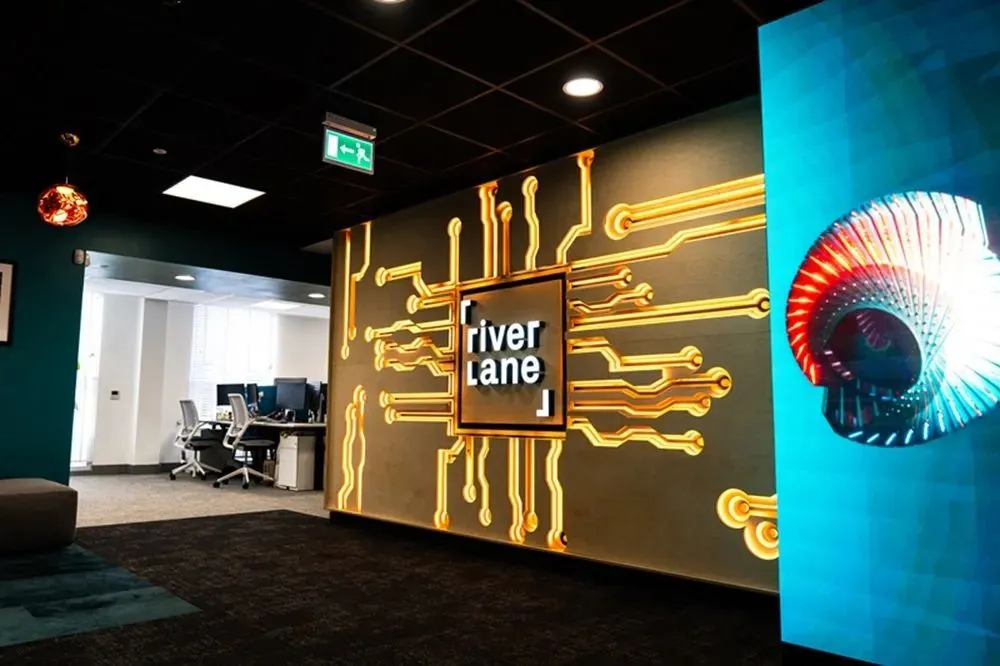
- Riverlane (Cambridge): A standout in the quantum realm, Riverlane is tackling the industry’s ultimate bottleneck: reliability. The company builds real-time error-correction hardware and software compatible with all major qubit architectures, moving quantum computers closer to practical, commercial viability.
Beyond its corporate venture initiatives, Nvidia’s alliance with the Earthshot Prize bridges commercial AI capability with environmental stewardship. By providing vital compute resources and deep technical mentorship to Earthshot finalists and innovators, Nvidia aims to supercharge solutions aimed at repairing and protecting the planet.
Chronology of Nvidia’s Strategic Engagement in the UK
Nvidia’s latest investments do not happen in a vacuum; they represent the latest chapter in a multi-year strategy to deepen ties with the UK’s academic and entrepreneurial landscape.
- Historical Academic Collaborations: Over the past decade, Nvidia has steadily cultivated relationships with premier UK academic institutions, including the University of Cambridge, the University of Oxford, and Imperial College London, largely through its Deep Learning Institute (DLI) and joint research initiatives.
- The ARM Acquisition Attempt (2020–2022): Although Nvidia’s high-profile $40 billion acquisition of Cambridge-based chip designer ARM ultimately collapsed in early 2022 due to regulatory hurdles, Nvidia maintained and even expanded its engineering footprint in the UK, recognizing the country as an indispensable seedbed for semiconductor and AI talent.
- Establishment of Cambridge-1 (2021): Marking a major milestone, Nvidia launched Cambridge-1, the UK’s most powerful supercomputer at the time. Dedicated entirely to life sciences and healthcare research, the supercomputer catalyzed collaborations with AstraZeneca, GlaxoSmithKline (GSK), and numerous NHS trusts.
- Continuous Venture Backing (2022–Present): Through its Inception program and direct venture investments, Nvidia has systematically identified and nurtured British startups working in autonomous systems, medical imaging, and climate tech.
- Today’s Five-Startup Announcement: Nvidia solidifies its multi-vector investment strategy by concurrently backing enterprises in drug discovery, infrastructure logistics, algorithmic engineering, neurodegeneration, and quantum computing, alongside its entry into the Earthshot Prize Global Alliance.
Supporting Data and Ecosystem Metrics
To understand the weight of Nvidia’s latest move, it is necessary to examine the broader economic and technological landscape of the UK tech sector.
- Venture Capital Resilience: Despite macroeconomic headwinds and shifting global investment climates, the UK remains Europe’s leading destination for venture capital. According to recent industry data, UK tech startups secured over £20 billion in venture funding in recent cycles, with artificial intelligence and deep tech capturing a dominant share of that capital.
- Compute Demand: Modern deep learning models—especially biological foundation models and quantum simulation environments—require unprecedented levels of parallel processing power. Nvidia’s hardware dominance (driven by its H100, H200, and emerging Blackwell architectures) places the company at the infrastructural center of gravity for these startups.
- The Quantum Horizon: The global quantum computing market is projected to grow exponentially over the next decade. However, error rates remain the single greatest impediment to scalable quantum utility. Riverlane’s hardware-agnostic approach addresses a multi-billion-dollar bottleneck, making it a critical asset in the global race for fault-tolerant quantum computing.
- Healthcare and Life Sciences: The UK life sciences sector employs over 280,000 people and generates tens of billions of pounds in annual turnover. By backing ventures like Boltz and Prima Mente, Nvidia is directly fueling a digital revolution in computational biology—a field expected to drastically reduce the timeline of drug development from decades to months.
Official Responses and Industry Perspectives
While formal press statements from individual startup founders and Nvidia executives emphasize mutual growth, the broader tech community has been quick to analyze the strategic motivations behind the announcements.
Industry analysts note that Nvidia’s strategy functions as a masterclass in ecosystem lock-in and symbiotic growth. By providing early-stage capital, technical validation, and priority access to high-demand GPUs and software libraries (such as CUDA), Nvidia ensures that the next generation of breakthrough technologies natively runs on its architecture.
Representatives from the Earthshot Prize expressed enthusiasm regarding the partnership, noting that the scale of climate data processing requires advanced AI and high-performance computing capabilities that only global technology leaders can sustainably provide. "Tackling the Earthshot challenges demands not just ambition, but unprecedented computational horsepower," noted an alliance spokesperson. "Nvidia’s commitment brings world-class technical muscle to environmental innovators who are racing against time."
Similarly, academic and incubator networks across Cambridge and London have lauded the investments as vital injections of patient capital that help bridge the notorious "valley of death" between academic research and commercial deployment.
Implications for the Future of UK Deep Tech
Nvidia’s simultaneous investment in five distinct domains carries profound implications for the UK’s technological trajectory and the global AI landscape.
1. Accelerating Computational Biology
With Boltz and Prima Mente joining its portfolio, Nvidia is doubling down on the convergence of AI and biology. Traditional pharmaceutical research is notoriously slow and expensive. By utilizing AI agents and foundation models to map molecular structures and decode diseases like Alzheimer’s, these startups—backed by Nvidia’s silicon—could transform the UK into the undisputed global leader in computational drug discovery.
2. Reinforcing Infrastructure and Efficiency
As global demand for hyperscale datacentres skyrockets to power generative AI workloads, efficient project management and algorithmic optimization are paramount. Foresight and Hiverge address the physical and digital bottlenecks of modern tech expansion. By predicting completion timelines and automatically generating faster algorithms, these startups help mitigate the staggering energy and financial costs associated with scaling modern computing infrastructure.
3. Bridging Classical and Quantum Computing
Quantum computing is often viewed as a distant paradigm, but firms like Riverlane are building the essential scaffolding required to make quantum machines reliable today. By solving the universal problem of error correction across multiple qubit types, Riverlane’s success could drastically shorten the timeline for quantum supremacy in cryptography, materials science, and financial modeling.
4. Cementing the UK as a Global AI Powerhouse
By directing capital toward British startups founded by elite researchers from institutions like Cambridge, MIT, and Google DeepMind, Nvidia is helping to anchor intellectual property and high-value technical jobs within the UK. This counters ongoing concerns about brain drain and reinforces the UK government’s ambition to position the nation as a science and technology superpower.
Ultimately, Nvidia’s latest maneuvers demonstrate that the future of artificial intelligence is not confined to software algorithms alone; it is deeply interwoven with physical infrastructure, life-saving medicine, environmental sustainability, and the next frontier of quantum physics. Through these strategic partnerships, Nvidia is actively shaping the technological architecture of the decades to come.