By Alun Williams
Web Editor, Electronics Weekly
The global technology landscape is moving at a blistering, almost unprecedented pace. As we examine the most-read articles across our platform over the past week, a clear narrative emerges: the insatiable appetite for artificial intelligence infrastructure is driving colossal financial shifts, massive capital expenditures, and intense hardware innovations. From multi-billion-dollar semiconductor earnings and historic corporate losses to ambitious regional expansion plans and high-density optical networking breakthroughs, the tech sector is experiencing a period of extreme transformation.
Using Google Analytics data to track reader engagement, we explore the top five stories that dominated industry discussions this week, moving in reverse chronological order from number five to our most-read piece.
5. Molex Introduces VersaBeam Mini: Solving Density Challenges in AI Networks
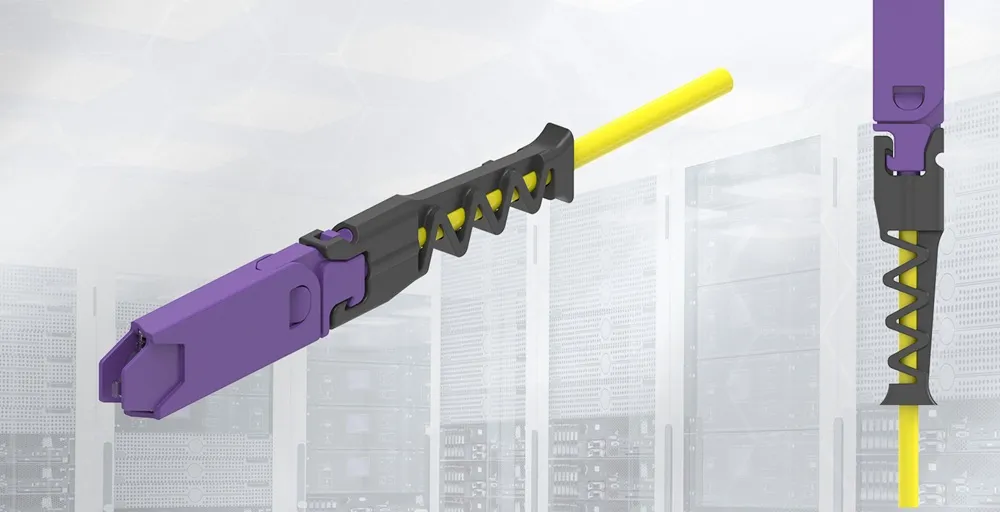
Opening our top five countdown is a hardware innovation addressing a rapidly growing bottleneck in modern data centers: physical space and thermal management. Molex has officially announced the VersaBeam Mini, an ultra-compact, 16-fiber Expanded Beam Optical (EBO) connector designed explicitly for high-density artificial intelligence and hyperscale networks.
Main Facts & Engineering Breakthroughs
As artificial intelligence models grow exponentially in parameter size, the networking switches connecting thousands of GPUs must handle unprecedented volumes of data traffic. Traditional ferrule-based fiber connectors often struggle with dust, physical wear, and alignment tolerances in such dense environments.
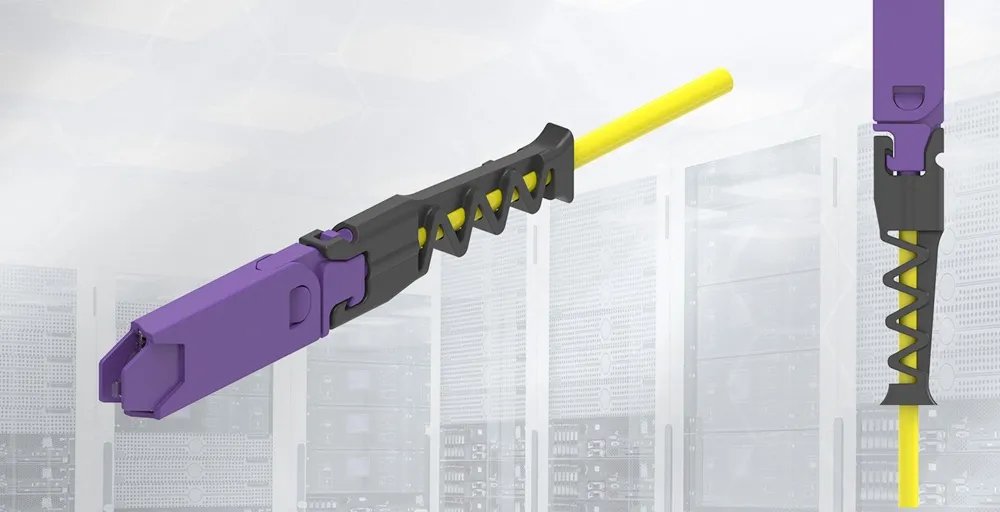
The VersaBeam Mini solves these critical space, thermal, and maintenance challenges by packing an astonishing 16 fibers into a tiny 3.5 x 9 mm footprint. By utilizing expanded beam technology—which collimates and expands the light beam across an air gap before refocusing it into the receiving fiber—the connector becomes significantly less sensitive to dust and debris, drastically reducing maintenance downtime in hyperscale data centers.
Industry Implications
The rollout of high-density EBO connectors highlights a broader truth about the AI boom: software advancements are entirely dependent on physical infrastructure. Without continuous miniaturization and reliability enhancements in optical interconnects, data center operators would face severe networking bottlenecks that could stall training times for next-generation large language models.
4. Elon Musk Predicts xAI Will Catch Up to OpenAI and Anthropic by Year-End
Taking the fourth spot on our list are bold predictions from Elon Musk regarding the competitive trajectory of xAI. Speaking on the rapid evolution of artificial intelligence models, Musk stated that he expects xAI’s proprietary models to match the capabilities of industry pioneers Anthropic and OpenAI by Christmas.
Main Facts & Timelines
"We will keep accelerating," Musk remarked, emphasizing the youth of xAI compared to its competitors. "Our AI efforts are only 3 years old, vs 6 and 10 years old for Anthropic and OpenAI. If our second derivative remains strong, xAI will reach pole position in about 6 months."
Musk’s focus on the "second derivative" speaks to the rate of acceleration rather than just current baseline performance. While OpenAI and Anthropic established early leads with consumer-facing conversational models and massive enterprise deployments, xAI has leveraged immense compute clusters—such as the Colossus supercomputer built in Memphis—to train models at a breakneck speed.
Industry Implications
Should xAI achieve parity with OpenAI and Anthropic by the end of the year, the generative AI market will shift from a perceived oligopoly to a hyper-competitive three-way race. This intense competition is likely to accelerate the release cycles of new foundation models, driving prices down for enterprise API consumers while raising the bar for safety, reasoning, and multimodal capabilities.
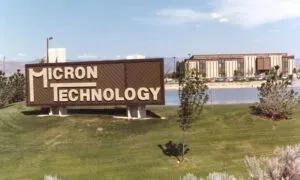
3. Micron Technology Posts a Staggering $54 Billion Revenue Quarter
Securing the third position is monumental financial news from memory and storage manufacturer Micron Technology, which reported a jaw-dropping fiscal fourth-quarter performance that underscores the immense hardware demands of the AI infrastructure buildout.
Supporting Financial Data
Micron’s financial metrics for the quarter shattered previous expectations:
- Revenue: Reached $54.23 billion, a massive leap from $41.46 billion in the prior quarter and a staggering increase from just $11.32 billion during the same period last year.
- Net Profit: Reported at $37.70 billion, reflecting incredible pricing power and high demand for specialized high-bandwidth memory (HBM) chips.
- Operating Cash Flow: Surged to $43.97 billion, compared to $25.39 billion in the prior quarter and a modest $5.73 billion in the corresponding period last year.
Implications for the Semiconductor Market
These numbers illustrate the direct financial windfall experienced by memory manufacturers as cloud providers and enterprise clients rush to secure HBM chips essential for running high-end AI accelerators like Nvidia’s GPUs. The tripling of year-over-year revenue demonstrates that the semiconductor cycle has entered a historic super-cycle driven almost entirely by artificial intelligence workloads.
2. Anthropic Unveils the Largest Pre-IPO Loss in Corporate History
In at number two is shocking financial disclosure from AI safety and research lab Anthropic, which recently released its IPO prospectus containing figures that have sent ripples through both the tech and financial sectors.

Main Facts & Financial Disclosures
Anthropic now holds the dubious world record for the largest annual net loss preceding an initial public offering in corporate history, clocking in at $42 billion. To put this figure into perspective, the previous record holder for pre-IPO losses was SpaceX, which recorded a $4.9 billion loss before its public market journey.
Furthermore, the prospectus revealed a high degree of customer concentration: two major enterprise clients—widely believed to be Microsoft and Google—are responsible for a remarkable 24% of Anthropic’s total revenues.
Official Responses and Market Analysis
Financial analysts have pointed out that these immense losses reflect the staggering cost of frontier AI research, compute infrastructure acquisition, and top-tier talent acquisition. Training models that compete at the absolute bleeding edge requires billions of dollars in cloud compute credits, electricity, and specialized silicon before a single dollar of profit can be realized.
While a $42 billion loss would have spelled doom for software startups of previous decades, the modern generative AI gold rush treats massive cash burn as the price of admission to a market projected to be worth trillions. However, the heavy reliance on just two major corporate partners also highlights systemic vulnerability in Anthropic’s revenue stream.
1. TSMC Eyes Massive Expansion with Six New Fabs in Texas
Taking the crown as our most-read article of the week is monumental manufacturing news: Taiwan Semiconductor Manufacturing Company (TSMC) is reportedly considering an ambitious new investment in Texas that could eclipse its already massive $265 billion commitment in Arizona.
Chronology and Main Facts
According to industry reports, TSMC is actively evaluating plans to construct six new semiconductor fabrication plants (fabs) in the Lone Star State. This move would further cement Texas as a premier global hub for advanced semiconductor manufacturing.
The state’s burgeoning "Silicon Prairie" already hosts major chipmaking facilities and research centers operated by Texas Instruments, Samsung, and Terafab, alongside a robust ecosystem of specialized chemical and equipment suppliers.
Strategic and Geopolitical Implications
If finalized, this six-fab initiative represents a profound realignment of global semiconductor supply chains. Driven by geopolitical tensions in the Taiwan Strait and bolstered by government incentives such as the U.S. CHIPS Act, foundry giants are rapidly localizing manufacturing capacity on American soil.
While Arizona has served as the initial focal point for TSMC’s U.S. expansion, Texas offers distinct advantages, including established industrial infrastructure, favorable regulatory environments, and a growing pool of engineering talent. For the electronics industry, this expansion guarantees greater supply chain resilience, ensuring that future generations of high-performance computing, automotive, and AI chips can be reliably produced closer to domestic end-markets.
Conclusion: A Defining Era for Electronics and AI
The stories dominating Electronics Weekly this past week—from Molex’s tiny optical connectors to TSMC’s colossal Texas ambitions—paint a vivid picture of an industry moving at lightspeed. The convergence of artificial intelligence, massive capital deployment, and advanced manufacturing is reshaping the global economy. As companies like Micron reap historic rewards and pioneers like Anthropic absorb unprecedented losses in pursuit of technological supremacy, the foundation for the next decade of digital innovation is being laid today.

Stay tuned to Electronics Weekly as we continue to track these developments, bringing you breaking news and deep technical analysis from the front lines of the tech revolution.