The intersection of artificial intelligence and physical manufacturing is no longer a futuristic talking point confined to tech conferences—it has become a multi-billion-dollar battleground. Over the past few weeks, a wave of astronomical funding rounds, enterprise software launches, and government policy frameworks has signaled a fundamental shift in how the world designs, programs, builds, and maintains physical products.
From Jeff Bezos-backed mega-startups aiming to compress the entire product lifecycle into an automated pipeline, to pragmatic agentic platforms meant to democratize plant floor analytics, the industrial sector is racing to adopt AI. Yet, beneath the breathless headlines of unicorn valuations and autonomous agents lies a harsh industrial reality: software must survive the chaotic, unpredictable crucible of the physical world.
This briefing provides a comprehensive analysis of the latest developments in industrial AI, breaking down the major investments, technological breakthroughs, software deployments, and regulatory roadmaps shaping the future of engineering.
1. Main Facts: The Current Landscape of Industrial AI
The modern industrial ecosystem is experiencing a high-stakes transition driven by generative AI, agentic frameworks, and physical foundation models. The defining events of this movement include:
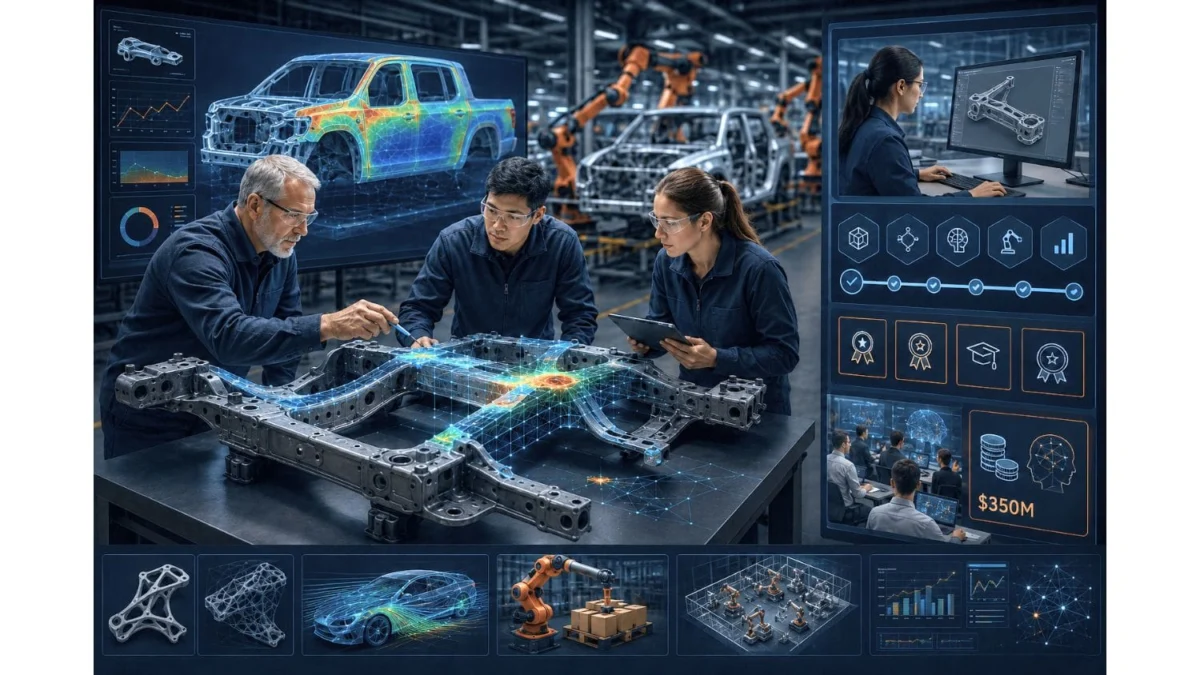
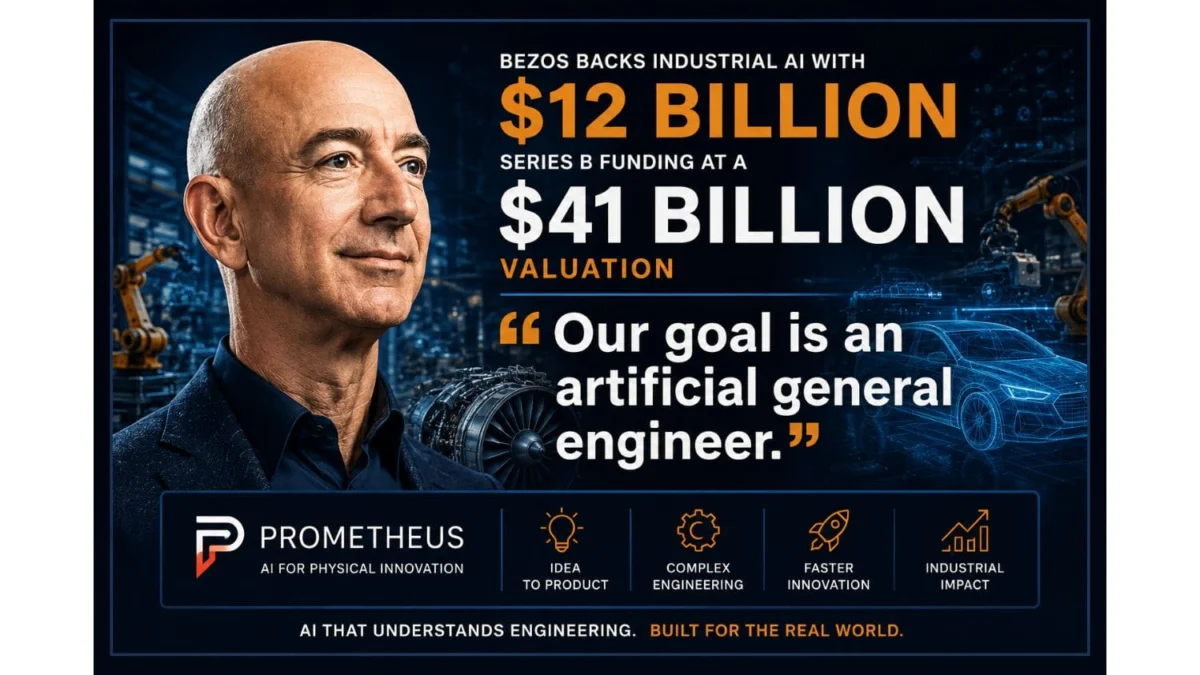
- The Rise of the "Artificial General Engineer": Prometheus, an industrial AI startup backed by technology titan Jeff Bezos, has secured a staggering $12 billion funding round at a $41 billion valuation. The company’s ambition is to build an end-to-end system capable of taking a product from initial concept to manufactured reality—spanning jet engines, medical devices, and consumer electronics—without traditional human bottlenecks.
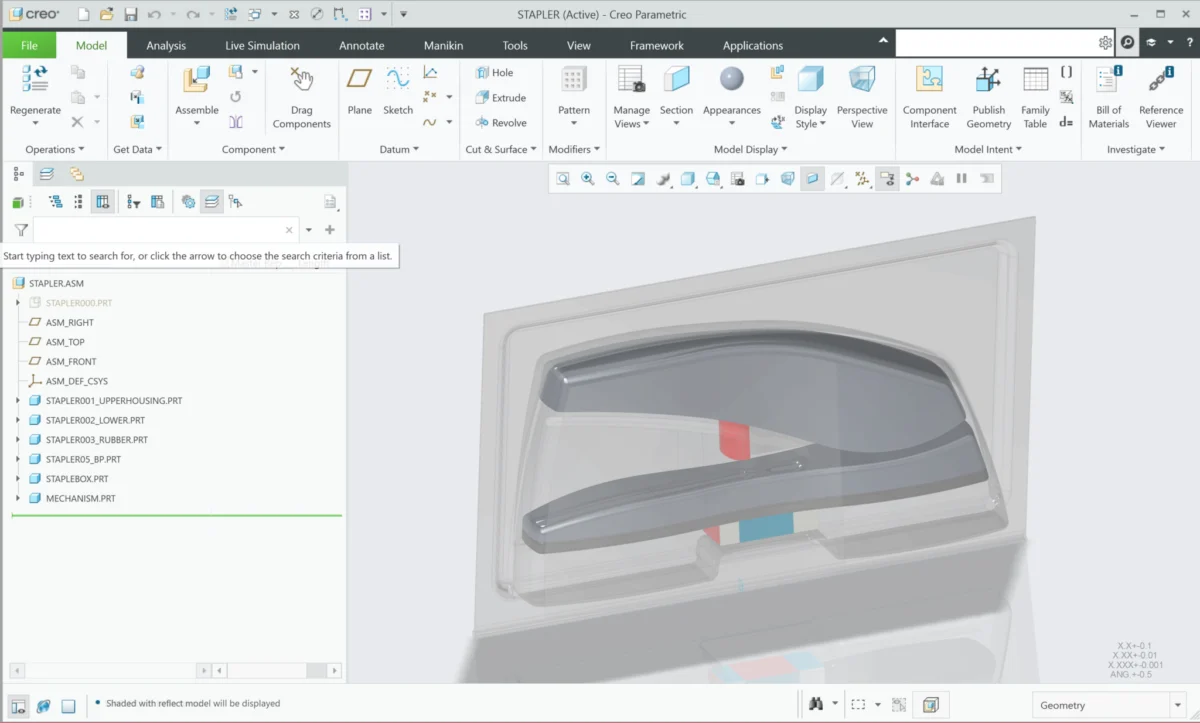
- Accelerating CNC Programming: Limitless Labs (formerly LimitlessCNC) has raised $20 million in Series A funding to scale its agentic AI platform for Computer-Aided Manufacturing (CAM). The platform promises up to a 50% reduction in CNC programming time by automating feature recognition, tooling recommendations, and toolpath generation within industry-standard environments like Mastercam, NX, and Creo.
- Closing the Feedback Loop: PTC has launched Orbit, an enterprise AI solution designed to ingest and harmonize disparate data streams from engineering designs, IoT field sensors, service logs, and business systems, enabling teams to spot product vulnerabilities long before they manifest as costly recalls.
- Democratizing Plant Analytics: Sight Machine has introduced an agentic manufacturing platform that allows on-the-ground process engineers to build digital models of their facilities and query production bottlenecks using natural language, routing operational insights directly into collaboration tools like Microsoft Teams.
- Strategic Government Intervention: The UK government has published a formal AI Adoption Plan for Advanced Manufacturing, providing a structured, risk-mitigated roadmap for industrial enterprises—particularly small and medium-sized manufacturers (SMEs)—to transition from experimental pilots to scaled deployments.
- Form Follows Function in Robotics: Genesis AI has unveiled Eno, a general-purpose robotic system that eschews humanoid aesthetics in favor of functional ergonomics, prioritizing human capability over human mimicry to tackle hazardous or labor-constrained environments.
2. Chronology of Recent Developments
To understand how rapidly the industrial AI sector is evolving, it is essential to trace the sequence of announcements that have defined this recent wave of innovation:
- Phase 1: Macro-Capital Injection (Prometheus): The timeline begins with the colossal capitalization of Prometheus. By commanding a $41 billion valuation on a $12 billion funding round, the startup instantly established a high-water mark for investor expectations regarding artificial general intelligence applied to physical engineering.
- Phase 2: Commercial Validation in Precision Machining (Limitless Labs): Shortly after, Limitless Labs secured its $20 million Series A. Crucially, this funding followed real-world commercial traction, with the platform already embedded in production environments at major industrial players like Sandvik and Iscar.
- Phase 3: Lifecycle Integration and Enterprise Visibility (PTC Orbit & Sight Machine): Mid-cycle announcements from PTC and Sight Machine shifted the focus from pure design and programming to lifecycle management and operational visibility. PTC introduced Orbit to bridge the historical chasm between field service data and engineering design, while Sight Machine deployed its agentic platform to empower shop-floor operators.
- Phase 4: Institutional and Macroeconomic Guardrails (UK Government): As private sector enthusiasm surged, the public sector stepped in. The UK government’s publication of its advanced manufacturing AI adoption plan provided a pragmatic, methodical framework to counter the hype cycle.
- Phase 5: Hardware Realism (Genesis AI): Culminating the recent surge, Genesis AI’s unveiling of Eno demonstrated a pivot toward functional, task-oriented robotics designed specifically for the unglamorous realities of assembly lines and laboratories.
3. Supporting Data and Financial Metrics
The numbers underpinning this industrial transformation reveal both unprecedented optimism and systemic risks:
- $41 Billion: The valuation of Prometheus, highlighting the immense capital venture markets are willing to allocate toward the theoretical automation of physical manufacturing.
- 50%: The headline efficiency metric claimed by Limitless Labs regarding the reduction of CNC programming time—a vital statistic in an industry facing an acute shortage of master machinists.
- Multi-Source Data Ingestion: Platforms like PTC Orbit and Sight Machine rely on aggregating dozens of disparate data silos—including CAD files, CAM trajectories, IoT sensor feeds, maintenance logs, and Enterprise Resource Planning (ERP) databases—to function effectively.
- Validation Frameworks: The UK government’s adoption plan emphasizes a strict three-phase metric: opportunity scanning, small-scale testing, and controlled scaling, designed to prevent capital loss on unproven software.
4. Industry Responses and Expert Perspectives
Reaction across the engineering and manufacturing sectors has been polarized between visionary excitement and hard-nosed skepticism.
The Technologist’s Optimism
Proponents of industrial AI argue that the sector is uniquely positioned to benefit from large foundation models and agentic workflows. For decades, manufacturing has generated terabytes of structured and unstructured data—ranging from step files and G-code to machine telemetry and maintenance logs—that have remained underutilized. Advocates believe that specialized agents can act as force multipliers, freeing skilled engineers and machinists from administrative drudgery and tribal knowledge silos.
The Shop-Floor Skeptic
Veteran engineers and manufacturing executives, however, offer a necessary dose of pragmatism. The universal consensus on the shop floor can be summarized in a single phrase: Software has to survive a Monday morning at a real factory.
Critics point out that tech-sector demonstrations frequently rely on pristine CAD files, idealized tolerances, and clean data sets. In reality, manufacturing is messy. It involves warped sheet metal, worn-out tooling, thermal expansion, custom one-off fixtures, and unpredictable human intervention. If an AI agent generates a confident-sounding recommendation that fails to account for physical wear and tear, the result is not a minor software bug—it is a ruined workpiece, a broken machine tool, or a catastrophic safety hazard.
5. Strategic Implications for the Future of Manufacturing
As artificial intelligence transitions from an office-bound tool to an active participant in physical engineering, several long-term implications emerge for the global manufacturing sector:
The Revaluation of Tribal Knowledge
In industries like CNC machining and precision manufacturing, critical expertise has historically been locked inside the heads of senior technicians who have spent decades mastering their craft. Platforms like Limitless Labs and Sight Machine attempt to codify this tribal knowledge into searchable, executable agentic models. While this helps mitigate the global skills shortage, it also raises questions about intellectual property, institutional dependency, and the training of the next generation of engineers.
The Shift from Dashboards to Autonomous Agents
For years, digital transformation in manufacturing meant prettier dashboards and more complex Business Intelligence (BI) reports. The current wave of "agentic manufacturing" moves past passive visualization. Systems like PTC Orbit and Sight Machine are designed not just to display data, but to investigate anomalies, diagnose root causes, and push actionable recommendations directly to human operators via collaborative software.
The Imperative of Data Hygiene
The success of artificial intelligence in advanced manufacturing will ultimately depend on data hygiene. AI models trained on corrupted, siloed, or incomplete data will inevitably produce hallucinations or dangerous errors. Enterprises that invest in rigorous data governance, standardized digital threads, and robust validation pipelines will successfully harness these technologies, while those chasing flashy demos without foundational infrastructure will face costly failures.
Conclusion: Balancing Ambition with Physical Reality
The industrial AI boom represents one of the most significant structural shifts in manufacturing history. From Bezos-backed endeavors to democratized shop-floor analytics, the tools are being built to reshape how humanity creates physical goods.
Yet, the ultimate arbiter of success will not be venture capital funding rounds or algorithmic sophistication—it will be the uncompromising laws of physics. As manufacturers evaluate these emerging technologies, the path forward requires a balanced approach: embracing the profound efficiency gains of agentic AI while maintaining rigorous human oversight, robust data validation, and a healthy respect for the chaotic reality of the factory floor.