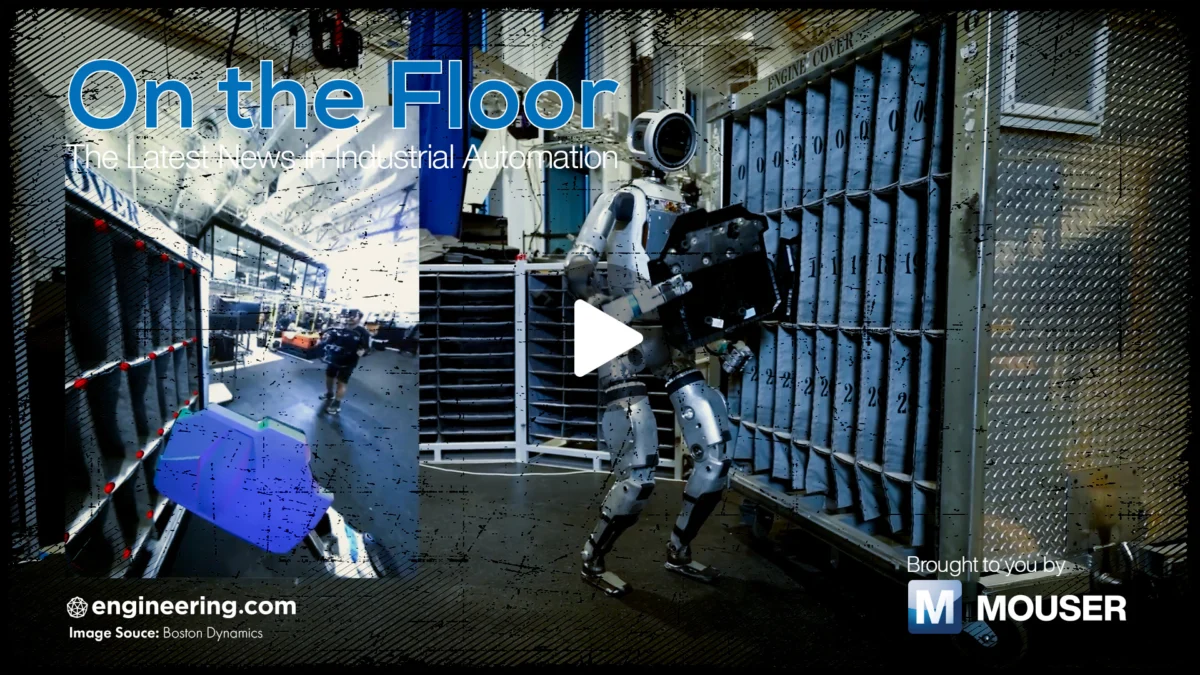
In a move that signals a seismic shift in the global automotive landscape, Hyundai Motor Group and its subsidiary, Boston Dynamics, have officially inaugurated the Robotics Metaplant Applications Center in Georgia. This facility serves as the nerve center for an ambitious, high-stakes initiative: the mass deployment of the next-generation Atlas humanoid robot into the hyper-competitive world of automotive manufacturing. By leveraging the convergence of advanced artificial intelligence and sophisticated robotics, the partnership aims to transform the factory floor from a fixed, automated environment into a flexible, intelligent ecosystem capable of unprecedented operational agility.
Main Facts: A New Frontier in Industrial Automation
The core objective of this collaboration is the seamless integration of Boston Dynamics’ state-of-the-art humanoid platform, Atlas, into Hyundai’s global production network. Unlike traditional robotic arms—which are restricted to repetitive, static tasks—the new Atlas is designed for versatility, dexterity, and adaptive problem-solving.
The Robotics Metaplant Applications Center, situated in the heart of Georgia’s burgeoning tech corridor, is not merely a testing lab; it is a full-scale training ground. Here, engineers are utilizing machine learning and reinforcement learning algorithms to "teach" Atlas units the nuances of automotive assembly. The facility aims to bridge the gap between lab-bound research and the harsh, unpredictable realities of a high-volume manufacturing floor.
The ultimate goal is as staggering as it is transformative: the deployment of 25,000 humanoid units across Hyundai’s various manufacturing facilities worldwide. This would represent one of the largest industrial humanoid deployments in human history, fundamentally altering the labor model of automotive production.
Chronology: From Lab Curiosity to Industrial Standard
The trajectory of this partnership can be traced back to a series of strategic maneuvers that shifted the paradigm of modern robotics.
- 2020: The Strategic Acquisition: Hyundai Motor Group formally announced its acquisition of Boston Dynamics from SoftBank in a deal valued at approximately $1.1 billion. At the time, the industry viewed the move as a long-term play, anticipating that Hyundai would integrate Boston Dynamics’ advanced locomotion technology into its future mobility solutions.
- 2021-2022: Synergy Development: Following the acquisition, the two entities began a deep-dive collaboration. Boston Dynamics shifted focus from purely research-oriented robotics (such as the viral dance videos of Spot and Atlas) to industrial-grade applications, while Hyundai provided the practical, real-world testing grounds of their manufacturing facilities.
- 2023: The Birth of the Metaplant Concept: Hyundai broke ground on its state-of-the-art EV facility in Georgia. Recognizing that the future of the "Metaplant" relied on more than just fixed automation, the company committed to integrating humanoid labor.
- 2024: The Launch of the Applications Center: The inauguration of the Robotics Metaplant Applications Center marked the transition from conceptual planning to active training. This center now serves as the primary hub where AI models are refined, stress-tested, and prepared for real-world production cycles.
Supporting Data: The Scale of the AI Revolution
The move toward humanoid labor is driven by a convergence of technological maturity and economic necessity. According to internal projections and industry analysis, the transition to AI-driven, humanoid manufacturing is supported by several critical metrics:
The AI-Training Bottleneck
The "pacing element" identified by both Hyundai and Boston Dynamics is not hardware manufacturing capacity, but rather "training velocity." Humanoid robots require millions of hours of simulated and real-world training to navigate complex manufacturing environments. By utilizing the new Georgia-based facility, the team is deploying advanced AI models that can simulate thousands of iterations in a single day, drastically shortening the time required to bring a robot from "novice" to "expert" level on an assembly line.
Operational Efficiency
Industry reports suggest that the integration of humanoid robotics can increase throughput by approximately 25-30% in sectors involving high-mix, low-volume tasks. Traditional robots are excellent at welding and painting, but they struggle with tasks that require tactile feedback, fine motor skills, or the ability to navigate dynamic human spaces. The Atlas platform, with its human-like range of motion, is specifically engineered to handle the "non-repetitive" tasks that have historically kept manufacturing labor costs high.
Scalability Projections
The target of 25,000 units is a testament to the maturation of the supply chain. While humanoids were once hand-built prototypes costing millions of dollars each, the collaboration is focused on modular assembly and standardized software stacks, which are designed to drive down the cost-per-unit to a level where the return on investment (ROI) is realized within 18 to 24 months of deployment.
Official Responses: The Vision of the Leadership
Executives at both Hyundai and Boston Dynamics have framed this initiative as the next natural step in the evolution of industrial civilization.
"We are moving beyond the era of the ‘blind machine,’" stated a lead engineer involved in the Metaplant project. "The goal is to create a symbiotic relationship between human workers and humanoid systems. These machines are not intended to replace human ingenuity; they are intended to liberate it, handling the ergonomically taxing, repetitive, and potentially dangerous tasks that currently constrain our production lines."
Boston Dynamics, long regarded as the vanguard of robotics innovation, has expressed pride in the practical application of their decades of research. "For years, we demonstrated that robots could navigate the world," a company spokesperson noted. "Now, we are demonstrating that they can work in it. The Georgia center is the crucible where that promise is being solidified."
Hyundai’s leadership has also emphasized the role of sustainability and safety. By creating a safer, more efficient manufacturing environment, the company aims to set a new standard for ESG (Environmental, Social, and Governance) performance in the automotive industry, ensuring that the next generation of electric vehicles is built by a workforce that is both high-tech and highly supported.
Implications: The Future of the Manufacturing Workforce
The implications of the Hyundai-Boston Dynamics initiative are profound and far-reaching, touching on everything from labor economics to the very nature of industrial design.
Redefining the Factory Floor
The traditional automotive plant is a rigid environment, defined by tracks, conveyors, and fixed robotic cells. The introduction of Atlas humanoids suggests a transition to a "modular" factory. If a robot is capable of performing multiple tasks—from assembly to material transport—the entire layout of a factory can be reconfigured in real-time. This flexibility is essential for the automotive sector, which is increasingly focused on rapid model iterations and highly customized vehicle orders.
The Human-Machine Collaboration
The most critical implication concerns the human workforce. As humanoids take over the "dull, dirty, and dangerous" tasks, the role of the human operator is expected to shift toward oversight, programming, and complex maintenance. This necessitates a massive upskilling effort. Hyundai is reportedly investing heavily in training programs to ensure that their current staff can transition into these new, higher-value roles, creating a "collaborative intelligence" model rather than a purely displacement-driven one.
Global Economic Shift
If successful, this model will likely be exported globally. Countries that rely on low-cost labor for manufacturing may find their competitive advantage challenged as the cost of AI-driven humanoid labor drops. This could trigger a "reshoring" movement, where automotive manufacturing returns to the regions where the vehicles are actually sold, closer to the final consumer.
A New Standard for Robotics
The Georgia center is effectively setting the "Gold Standard" for industrial humanoid certification. As these robots prove their reliability, they will likely be adopted by other sectors—including aerospace, electronics, and even large-scale logistics. The technology developed within the Hyundai-Boston Dynamics partnership is poised to become the operating system for the next industrial revolution.
Conclusion
The Robotics Metaplant Applications Center stands as a monument to a future that was once relegated to the pages of science fiction. By treating AI as the central nervous system of the manufacturing floor and the humanoid robot as its versatile hands, Hyundai and Boston Dynamics are not just building cars—they are building the blueprint for the 21st-century factory. As the first wave of Atlas units rolls off the line and onto the floor, the industry will be watching closely, recognizing that the era of the synthetic workforce has officially begun.