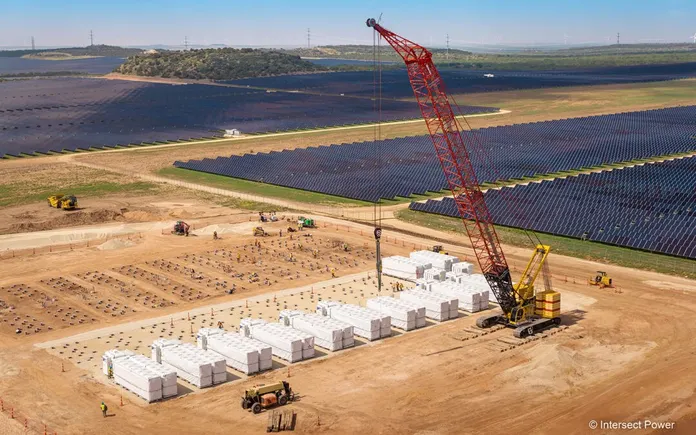
Global Energy Markets — In a historic turning point for the global energy sector, the levelized cost of electricity (LCOE) for four-hour battery energy storage systems (BESS) has plummeted below that of traditional fossil-fuel gas peaker plants across multiple markets worldwide.
According to a landmark market analysis published Thursday by energy research firm Wood Mackenzie, a confluence of soaring gas turbine manufacturing bottlenecks, escalating fuel volatility, and rapidly scaling battery production has decisively flipped the economic equation in favor of clean energy storage.
What was once viewed merely as a complementary technology for intermittent renewables has now matured into a dominant, cost-effective baseload and peaking resource. As data center expansion drives unprecedented electricity demand globally, the structural economics of power generation are undergoing a permanent transformation.
1. Main Facts: The Death of Gas Peaker Dominance
The core finding of the Wood Mackenzie report is stark: four-hour battery storage is no longer just competitive with fossil fuels—it is significantly cheaper.
In the United States, for a targeted commercial operation date in 2026, deploying a new four-hour battery storage system is now 65% to 75% cheaper than building and operating a new open-cycle gas turbine (OCGT) peaker plant. This dramatic delta accounts for regional variables, widening even further in jurisdictions where carbon pricing applies.
This economic shift is occurring against the backdrop of a severe supply crunch in traditional thermal generation. In North America, capital investment in gas generation capacity is entering what analysts term a "supply deficit cycle through the late 2030s." Driven by relentless data center load growth—largely fueled by the artificial intelligence boom—thermal capital costs remain elevated, reinforcing the long-term economic case for renewables and storage.
Simultaneously, the cost of the hardware required for gas peakers has skyrocketed. Gas turbine prices are projected to surge to $600 per kilowatt (kW) by the end of 2027, representing a staggering 195% increase since 2019. The world’s three major gas turbine manufacturers—GE Vernova, Siemens Energy, and Mitsubishi—are grappling with unprecedented manufacturing backlogs ranging from 35 GW to 116 GW each, leading to multi-year wait times for new thermal equipment.
2. Chronology: How the Energy Landscape Shifted
To understand how battery storage achieved cost parity—and superiority—so rapidly, it is necessary to examine the trajectory of supply chains, manufacturing scales, and geopolitical pressures over the past decade.
- 2019: Gas turbine prices sit at historic lows, and gas peaker plants are universally regarded as the cheapest and most reliable method to meet peak electricity demand. Battery storage is viewed as a nascent, expensive niche technology primarily used for frequency regulation.
- 2020–2022: The COVID-19 pandemic, followed by global supply chain disruptions and the European energy crisis triggered by the conflict in Ukraine, exposes the extreme volatility of fossil fuel markets. Concurrently, electric vehicle (EV) adoption accelerates battery manufacturing capacity globally.
- April 2023–2024: Wood Mackenzie highlights an unfolding gas turbine supply crunch, projecting a nearly threefold increase in turbine prices by 2027. Major manufacturers see their order books swell past 100 GW, delaying traditional thermal projects.
- Late 2024–Present: Mass production of lithium-ion and alternative battery chemistries drives storage capital expenditures down. By early 2025, four-hour storage systems cross the economic threshold, becoming substantially cheaper than new gas peakers in key global markets. Simultaneously, solar LCOE milestones are hit, with single-axis tracker solar cementing its place as the lowest-cost new-build power generation technology in 43 out of 48 modeled markets globally.
3. Supporting Data: Regional Breakdowns and Market Metrics
The Wood Mackenzie report provides a granular look at how different geographies are experiencing this structural energy transition.
North America
While North America is witnessing aggressive battery adoption driven by federal tax credits, near-term solar costs face headwinds from tariffs, anti-dumping measures, countervailing duty actions, and stringent import restrictions.
- Distributed Solar: Experiencing the most significant price increases due to localized supply chain constraints.
- Utility-Scale Solar: Partially insulated by a massive pipeline of 168 GW of safe-harbored capacity. However, module prices are still projected to climb at a rate of approximately 5% annually through 2030.
- Residential and Commercial Sectors: Facing a heavily constrained supply environment, with module prices forecast to jump 6% in 2027 and an additional 14% in 2028.
- Onshore Wind: Despite near-term policy uncertainty and potential Section 232 impacts on turbine pricing, continuous capital and operational expenditure improvements are expected to drive wind LCOE down by 16% by 2060.
The Middle East and Africa
The Middle East is rapidly emerging as a global leader in ultra-low-cost solar power. According to the research, single-axis tracker solar and wind are driving costs down to historic lows. In the most competitive markets—namely Saudi Arabia and the United Arab Emirates—solar LCOE is on a definitive trajectory to fall below $20 per megawatt-hour (MWh) by 2033. Furthermore, four-hour storage costs in the broader Middle East and Africa region are forecast to drop 33% to $80/MWh by 2035, effectively displacing gas peaking plants across every major gas market in the region.
Asia-Pacific and China
China continues to serve as the undisputed global cost benchmark for energy storage. BESS hardware costs in China remain more than 55% below the rest of the Asia-Pacific average. This staggering cost advantage underscores how massive industrial manufacturing scale is actively redrawing the global energy cost map, making Chinese-manufactured storage components the most sought-after globally, despite ongoing geopolitical trade barriers.
4. Official Responses and Industry Analysis
Industry leaders and analysts emphasize that this shift is no longer a temporary market anomaly, but a permanent structural evolution.
"This economic shift is decisive and widening," said Ahmed Jameel Abdullah, principal analyst at Wood Mackenzie, in a public statement accompanying the report.
"Gas turbine shortages and rising fuel volatility are driving up peaking costs, while expanding battery manufacturing continues to push storage costs down."
Abdullah noted that the economic momentum is now spilling over into baseload generation assets as well. (“Single-axis tracker solar is now the lowest-cost new-build technology in 43 of 48 modeled markets, with onshore wind leading in five,” he reiterated.)
Regarding policy and incentives, Wood Mackenzie highlighted the critical role that government policy plays in buffering supply chain hurdles. In the United States, tax credits "continue to provide a competitive advantage" by partially counteracting the disruptive financial impacts of Foreign Entity of Concern (FEOC) restrictions and domestic supply chain bottlenecks.
While analysts anticipate a temporary cost spike following the anticipated phase-out of investment tax credits (ITCs) beginning in 2038, long-term technological trends—including the commercialization of novel battery chemistries, hardware commoditization, and the maturation of domestic supply chains—are expected to drive storage LCOE down by an additional 10% through 2060.
5. Implications: The Future of Global Power Systems
The crossing of this economic Rubicon has profound implications for utility planners, grid operators, fossil fuel investors, and climate policy advocates.
1. The Redefinition of Grid Reliability
For decades, grid operators relied on fossil-fuel peaker plants—typically natural gas turbines that could fire up rapidly at a moment’s notice—to manage sudden spikes in electricity demand or compensate for generation drop-offs. With four-hour battery storage now cheaper, cleaner, and increasingly faster to deploy than gas peakers, utilities have a vastly superior tool for grid balancing. Four-hour durations are optimal for capturing midday solar generation and discharging it during the evening peak demand ramp, neutralizing the classic "duck curve" phenomenon.
2. Stranded Asset Risks for Fossil Fuel Investments
The revelation that gas turbine manufacturing backlogs extend into the tens of gigawatts while prices sit nearly 200% higher than historical baselines introduces severe financial risk for capital allocators considering new thermal assets. Utilities and independent power producers (IPPs) that commit capital to long lead-time gas projects risk landing in a "supply deficit" trap where expensive fuel and inflated capital costs make their generation uncompetitive against zero-fuel-cost renewables paired with falling-cost storage.
3. The Data Center Dilemma
As hyperscale data center operators—powering the explosive growth of artificial intelligence and cloud computing—demand round-the-clock power, they are increasingly seeking direct procurement arrangements with clean energy developers. The Wood Mackenzie findings prove that pairing new data center loads with solar and four-hour battery storage is not only an environmental imperative to meet corporate net-zero targets, but also the most financially prudent choice in a resource-constrained thermal market.
4. Geopolitical Realignment of Energy Supply Chains
The race for manufacturing dominance is reshaping international trade relations. While Chinese industrial policy has successfully driven battery costs down to levels that reshape the global map, Western nations are attempting to build domestic manufacturing fortresses via legislation like the U.S. Inflation Reduction Act (IRA). Although tariffs, anti-dumping duties, and import restrictions create localized cost friction for solar modules and batteries in North America, the overwhelming underlying economic tailwinds of storage technology suggest that the clean energy transition has achieved unstoppable momentum.
Conclusion
The latest analysis from Wood Mackenzie marks the definitive closing chapter for the uncontested economic supremacy of fossil-fuel peaking capacity. As gas turbine manufacturers struggle with multi-year backlogs and surging materials costs, battery storage has stepped into the breach. Backed by relentless manufacturing scale, plunging technological costs, and supportive policy frameworks across multiple continents, four-hour storage is poised to become the bedrock of 21st-century power grids—delivering reliable, low-cost electricity without the fuel price volatility of the past.