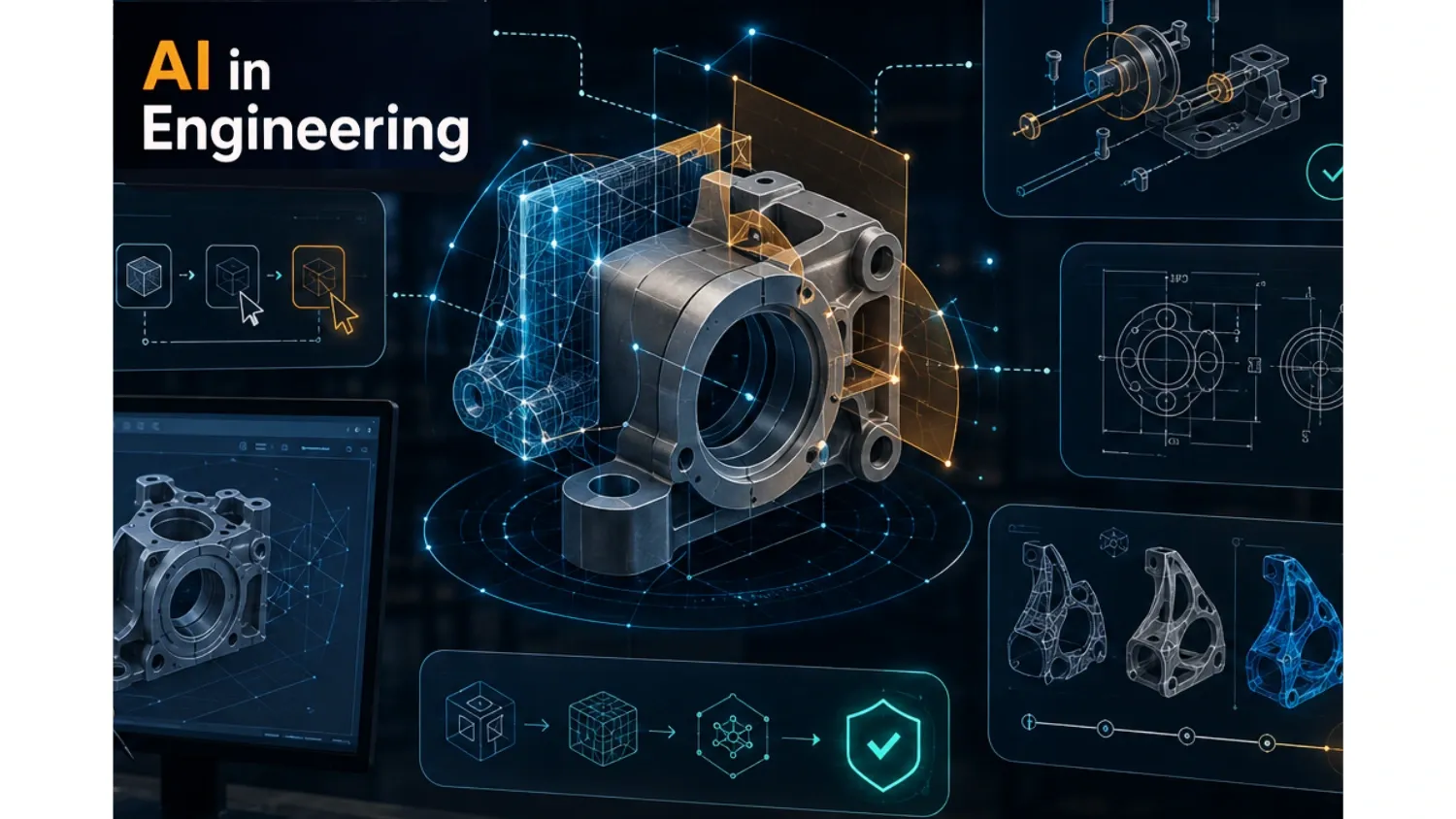





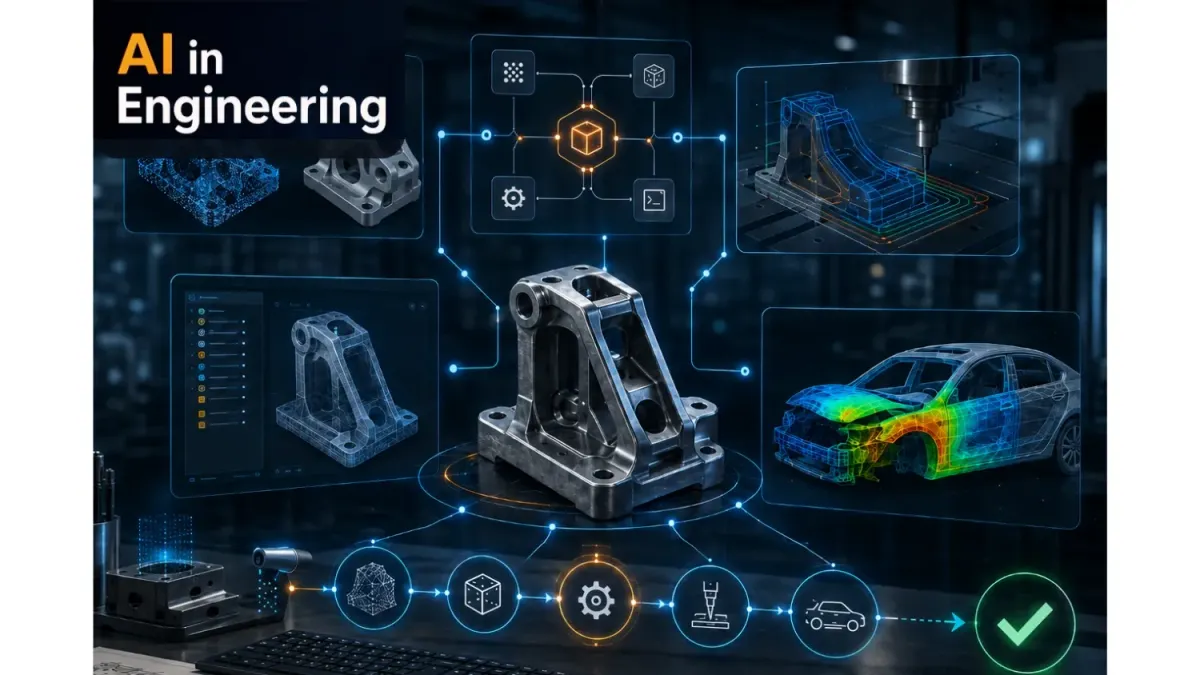
Artificial intelligence has officially moved past the hype cycle and deep into the trenches of engineering work. No longer confined to theoretical chatbots or isolated design assistants, AI is infiltrating the "messy middle" of product development—handling tedious CAM edits, streamlining scan-to-CAD clean-ups, connecting disparate software silos, and delivering real-time crash predictions.
Yet, as major industry players like Mastercam, Synera, and Luminary introduce powerful new AI capabilities, the core message for the engineering community remains grounded: artificial intelligence accelerates workflows, but it does not replace engineering judgment. The professional value of engineers is shifting away from repetitive data entry and manual toolpath tweaks toward higher-level system orchestration, critical thinking, and rigorous validation.
Main Facts: The New Landscape of AI-Assisted Engineering
Recent developments across computer-aided manufacturing (CAM), computer-aided design (CAD), and computer-aided engineering (CAE) highlight a paradigm shift. AI is no longer just helping users write code or navigate help menus; it is actively altering geometry, generating toolpaths, and predicting physical behaviors.
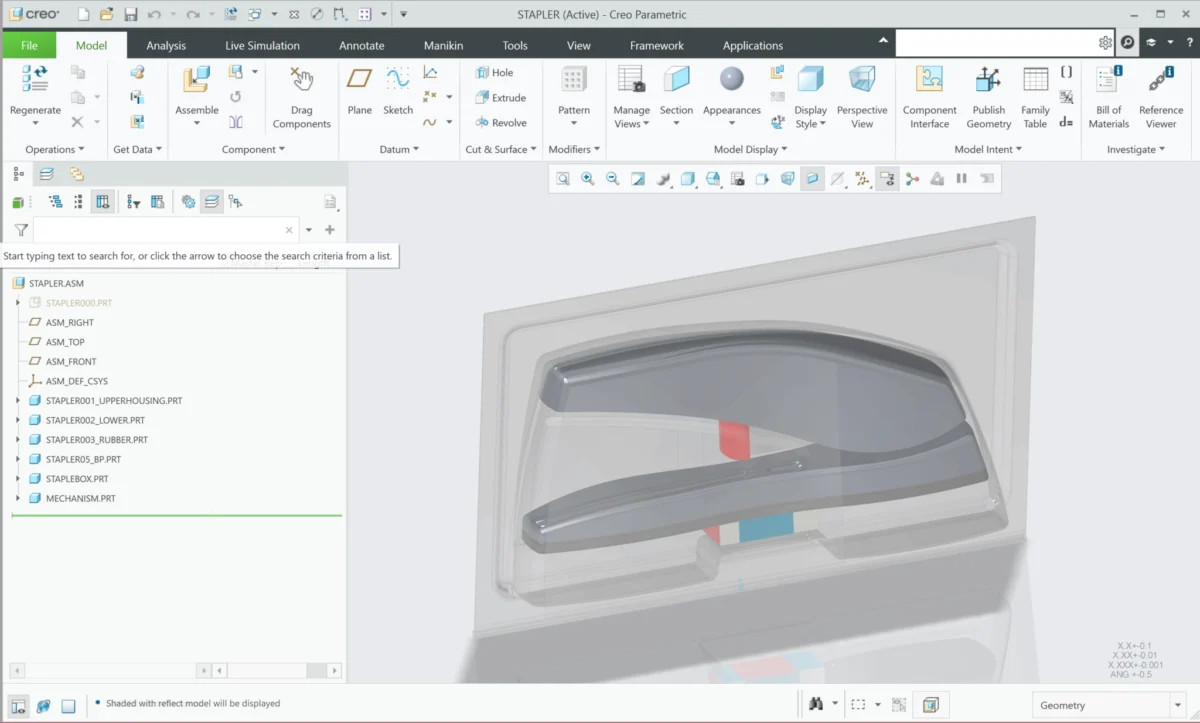
- Mastercam 2026 has introduced CAM Copilot, an AI-driven assistant that allows machinists to adjust feeds, speeds, and toolpaths using natural language voice or text commands across roughly 200 toolpath types.
- Synera has expanded its AI Agent Platform by integrating new add-ins for Autodesk Fusion and nTop (nTopology), aiming to bridge the notoriously inefficient data hand-off gaps between CAD, CAE, CAM, and Product Lifecycle Management (PLM) systems.
- Scan-to-CAD workflows are undergoing a transformation. Advanced machine learning models are stepping in to solve the primary bottleneck in 3D scanning—interpreting massive point clouds and meshes to automatically recognize features like planes, cylinders, and holes.
- Luminary has launched Shift-Crash, a physics-based AI model capable of predicting full-vehicle deformation, stress fields, and crash responses in seconds rather than the hours traditionally required by high-performance computing (HPC) clusters.
Chronology of Innovation: How We Reached the "Messy Middle"
To understand where engineering AI stands today, it helps to examine how the technology has evolved over successive software generations.
Phase 1: Point Solutions and Siloed Automation (2018–2021)
Initially, AI in engineering was largely experimental or narrowly scoped. Machine learning algorithms were deployed to optimize generative design shapes based on mass and load parameters. However, these tools existed in isolation. Generating a lightweight bracket was easy, but integrating that geometry back into an established PLM system or modifying it for manufacturing often required a complete rebuild.
Phase 2: Workflow Acceleration and Natural Language Interfaces (2022–2024)
As large language models and computer vision matured, software vendors began embedding AI deeper into mainstream applications. Generative design graduated from academic novelties to commercial add-ins, while initial attempts at automated drafting and error detection emerged. However, these tools were mostly reactive, designed to speed up single tasks rather than connect entire engineering pipelines.
Phase 3: Connected Platforms and Real-Time Prediction (2025–Present)
Today, the industry has entered the era of platform connectivity and predictive physics. Platforms like Synera are actively breaking down software silos, allowing automated workflows to pass data fluidly between Fusion, nTop, and enterprise PLM systems. Concurrently, specialized tools like Mastercam Copilot and Luminary’s Shift-Crash demonstrate that AI can now manage complex domain-specific tasks—from shop-floor programming to crashworthiness screening—in real time.
Supporting Data and Technical Deep Dive
The practical impact of these new tools is best understood through the specific technical metrics and capabilities reported across the industry.
Synera’s AI Agent Platform: Bridging the Tool Gap
Engineering teams have historically lost substantial time during hand-offs between specialized tools. Synera’s latest platform updates target these exact friction points:
- The nTop Add-In: Designed to support complex, mathematically driven design work—such as lattices for additive manufacturing. Users can create, update parameters, and run analyses while retaining a fully replayable digital thread.
- The Fusion Add-In: Facilitates cloud design sharing, automated design and simulation iterations, cost analysis, and Request for Quote (RFQ) preparation.
By unifying these environments, Synera enables automated workflows to move data smoothly, though engineers must still manually verify variant assumptions and manufacturing constraints.
Mastercam 2026 and CAM Copilot
Programming CNC machines has traditionally been a meticulous, highly repetitive manual process. Mastercam Copilot addresses this by integrating directly into the programming workflow:
- Command Scope: Supports approximately 200 toolpath types.
- Safety Protocols: Operates via text or voice commands (triggered by the hands-free keyword "Copilot") to adjust feed rates and spindle speeds across multiple operations, backed by mandatory confirmation prompts to ensure shop-floor safety.
- Training Integration: Includes integrated search capabilities across the myMastercam video library, providing timestamped answers to assist junior machinists.
Transforming 3D Scans into Usable CAD
Hardware capture capabilities—driven by companies like Artec 3D, T3DMC, OR3D, and Backflip—have advanced faster than software interpretation. The bottleneck is no longer capturing geometry, but turning massive point clouds into parametric models.
- AI Geometry Recognition: Machine learning models now segment surfaces, fit features, and clean up meshes automatically.
- Intent Extraction: AI can identify design intent, proposing parametric CAD models or automated pass/fail inspection checks. However, the system relies entirely on clean scan data; a scan only shows what exists, leaving engineers to determine what the model should mean.
Luminary’s Shift-Crash: Physics AI in Action
Traditional crash simulation is computationally punishing. A standard National Highway Traffic Safety Administration (NHTSA) NCAP 56 km/h frontal crash simulation can require 10 to 12 hours on dedicated HPC clusters.
- Performance: Shift-Crash utilizes transfer learning—trained on 5,000 simulations based on a 2010 Toyota Yaris—to predict stress fields, deformation, and overall crash response in mere seconds.
- Accuracy: Luminary reports a prediction error of below 3% Root Mean Square Error (RMSE).
- Context: Because official NCAP ratings rely on rigidly defined, certified test conditions, Shift-Crash is positioned strictly as an early screening tool rather than official certification evidence.
Official Perspectives and Industry Responses
Industry leaders and software developers emphasize that the ultimate goal of AI is not to replace human expertise, but to eliminate administrative and computational drag.
Developers at Luminary stress that tools like Shift-Crash are designed to democratize early-stage exploration. By slashing simulation times from half a day to seconds, engineering teams can evaluate dozens of structural variations before committing to expensive physical prototypes or late-stage redesigns.
Similarly, representatives from CNC software developers highlight that tools like Mastercam Copilot are meant to augment the programmer’s intuition. By automating routine feed and speed adjustments, experienced machinists can focus on complex fixture design and optimization, while junior staff can accelerate their learning curves safely through natural language queries.
However, a unified consensus emerges across all sectors: AI does not assume liability. Whether a toolpath is generated by voice command, a CAD model is derived from a point cloud, or a vehicle deformation profile is predicted by a neural network, the ultimate responsibility for product safety, regulatory compliance, and manufacturing feasibility rests squarely with the human engineer.
Implications for the Engineering Career Path
The rapid deployment of AI into CAD, CAM, CAE, and PLM environments carries profound implications for engineering professionals and the job market at large.
The Rise of the Systems Orchestrator
The traditional career path often rewarded deep specialization in a single software package—becoming an expert surface modeler in CAD or a dedicated FEA analyst. As automated workflows and AI agents begin to stitch these tools together, value is rapidly migrating toward professionals who understand the entire product development lifecycle.
Engineers who can successfully "steer and check" AI tools will command a premium. This requires a specific skill set:
- Critical Output Evaluation: Knowing when a CAM feed-rate suggestion is safe, when a scan-to-CAD geometry translation is trustworthy, and when an AI crash prediction is useful for screening rather than final validation.
- Cross-Disciplinary Integration: The ability to connect tools across mechanical design, structural simulation, and manufacturing, ensuring that automated data hand-offs do not propagate hidden errors.
- Judgment Over Execution: As drafting, basic programming, and routine simulation setup become automated, the differentiator will be an engineer’s ability to question outputs, challenge underlying assumptions, and make sound manufacturing decisions.
Conclusion: Embracing the Messy Middle
AI has arrived in the messy middle of engineering work, promising faster iteration, superior traceability, and dramatic reductions in computational bottlenecks. Yet, the physics of manufacturing remain unforgiving. A miscalculated toolpath can still destroy a multi-thousand-dollar workpiece; a flawed scan interpretation can compromise a reverse-engineered component; and a misunderstood crash prediction can lead to catastrophic failure if mistaken for certified data.
For the modern engineer, AI is not a replacement for expertise—it is an amplifier. Those who learn to harness its speed while maintaining rigorous oversight will lead the next era of industrial innovation.