






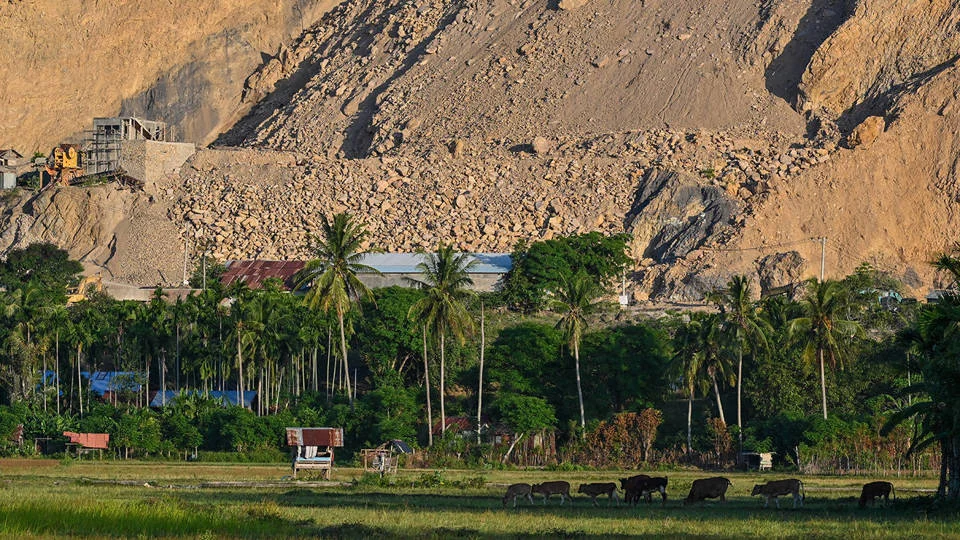
JAKARTA — As the global imperative to combat climate change accelerates, the phased elimination of fossil fuels has moved from theoretical environmental policy to immediate economic reality. Yet, in regions where economic vitality has for generations revolved around coal, oil, and gas extraction, shifting away from carbon-intensive industries presents a profound structural paradox.
Ensuring a "just transition"—one that safeguards vulnerable populations from sudden economic collapse—requires far more than national decarbonization targets. It demands the deliberate, methodical development of alternative livelihoods tailored to the specific ecological, social, and economic needs of each affected community. As policymakers grapple with these complex transformations, regional endowment funds are emerging as a vital financial vehicle to bridge the gap between climate ambition and local economic survival.
Main Facts: The Anatomy of a Fossil-Fuel Trap
The transition away from fossil fuels inevitably exposes deep structural inequalities within developing and developed economies alike. Nowhere is this more apparent than in resource-rich emerging markets like Indonesia, an economy recently characterized by international analysts as a "ticking time bomb" due to its complex interplay of macroeconomic vulnerabilities and resource dependency.
In various Indonesian regencies and provinces, coal mining has historically served as the primary engine of Gross Domestic Product (GDP) growth. Consequently, the pursuit of green energy raises a thorny political and economic dilemma: how to actively stimulate alternative growth and combat climate change without plunging resource-dependent regions into terminal poverty.
The core facts defining this crisis include:
- Severe Hyper-Dependency: In many mining-reliant villages, the local labor market is overwhelmingly skewed toward extraction. For instance, in Pulau Panggung—a village located in Muara Enim, one of Indonesia’s most coal-dependent regencies in South Sumatra—over 56% of the resident population works directly in the mining sector as permanent staff or casual laborers.
- The Displacement Threat: As mining companies face expiring concessions, diminishing reserves, and aggressive corporate efficiency measures, local livelihoods are vanishing. Unlike previous industrial shifts, these workers face redundancy without a ready-made economic substitute.
- The Policy Gap: While national governments draft broad decarbonization frameworks, regional development plans often lack actionable, granular roadmaps for economic diversification. This leaves communities rich in minerals but poor in structural resilience.
Chronology: From Agricultural Roots to the Extractive Era and Beyond
Understanding how communities like Pulau Panggung arrived at their current vulnerability requires examining the historical arc of industrial development in South Sumatra.
Early 1990s: The Great Industrial Pivot
For generations, the economic lifeblood of rural South Sumatra was rooted in agriculture, smallholder farming, and local trade. However, with the rapid expansion of the commercial coal mining sector in the early 1990s, the socioeconomic landscape shifted dramatically. Drawn by promises of steady wages and upward mobility, local populations largely abandoned traditional farming practices. Agriculture was sidelined as generations of workers specialized almost exclusively in mining operations, transforming self-sustaining agrarian communities into wage-dependent resource enclaves.
The 2010s: Peak Extraction and Regulatory Disconnect
Throughout the 2010s, coal extraction fueled local government revenues and regional spending. However, top-down policymaking centralized decision-making in Jakarta, leaving regency and provincial governments with limited autonomy to plan for a post-extractive future. Environmental degradation compounded the problem, as vast tracts of productive land were converted into open-pit mines with vague commitments to post-operational land rehabilitation.
Present Day: The Expiration Crisis and Livelihood Vulnerability
Today, as initial mining concessions approach their expiration dates and global market pressures favor renewable alternatives, extractive firms are scaling back operations. Villages that abandoned agriculture thirty years ago now face a looming economic cliff. With degraded ecosystems, rusted machinery, and a workforce lacking modern secondary skills, these communities are caught between a dying industry and a structurally unprepared state apparatus.
Supporting Data: The Ground Realities in Numbers
Comprehensive research conducted by WALHI Sumatera Selatan (Friends of the Earth South Sumatra) alongside the Indonesian Center for Environmental Law (ICEL) paints a stark quantitative picture of the transition crisis:
- 56.7%: The exact proportion of Pulau Panggung’s residents currently employed directly by the coal mining sector, illustrating an unsustainable level of occupational monoculture.
- Decades of Abandonment: More than 30 years have passed since the systemic shift from sustainable agrarian economies to extraction-based employment, creating a deep human-capital gap where traditional farming expertise has eroded.
- Zero Substantive Guidance: A review of the 2025–2029 South Sumatra Medium-Term Regional Development Development Plan (RPJMD) reveals a glaring policy void. The planning document fails to provide concrete execution strategies for post-coal economic transformation, admitting only that regional diversification efforts remain "suboptimal."
- Ambiguous Land Tenure: Across Indonesia, unclear land status acts as a persistent structural barrier, complicating efforts to repurpose post-mining landscapes for eco-tourism, agroforestry, or renewable energy infrastructure.
Official Responses and Policy Gaps
The response from public authorities highlights a persistent disconnect between macro-level climate commitments and micro-level socioeconomic realities.
National governments typically issue broad, high-level transition roadmaps, expecting provincial and regency authorities to formulate localized execution strategies. In practice, however, local bureaucrats frequently lack the financial instruments, technical capacity, and legislative authority to implement meaningful transformation.
The Top-Down Policy Trap
Civil society organizations and environmental legal experts have repeatedly criticized centralized policymaking frameworks. By treating the energy transition as a purely technical, top-down bureaucratic exercise, state planners routinely overlook the distinct needs of individual communities.
When regional development plans—such as those in South Sumatra—acknowledge the necessity of resource-based economic transitions, they rarely outline how those resources should be managed to protect fragile ecosystems while generating sustainable jobs. Consequently, local populations are treated as passive recipients of national policy rather than active architects of their own economic futures.
To correct this trajectory, policy experts argue that governments must pivot toward a two-pronged, bottom-up approach:
- Mandatory Participatory Mapping: Before any transition plan is approved or funded, governments must conduct rigorous, participatory baseline assessments. These assessments must map local land tenure status, workforce skills, ecological assets, and community strengths. In Muara Enim, such an exercise would immediately identify viable pathways back to sustainable agriculture, specialized agro-processing, and nature-based eco-tourism.
- Empowering Local Governance: Affected communities must be granted a formalized, legally binding role in decision-making bodies. Entrusting transition design to municipal stakeholders ensures that interventions directly address the real-world vulnerabilities of displaced workers.
Implications: Regional Endowment Funds as a Financial Lifeline
Even the most progressive community-driven transition plans are destined to fail without adequate, sustained capital. Designing alternative livelihoods requires substantial upfront investment in human capital development, vocational retraining, digital infrastructure, and ecosystem restoration.
Where will these funds originate, particularly in developing nations grappling with fiscal constraints? The answer may lie in institutionalizing Regional Endowment Funds.
The Sovereign Wealth Model: Learning from Alaska
A proven blueprint for resource-revenue redistribution is the Alaska Permanent Fund. Established in the late 1970s, this state-owned sovereign wealth fund captures a designated percentage of revenues generated from state oil and mining extraction, investing them in global financial markets for the long-term benefit of current and future generations.
Managed transparently by an independent corporation, the fund finances essential public goods, infrastructure, and direct dividend disbursements to residents. While developed in a high-income sub-arctic state, the foundational mechanics of the Alaska model are universally applicable.
Adapting Endowment Funds for the Developing World
Applying this framework to fossil-fuel-dependent regions in emerging markets like Indonesia offers a compelling solution to the financing bottleneck. By capturing a portion of current mining, oil, and gas royalties and routing them directly into dedicated regional endowment funds, governments can establish a permanent financial buffer.
These localized funds would serve several critical functions:
- Financing the Transition Phase: Providing predictable, multi-year capital injections for community-led economic diversification initiatives before extractive revenues dry up entirely.
- Funding Human Capital Gaps: Underwriting robust educational programs, technical retraining for displaced miners, and digital literacy initiatives to prepare workers for emerging green sectors.
- Enforcing Ecological Restoration: Guaranteeing the financial resources necessary to rehabilitate mined lands, turning environmental liabilities into productive assets for agriculture and eco-tourism.
Conclusion: Time is Running Out
The window of opportunity to establish functional regional endowment funds is narrowing rapidly. As global decarbonization targets tighten and fossil-fuel reserves deplete, the revenue streams currently supporting mining-dependent regions will inevitably vanish.
Policymakers in Indonesia and across the global South must act decisively before extraction halts completely. Establishing pilot programs in hyper-vulnerable regions—such as Muara Enim—can serve as a proof-of-concept, demonstrating how targeted financial mechanisms and bottom-up planning can successfully rescue communities from the economic ashes of the fossil-fuel era.
Without immediate action to capitalize and institutionalize regional endowment funds, governments risk leaving vulnerable communities with meticulously written transition plans—and zero capital to bring them to life.