In a move that highlights the widening gap between corporate sustainability pledges and the hard realities of grid capacity, Black Hills Corp. has unveiled an ambitious $1.8 billion energy infrastructure project in Cheyenne, Wyoming. The initiative is designed to provide massive power to a forthcoming Google data center, utilizing a complex blend of new natural gas-fired generation and a massive, privately managed microgrid.
The project, which represents a significant departure from the tech industry’s typical reliance on utility-scale renewables, has sparked a firestorm of debate. As data centers continue to consume electricity at unprecedented rates—driven largely by the proliferation of artificial intelligence—utilities and tech giants are increasingly forced to choose between the speed and reliability of fossil fuels and the long-term decarbonization goals that have defined the tech sector for the past decade.
Main Facts: The Anatomy of the Deal
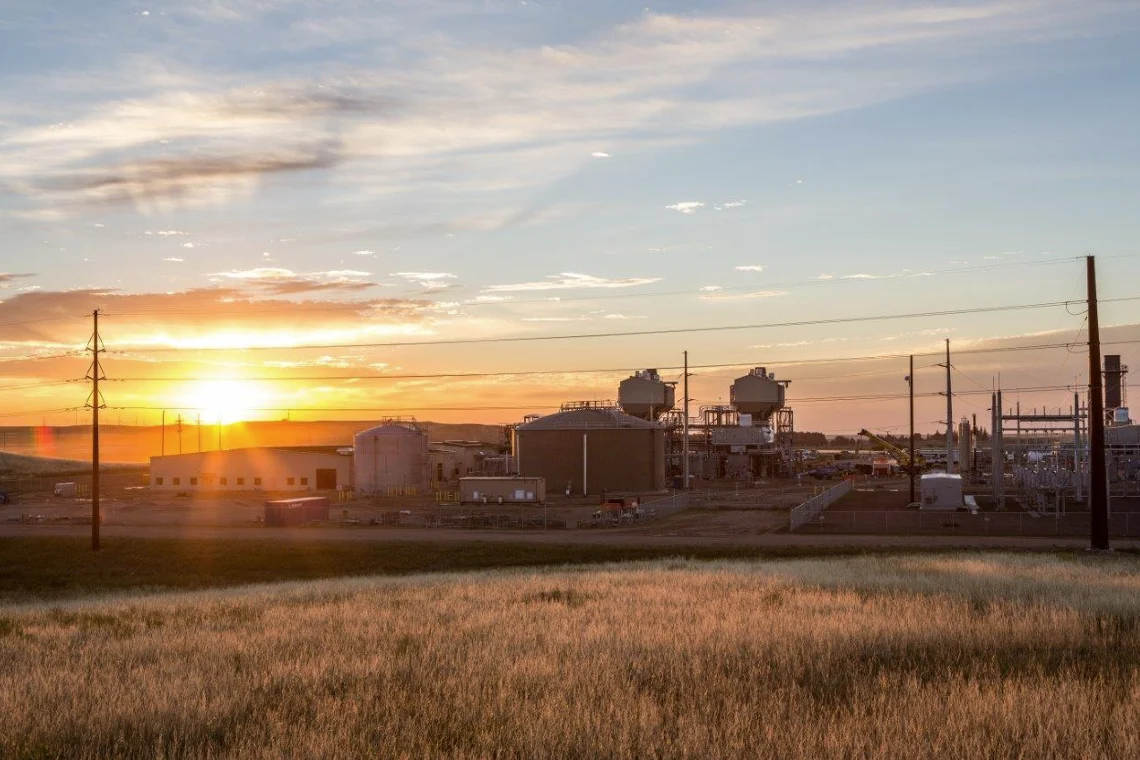
The core of the Black Hills-Google agreement centers on the expansion of the existing Cheyenne Prairie Generating Station. Black Hills plans to construct 564 MW of new natural gas-fired generation capacity at the site between 2027 and 2029. Crucially, these assets will be owned by a non-regulated affiliate of Black Hills, effectively insulating the Wyoming utility and its ratepayers from the direct financial risks of the development.
Beyond the gas turbines, the scale of the project is massive. The total energy ecosystem designed for the Google facility encompasses approximately 2.7 GW of resource capacity. This includes the 564 MW of gas-fired power, supplemented by 2.1 GW of third-party energy resources. These third-party assets, which the company indicates will consist of a mix of turbines and fuel cells, will not be owned by Black Hills. Instead, they will operate within a sophisticated microgrid structure governed by Wyoming’s "Large Power Contract Service" tariff.
Black Hills will serve as the orchestrator of this complex energy ballet, charging a management fee to handle grid operations, dispatch, and reliability services. This arrangement allows Google to secure the high-availability power it requires for 24/7 data center operations while providing Black Hills with a lucrative, long-term revenue stream.
Chronology of the Project
The timeline for the Cheyenne project is aggressive, reflecting the rapid deployment cycles required by the tech sector:

- Pre-2026: Initial site planning and discussions between Google and Black Hills Corp. regarding energy requirements for the Wyoming expansion.
- October 2026: Official announcement of the $1.8 billion investment and the submission of project parameters. Black Hills secures necessary air quality permits for the expansion of the Cheyenne Prairie facility.
- 2026-2027: Preliminary phases, including securing additional transmission approvals and site development.
- July 2027: Deadline for the reimbursement of the $399 million Google has already advanced for long-lead equipment purchases.
- 2027-2029: Construction phase for the 564 MW gas-fired units at the Cheyenne Prairie Generating Station.
- 2029-2030: Expected project commissioning and the start of full-scale microgrid management operations.
- 2030 and beyond: Black Hills projects $150 million in annual net income from the project starting in 2030, with a long-term cash flow projection extending through 2048.
Supporting Data and Financial Framework
The financial architecture of the deal is specifically designed to protect Black Hills’ existing utility customers. Given the volatility of energy markets and the massive capital expenditure required for such a build-out, Black Hills has implemented "contractual protections" aimed at mitigating the risks of stranded assets, project termination, and cost overruns.
Google, as the primary beneficiary, is essentially underwriting the financial risk of the infrastructure. The $399 million advance for equipment is a testament to the urgency of the deal; by front-loading the capital, Google ensures that supply chain constraints do not derail the project schedule.
From a shareholder perspective, the deal is a significant win for Black Hills. The utility anticipates $2.4 billion in unlevered free cash flow through 2048. By diversifying its revenue stream to include microgrid management fees, the company creates a model that is less dependent on traditional regulated rate base growth and more reliant on high-margin, specialized service contracts.
The Industry Dilemma: Gas vs. Carbon-Free Goals
The Cheyenne project sits at the center of an increasingly polarized debate over how to power the AI revolution. On one side, utilities are under immense pressure to deliver power "yesterday." With grid interconnections for renewable projects often languishing in queues for years, natural gas remains the only reliable way to bring large-scale, dispatchable power online in a short timeframe.
However, Google’s own corporate mandate—to operate on 24/7 carbon-free energy by 2030—makes the addition of 564 MW of gas-fired generation appear, at least on the surface, as a contradiction.
This tension is not unique to Wyoming. Across the United States, grid operators are seeing a surge in demand that far outstrips the current rate of clean energy development. While nuclear energy has recently been touted as the "clean" solution for data centers—evidenced by Google’s concurrent deal with Constellation Energy to tap into existing nuclear capacity—the sheer volume of power required means that developers are often forced to use a "whatever works" strategy.

Official Responses and External Criticism
The reaction to the deal has been sharply divided. While Black Hills and Google have framed the project as a model of efficient, private-sector cooperation, energy policy experts are raising red flags.
Jesse Jenkins, a prominent energy researcher at Princeton University and co-founder of Firma Power, has been one of the most vocal critics. Jenkins noted the irony of Google signing two major power deals in the same week: one with Constellation Energy for nuclear power, which he praised as a "model for powering data centers," and the Black Hills deal, which he characterized as a "departure" from Google’s stated mission.
In a series of posts on social media, Jenkins argued that the reliance on new natural gas infrastructure in Wyoming is a missed opportunity. He suggested that data center developers should be utilizing their massive financial leverage to accelerate the interconnection of wind, solar, and battery storage projects already in the queue. According to Jenkins, by building new gas, the industry risks "locking in" fossil fuel reliance for decades, making the 2030 carbon-free goal increasingly difficult to reach.
Implications for the Future of the Grid
The Black Hills-Google arrangement may well serve as a blueprint for future data center power procurement. If the project succeeds, it will demonstrate that utilities can effectively partner with tech giants to build "private" energy islands—microgrids that operate alongside the main grid but remain financially and operationally distinct.
However, the implications for the broader energy transition are profound:
- Increased Market Segmentation: We may see a bifurcated grid where certain high-load users, like AI data centers, operate on dedicated, privately managed microgrids, while the public grid continues to struggle with aging infrastructure and slow renewable integration.
- The "Gas Bridge" Reality: Despite the political and environmental momentum behind decarbonization, the demand for high-reliability, 24/7 power for digital infrastructure is creating a new lease on life for natural gas.
- Regulatory Scrutiny: State public utility commissions will likely face increased pressure to ensure that these "private" deals do not inadvertently offload costs or risks onto the average ratepayer, even when contractual protections are in place.
As Cheyenne prepares for this massive infusion of power infrastructure, the eyes of the energy sector are fixed on Wyoming. Whether this project is viewed as a pragmatic solution to a global power crisis or a retreat from climate commitments will ultimately depend on the project’s performance in the years following its 2029 commissioning. For now, it stands as the most prominent example of the high-stakes, multi-billion-dollar game of cat and mouse being played between the world’s largest tech companies and the physics of the electrical grid.