By Minghao Zhao
Published: October 6, 2026
Main Facts
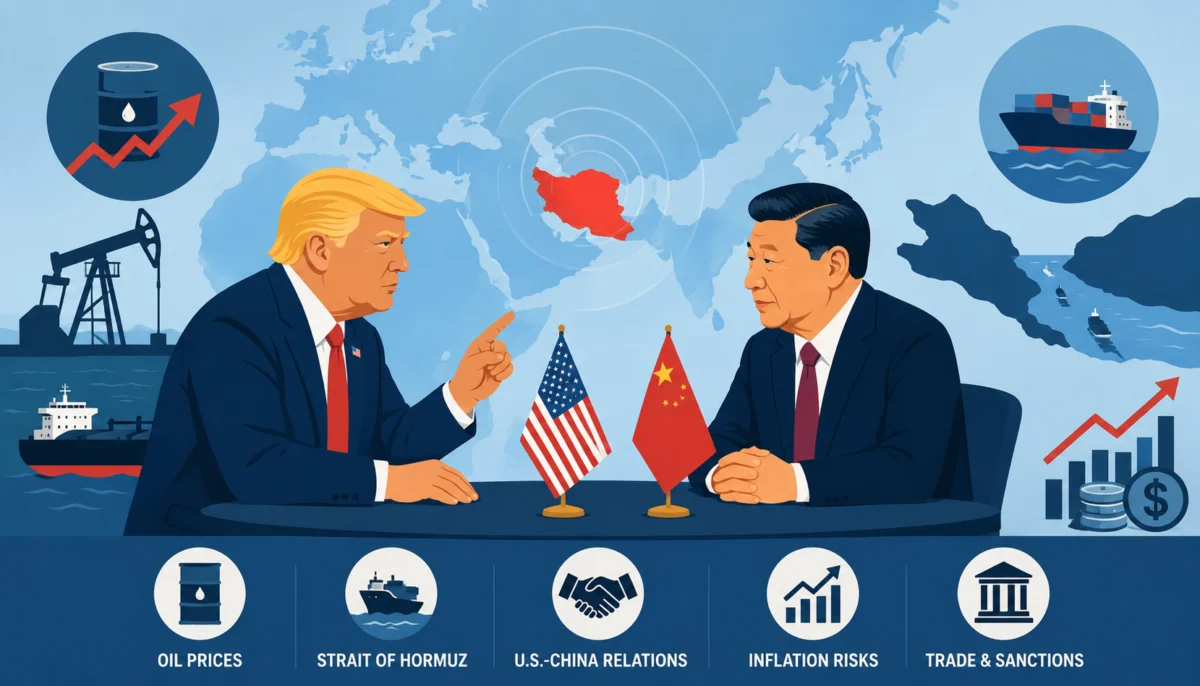
The latest high-stakes diplomatic encounter between United States President Donald Trump and Chinese President Xi Jinping concluded in an atmosphere best characterized by strategic stabilization rather than grand resolution. Against a backdrop of profound structural competition, the summit delivered several concrete yet provisional outcomes designed to cap escalating hostilities.
Foremost among these developments is a critical two-month extension on ongoing trade negotiations, granting both economic superpowers a much-needed window to avert a damaging escalation of tariffs and market restrictions. Additionally, the two leaders established a formal bilateral dialogue mechanism dedicated to the governance and safety of Artificial Intelligence (AI), marking a rare area of prospective technical cooperation in an otherwise fractured technological landscape.
On the intensely sensitive geopolitical front concerning Taiwan, the summit yielded carefully calibrated diplomatic language designed to preserve strategic ambiguity and avoid provocative rhetoric. According to diplomatic analysts in Beijing and Washington, China’s overarching calculus entering the summit was singular and defensive: to arrest the downward spiral of bilateral ties and establish a floor beneath the relationship. From the perspective of Chinese leadership, this objective was largely achieved, substituting volatile unpredictability with a structured, albeit tense, diplomatic holding pattern.
Chronology: The Path to the Summit and the Diplomatic Sequence
The road to the Trump-Xi summit was paved with months of escalating rhetoric, back-channel negotiations, and mounting pressure from the global business community. Understanding the trajectory of this diplomatic milestone requires a close examination of the timeline leading up to the leaders’ encounter in late 2026.
Phase One: The Pre-Summit Trade and Tech Friction (Q1–Q2 2026)
- January–March 2026: Following shifts in legislative priorities and persistent supply chain realignments, the U.S. Department of Commerce introduced a fresh suite of export controls targeting advanced semiconductor manufacturing equipment. In response, Beijing implemented targeted regulatory hurdles for rare earth mineral exports, vital for Western automotive and defense manufacturing.
- April 2026: Financial markets experienced heightened volatility as the expiration date for previous trade agreements approached. Business lobbies in both nations intensified lobbying efforts, warning that a failure to reach an interim accord would trigger inflationary shocks globally.
Phase Two: Back-Channel Diplomacy and Preparations (July–August 2026)
- July 2026: Senior economic emissaries from both countries held clandestine meetings in a neutral third-party nation. These preparatory talks laid the groundwork for high-level engagement, isolating specific, tractable issues—such as AI safety and baseline agricultural trade—from intractable ideological disputes.
- August 2026: National security advisors finalized the agenda for the upcoming presidential meeting. Both sides recognized the political imperative of delivering a "stable deliverable" to reassure volatile global markets ahead of the autumn legislative cycles.
Phase Three: The Summit Execution (October 2026)
- Early October 2026: Presidents Trump and Xi convened for a tightly choreographed summit. Over the course of closed-door sessions and working dinners, the two leaders addressed economic containment, technological bifurcation, and regional security flashpoints.
- Post-Summit Announcement: Officials released the joint parameters of the two-month trade extension and the framework for the bilateral AI dialogue, cementing the current phase of managed rivalry.
Supporting Data: Economic Indicators and Strategic Metrics
To fully comprehend why both leaders opted for a temporary ceasefire rather than an aggressive escalation, one must examine the underlying economic and strategic data shaping decision-making in Washington and Beijing.
Bilateral Trade and Tariff Exposure
Despite years of government-mandated "decoupling" and "derisking" initiatives, bilateral trade volumes between the world’s two largest economies remain deeply intertwined:
- Trade Volume: Total goods and services trade between the U.S. and China hovered near $660 billion through the previous fiscal year, demonstrating that total economic separation remains economically prohibitive for both parties.
- Tariff Landscape: Average effective tariff rates on Chinese imports to the U.S. have remained elevated since the initial trade wars, creating persistent cost pressures for American retail, technology, and manufacturing sectors. Conversely, China’s domestic economy—grappling with property sector adjustments and domestic demand recovery—has sought external trade stability to bolster investor confidence.
Technological Bifurcation and AI Investment
The inclusion of an AI dialogue framework reflects the staggering scale of technological competition:
- R&D Expenditures: The United States and China combined account for over 65% of global research and development spending dedicated to artificial intelligence and quantum computing.
- Regulatory Divergence: While Washington has prioritized national security-driven export controls and investment vetting (via CFIUS), Beijing has advanced comprehensive generative AI service regulations aimed at balancing state security with commercial innovation. The newly announced bilateral talks do not signal a convergence of values, but rather a mutual recognition of the existential risks posed by unmanaged AI escalation, particularly regarding automated military systems.
Official Responses and Stakeholder Reactions
The aftermath of the summit triggered a diverse array of responses from government ministries, corporate leaders, and international observers, highlighting the fragile nature of the current diplomatic equilibrium.
Washington’s Perspective
In a post-summit press briefing, senior U.S. administration officials emphasized that the two-month trade extension should not be misconstrued as a softening of America’s strategic stance on China.
"This is a tactical pause, not a strategic pivot," noted a senior economic policy advisor speaking on condition of anonymity. "The President remains entirely committed to protecting American industrial capacity, safeguarding critical supply chains, and challenging unfair trade practices. However, establishing guardrails is a necessary prerequisite to managing competition responsibly."
Defense department spokespersons echoed this sentiment regarding the AI dialogue, stressing that while technical exchanges are useful for transparency, the U.S. military maintains its posture of technological deterrence in the Indo-Pacific.
Beijing’s Perspective
In Beijing, state media and Ministry of Foreign Affairs spokespersons framed the summit as a diplomatic validation of China’s core principles: mutual respect, peaceful coexistence, and win-win cooperation.
"President Xi Jinping articulated clearly that the fundamental interests of both nations lie in avoiding conflict," stated a Ministry of Foreign Affairs spokesperson during a regular press conference. "China is committed to stabilizing bilateral relations, but we will never compromise on our sovereignty, security, and development interests—particularly concerning the Taiwan question."
Chinese financial analysts responded positively to the trade extension, noting that it provides temporary relief to export-oriented manufacturing hubs along China’s eastern seaboard.
Global and Business Community Reactions
Global markets greeted the summit’s outcomes with cautious optimism. Major stock indices in New York, Tokyo, and Hong Kong experienced modest upward ticks following the announcement of the trade extension.
However, multinational corporate leaders offered a more nuanced assessment. Executives point out that a two-month extension provides very little long-term certainty for capital expenditure planning. Chambers of commerce in both countries issued joint statements urging lawmakers to use the 60-day window to forge a more permanent, predictable economic framework that shields commercial enterprises from geopolitical crossfire.
Implications: The Era of Managed Rivalry
The Trump-Xi summit marks a defining milestone in the evolution of the 21st-century international order. The era of comprehensive engagement, which characterized Washington-Beijing relations for much of the post-Cold War period, has been definitively replaced by an era of managed rivalry.
1. The Institutionalization of Guardrails
The establishment of specific communication channels—most notably the AI dialogue mechanism—signals a growing realization in both capitals that great power competition requires operational safety valves. Just as Cold War adversaries established hotlines and arms control treaties to prevent accidental escalation, the U.S. and China are slowly constructing a bureaucratic architecture to manage friction in cyberspace, outer space, and advanced technologies.
2. The Taiwan Strait as a Persistent Flashpoint
Despite the carefully chosen diplomatic language utilized during the summit, the underlying dynamics of the Taiwan Strait remain unchanged. Beijing views the Taiwan issue as its most sensitive red line, while Washington remains bound by the Taiwan Relations Act and bipartisan commitments to support the island’s self-defense capabilities. The temporary stabilization achieved at the summit does not resolve this foundational contradiction; rather, it underscores the mutual desire to defer a direct military crisis through diplomatic containment.
3. Economic Fragmentation vs. Interdependence
The two-month trade extension highlights the central paradox of modern Sino-American relations: structural economic interdependence coexists with aggressive national security-driven decoupling. While financial markets celebrate temporary reprieves, supply chains are structurally shifting toward "friend-shoring" and diversification. The coming months will test whether this temporary extension can blossom into a durable trade framework, or if it is merely a brief pause before the next wave of economic friction.
Conclusion
Ultimately, the Trump-Xi summit demonstrates that neither Washington nor Beijing desires an uncontrolled descent into open conflict. By settling into a pragmatic holding pattern, both administrations have bought themselves time. Yet, a holding pattern is inherently temporary. Whether this managed rivalry can be sustained indefinitely—or whether it will eventually give way to deeper structural ruptures—remains the defining geopolitical question of our era.