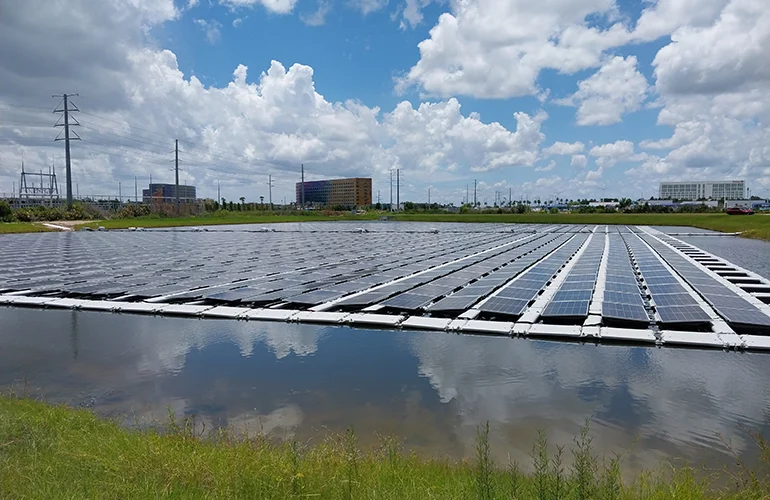
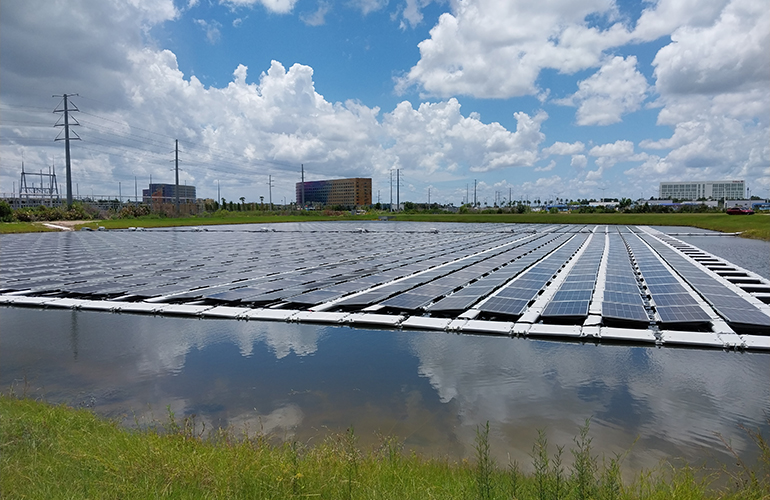
ORLANDO, Florida — In the sun-drenched landscape of central Florida, where world-class entertainment meets cutting-edge engineering, a quiet revolution in clean energy is taking place. Universal Orlando Resort’s newest crown jewel, the Epic Universe theme park, is no longer just a destination for immersive worlds inspired by Nintendo, Harry Potter, and How to Train Your Dragon. It is also a trailblazer in corporate sustainability, anchored by an innovative 1.4-megawatt (MW) floating solar photovoltaic system.
Deployed by leading U.S. floating solar developer and engineering, procurement, and construction (EPC) contractor D3Energy, this high-tech aquatic array represents a major leap forward for the amusement and hospitality industries. Energized earlier this year, the floating solar project is a core component of Epic Universe’s broader, multi-site renewable energy strategy. As theme parks worldwide face mounting pressure to reduce their carbon footprints and embrace environmental stewardship, Universal’s latest venture offers a masterclass in how large-scale entertainment complexes can seamlessly blend high-octane thrills with ecological responsibility.
Main Facts: The Anatomy of Epic Universe’s Clean Energy Vision
The newly commissioned floating solar array is not merely a symbolic gesture toward green energy; it is a heavy-duty power generation asset meticulously designed to meet the rigorous demands of a modern mega-resort.
Key Highlights of the Project:
- Capacity: The floating solar photovoltaic system boasts a robust 1.4-MW capacity, contributing significantly to the park’s on-site clean energy generation.
- Broader Solar Portfolio: The floating array is one of three distinct on-site solar installations spread across the Epic Universe footprint, bringing the park’s total on-site solar capacity to 3.7 MW.
- Project Management: The comprehensive solar program was managed globally by renowned clean energy provider Qcells, with D3Energy specializing in and executing the specialized floating solar component.
- Technology Utilization: The installation relies on industry-leading Ciel & Terre Hydrelio floating solar technology, a proven modular system designed to withstand aquatic environments, wind loads, and water-level fluctuations.
- Direct Application: The power generated by the floating array is dedicated to a very specific, high-visibility purpose: charging Epic Universe’s fleet of electric buses, ensuring that guest transportation aligns with the park’s zero-emission aspirations.
- Storage and Distribution: Energy harvested by the panels during peak daylight hours is routed into advanced battery energy storage systems (BESS), which then power the electric bus fleet during nighttime operations.
Epic Universe has also achieved a monumental milestone outside of its power generation metrics: it is the first theme park globally to attain LEED Platinum certification under the LEED for Communities: Plan and Design framework. This prestigious certification underscores that the park’s commitment to sustainability extends far beyond solar panels, encompassing water conservation, smart urban planning, biodiversity, and energy efficiency across its entire sprawling ecosystem.
Chronology: A Multi-Year Journey Toward Aquatic Solar Innovation
The realization of the Epic Universe floating solar project did not happen overnight. It is the result of a multi-year partnership, technological evolution, and meticulous urban planning.
Phase 1: Breaking Ground on Aquatic Solar (2021)
Long before Epic Universe welcomed its first visitors, D3Energy and Universal Orlando established their working relationship with a pioneering project. In 2021, D3Energy completed Universal’s very first floating solar installation at the resort’s main Orlando campus. Utilizing the same Ciel & Terre Hydrelio technology that would later be deployed at Epic Universe, that initial project proved that floating solar arrays—often called "floatovoltaics"—could thrive in Florida’s demanding climate while efficiently utilizing underutilized retention ponds and man-made water bodies.
Phase 2: Planning Epic Universe and the Qcells Partnership
As Universal pressed forward with the monumental task of designing Epic Universe—its most ambitious theme park to date—sustainability was baked into the blueprint from day one. Universal partnered with Qcells to oversee and manage the park’s expansive, multi-tiered solar energy program. Recognizing the success of their 2021 collaboration, Qcells and Universal brought D3Energy back into the fold to design, engineer, and construct the specialized floating solar array that would occupy the park’s aquatic infrastructure.
Phase 3: Construction and Grid Interconnection (Late 2023 – Late 2025)
Constructing a floating solar array requires a specialized skill set distinct from traditional ground-mounted or rooftop solar installations. Engineers had to assemble high-density polyethylene (HDPE) pontoons, anchor them securely to withstand Florida’s high winds and tropical storm seasons, and mount high-efficiency photovoltaic panels above the water’s surface.
The system was fully installed, rigorously tested, and successfully energized earlier this year, seamlessly integrating into Epic Universe’s microgrid and battery storage infrastructure just in time to support the park’s pre-opening operational phase and the rollout of its electric transportation network.
Supporting Data: The Engineering and Environmental Logic of Floatovoltaics
To understand why Universal and D3Energy opted for a floating solar solution rather than traditional land-based or rooftop arrays, one must examine the unique advantages of floatovoltaic technology, particularly in warm, land-constrained environments like central Florida.
Land Conservation and Spatial Efficiency
Theme parks are massive enterprises that require immense acreage for parking structures, administrative offices, maintenance facilities, hotels, and, of course, immersive lands and rides. Land within a major resort development is prime real estate. By utilizing man-made retention ponds and water bodies for floating solar arrays, developers effectively generate clean power from spaces that would otherwise remain sterile and unproductive. This preserves precious land for guest attractions and natural landscaping.
Thermal Performance and Energy Yield
One of the hidden challenges of traditional solar panels is heat. Photovoltaic cells lose efficiency as their operating temperatures rise. In Florida’s scorching summer months, ground-mounted or rooftop panels can become extremely hot, diminishing their energy output.
Floating solar arrays enjoy a natural cooling effect. The proximity of the water body helps regulate the temperature of the panels through evaporative cooling and conductive heat transfer. Consequently, floatovoltaics often yield higher energy generation efficiency compared to their land-based counterparts operating under identical climatic conditions.
Water Conservation and Algae Mitigation
Beyond power generation, floating solar arrays offer ecological benefits to the bodies of water they inhabit. By shading the surface of retention ponds, the solar panels reduce direct sunlight penetration, which in turn curbs excessive evaporation—a critical benefit in regions facing water conservation challenges. Additionally, reduced sunlight helps inhibit the rapid growth of algae and aquatic weeds, improving overall water quality and reducing the need for chemical treatments.
Battery Integration and E-Mobility
The integration of solar generation with battery energy storage systems (BESS) creates a closed-loop energy ecosystem. During peak daylight hours, when the sun beats down relentlessly on Orlando, the floating array operates at maximum capacity. Instead of immediately dumping all power back into the grid, the excess energy is diverted to high-capacity batteries. At night, when the park closes to day guests and the electric bus fleet prepares for maintenance cycles and next-day operations, the stored solar energy is drawn down to charge the buses emission-free.
Official Responses: Industry Leaders Weigh In on the Milestone
The successful deployment of the Epic Universe floating solar project has drawn praise from executive leadership across all participating organizations, highlighting the collaborative spirit required to pull off such a complex engineering feat.
Stetson Tchividjian, Managing Director of D3Energy, emphasized the significance of deepening the company’s relationship with a global entertainment giant like Universal.
“We’re proud to continue our relationship with Universal Orlando through a second floating solar project,” said Tchividjian. “Universal continues to lead the way in sustainability across the theme park industry, and it’s exciting to see floating solar integrated into one of the most innovative destinations in the world.”
Tchividjian also took the opportunity to acknowledge the broader collaborative framework established by Qcells, noting the seamless execution of the multi-site initiative.
“We also appreciate Qcells’ leadership in managing the overall solar program and the opportunity to deliver the floating solar component alongside their team,” Tchividjian added.
Industry analysts have similarly lauded the project as a textbook example of corporate synergy. By leveraging Qcells’ mastery of large-scale solar program management alongside D3Energy’s specialized aquatic EPC capabilities, Universal Orlando was able to bypass the logistical hurdles typically associated with deploying diverse renewable technologies across a complex, high-traffic commercial development.
Implications: Setting a New Standard for the Global Entertainment Industry
The completion of the 1.4-MW floating solar installation at Epic Universe carries profound implications not only for Universal Orlando Resort, but for the broader amusement, leisure, and tourism industries worldwide.
Raising the Bar for Corporate Sustainability
Theme parks are notoriously energy-intensive operations. Between climate-controlled indoor attractions, massive lighting arrays, high-speed roller coasters, water rides, nightly fireworks spectacles, and sprawling resort hotels, their daily energy consumption rivals that of small towns.
For decades, environmental critics have pointed to the carbon footprints of major entertainment conglomerates. Projects like Epic Universe—validated by its LEED Platinum certification—demonstrate that large-scale entertainment and aggressive corporate sustainability are no longer mutually exclusive. By generating 3.7 MW of total on-site solar power and powering their transit fleets with stored daytime sunlight, Universal is proving that sustainability can be woven into the very fabric of the guest experience.
A Blueprint for Future Resort Developments
As urban centers grow denser and land values skyrocket, developers of master-planned communities, resorts, and theme parks must find innovative ways to achieve net-zero goals without sacrificing developable land. The success of D3Energy’s floating installations at Universal Orlando serves as a living, breathing case study for developers globally.
Retention ponds, golf course water hazards, and ornamental lakes that once served purely functional or aesthetic purposes are now being viewed by forward-thinking engineers as prime real estate for clean energy harvesting.
Inspiring the Next Generation
Beyond the technical and environmental metrics, high-profile sustainability initiatives at world-class theme parks have a powerful cultural impact. Millions of visitors pass through the gates of Epic Universe each year, hailing from every corner of the globe. When guests witness state-of-the-art floating solar arrays powering the electric buses that transport them between attractions, it normalizes clean energy technology in the public consciousness.
For younger generations, seeing renewable energy integrated seamlessly into magical worlds inspired by Harry Potter, Nintendo, and How to Train Your Dragon sends a clear message: sustainability, innovation, and wonder go hand in hand.
Conclusion
Universal Epic Universe’s 1.4-MW floating solar project is much more than an assemblage of pontoons and photovoltaic panels floating on an Orlando retention pond. It is a testament to what can be achieved when visionary entertainment brands partner with specialized engineering pioneers like D3Energy and Qcells.
By combining cutting-edge floatovoltaic technology, battery storage, and zero-emission transportation into a unified, LEED Platinum-certified ecosystem, Universal Orlando Resort has firmly established itself as an environmental leader in the global amusement industry. As the sun sets over Epic Universe—recharging the batteries that will power tomorrow’s electric bus fleet—it illuminates a path forward where thrilling entertainment and ecological responsibility happily coexist.