By Climate-Tech Editorial Desk
Published: Special Home comfort & HVAC Industry Report
Main Facts: The Summer Comfort Crisis
As temperatures climb during peak summer months, thousands of homeowners face a perplexing and uncomfortable scenario: their air conditioning unit is humming loudly, drawing power, and blowing air through the vents—yet the indoor temperature continues to rise. Far from being a mere minor inconvenience, an air conditioner that runs continuously without dropping indoor temperatures signals an underlying mechanical, electrical, or structural failure within the HVAC (Heating, Ventilation, and Air Conditioning) ecosystem.
Industry data indicates that a staggering percentage of emergency mid-summer service calls stem from preventable maintenance lapses, such as neglected air filters or obstructed outdoor condenser units. However, a significant number of calls point to more complex issues, including refrigerant leaks, failing compressors, electrical component degradation, and compromised ductwork.
When an AC runs without cooling, it not only compromises indoor air quality and household comfort but also triggers a massive spike in monthly utility bills. The system, trapped in an endless cycle trying to reach an unattainable set temperature, strains its motors and electrical systems, accelerating wear and tear. Understanding the root causes of this phenomenon—ranging from simple user errors to severe mechanical breakdowns—is critical for homeowners looking to protect their investments and restore indoor comfort safely.
Chronology: How a Minor AC Glitch Escalates into a System Failure
The breakdown of an air conditioning system rarely happens overnight. It typically follows a predictable chronological progression, transitioning from a subtle operational inefficiency to a catastrophic system shutdown.
Phase 1: The Invisible Restriction (Weeks 1 to 4)
The timeline usually begins innocuously. An air filter captures dust, pet dander, and microscopic debris over several weeks. As the filter fibers clog, static pressure inside the ductwork increases. The blower motor must work harder to pull air through the barrier. Although the homeowner may not notice any immediate change in room temperature, energy consumption begins to creep upward.
Phase 2: The Thermal Imbalance (Weeks 4 to 8)
With airflow restricted, the evaporator coils inside the indoor unit cannot absorb heat efficiently. The refrigerant flowing through the coils fails to boil off completely, causing liquid temperatures to drop below freezing. Moisture in the warm household air condenses on the freezing coils and instantly turns to ice. A thin layer of frost forms, acting as an additional insulator and further degrading the system’s ability to cool incoming air.
Phase 3: Continuous Operation and Component Stress (The Critical Turning Point)
Sensing that the house has not reached the thermostat’s set temperature, the control board commands the system to keep running. The compressor—the high-pressure pump that circulates refrigerant—runs continuously without cycling off. This continuous duty cycle generates excessive internal heat, breaks down lubricating oils, and places immense strain on electrical relays, capacitors, and motor windings.
Phase 4: Total Cooling Failure and Emergency Intervention
Eventually, the evaporator coil becomes a solid block of ice, airflow drops to zero, or a safety switch trips due to overheating. The AC may continue to blow room-temperature air, or it may stop blowing air altogether as the blower motor or compressor shuts down to prevent self-destruction. At this stage, emergency professional intervention is no longer optional; it is mandatory to prevent permanent equipment failure.
Supporting Data: The Anatomy of AC Inefficiency
To understand why an air conditioning unit struggles, one must look at how the core components interact within a closed-loop thermodynamic system. An air conditioner does not actually "create" cold air; rather, it extracts heat from the interior of the home and transfers it outdoors.
Thermodynamic Breakdown and Component Failure Rates
| Component / Issue | Primary Symptom | Root Cause | Impact on Energy & Efficiency |
|---|---|---|---|
| Dirty Air Filter | Weak airflow, warm spots | Dust and debris accumulation | Increases energy consumption by 5% to 15%. |
| Low Refrigerant | Hissing sounds, ice on lines | Pinhole leaks in copper tubing or joints | Reduces cooling capacity by up to 50%; risks compressor burnout. |
| Dirty Evaporator Coil | Reduced cooling, frozen coils | Dust bypasses filter over extended periods | Impairs heat transfer; causes systemic icing. |
| Dirty Condenser Unit | Hot air from vents, high head pressure | Leaves, grass, and dirt choking outdoor fins | Forces the compressor to run at dangerously high pressures. |
| Damaged Ductwork | Uneven cooling, high electric bills | Unsealed joints, pest damage, sagging flex ducts | Can waste up to 30% of conditioned air. |
| Failing Compressor | Clicking sounds, humming, tripped breaker | Electrical surges, overheating, mechanical wear | Results in complete cooling loss; often requires system replacement. |
According to independent energy efficiency studies, over 70% of all residential HVAC repair calls involve one of the aforementioned factors. Furthermore, operating an air conditioner with a restricted filter or low refrigerant level can shorten the operational lifespan of a modern system by 3 to 5 years.
Official Responses and Industry Standards
Leading HVAC manufacturing bodies, energy agencies such as ENERGY STAR, and professional associations like ACCA (Air Conditioning Contractors of America) maintain strict guidelines regarding air conditioner troubleshooting and maintenance.
Industry experts emphasize that homeowners should limit their troubleshooting to non-invasive checks—such as inspecting air filters, verifying thermostat programming, and clearing debris from the outdoor condenser unit. Attempting to service mechanical or electrical components without proper certification violates federal environmental laws and manufacturer warranties.
Regulatory Compliance and Refrigerant Handling
Under Section 608 of the Clean Air Act, enforced by the U.S. Environmental Protection Agency (EPA), the release of ozone-depleting refrigerants (such as R-22) and modern hydrofluorocarbons (such as R-410A) into the atmosphere is strictly prohibited.
- Professional Certification Required: Only technicians certified by EPA-approved programs can purchase, handle, or add refrigerant to a residential cooling system.
- Leak Repair Mandates: Federal regulations require technicians to repair known refrigerant leaks before recharging a system, ensuring that temporary fixes are not used to bypass environmental safety standards.
Implications: Financial, Environmental, and Comfort Consequences
When an air conditioner runs continuously without cooling, the ripple effects extend far beyond a stuffy living room.
1. Financial Toll on the Household
The most immediate impact is financial. An air conditioning compressor is one of the largest energy consumers in a residential home. When a system runs 24 hours a day without cycling off, electricity consumption skyrockets. Homeowners frequently report utility bills doubling or tripling during months when an underlying HVAC issue goes unaddressed. Furthermore, minor issues left unattended—such as a small refrigerant leak or a dirty coil—inevitably evolve into catastrophic failures, transforming a minor service charge into an expensive compressor replacement or a total system overhaul.
2. Indoor Air Quality and Health Implications
Continuous blower operation pulls unfiltered or partially filtered air through compromised barriers. If evaporator coils are damp, dirty, or encrusted with biological growth (mold and mildew), the continuous airflow acts as a distribution system, circulating spores, dust mites, and allergens throughout the home. For occupants with asthma, allergies, or respiratory sensitivities, a malfunctioning AC system can trigger acute health flare-ups.
3. Structural and Environmental Impact
From an environmental perspective, inefficient HVAC units draw excess electricity from power grids, often fueled by fossil energy sources, increasing the household’s carbon footprint. Additionally, neglected systems that leak synthetic refrigerants contribute directly to atmospheric warming unless handled, recovered, and recycled according to strict environmental protocols.
Comprehensive Troubleshooting Guide: What Homeowners Can Do
Before placing a service call, homeowners can perform a structured diagnostic checklist to rule out simple operational errors.
Step 1: Inspect and Replace the Air Filter
Locate the indoor air filter (found in a return vent grille or adjacent to the air handler). If the filter is gray, caked with dust, or visibly blocked, remove it immediately. Run the system for a brief period with a clean filter to determine if airflow is restored.
Step 2: Verify Thermostat Settings
- Ensure the thermostat is set to "Cool" rather than "Heat" or "Off."
- Confirm that the fan setting is switched to "Auto" rather than "On" (setting it to "On" blows uncooled air continuously after the cooling cycle stops).
- Check battery levels if using a non-hardwired digital thermostat.
Step 3: Check the Outdoor Condenser Unit
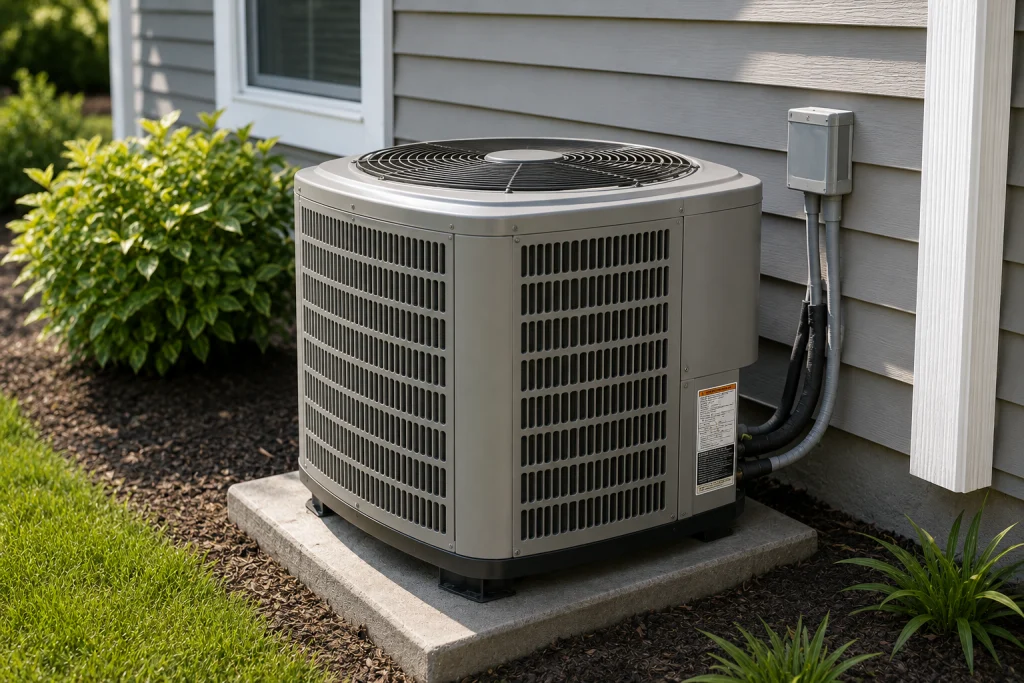
Inspect the outdoor cabinet. Ensure that shrubs, fallen leaves, lawn clippings, and outdoor furniture maintain at least two feet of clearance on all sides. Use a garden hose to gently rinse accumulated dust and dirt off the exterior aluminum fins, taking care not to bend the delicate metal with high water pressure.
Step 4: Examine Vents and Registers
Walk through your home and ensure that supply registers and return grilles are fully open and unobstructed by rugs, furniture, or drapes. Blocked vents create unequal pressure zones in the ductwork, impairing overall temperature regulation.
Step 5: Check for Ice Formation
Turn off the cooling mode immediately if you notice frost or ice coating the refrigerant lines or indoor evaporator coil. Turn the thermostat fan setting to "On" to force warm air across the coil and melt the ice. Never attempt to chip ice off coils with sharp tools, as this can puncture the fragile copper tubing and release all system refrigerant.
When to Call an HVAC Professional
If basic troubleshooting steps fail to restore cooling performance, professional intervention is required. Homeowners should contact certified technicians immediately if they observe any of the following warning signs:
- Hissing or Bubbling Sounds: Typically indicate a pressurized refrigerant leak within the system lines or coils.
- Electrical Burning Odors: Suggests overheating motor windings, failing capacitors, or damaged electrical wiring.
- Persistent Ice Buildup: Indicates severe airflow restrictions, low refrigerant charge, or an improper metering device function.
- Repeated Circuit Breaker Tripping: A critical safety warning that the compressor or blower motor is drawing excessive electrical current.
- Loud Grinding or Screeching Noises: Points to mechanical failure within the blower motor bearings or compressor assembly.
Preventive Maintenance: Safeguarding Your Investment
The most effective strategy against unexpected summer breakdowns is proactive, scheduled preventive maintenance. Routine seasonal tune-ups performed by qualified technicians protect equipment integrity and ensure peak operating efficiency.
A comprehensive professional maintenance visit typically includes:
- Refrigerant Pressure Check: Verifying that system pressures align with manufacturer specifications to detect potential leaks early.
- Electrical Component Testing: Measuring voltage, testing capacitors, and tightening electrical connections to prevent shorts and failures.
- Coil Cleaning: Thoroughly washing and sanitizing both indoor evaporator coils and outdoor condenser coils to maintain optimal heat transfer.
- Blower Motor Inspection: Lubricating moving parts, checking belt tension (where applicable), and measuring motor amperage draw.
- Ductwork and Drainage Assessment: Clearing condensate drain lines to prevent water backups and inspecting accessible ductwork for leaks or disconnections.
Expert HVAC Solutions with Climate-Tech
When your air conditioning system fails to keep your home cool and comfortable, you need reliable, expert diagnostics and fast repairs. Climate-Tech’s team of licensed, certified HVAC technicians specializes in diagnosing complex cooling failures, repairing refrigerant leaks, servicing electrical components, and performing comprehensive seasonal tune-ups.
Do not let a struggling air conditioner drive up your utility bills or leave your family sweltering in the summer heat. Contact our team today to schedule a professional air conditioning service and restore your home’s comfort and peace of mind.
Frequently Asked Questions
Why is my AC running but not cooling my house?
The most common causes include dirty air filters, refrigerant leaks, dirty evaporator or condenser coils, incorrect thermostat settings, restricted airflow, or internal compressor problems.
Why is my air conditioner not blowing cold air?
When an air conditioner blows ambient room-temperature air, it is usually because the system is failing to transfer heat. Low refrigerant levels, heavy coil contamination, or electrical faults are frequently responsible.
Can a dirty air filter cause an AC not to cool?
Yes. A clogged air filter chokes off airflow, reducing cooling performance, lowering system efficiency, and frequently causing the indoor evaporator coil to freeze solid.
Should I turn my AC off if it’s not cooling?
Yes. If you observe ice buildup on your refrigerant lines or indoor unit, turn off the cooling mode immediately and switch the fan to "On" to melt the ice while waiting for professional service. Running a compromised system risks destroying the compressor.