By Bob Deans, Senior Advisor, Communications (Adapted from NRDC and CleanTechnica reporting)
During his 2024 presidential campaign, Donald Trump made a bold and sweeping promise to the American electorate: he vowed to slash “energy and electricity prices by half, at least . . . within 12 months, at a maximum 18 months.”
Those months have come and gone. Far from seeing utility bills and fuel costs plummet, American families and businesses are instead grappling with a punishing, compounding affordability crisis. Energy costs have not only risen steadily on Trump’s watch, but administration actions have also locked in billions of dollars in unnecessary expenditures at the gas pump and the electric meter for decades to come.
Coupled with a systematic rollback of environmental safeguards and a pivot back toward coal and volatile hydrocarbons, these policies are yielding a devastating double whammy: Americans are paying more for energy while simultaneously burning more of it. Behind the political rhetoric lies a trail of scuttled investments, surging inflation at the meter, and staggering public health tolls—particularly felt across nine focal states: Colorado, Georgia, Iowa, Michigan, North Carolina, Ohio, Pennsylvania, Texas, and Wisconsin.
Main Facts: The Anatomy of the Energy Affordability Crisis
The economic fallout of the Trump administration’s energy agenda is defined by several stark realities:
- Surging Electricity Rates: Household electricity rates have jumped an average of 15.1 percent nationwide since Trump took office, climbing from 15.9 cents per kilowatt-hour to 18.3 cents. In states like Ohio, rates have spiked by 25 percent, while Iowa has seen a staggering one-third surge.
- The Pump Price Shock: Following the administration’s escalation of foreign conflicts—specifically the war on Iran launched on February 28, 2026—gasoline prices surged nearly 50 percent nationwide. This added more than $540 in fuel expenses for the typical household over a seven-month span, even as major oil conglomerates recorded windfall profits.
- Capital Flight and Lost Jobs: Approximately $86 billion worth of planned clean energy manufacturing, generation, and battery storage projects have been scuttled. This includes $36 billion in canceled U.S. factories that would have employed over 50,000 workers to build solar panels, EVs, and advanced batteries, alongside $50 billion in canceled wind, solar, and storage developments.
- Public Health Tolls: Increased emissions of mercury, soot, and particulate matter from the administration’s forced reliance on aging fossil-fuel infrastructure are projected to trigger $640 billion in cumulative health costs between 2026 and 2035. This includes 5.4 million missed school and workdays and an estimated 35,000 premature deaths nationwide.
Chronology of Regression: From Campaign Promises to Market Turmoil
To understand how the United States arrived at this inflection point, it is necessary to examine the timeline of policy shifts and geopolitical friction that reshaped the energy landscape over the past several years:
- Late 2024: Donald Trump secures the presidency after a campaign heavily bankrolled by oil and gas billionaires, repeatedly promising rapid, dramatic reductions in energy prices through the unchecked expansion of fossil fuel extraction.
- Early 2025: Shortly after inauguration, the administration initiates a sweeping regulatory rollback. It targets clean vehicle standards, enacts heavy import tariffs on critical manufacturing and transmission components, and works to dismantle incentives tied to the transition toward renewable energy. In March 2025, analyses warn that new tariffs threaten to spike the cost of building, buying, and operating electric vehicles by upwards of $12,000, destabilizing America’s nascent auto factory revival.
- February 28, 2026: The Trump administration launches a military conflict against Iran, instantly triggering global oil market instability. Over the subsequent seven months, gasoline prices skyrocket by nearly 50 percent, delivering record profits to companies like ExxonMobil and Chevron while severely punishing ordinary motorists.
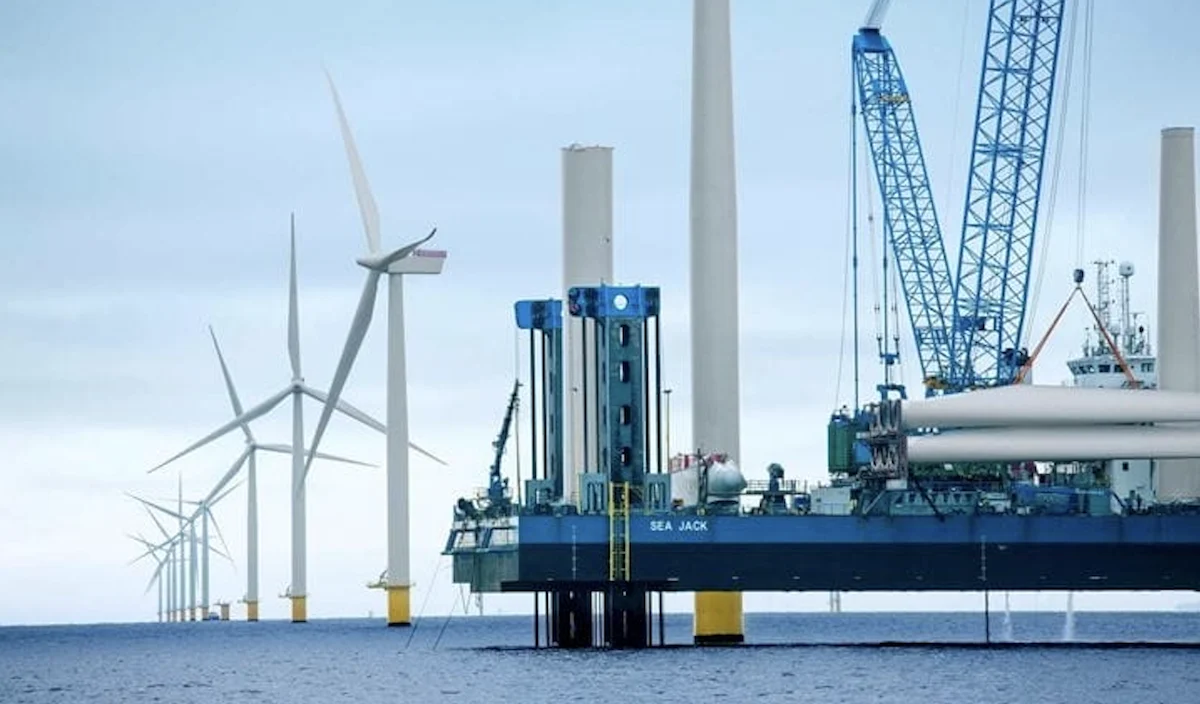
- Mid-2026: The administration accelerates its assault on renewable energy by paying nearly $4 billion in taxpayer funds to cancel offshore wind leases—projects originally slated to power more than nine million homes. Simultaneously, federal directives force the continued operation of several dirty, expensive coal-fired power plants that utilities had previously scheduled for retirement.
- Late 2026: Cumulative data reveals that administration policies have put the nation on a trajectory to consume roughly 40 percent more gasoline than it would have under the previous clean car standards, while threatening between 390 and 540 gigawatts of planned electricity capacity over the decade.
Supporting Data: The Economics of Higher Bills
The justification offered by the administration for rolling back environmental rules was simple: free the markets, unleash fossil fuels, and lower costs. Market data, however, tells the exact opposite story.
Electricity and the Data Center Pressure
The nationwide 15.1 percent jump in retail electricity rates is not happening in a vacuum. Grid operators are grappling with an explosion of energy-guzzling artificial intelligence and data centers, expensive transmission upgrades required to service new facilities, volatile natural gas prices, and the pressing capital costs of hardening the grid against extreme weather intensified by climate change.

In this environment, wind, solar, and battery storage represent the cheapest and fastest ways to inject new capacity into the grid. Yet, the Trump administration has actively curtailed these technologies. By imposing import tariffs on transmission and generation hardware, the administration artificially inflated the cost of grid expansion precisely when the nation needed capacity the most.
The Car and Fuel Trap
By repealing commonsense clean vehicle and fuel economy standards, the administration claimed it was saving consumers upfront vehicle costs. In reality, independent analyses—including projections from the Natural Resources Defense Council (NRDC) and federal energy outlooks—demonstrate that drivers will pay an average of $1,624 more to fuel a new car over its lifetime.
Scrapping those rules has locked the United States into burning roughly 40 percent more gasoline than projected under prior efficiency benchmarks. Rather than freeing consumers, the policy chains them permanently to the volatile swings of the global oil market—a vulnerability laid bare by the 2026 Middle East conflict.
Official Responses and Stakeholder Outcry
The divergence between the White House’s public messaging and the ground-level economic reality has ignited fierce pushback from economists, industrial analysts, environmental advocates, and labor representatives.
Administration defenders argue that deregulation and the prioritization of traditional hydrocarbons are essential for national energy security and economic independence. Proponents of these policies maintain that removing government mandates on vehicles and power plants relieves burdens on heavy industry.
However, industry insiders and labor organizations tell a different story. The sudden cancellation of clean energy tax credits and offshore wind projects threw multi-billion-dollar supply chains into disarray. E2 (Environmental Entrepreneurs) project tracking highlights that $86 billion in private-sector investments have evaporated, taking tens of thousands of good-paying manufacturing jobs with them.
“Under Trump, we’re not only paying more for gasoline, but we’re also set to burn more of it,” notes Bob Deans, Senior Advisor for Communications at the NRDC. By funneling billions into corporate bailouts for retiring coal plants and payouts to dissolve wind leases, critics argue the administration is effectively using public money to subsidize inefficiency.
Broader Implications: Lost Capacity and Public Health Crises
The long-term consequences of this policy trajectory extend far beyond monthly household budget strains. They threaten America’s industrial competitiveness, technological leadership, and public health.

The Power Deficit
Taken together, the administration’s actions could cost the United States between 390 and 540 gigawatts of new electricity capacity over the coming decade—amounting to roughly 40 percent of all planned generation prior to the administration’s intervention. Even at the conservative end of these projections, the lost power represents enough generation to have increased total U.S. capacity by a third above the baseline 1,200 gigawatts.
This translates to up to $700 billion in foregone capital investment over the next ten years, starving local economies of roughly half a million direct jobs.
The Human Cost
Perhaps the most alarming metric is the human toll. By deliberately increasing the combustion of coal and natural gas—and granting regulatory exemptions to heavy polluters—the administration’s policies are projected to generate a cumulative $640 billion in societal health costs between 2026 and 2035.
Using EPA-standard methodologies, modeling indicates that the spike in ambient mercury, fine particulate matter ($PM_2.5$), and smog will drive up rates of pediatric asthma, chronic heart disease, and lung ailments. This surge in illness is projected to cause 5.4 million additional missed days of school and work and result in approximately 35,000 premature deaths nationwide.
State-by-State Impact Overview
The national statistics manifest locally in distinct ways across the country. While the full scope of the affordability crisis touches every corner of the nation, nine states serve as ground zero for the economic and environmental fallout:
- Colorado: Facing mounting grid stress and extreme wildfire risks, Colorado communities are seeing vital renewable integration projects delayed by supply chain tariffs and federal headwinds.
- Georgia: Once a booming hub for solar and electric vehicle manufacturing investments, Georgia has absorbed major shocks from scuttled factory projects and stalled clean-tech job growth.
- Iowa: Home to pioneering wind energy generation, Iowa has nonetheless watched electricity rates surge by over 30 percent, frustrating consumers who expected cheap domestic power.
- Michigan: The heart of the American automotive industry has been whipsawed by volatile EV policies and relaxed fuel economy standards, placing traditional and transitioning factories at a severe competitive disadvantage.
- North Carolina: Rising utility rates and curtailed solar developments have left ratepayers vulnerable to fossil-fuel price spikes and extreme weather vulnerabilities.
- Ohio: Residential electricity rates have skyrocketed by 25 percent, driven in part by regional grid pressures and the artificial preservation of expensive, legacy fossil infrastructure.
- Pennsylvania: As a major producer of both natural gas and coal, Pennsylvania communities face the complex pressures of volatile commodity markets alongside escalating public health costs from increased air pollution.
- Texas: Despite leading the nation in installed wind and solar capacity, Texas consumers remain exposed to transmission bottlenecks and high power prices exacerbated by federal friction against clean-tech scaling.
- Wisconsin: Manufacturing sectors tied to green components have felt the chilling effect of federal policy reversals, while families absorb steady increases in monthly power bills.
Conclusion
The promise made on the 2024 campaign trail was that slashing clean energy investments and returning fully to fossil fuels would usher in an era of cheap, abundant energy. The empirical record of the past year demonstrates the exact opposite.
By tying the nation’s energy future to volatile oil markets, subsidizing obsolete coal plants, and dismantling the manufacturing base of the clean energy economy, the Trump administration has engineered a multi-trillion-dollar affordability crisis. For American families staring down inflated utility bills, soaring gas prices at the pump, and a looming public health burden, the true cost of this regression is only just beginning to come due.