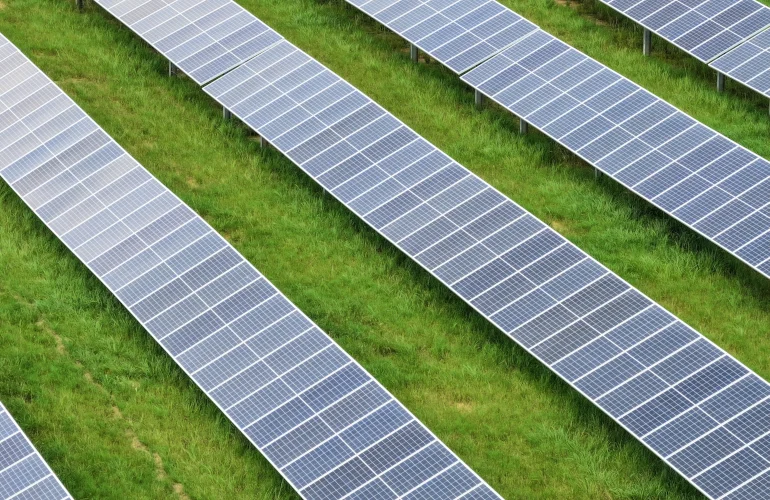
BATES COUNTY, Mo. — In an ambitious fusion of environmental remediation and large-scale renewable energy infrastructure, construction has officially commenced on the Swan Energy Center, a massive 650-megawatt (MW) photovoltaic facility in northwestern Bates County, Missouri. Developed by Clearway Energy Group, the project marks a significant milestone as the company’s debut utility-scale venture in the state.
Sprawling across acreage once scarred by industrial strip-mining operations, the Swan Energy Center represents a fundamental shift in how post-industrial landscapes can be revitalized. Rather than remaining fallow or requiring intensive, expensive commercial remediation, this legacy land is being repurposed to harness the power of the sun. Backed by a 20-year power purchase agreement (PPA), the facility is engineered not only to inject a staggering volume of carbon-free electricity into the regional grid but also to catalyze long-term economic development, bolster local tax revenues, and restore ecological vitality to a rural Missouri community.
Once fully operational, the Swan Energy Center will generate enough electricity annually to power approximately 200,000 average American homes. With commercial operations slated to begin in 2028, the project stands as one of the most consequential renewable energy investments in the Midwest, offering a blueprint for how energy developers, local governments, and agricultural communities can collaborate to build a resilient, sustainable future.
Main Facts
The Swan Energy Center is a multi-faceted infrastructure undertaking defined by impressive scale, strategic partnerships, and a deep commitment to community reinvestment.
- Capacity and Generation: The facility boasts a 650-MW generating capacity. At peak output, it will produce sufficient renewable energy to meet the annual electricity demands of roughly 200,000 households.
- Land Use and Remediation: The project is situated entirely on portions of former strip-mined land in northwestern Bates County. This Brownfield-style redevelopment prevents the conversion of pristine agricultural acreage into industrial energy sites.
- Economic Footprint: Construction of the facility is projected to create up to 500 peak construction jobs. Following completion, the site will support several permanent, high-paying operations and maintenance technician roles.
- Tax and Financial Contributions: Clearway Energy Group has established a comprehensive 30-year "payment in lieu of taxes" (PILOT) agreement with Bates County. This framework is projected to inject more than $80 million into the local economy over its lifespan.
- Immediate Community Investments: In addition to the long-term PILOT program, Clearway is providing immediate funding injections:
- $1 million in the current year to help Bates County acquire vital emergency equipment.
- $288,000 annually for the first ten years of commercial operations to support road and bridge maintenance across 24 townships and road districts in Bates County.
- $200,000 allocated directly to the municipalities of Amoret and Amsterdam for the modernization of public safety equipment.
- Supply Chain and Domestic Content: The facility will prioritize domestic manufacturing, utilizing American-made solar panels and balance-of-system equipment to support domestic clean-tech supply chains.
- Ecological Stewardship: The project integrates a specialized land-management strategy, incorporating native grasses and pollinator-friendly floral resources to support vulnerable species such as the monarch butterfly while simultaneously enhancing soil health and natural drainage.
Chronology of Development
The realization of the Swan Energy Center is the result of years of strategic planning, environmental assessments, and cooperative negotiations between private industry and local stakeholders.
Phase I: Site Selection and Feasibility (2021–2023)
The genesis of the project lay in identifying land suitable for a massive solar installation without disrupting prime farming operations. Developers from Clearway Energy Group zeroed in on northwestern Bates County, recognizing that former strip-mined land offered expansive, unobstructed clearings well-suited for utility-scale solar arrays. Initial feasibility studies evaluated grid interconnection capacity, environmental baseline conditions, and local zoning requirements. During this period, engineering teams mapped the topography of the abandoned mining pits, determining how solar racking systems could be safely anchored into reclaimed soil profiles.
Phase II: Permitting, Agreements, and Partnerships (2023–2024)
As technical blueprints matured, Clearway engaged in extensive dialogue with Bates County officials, township leaders, and local residents. Recognizing the long-term fiscal implications of a project of this magnitude, negotiations commenced on the structural framework for local tax contributions. The culmination of these talks was the landmark 30-year PILOT agreement, designed to provide predictable, recurring revenue streams for schools and county services. Concurrently, Clearway secured a 20-year power purchase agreement to ensure long-term offtake for the generated electricity and finalized a construction partnership with Blattner Energy, a nationally recognized leader in renewable energy engineering and construction.
Phase III: Groundbreaking and Heavy Construction (2025–2027)
With permitting secured and supply chains established, formal construction activities kicked off. The site has transitioned into a bustling industrial hub, projected to scale up to 500 construction workers at peak activity. Heavy machinery is currently grading the terrain, installing access roads, and preparing the foundation for miles of tracking solar arrays. The construction phase will span multiple years, encompassing civil works, electrical wiring, substation construction, and the systematic installation of American-made photovoltaic modules.
Phase IV: Commercial Operations and Ecological Integration (2028 and Beyond)
Commercial operation date (COD) is targeted for 2028, at which point the Swan Energy Center will officially begin exporting renewable power to the grid. As the facility transitions from construction to operations, land management protocols will shift toward long-term environmental stewardship. Crews will establish and maintain native perennial vegetation, turning the solar farm into a functional ecosystem that supports local biodiversity, soil regeneration, and agricultural sustainability.
Supporting Data and Economic Impact Analysis
The economic architecture of the Swan Energy Center is designed to ensure that the benefits of the transition to renewable energy are shared broadly across the community, rather than concentrated solely among corporate stakeholders and landowners.
The 30-Year PILOT Framework
In rural counties across the American Midwest, the introduction of multi-million-dollar industrial assets can often create fiscal bottlenecks regarding local tax assessments and municipal budgets. To mitigate this and provide financial certainty, Clearway’s 30-year PILOT agreement establishes a predictable sliding scale of revenue generation. Over the course of three decades, the project will pump upward of $80 million into Bates County. These funds are earmarked to alleviate tax burdens on local residents while supercharging budgets for public education, emergency services, and infrastructure upkeep.
Infrastructure and Emergency Services Support
Rural municipalities frequently struggle with capital expenditures for heavy-duty equipment, such as fire trucks, ambulances, and road-grading machinery. Clearway’s targeted community contributions directly address these deficits:
- The $1 Million Emergency Fund: Disbursed during the early phases of the project, this capital allows Bates County emergency management agencies to upgrade outdated gear, enhance radio communications, and expand response capabilities—benefits that protect both construction personnel and local residents.
- The Township Road and Bridge Allocation: Transporting thousands of heavy solar panels, inverters, and construction vehicles places significant wear and tear on rural county roads. By committing $288,000 annually for the first decade to the county’s 24 townships and road districts, Clearway ensures that local taxpayers will not be left footing the bill for road repairs necessitated by construction traffic.
- Municipal Safety Grants: Smaller towns like Amoret and Amsterdam often operate on constrained municipal budgets. The $200,000 direct allocation for public safety enhancements gives these communities the financial flexibility to upgrade police and fire department assets, improving regional safety.
Job Creation and Workforce Dynamics
The clean energy transition is frequently touted for its job-creation potential, and the Swan Energy Center is a prime regional example. At peak construction, the project will support up to 500 jobs, bringing skilled labor—including electricians, heavy equipment operators, civil engineers, and project managers—into Bates County. This influx stimulates the local hospitality, retail, and housing sectors as workers patronize local diners, hotels, and supply stores. Furthermore, the establishment of permanent operations and maintenance (O&M) roles ensures that the project will provide enduring, high-tech employment opportunities well into the 2050s.
Official Responses and Stakeholder Perspectives
The announcement of the Swan Energy Center has drawn praise from corporate leadership, local officials, and environmental advocates alike, highlighting the broad coalition required to bring a project of this magnitude to fruition.
John Woody, Chief Development Officer at Clearway Energy Group, emphasized the transformative nature of the project and the importance of local collaboration in a statement released at the groundbreaking:
"The Swan Energy Center represents a significant investment in Bates County, delivering reliable clean energy and economic benefits to the region. We’re grateful to our local partners for their trust in welcoming Clearway to the community."
Woody’s sentiments underscore a growing trend within the renewable energy sector: the recognition that successful utility-scale projects rely heavily on proactive community engagement, transparent communication, and tangible local reinvestment. By addressing community needs upfront—ranging from road maintenance to emergency equipment—Clearway has positioned itself as a corporate neighbor invested in the long-term health of Bates County.
Local county commissioners and municipal leaders have similarly welcomed the partnership, noting that the project provides a rare opportunity to convert dormant, industrial wasteland into a reliable engine of economic growth. For a region historically reliant on traditional resource extraction, the pivot to solar energy represents not a break with the past, but an intelligent evolution of it.
Implications and Future Outlook
The implications of the Swan Energy Center extend far beyond the borders of Bates County, offering vital lessons for the future of American energy infrastructure, industrial reclamation, and environmental conservation.
Repurposing Industrial Legacies
Across the United States, millions of acres of former mining sites, brownfields, and industrial ruins sit idle. These lands often present significant environmental challenges, including soil degradation, altered hydrology, and aesthetic blight. The Swan Energy Center demonstrates that utility-scale solar development can serve as a viable remediation strategy for these forgotten landscapes. By placing solar arrays on strip-mined land, developers avoid land-use conflicts with farmers and ranchers, preserving the nation’s prime agricultural breadbasket while turning unproductive land into a high-yield economic asset.
Grid Resilience and the Midwestern Clean Energy Transition
As coal-fired power plants across the Midwest approach retirement, regional grid operators face mounting pressure to replace baseload and intermediate generation capacity with clean, reliable alternatives. A 650-MW solar installation injects a massive block of carbon-free electricity into the grid, helping utilities diversify their generation portfolios, hedge against volatile fossil fuel commodity prices, and meet corporate and state sustainability targets. Backed by a 20-year PPA, the project guarantees price stability for energy buyers over the long term.
Biodiversity and Agro-Ecology Integration
Critics of early solar developments occasionally raised concerns regarding the ecological impact of covering hundreds of acres of land with glass and steel. Modern utility-scale projects like the Swan Energy Center actively counter these concerns through integrated ecological design. By intentionally planting native grasses and pollinator-friendly floral species beneath and between the solar panels, the facility transforms an industrial footprint into a thriving habitat for bees, butterflies, and other beneficial insects.
This practice—often referred to as "low-impact solar" or "agrivoltaics"—does more than just support biodiversity. Deep-rooting native perennial plants stabilize the soil, prevent erosion, improve water infiltration, and enhance overall soil health. Over time, the land beneath the solar panels heals from the lingering degradation of its strip-mining past, creating a harmonious coexistence between high-tech energy generation and ecological restoration.
Conclusion
The Swan Energy Center is more than just a massive collection of photovoltaic panels; it is a symbol of transition. By taking land that was once stripped of its natural wealth and re-engineering it to capture the infinite power of the sun, Clearway Energy Group and the people of Bates County are forging a new path forward. With tens of millions of dollars in guaranteed local revenue, hundreds of jobs, fortified emergency services, and a restored ecosystem, the project proves that the clean energy transition can—and should—be built on a foundation of local empowerment, environmental healing, and shared prosperity. As construction moves forward toward its 2028 operational target, the Swan Energy Center stands ready to illuminate Missouri’s energy landscape for decades to come.