INDUSTRIAL AUTOMATION — The architecture of industrial automation is undergoing a fundamental structural shift. For decades, the undisputed backbone of discrete manufacturing has been the multi-core Industrial PC (IPC)—powerful computing nodes built on x86 or ARM system-on-chip (SoC) processors capable of executing deterministic machine control alongside a general-purpose operating system on a single piece of silicon.
However, as machines grow increasingly complex and data-hungry, the limitations of routing all operational telemetry through a centralized controller are becoming apparent. Today, the convergence of advanced edge-computing hardware, cabinet-free drive architectures, and intelligent field devices is transforming how industrial machinery processes data, executes safety protocols, and monitors its own health in real time.
1. Main Facts: The Architectural Shift to Distributed Intelligence
To understand the current transformation in machine control, one must examine how advanced discrete automation systems have traditionally been engineered. High-performance machinery relies on industrial networking standards—such as SERCOS III, EtherCAT, PROFINET, or EtherNet/IP—to handle deterministic traffic. Cyclic control tasks execute on designated processor cores governed by a real-time kernel, demanding tight jitter tolerances within the microgram range for advanced motion-control applications. Meanwhile, non-deterministic functions operate on remaining, unreserved cores.
Data sources within these architectures are ubiquitous. Multi-axis servodrives, IO-Link primaries, and diverse sensors continuously sample the physical parameters of mechanical components interfacing with workpieces. By timestamping this data to a distributed network clock, edge platforms can rigorously correlate variables like motor current, positioning error, torque, temperature, and vibration with the exact machine state at the moment of capture.
[Sensors / Servodrives]
       │ (High-Frequency Sampling & Timestamping)
       ▼
[Edge-Filtering Layer] (Striips extraneous communications)
       │
       ├───────────────────────────────┐
       ▼                               ▼
[Deterministic Core]          [Nondeterministic Core]
(Real-time Motion Control)    (Cloud Telemetry & Diagnostics)
However, processing raw, high-frequency data at the central controller introduces severe communication overhead. To solve this, edge-computing hardware implements localized data filtering. By stripping away extraneous communications before they flood the primary bus, edge processing boosts network efficiency regardless of the industrial protocol or baud rate in use.
The Rise of Cabinet-Free, Drive-Level Computing
In recent years, motion-component manufacturers have introduced a disruptive class of servo amplifiers engineered specifically for edge-computing functions and cabinet-free arrangements.
Drives are inherently the best-instrumented components on any automated machine. They continuously close control loops on current, velocity, and position at high-frequency intervals. They natively collect phase current, rotor position, bus voltage, and winding temperature. Historically, this rich stream of internal data went largely unused, discarded between fieldbus communication cycles.
Modern smart drives with integrated logic bypass the central controller entirely for local data processing. They communicate machine status updates within microseconds—enabling motion systems to react instantly to anomalies, preventing catastrophic mechanical crashes, jams, and misfeeds while simultaneously transmitting operational health data upstream in near real-time.
Furthermore, critical safety functions have migrated to these edge-computing arrangements. Certified safety features—such as Safe Torque Off (STO), safe operating stops, and various motion limits—now execute directly on the drive. This transition allows decentralized drives to replace traditional safety relays, heavy contactors, and complex hardwired emergency stop circuits.
2. Chronology: The Evolution from Blind Control to Smart Edge Nodes
The trajectory of industrial automation hardware reveals a clear, phased migration from centralized PLC dominance to today’s highly distributed, edge-native ecosystems:
- Era 1: Centralized Closed-Loop Control (Late 20th Century – Early 2010s): Industrial machines relied heavily on centralized PLCs and IPCs. Field devices acted as "dumb" sensors and actuators, blindly transmitting raw signals back to a central rack. Servodrives performed local motor control, but internal operational telemetry was trapped inside the amplifier firmware.
- Era 2: Industrial Ethernet & Deterministic Fieldbuses (2010s – Early 2020s): The adoption of high-speed industrial Ethernet protocols (EtherCAT, PROFINET) enabled synchronized, multi-axis motion control. Distributed clocks allowed precise timestamping, but processing remained heavily centralized, placing a massive computational burden on central IPC processors.
- Era 3: The Edge Computing Awakening (Mid-2010s – 2020): As IoT and Industrie 4.0 initiatives gained traction, factories sought deep analytics. However, streaming all raw sensor and drive data to cloud platforms or central servers choked industrial networks and overwhelmed control software, proving the necessity of edge-filtering hardware.
- Era 4: Decentralized Drive Intelligence and Smart Edge Nodes (Present Day): Modern servo amplifiers and programmable edge controllers now feature native processing power, local logic execution, and embedded safety protocols. By pushing intelligence directly to the machine periphery, automation engineers are minimizing wiring, eliminating control cabinets, and achieving microsecond-level response times.
3. Supporting Data & Deep Dive Use Cases
To appreciate the practical impact of this architectural shift, industry analysts look closely at specific application domains where edge computing delivers measurable ROI.
Use Case: Advanced Industrial Conveyance
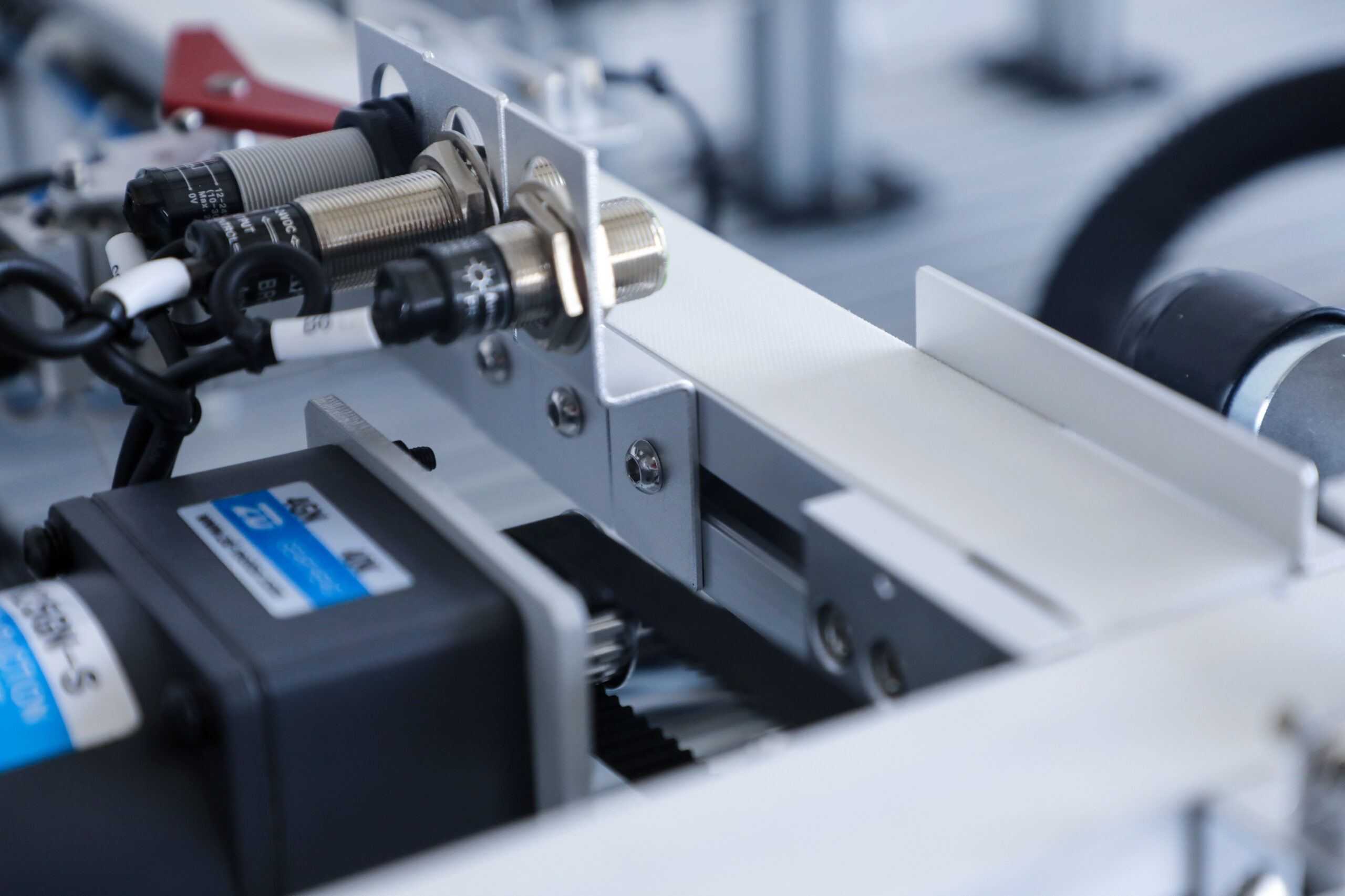
Consider an industrial conveyor system. While basic conveyors utilize simple single-speed motors, modern automated conveyance systems are deeply networked ecosystems. They integrate sensors, encoders, servodrives, and multi-axis mechanisms to manipulate, inspect, and sort workpieces dynamically.
┌────────────────────────────────────────────────────────┐
│               MODERN CONVEYOR EDGE ECOSYSTEM           │
├──────────────────────────┬─────────────────────────────┤
│ Sensor Subtypes          │ Tracked Parameters          │
├──────────────────────────┼─────────────────────────────┤
│ Optical / Vision         │ Orientation, Surface Quality│
│ Load Cells               │ Weight, Lot Tracking        │
│ Accelerometers           │ Belt Tension, Frame Vibrations│
│ Encoders                 │ Position, Velocity, Slip    │
└──────────────────────────┴─────────────────────────────┘
A vast array of sensor subtypes track workpiece orientation, surface quality, weight, and lot numbers, enriching database records on the fly. Concurrently, machine-health sensors track belt tensions, bearing temperatures, and frame vibrations. Unified by a single fieldbus clock, every conveyor event receives an exact timestamp, allowing engineers to reconstruct precise plant conditions for any historical event.
Operationally, edge computing enables advanced conveyance capabilities:
- Zero-Pressure Accumulation: Dynamic gapping, merging, and diverting of products without physical collisions.
- Multi-Robot Coordination: When multiple robotic arms interface with a single conveyor, edge controls process workpiece coordinates instantly to command picking, sorting, labeling, or ejecting on the fly.
- Motor-Torque Signature Analysis: Edge algorithms monitor torque profiles to identify mistracking belt sections or rising accumulation pressures signaling a developing workpiece jam.
- Predictive Maintenance: Creeping increases in motor-current draw—paired with slowly rising operating temperatures—flag seal or bearing wear long before failure.
- Regulatory Traceability: Essential for food, pharmaceutical, and medical device processing facilities requiring immutable audit trails.
Edge Computing in Simpler Motion Systems
While advanced systems rely on deterministic industrial Ethernet, many single-axis and legacy machines use relay contacts, limit switches, and simple 4–20 mA control loops.
Here, smart edge devices step in to terminate binary and analog signals locally. They handle critical preprocessing tasks—including debouncing, scaling, threshold detection, timestamping, and feature extraction. By summarizing data locally, these smart nodes transmit only immediately meaningful events over modest Ethernet or wireless links.
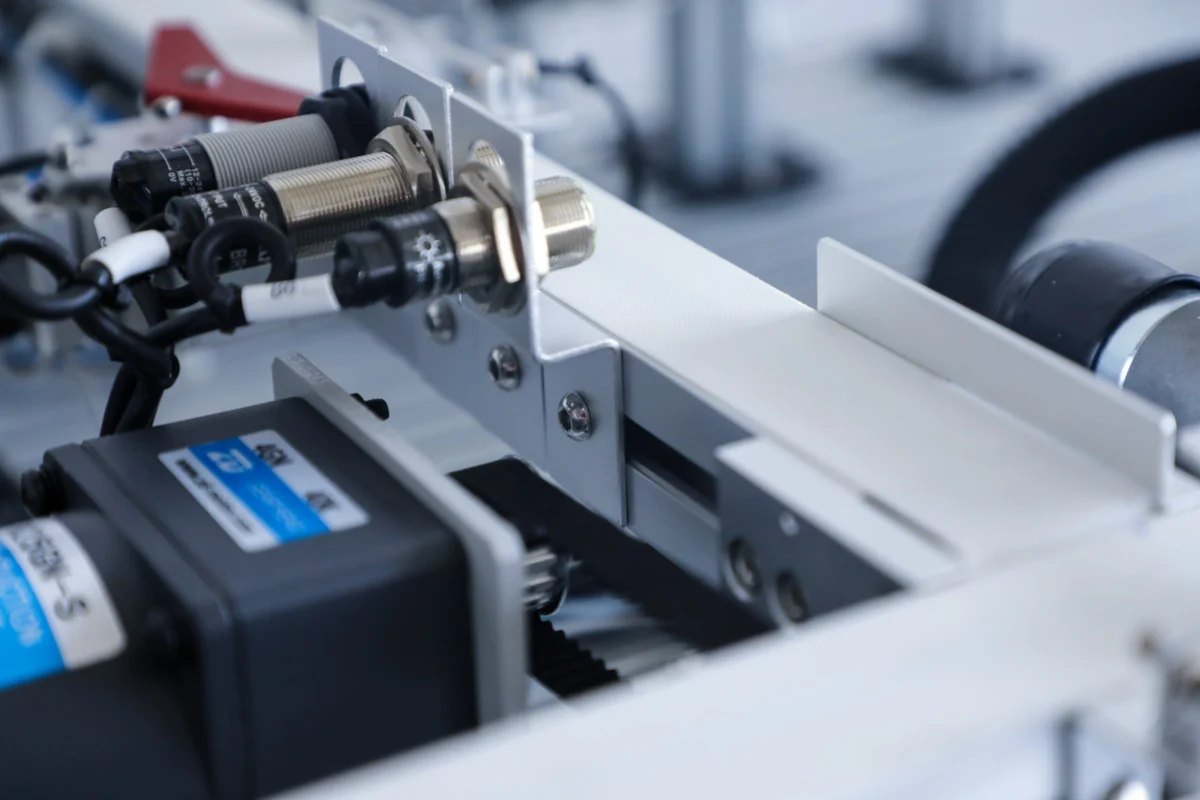
Even simple limit, home, and proximity sensors yield valuable data regarding machine strokes, duty cycles, and dwells. Current transducers coupled with 4–20 mA outputs enable streamlined motor-current signature analysis without full spectral vibration monitoring. Accelerometers mounted near couplings and gearboxes detect threshold breaches to establish early wear-trending models.
Commercial hardware filling this space includes programmable edge controllers with built-in digital and analog I/O terminals, capable of executing local code and publishing data via MQTT or OPC UA protocols. Alternatively, specialized motion controllers wirelessly pair with discrete or analog sensor nodes hardwired directly to the machinery.
4. Official Perspectives and Industry Response
The transition toward edge-computing hardware and drive-level intelligence has prompted a strategic realignment among major automation vendors. Leading motion-control suppliers emphasize that decentralization is no longer just an optional feature for high-end facilities, but a foundational requirement for scalable manufacturing.
Control system architects note that eliminating centralized wiring racks drastically reduces installation labor and cabinet real estate. “When amplifiers can execute their own logic and safety routines directly on the machine frame, you eliminate thousands of points of failure found in traditional copper wiring harnesses,” notes a lead systems integration engineer. “The control response is inherently faster because the decision loop is closed inches from the physical axis, rather than meters away across a factory floor.”
Furthermore, automation standards bodies are increasingly certifying drive-integrated safety functions. This regulatory acceptance has given OEMs the confidence to dismantle traditional, hardwired safety circuits in favor of safe motion protocols operating over functional safety networks.
5. Operational Implications: Benefits, Challenges, and the Future
The widespread adoption of edge-computing hardware in industrial motion control yields profound operational advantages, though it also introduces distinct engineering challenges.
Key Benefits
- Drastically Reduced Wiring: Distributing intelligence and safety to the machine periphery eliminates massive bundles of home-run copper cables, replacing them with streamlined hybrid cabling.
- Enhanced Diagnostics and Monitoring: Addressable edge hardware and smart drives provide granular visibility into machine health, enabling predictive maintenance that slashes unplanned downtime.
- Microsecond Control Response: Closing local control loops at the drive level prevents mechanical jams, collisions, and misfeeds faster than any centralized controller ever could.
- Regenerative Energy Management: Advanced edge amplifiers efficiently manage and redistribute braking energy across the DC bus, improving overall facility energy efficiency.
Engineering Challenges
- Environmental Hardening: Locating computing hardware and amplifiers directly on the machine frame exposes electronics to severe dust, moisture, vibration, and thermal fluctuations. Consequently, equipment must feature robust IP-rated housings.
- Cybersecurity at the Edge: As edge nodes assume local processing and publish data via open protocols like MQTT and OPC UA, securing the machine periphery against unauthorized access becomes an imperative engineering discipline.
- Skill Set Evolution: Maintenance technicians and controls engineers must transition from traditional ladder logic troubleshooting to managing distributed, software-defined edge networks and decentralized drive parameters.
Conclusion
The convergence of edge computing and industrial motion control marks the end of the monolithic automation era. By pushing deterministic control, diagnostic analytics, and safety protocols out of the central control cabinet and directly onto the machine—and into the very heart of the servodrive—manufacturers are unlocking unprecedented levels of speed, reliability, and operational intelligence. As smart edge devices continue to evolve, the factory floor of tomorrow will be defined not by how much data it sends to the cloud, but by how intelligently it acts at the edge.