





By Tech & Enterprise News Desk
Published: October 2026
Main Facts: Bringing Data Center Power to the Desktop
As artificial intelligence rapidly transitions from experimental tech into the core operational foundation of global enterprises, the hardware demands required to sustain this evolution have fundamentally shifted. Traditional computing architectures are no longer sufficient to handle the massive compute loads required by modern machine learning models.
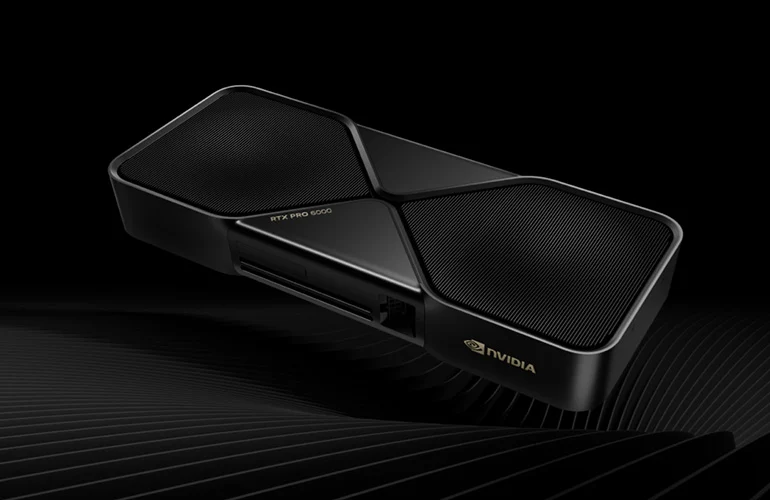
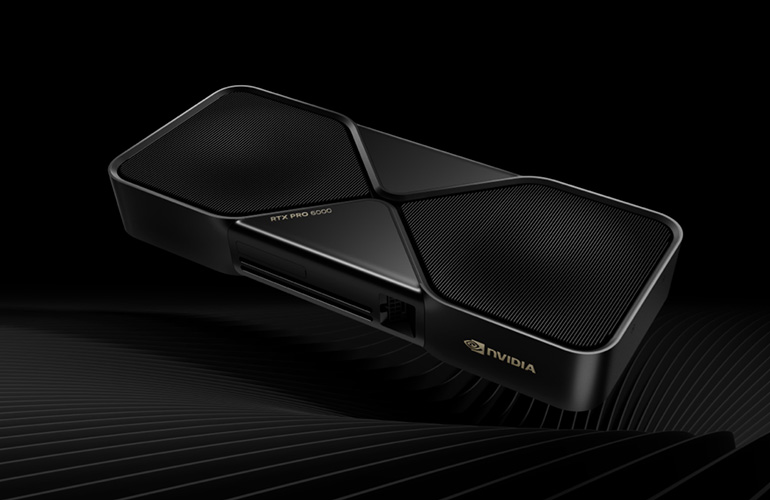
To bridge this critical infrastructure gap, PNY Technologies has stepped forward as a premier supplier of the groundbreaking NVIDIA RTX PRO™ 6000 Blackwell Series. Anchored by the flagship NVIDIA RTX PRO 6000 Blackwell Workstation Edition and its Max-Q counterpart, this new class of desktop solutions is engineered to deliver unprecedented levels of AI processing power directly to engineers, researchers, and creators.
Configurable with up to four GPUs per single workstation system, the RTX PRO 6000 Blackwell architecture unlocks an astonishing 14.2 petaflops of AI compute coupled with a massive 384 GB of high-speed GPU memory. This capability effectively packs the performance of a multi-node server rack into a desk-side enclosure, allowing organizations to train, fine-tune, and run sophisticated local AI models without being entirely dependent on remote cloud infrastructure.
Chronology: The Evolution of Workstation-Class AI Hardware
The Shift Toward Localized Intelligence
- The Pre-AI Workstation Era: For decades, professional workstations were defined by their ability to handle high-resolution 3D rendering, computer-aided design (CAD), and heavy video editing. While powerful, these systems relied predominantly on multi-core CPUs and legacy discrete graphics cards tailored for visual precision rather than massively parallel matrix calculations.
- The Rise of Cloud Dependency: As deep learning and early large language models (LLMs) emerged, development teams were forced to offload training and heavy inference workloads to remote data centers and cloud service providers. While scalable, this approach introduced latency, security hurdles, and recurring operational expenditures.
- The Modern Edge-AI Paradigm: Recognizing the friction of pure cloud dependency, hardware pioneers began developing architectures capable of dense localized processing. The introduction of advanced tensor cores and unified memory models paved the way for desktop systems that could handle production-grade AI workloads natively.
The Blackwell Breakthrough
- Architectural Leap: NVIDIA’s announcement of the Blackwell architecture marked a generational leap in accelerated computing, specifically designed to address the exponential growth of generative AI parameters and complex neural networks.
- PNY’s Strategic Deployment: Capitalizing on this architectural leap, PNY Technologies integrated the Blackwell architecture into the RTX PRO 6000 Workstation Edition. By making these ultra-dense GPUs available to enterprise IT environments, PNY established a direct pipeline for industries seeking to accelerate their AI adoption cycles.
- Today: Organizations across robotics, autonomous driving, data science, and creative engineering are actively deploying PNY-supplied Blackwell workstations to prototype, test, and scale their AI initiatives locally before pushing models into enterprise production pipelines.
Supporting Data: Unpacking the Hardware Capabilities
To understand the magnitude of the NVIDIA RTX PRO 6000 Blackwell Workstation Edition, one must examine the raw technical specifications and performance metrics that set it apart from previous generations.
Compute Power and Memory Density
- 14.2 Petaflops of AI Compute: When configured with the maximum capacity of four NVIDIA RTX PRO 6000 Blackwell Max-Q Workstation Edition GPUs, a single desktop system delivers up to 14.2 petaflops of mixed-precision computing power. This scale of performance drastically reduces the training time required for custom models.
- 384 GB of Combined GPU Memory: Large language models, multi-modal vision systems, and physics simulations require vast amounts of VRAM to load parameter weights and dataset tensors efficiently. The multi-GPU workstation configuration provides an aggregate 384 GB of memory, preventing performance-choking bottlenecks and eliminating out-of-memory errors during complex local runs.
Versatile Deployment Models
- Standalone Desktop Processing: Ideal for data scientists and developers who require rapid, iterative experimentation without sharing cloud cluster queues or incurring unpredictable compute usage fees.
- Hybrid Integration: Designed to interface seamlessly with existing data center and cloud infrastructure. Workloads developed and fine-tuned on the desktop can be effortlessly scaled up to enterprise server clusters or deployed across distributed cloud networks.
Official Perspectives and Industry Response
The introduction of the PNY-supplied NVIDIA RTX PRO 6000 Blackwell systems has drawn significant attention from industry analysts and enterprise leaders alike.
Bridging the Developer-Infrastructure Gap
Industry observers note that one of the primary roadblocks in enterprise AI adoption has been the friction between software developers and IT infrastructure deployment teams. By delivering data center-class capabilities in a desk-side form factor, hardware providers are removing the bureaucratic and logistical hurdles traditionally associated with acquiring test environments.
"Artificial intelligence is transforming industries at an unprecedented pace," notes the leadership team at PNY Technologies. "From agentic AI that autonomously solves complex, multi-step problems to physical AI that brings intelligence into robotics and autonomous vehicles, the future is here. But harnessing these advanced technologies requires serious computing power, something legacy systems simply cannot deliver."
Empowering Specialized Verticals
Enterprise tech strategists emphasize that the RTX PRO 6000 Blackwell edition is not a monolithic tool, but rather a specialized engine driving multiple distinct technical disciplines:
- Physical AI and Robotics: Real-time decision-making is vital for autonomous systems. The integration of Blackwell architecture allows developers to process heavy multimodal sensor data streams and run complex physics-based simulations locally.
- Advanced Local Inferencing: As enterprise applications incorporate deeper automation and multi-layered AI tools, professionals require robust local inference capabilities to maintain fluid multitasking workflows without network latency.
- Data Science and Prototyping: Data scientists can iterate through hypothesis testing and model validation cycles at a fraction of the time required by traditional CPU-bound systems.
Implications: What the RTX PRO 6000 Blackwell Means for the Future of Work
The widespread availability of PNY-supplied NVIDIA RTX PRO 6000 Blackwell workstations carries profound implications for software development, enterprise security, and market competitiveness.
1. Democratizing Advanced AI Experimentation
Historically, access to multi-petaflop computing clusters was restricted to hyper-scale technology companies and heavily funded academic research institutions. By placing this level of performance into a desktop form factor, small-to-medium enterprises (SMEs) and specialized engineering departments can now compete on a level playing field. Developers can experiment freely with complex neural networks, agentic AI frameworks, and large models without incurring runaway cloud costs.
2. Enhancing Data Security and Compliance
One of the most persistent concerns regarding enterprise AI adoption is intellectual property protection and data privacy. Sending proprietary corporate data, financial records, or sensitive engineering schematics to external cloud servers introduces compliance risks. With the massive VRAM and compute capacity of the RTX PRO 6000 Blackwell workstations, organizations can securely train and fine-tune models entirely on-premises, ensuring that critical data never leaves the local network.
3. Accelerating the Era of Physical AI
As autonomous vehicles, smart manufacturing machinery, and advanced robotics move from theoretical concepts into mass commercial deployment, the need for real-time edge processing becomes paramount. The Blackwell architecture’s aptitude for handling physics simulations and rapid sensor data fusion will directly accelerate development cycles in the robotics sector, shortening the timeline from concept to real-world deployment.
4. Redefining Professional Productivity
For creative professionals, engineers, and data analysts, the boundary between local workstation performance and cloud compute is dissolving. Applications powered by the NVIDIA RTX PRO 6000 Blackwell Workstation Edition can handle high-resolution content creation, real-time ray tracing, and complex AI-augmented workflows simultaneously. This eliminates workflow interruptions, allowing professionals to maintain unbroken focus and achieve higher output quality.
Conclusion
As organizations worldwide race to integrate artificial intelligence into their core operational frameworks, the underlying hardware infrastructure will dictate who leads and who falls behind. Through its supply of the NVIDIA RTX PRO™ 6000 Blackwell Workstation Edition, PNY Technologies has provided the enterprise market with an essential catalyst for innovation.
Combining unmatched computing density, massive memory configurations, and seamless scalability from the desktop to the cloud, these workstations empower developers, engineers, and data scientists to experiment, prototype, and deploy the next generation of intelligent systems with absolute confidence.
To learn more about the NVIDIA RTX PRO Blackwell GPUs and explore enterprise configurations, visit the official PNY Pro Portal.