





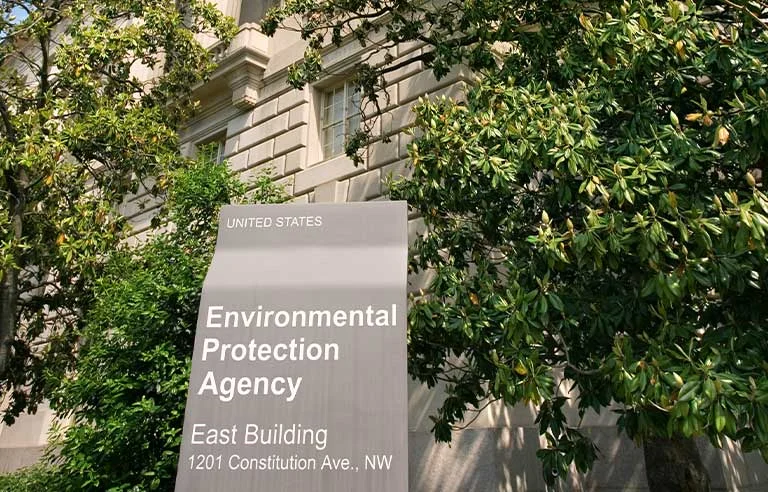
WASHINGTON — The U.S. Environmental Protection Agency (EPA) has officially opened a public comment period on a new regulatory proposal that would extend specific worker-related compliance deadlines for the controversial industrial chemical trichloroethylene (TCE).
Published in the Federal Register, the proposed rule attempts to untangle a complex web of implementation challenges, ongoing litigation, and industry pushback. The agency is specifically looking at adjustments for certain chemical processors and refrigerant manufacturers who are grappling with the stringent phaseout timelines established under previous regulatory actions.
The move highlights the delicate balancing act federal regulators face: protecting American workers and communities from a known human carcinogen while managing the economic and operational realities of removing a deeply entrenched industrial solvent from the U.S. manufacturing supply chain. With a tight public comment window ending on November 13, stakeholders across labor, environmental advocacy, and industrial sectors are weighing in on the future of TCE regulation.
Main Facts
At the core of the EPA’s latest regulatory maneuver is a proposed extension of key compliance dates. Under the newly published framework, the agency intends to push back multiple workplace compliance deadlines from December 18, 2026, to December 31, 2027.
The EPA stated that the adjustment is necessary to address "ongoing difficulties associated with compliance dates for the 2024 TCE final rule and 2025 interim final rule for certain chemical processors and refrigerant manufacturers due to challenges with the implementation of the respective prohibition and phaseout."
What is Trichloroethylene (TCE)?
Trichloroethylene is a volatile organic compound (VOC) primarily utilized as an industrial solvent. Its historical utility has spanned numerous sectors:
- Manufacturing and Maintenance: Widely used as a degreaser for metal parts, an ingredient in brake cleaners, and a solvent in various industrial cleaning applications.
- Consumer Goods: Historically found in certain specialty formulations, adhesives, and cleaning products.
- Chemical Synthesis: Extensively used as an intermediate in the production of hydrofluorocarbons (HFCs) and other refrigerants.
Health Hazards
The chemical’s widespread industrial utility has long been weighed against severe human health risks. In 2014, following extensive scientific evaluation under the Toxic Substances Control Act (TSCA), the EPA concluded that TCE poses severe hazards to human health. Scientific consensus links long-term and even short-term exposure to:
- Carcinogenicity: Classified as a known human carcinogen associated with kidney cancer, liver cancer, and non-Hodgkin lymphoma.
- Non-Cancer Health Effects: Documented toxicological impacts on the central nervous system, liver, kidneys, immune system, and male and reproductive systems.
- Developmental and Fetal Toxicity: Particular concern regarding fetal heart defects resulting from maternal exposure during early pregnancy.
Chronology of Regulatory Action and Litigation
The path toward regulating and ultimately banning TCE has been marked by decades of risk evaluations, shifting administrative priorities, aggressive rulemaking, and subsequent legal battles in federal courts.
Pre-2024: The Scientific Foundation
- 2014: The EPA completes its exhaustive TSCA risk assessment for TCE, officially designating the chemical as an unreasonable risk to human health under its conditions of use.
- 2016–2020: The agency proposes targeted bans on specific uses of TCE—such as aerosol degreasing and spot cleaning in dry cleaning—under the Obama and Trump administrations, though comprehensive economy-wide bans face delays and limited scopes.
The 2024 Final Rule and 2025 Interim Adjustments
- December 2024: Following the 2016 amendments to TSCA under the Frank R. Lautenberg Chemical Safety for the 21st Century Act—which significantly strengthened the EPA’s mandate to regulate existing chemicals—the agency publishes a sweeping final rule. This rule completely prohibits the manufacture (including import), processing, and distribution in commerce of TCE for all consumer products and the vast majority of commercial uses.
- 2025: The EPA issues an interim final rule to refine certain procedural aspects of the phaseout, establishing timelines for workplaces to phase out the chemical or implement stringent exposure controls under Section 6(g) exemptions.
Legal Challenges and Judicial Stays
- 2025–2026: Trade associations, chemical manufacturing coalitions, and industrial users file lawsuits in the U.S. Circuit Court of Appeals for the 3rd Circuit, challenging the validity, feasibility, and economic impact of the 2024 final rule.
- The 3rd Circuit Stay: Finding merit in aspects of the petitioners’ claims regarding immediate economic disruption or procedural hurdles, the court issues a stay of the rule’s effective date.
- Agency Reconsideration: In response to the ongoing litigation and judicial intervention, the EPA formally announces its intent to reconsider elements of the final rule. The agency has repeatedly pointed to this litigation as the driving factor behind multiple delays affecting the implementation of Section 6(g) exemptions—provisions designed to permit critical national security, medical, or industrial uses to continue under strict workplace controls for extended periods.
Supporting Data and Exposure Context
To fully understand why the EPA’s timeline extensions are contentious, one must examine the volume of TCE historically handled by American industry and the exposure dynamics that prompted federal intervention.
Industrial Volume and Economic Footprint
Before the 2024 ban, tens of millions of pounds of TCE were produced and imported annually in the United States. While consumer uses had declined significantly due to voluntary phaseouts and state-level restrictions (such as those in California and New York), commercial and industrial reliance remained heavy.
- Refrigerant Manufacturing: The chemical serves as an irreplaceable feedstock in the closed-loop production of next-generation refrigerants, a sector arguing that finding a safe chemical substitute or re-engineering production facilities cannot realistically be accomplished within original deadlines without causing supply shortages in the cooling and HVAC supply chains.
- Aerospace and Defense: Specialized metal cleaning operations involving oxygen systems and critical aviation components historically relied on TCE’s unique solvency and non-flammable properties.
Occupational Risk Statistics
According to EPA risk evaluations supporting the 2024 ban:
- Workers in commercial degreasing and chemical processing facilities routinely experienced exposure levels thousands of times higher than the EPA’s acceptable concentration benchmarks.
- Inhalation and dermal absorption routes presented acute risks of worker kidney toxicity and chronic risks of immunological suppression and cancer.
- Surrounding communities—often referred to as fenceline communities near industrial plants—faced elevated environmental justice concerns due to air emissions and wastewater discharges containing TCE.
The tension between these stark health statistics and the technical realities of supply chain continuity forms the crux of the current debate over extending compliance deadlines to December 31, 2027.
Official Responses and Stakeholder Perspectives
The EPA’s proposal to extend compliance dates has drawn a polarized array of responses from industry groups, labor unions, and environmental justice organizations.
Industry and Manufacturer Reactions
Representatives for chemical processors, refrigerant manufacturers, and industrial metal-finishers have expressed cautious relief regarding the proposed extension, while continuing to push for broader structural changes to the underlying rule.
- Supply Chain Continuity: Industry coalitions argue that an immediate cutoff would severely disrupt domestic manufacturing of critical infrastructure goods, including automotive parts, industrial machinery, and climate-control equipment.
- Feasibility Arguments: Association spokespersons emphasize that re-tooling closed-loop chemical manufacturing systems to eliminate TCE as a chemical intermediate requires extensive engineering reviews, environmental permitting, and capital investments that cannot be rushed without risking catastrophic plant shutdowns.
Environmental and Labor Advocacy Pushback
Conversely, public health advocates, labor unions, and environmental justice organizations have strongly criticized any move to delay worker protections.
- Prolonged Exposure Risks: Labor representatives point out that every month the compliance dates are pushed back is another month that factory workers are forced to handle a known human carcinogen without adequate long-term protections or verified safe alternatives.
- Accountability Concerns: Environmental watchdogs argue that the chemical industry has had ample warning—dating back to the initial 2014 risk determination—to phase out TCE. They contend that ongoing litigation and legal stalling tactics should not be rewarded with administrative extensions that dilute public health safeguards.
Broader Implications
The EPA’s handling of the TCE compliance extension carries ramifications that extend far beyond this single chemical solvent. It serves as a crucial test case for the implementation of the Toxic Substances Control Act amendments passed by Congress.
1. The Viability of TSCA Section 6
The outcome of the TCE rulemaking and the ongoing 3rd Circuit litigation will test the resilience of the EPA’s chemical regulation framework. If federal courts repeatedly stay or force the modification of aggressive chemical bans, it may signal a prolonged legal battleground for other high-profile toxic substances currently targeted under TSCA, such as asbestos, methylene chloride, and perchloroethylene.
2. Regulatory Certainty vs. Flexibility
For businesses operating in the United States, regulatory certainty is paramount. Frequent changes to phaseout schedules, driven by shifting legal stays and administrative reconsiderations, create significant planning hurdles. Companies must simultaneously prepare for total bans while lobbying for compliance extensions, complicating long-term capital allocation.
3. Protecting Vulnerable Workers
Ultimately, the debate over the December 31, 2027 compliance deadline centers on human lives. As the public comment window closes on November 13, the EPA faces the monumental task of weighing the tangible economic disruptions cited by chemical processors against the unquantifiable human cost of occupational exposure to a potent carcinogen. The final decision will set a definitive precedent for how federal regulators manage the phaseout of legacy industrial chemicals in the modern American economy.