In the rapidly evolving landscape of industrial design and instrumentation, the physical interface between human and machine remains a critical focal point. OKW Enclosures, a global leader in high-performance housing solutions, has announced a significant expansion of its acclaimed SENSO-CASE handheld series. By introducing a new standardized trigger configuration option, the company is addressing the nuanced needs of sectors ranging from medical diagnostics to precision industrial imaging.
Main Facts: A New Standard in Handheld Ergonomics
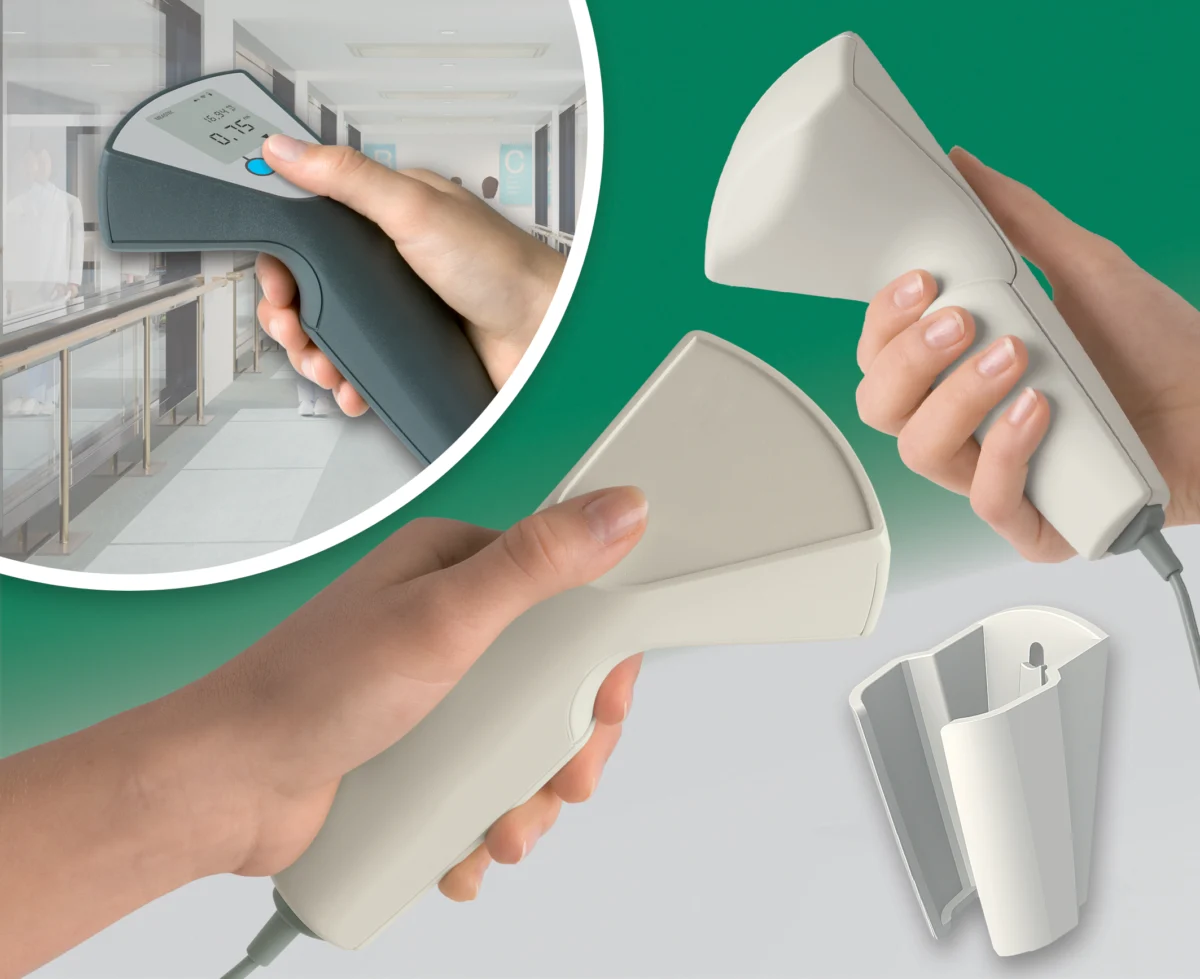
The SENSO-CASE series has long been recognized for its balance of aesthetic appeal and functional robustness. The latest update centers on the inclusion of an integrated underside trigger mechanism, which is now available as a standard specification alongside the traditional triggerless model.
Designed specifically for single-handed operation, the SENSO-CASE is constructed from high-grade ABS plastic, meeting the UL 94 HB flammability rating. The chassis dimensions—7.09 x 3.39 x 1.77 inches—have been meticulously engineered to provide an intuitive grip for both left- and right-handed operators. This ambidextrous design philosophy is central to OKW’s market strategy, ensuring that the hardware does not become a bottleneck for efficiency in high-stakes environments.
The enclosure is a modular, four-part system consisting of a top shell, base, handle cover, and a choice between a cable gland or a removable end panel. This modularity allows engineers to transition seamlessly between tethered, cable-connected applications and wireless configurations powered by internal battery sources, including standard dual AA batteries or a single 9V cell.
Chronology: The Evolution of the SENSO-CASE
The journey of the SENSO-CASE reflects a broader shift in the enclosure industry toward "application-ready" design.
- Initial Conceptualization: Recognizing a gap in the market for a dedicated sensor-based handheld device, OKW developed the SENSO-CASE to solve the problem of bulky, non-ergonomic housings that hindered field technicians.
- Market Integration: Upon its initial release, the enclosure was quickly adopted by manufacturers of optodigital technologies and industrial imaging systems. The inclusion of recessed control panels allowed for a cleaner, flush-mount appearance for membrane keypads and LCDs.
- The Ergonomic Shift: Feedback from the field suggested that while the initial design was excellent for static data entry, there was a mounting demand for "point-and-shoot" functionality.
- The Current Milestone: The 2026 expansion marks the official integration of the trigger-enabled underside. By formalizing this as a standard catalog option, OKW has effectively removed the need for costly custom molding for clients requiring trigger functionality, thereby reducing time-to-market for new product developers.
Supporting Data: Technical Specifications and Material Science
The utility of the SENSO-CASE is best understood through its technical specifications, which cater to the rigorous demands of laboratory and field environments.
Material Integrity and Aesthetics
The use of UL 94 HB-rated ABS ensures the device can withstand the mechanical rigors of daily use. While the standard color palette features professional off-white (RAL 9002) and a modern "lava" grey, the surface finish is designed to accommodate various post-processing techniques, including laser marking and high-durability printing.
Internal Architecture
For design engineers, the internal structure of an enclosure is often more important than the exterior. The SENSO-CASE provides:
- Fastening Pillars: Dedicated internal pillars allow for the secure mounting of PCBs, preventing vibration-induced damage in mobile applications.
- Power Flexibility: The internal cavity is optimized for power management, with room for 9V plug-in contacts or battery holders, catering to both professional laboratory equipment and portable field logging devices.
- Accessory Ecosystem: The product line is supported by a comprehensive suite of accessories, including wall holders for secure storage when not in use, pull-relief cable clamps for heavy-duty industrial tethering, and ring eyelets for operator safety lanyards.
Customization Capabilities
OKW provides a tiered customization service that allows for deep modification of the base SENSO-CASE platform. This includes:
- Machining: Precise cutouts for specialized sensors or high-density connectors.
- Shielding: Optional RFI/EMI shielding to protect sensitive instrumentation from electromagnetic interference, a critical requirement for medical and aerospace applications.
- Decorative Foils: Customized aesthetic overlays that align the product with specific corporate branding or functional interface requirements.
Official Perspectives: The Value of User-Centric Design
The decision to offer a trigger-ready configuration was driven by a commitment to user experience. In many industrial applications, the operator is multitasking—often wearing gloves or navigating complex environments. By integrating a trigger directly into the handle, the user can maintain a stable, one-handed grip while simultaneously triggering a measurement, taking a photo, or logging a data point.

According to technical design experts, the primary advantage of this modular approach is "design agility." Instead of a manufacturer having to fabricate a custom trigger housing—which involves expensive mold development and long lead times—they can now utilize the standard OKW SENSO-CASE. This shift effectively democratizes high-end ergonomic design for small- to mid-sized manufacturers who previously could not afford custom-tooled solutions.
Implications for Industry: The Future of Handheld Instrumentation
The release of the updated SENSO-CASE has significant implications for the future of various sectors:
1. Medical and Laboratory Diagnostics
In clinical settings, devices must be easy to clean and even easier to operate under pressure. The SENSO-CASE’s ability to house LCDs and membrane keypads, combined with the new trigger, makes it an ideal candidate for portable handheld ultrasound scanners, diagnostic blood analyzers, and remote patient monitoring devices.
2. Industrial Image Processing and IoT
As the Internet of Things (IoT) moves into the factory floor, there is a surge in demand for portable inspection tools. Whether it is an infrared thermal imager or a barcode-scanning logistics device, the SENSO-CASE provides a protective, ergonomic shell that allows for long-duration operation without operator fatigue.
3. Sustainability and Modular Manufacturing
The move toward modularity in enclosures is a broader trend that favors sustainability. By providing a standard platform that can be configured in multiple ways, OKW is helping to reduce waste. Instead of producing specialized, single-purpose enclosures, manufacturers can use a single, versatile platform that can be adapted to evolving requirements through simple accessory changes.
4. Competitive Landscape
The inclusion of the trigger option puts significant pressure on competitors who rely on legacy, non-customizable designs. It forces a market-wide pivot toward higher ergonomic standards. For the end-user, this means that the "standard" equipment they purchase tomorrow will be significantly more refined and easier to use than the equipment purchased just a few years ago.
Conclusion
The enhancement of the OKW SENSO-CASE series is a testament to the fact that, in the world of high-tech instrumentation, the smallest design details often yield the greatest operational impact. By standardizing the trigger-enabled configuration, OKW has not only streamlined the manufacturing process for its clients but has also raised the bar for what engineers should expect from a handheld enclosure.
Whether utilized in the sterile environment of a medical laboratory or the high-activity setting of a logistics warehouse, the SENSO-CASE stands as a bridge between complex internal technology and the human hand. As industries continue to lean into automation and portable data collection, the importance of robust, ergonomic, and highly configurable enclosures will only continue to grow. For design engineers tasked with the next generation of handheld innovation, the updated SENSO-CASE offers a sophisticated, proven foundation upon which to build the future of their products.
For those interested in integrating this solution into their next design cycle, technical documentation and customization inquiries can be addressed via the official OKW Enclosures portal.